
Spices & seasonings · Salt
Salt
The basic seasoning: sodium chloride crystals that sharpen flavour, preserve food and control fermentation.
Also called: table salt, sea salt, kosher salt, namak, tuz, sal
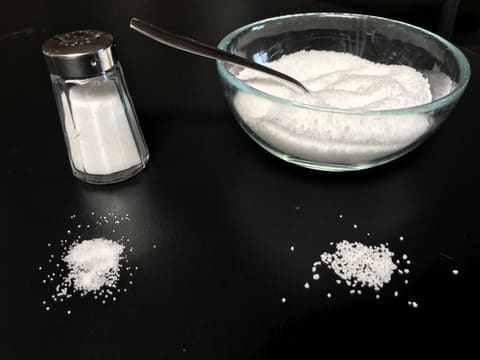
Photo: Lexlex, via Wikimedia Commons (CC-BY-SA-4.0)
What it is
Salt is crystalline sodium chloride, mined from deposits or evaporated from seawater. Table salt is fine and dense (often iodised), kosher salt has larger, lighter flakes, and sea salt ranges from fine grains to crunchy flakes for finishing. Because crystal size differs, a spoon of fine salt is noticeably saltier than a spoon of flaky salt.
How it’s used
- Seasoning almost every savoury dish
- Salting pasta and vegetable cooking water
- Brining and curing meat and fish
- Controlling yeast in bread dough
- Finishing with flaky salt
- Drawing water from vegetables before cooking
Characteristics
- Taste
- Salty; in small amounts it rounds and brightens other flavours.
- Sold as
- flakes, ground
- Cooking uses
- Mainly a seasoning
- Common in
- International
Varieties
- Table (iodised) salt
- Kosher salt
- Sea salt
- Flaky salt
- Rock salt (sendha namak)
- Black salt (kala namak)
Kinds in our pantry
Storage
Pantry-stable. Keeps indefinitely in a dry, closed container; it clumps in humidity (a few grains of rice in the shaker help).
Diet, allergens and safety
No major allergens in typical versions.
- Vegetarian
- Vegan
- Dairy-free
- Egg-free
- Gluten-free
- Nut-free
- Soy-free
- Caffeine-free
Nutrition per 100 g
- Energy
- 0 kcal
- Protein
- 0 g
- Carbohydrate
- 0 g
- Fat
- 0 g
- Fibre
- 0 g
- Sugars
- 0 g
USDA FoodData Central: Salt, table.
Substitutes
Optional — what works if you don’t have it, and how it changes the dish.
- Kosher or flaky salt — Use roughly half as much again by volume as fine table salt; weigh for baking.
Related ingredients
Recipes with salt
See all 1713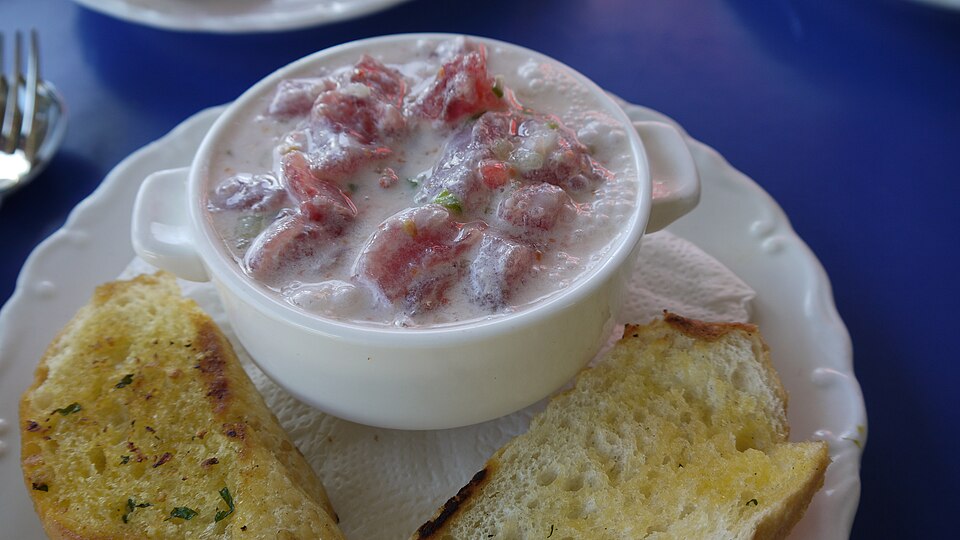
'Ota 'ika
 Tongan · 50 min · 235 kcal
Aam ki launji (sweet-sour raw mango chutney)
 Indian · 40 min · 85 kcal · Vegan
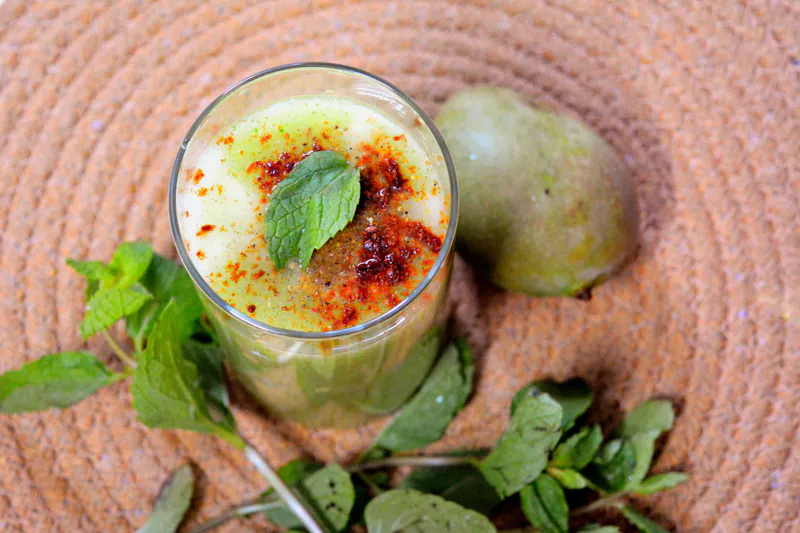
Aam panna
Indian · 45 min · 96 kcal · VeganAblo
 Togolese · 2 h 10 min · 269 kcal · Vegan
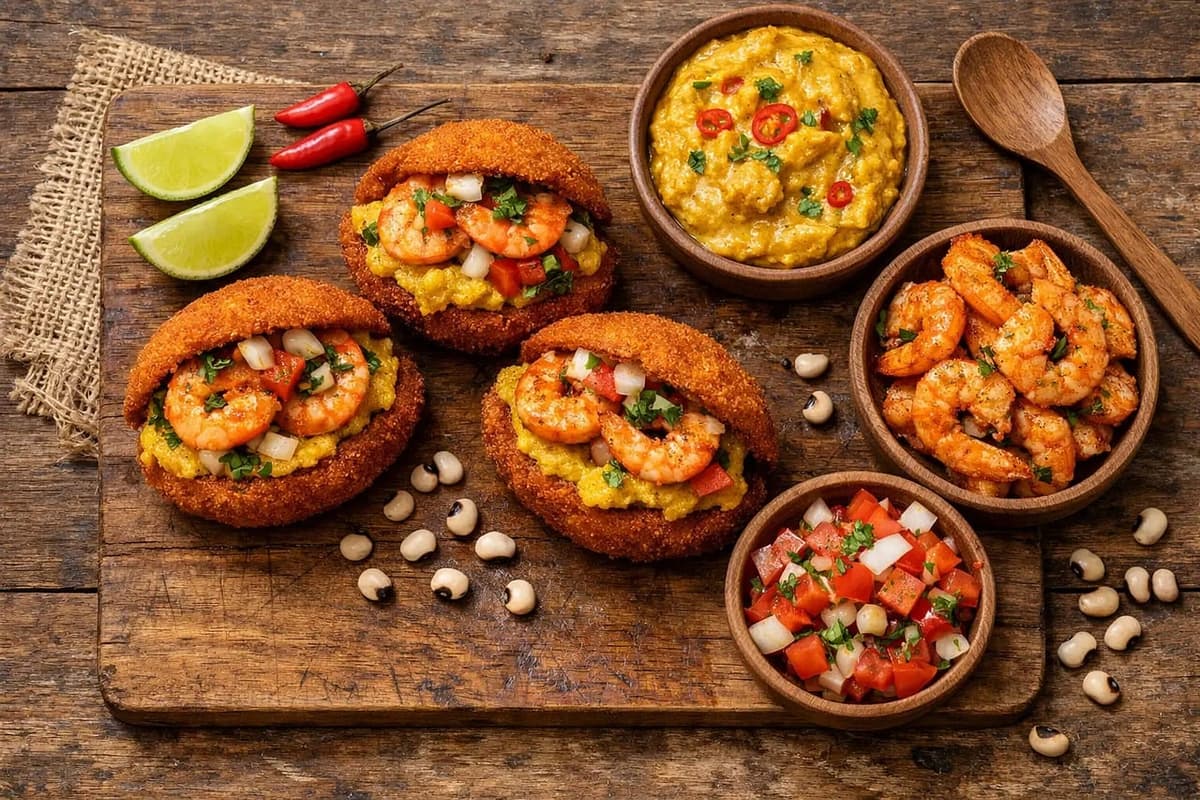
Acarajé
 Brazilian · 1 h 20 min · 534 kcal
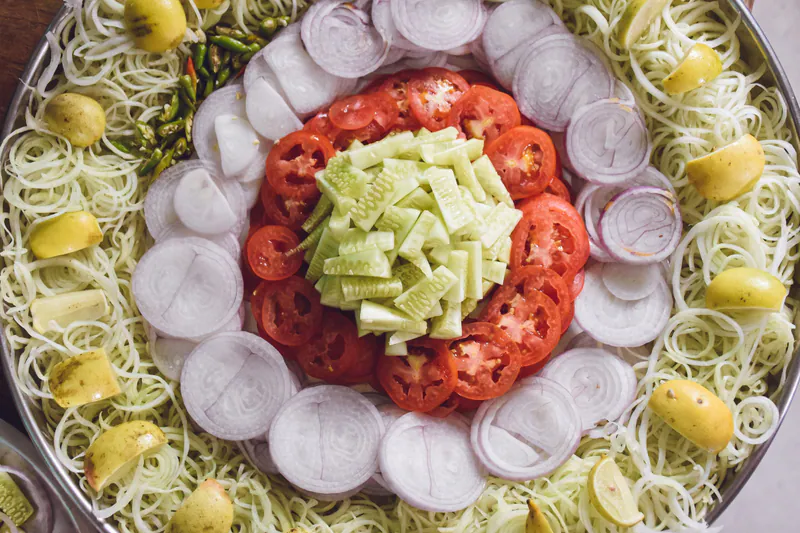
Achichuk
 Uzbek · 15 min · 33 kcal · Vegan
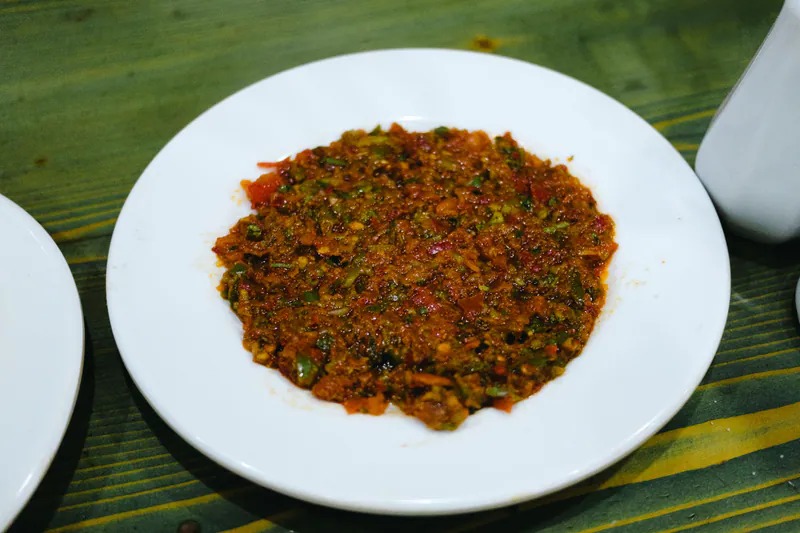
Acılı ezme (Turkish spicy tomato-pepper relish)
 Turkish · 40 min · 73 kcal · Vegan
Açma (soft Turkish breakfast rolls)
Turkish · 2 h 32 min · 265 kcal · Contains egg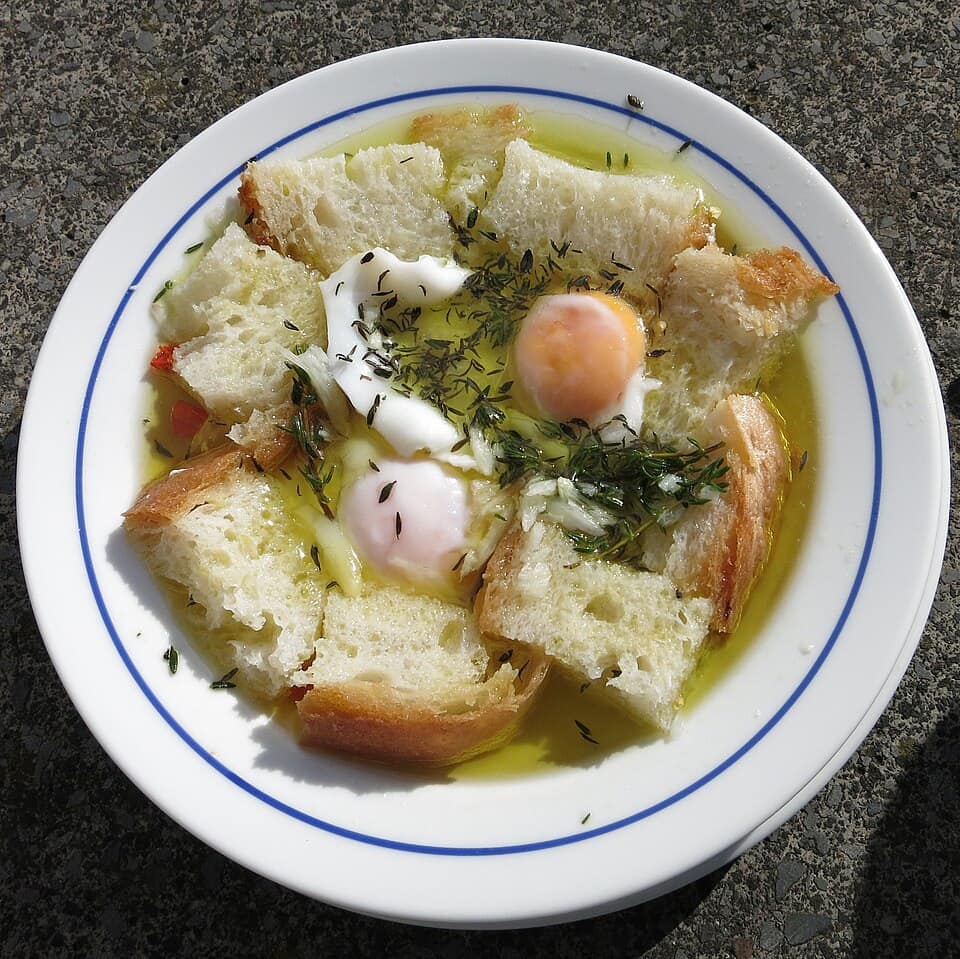
Açorda alentejana
 Portuguese · 20 min · 365 kcal · Contains egg
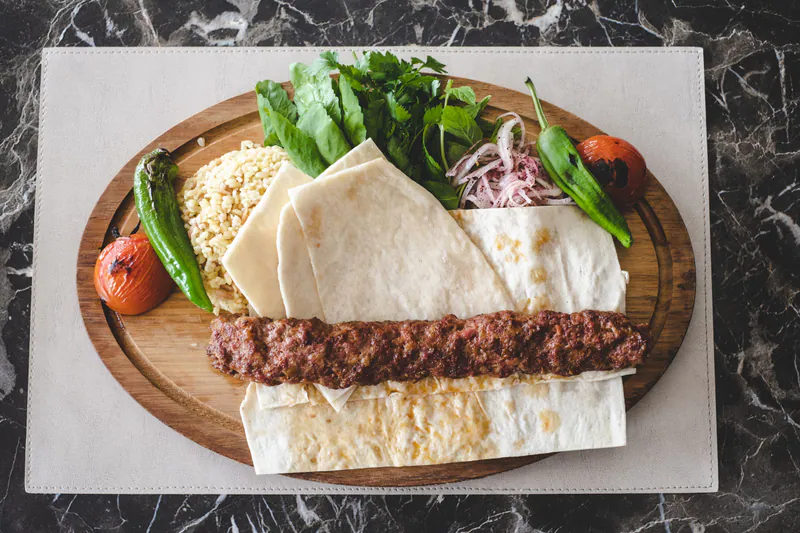
Adana kebab
Turkish · 1 h 7 min · 438 kcalAdjika (red chilli paste)
 Georgian · 1 h 20 min · 13 kcal · Vegan
Æbleskiver
 Danish · 45 min · 290 kcal · Contains egg
1701 more
- Afelia · Cypriot
- Afghan naan · Afghan
- Agege bread · Nigerian
- Ago glain · Beninese
- Aguadito de pollo · Peruvian
- Aïoli (Provençal garlic mayonnaise) · French
- Ajapsandali · Georgian
- Ají de gallina · Peruvian
- Ají verde (Peruvian green sauce) · Peruvian
- Ajiaco santafereño · Colombian
- Ajo blanco · Spanish
- Ajvar · Balkan
- Akara · Nigerian
- Akki roti · South Indian
- Akoho sy voanio · Malagasy
- Akuri (Parsi scrambled eggs) · Indian
- Albóndigas en salsa · Spanish
- Alfajores de maicena · Argentine
- Allam pachadi (Andhra ginger chutney) · South Indian
- Aloko · Ivorian
- Aloo bukhara chutney (sweet-sour plum chutney) · Indian
- Aloo gobi · Punjabi
- Aloo gosht · Pakistani
- Aloo keema · Pakistani
- Aloo paratha · Punjabi
- Aloo posto · Bengali
- Aloo rasedar · Indian
- Aloo sadeko · Nepalese
- Aloo tama · Nepalese
- Älplermagronen · Swiss
- Alu bhorta · Bangladeshi
- Amba (Iraqi mango pickle sauce) · Iraqi
- Ambuyat with cacah · Bruneian
- Amiwo · Beninese
- Amla chutney (Indian gooseberry chutney) · Indian
- Amritsari kulcha · Punjabi
- Anardana chutney (dried pomegranate seed chutney) · Punjabi
- Anda bhurji (Indian spiced scrambled eggs) · Indian
- Anda curry · Indian
- Anda paratha · Indian
- Andhra chicken curry · South Indian
- Andhra tomato pachadi · South Indian
- Anpan (sweet red bean buns) · Japanese
- Anticuchos de corazón · Peruvian
- Anzac biscuits · Australian
- Apfelrotkohl · German
- Appam · South Indian
- Apple and Berry Crumble · British
- Apple pie · American
- Arancini · Italian
- Arepas · Venezuelan
- Argentine asado · Argentine
- Armenian harissa · Armenian
- Arroz con coco · Colombian
- Arroz con gandules · Puerto Rican
- Arroz de marisco · Portuguese
- Arroz doce · Portuguese
- Aseeda with mullah · Sudanese
- Ash reshteh · Iranian
- Ashlyam-fu · Kyrgyz
- Atkilt wat · Ethiopian
- Atom (strained yoghurt with chilli butter) · Turkish
- Attiéké with grilled fish · Ivorian
- Aushak · Afghan
- Aussie meat pie · Australian
- Avakaya (Andhra mango pickle) · South Indian
- Avgolemono soup · Greek
- Avial · South Indian
- Avocado and Egg Toast · International
- Avocado hummus · International
- Awaze · Ethiopian
- Ayam bakar · Indonesian
- Ayam goreng kuning · Indonesian
- Ayam masak merah · Malaysian
- Ayran · Turkish
- Azi dessi with fufu · Togolese
- Azifa · Ethiopian
- Baba ghanoush · Levantine
- Baba ghanoush (Lebanese-Syrian chopped style) · Lebanese
- Babenda · Burkinabè
- Bacalhau à brás · Portuguese
- Bacalhau com natas · Portuguese
- Badam shorba · Indian
- Badrijani nigvzit · Georgian
- Baechu kimchi (napa cabbage kimchi) · Korean
- Bagara baingan · Indian
- Baguettes with poolish · French
- Bahamian conch fritters · Bahamian
- Bahamian peas 'n' rice · Bahamian
- Bai · Indian
- Bai sach chrouk · Cambodian
- Baingan bharta · Punjabi
- Bajan fish cakes · Bajan
- Bajan macaroni pie · Bajan
- Bajra roti · Indian
- Bak kut teh (peppery Teochew style) · Singaporean
- Bakarkhani (Hyderabadi style) · Indian
- Baked beef empanadas · Argentine
- Baked ziti · American
- Bakso · Indonesian
- Balaleet · Gulf Arab
- Baleadas · Honduran
- Bamia (okra and beef stew) · South Sudanese
- Banana bread · American
- Bandeja paisa · Colombian
- Bangers and mash with onion gravy · British
- Bangladeshi beef bhuna · Bangladeshi
- Bánh mì thịt nướng · Vietnamese
- Bánh xèo · Vietnamese
- Banku with okra stew · Ghanaian
- Bannock · Canadian
- Bara · Nepalese
- Bariis iskukaris · Somali
- Barszcz czerwony · Polish
- Basque burnt cheesecake · Spanish
- Bassaru · South Indian
- Batar daan · Timorese
- Batata harra · Lebanese
- Batbout (Moroccan pan pocket bread) · Moroccan
- Baursak · Kazakh
- Bayerischer Krautsalat · German
- Bazeen · Libyan
- Bazlama (Turkish stovetop flatbread) · Turkish
- BBQ pulled pork · Southern US
- Béarnaise sauce · French
- Béchamel sauce · French
- Beef kala bhuna · Bangladeshi
- Beef lok lak · Cambodian
- Beef nihari · Pakistani
- Beef rendang · Indonesian
- Beef stifado · Greek
- Beef stroganoff · Russian
- Beef tehari · Bangladeshi
- Beef tibs · Ethiopian
- Beerakaya pachadi (ridge gourd chutney) · South Indian
- Beetroot hummus · International
- Beetroot koshimbir · Indian
- Begova čorba (Bey's soup) · Bosnian
- Begun bhaja · Bangladeshi
- Begun bhorta · Bangladeshi
- Beignets de banane · Gabonese
- Belgian waffles (Brussels-style) · Belgian
- Belizean rice and beans with stew chicken · Belizean
- Benachin · Gambian
- Bengali tomato-date chutney (tomato khejur chutney) · Bengali
- Berbere spice blend · Ethiopian
- Bergen fish soup · Norwegian
- Beshbarmak · Kazakh
- Bessara (Egyptian green fava bean and herb dip) · Egyptian
- Beurre blanc · French
- Bhang ki chutney (Kumaoni hemp seed chutney) · Indian
- Bhapa pitha · Bangladeshi
- Bharli vangi · Indian
- Bhindi masala · Indian
- Bhuna khichuri · Bangladeshi
- Bhutanese red rice · Bhutanese
- Bibimbap · Korean
- Bicol express · Filipino
- Bifana · Portuguese
- Bigilla · Maltese
- Bigos · Polish
- Bilahi pitika (Assamese roasted tomato mash) · Indian
- Bint al sahn · Yemeni
- Birria de res · Mexican
- Biscuits and sausage gravy · Southern US
- Bissara · Moroccan
- Bitterballen · Dutch
- Black bean tacos · Mexican
- Blanquette de veau · French
- Blue cheese dressing · American
- Blueberry Muffins · American
- Bò lúc lắc (shaking beef) · Vietnamese
- Bobotie · Cape Malay
- Boerenkool stamppot · Dutch
- Boerewors with pap and sous · South African
- Boeuf bourguignon · French
- Bogobe jwa lerotse · Botswanan
- Boiled Eggs (Soft or Hard) · International
- Boiled peanut chaat · Indian
- Boko boko · Burundian
- Bolani · Afghan
- Bolillos (Mexican crusty rolls) · Mexican
- Bolinhos de bacalhau · Portuguese
- Bolo de fubá (Brazilian cornmeal cake) · Brazilian
- Boondi raita · Indian
- Borani banjan · Afghan
- Bore baasi (Chhattisgarhi soaked rice) · Indian
- Borhani · Bangladeshi
- Bosanski lonac (Bosnian pot) · Bosnian
- Bosnian meat burek · Bosnian
- Bouillabaisse · French
- Boule with okra sauce · Chadian
- Bouneschlupp · Luxembourgish
- Boxty · Irish
- Bratkartoffeln · German
- Bread sauce · British
- Brigadeiros · Brazilian
- Brik à l'oeuf · Tunisian
- Brioche Nanterre · French
- Broa de milho (Portuguese corn bread) · Portuguese
- Broccoli cheddar soup · American
- Broccoli salad · American
- Brown stew chicken · Jamaican
- Brun lapskaus · Norwegian
- Bryndzové halušky · Slovak
- Bucatini all'amatriciana · Italian
- Buchty · Czech
- Buckwheat blini · Russian
- Buckwheat kasha with mushrooms · Russian
- Budu (Timorese tomato relish) · Timorese
- Buffalo wings · American
- Bulalo · Filipino
- Bumbu dasar merah (Indonesian red spice base) · Indonesian
- Bumbu kacang (peanut satay sauce) · Indonesian
- Bún bò Huế · Vietnamese
- Bun kebab · Pakistani
- Bunny chow · South African
- Burani raita (Hyderabadi garlic raita) · Indian
- Burmese chicken curry · Burmese
- Burmese pork curry · Burmese
- Butter chicken · Punjabi
- Butter tarts · Canadian
- Buttermilk cornbread · Southern US
- Buttermilk pancakes · American
- Butterscotch sauce · British
- Buuz (Mongolian steamed dumplings) · Mongolian
- Byrek me spinaq (Albanian spinach pie) · Albanian
- Cabbage-carrot sambharo · Gujarati
- Cachapas · Venezuelan
- Cachupa · Cape Verdean
- Cacio e pepe · Italian
- Cacık · Turkish
- Caesar dressing · American
- Caesar salad · American
- Cajun seasoning · Southern US
- Caldo de feijão · Brazilian
- Caldo de res · Mexican
- Caldo verde · Portuguese
- Calulu · Angolan
- Canh chua cá · Vietnamese
- Canja (Cabo Verdean chicken and rice soup) · Cape Verdean
- Canja de galinha · Portuguese
- Canjeero · Somali
- Cannoli siciliani · Italian
- Cantonese egg tarts · Cantonese
- Cantonese sweet and sour sauce · Cantonese
- Cantucci (biscotti di Prato) · Italian
- Cape Malay chicken curry · Cape Malay
- Carbonade flamande · Belgian
- Caribbean Scotch bonnet pepper sauce · Caribbean
- Carimañolas · Panamanian
- Carne de porco à alentejana · Portuguese
- Carnitas · Mexican
- Carrot and ginger soup · International
- Carrot cake with cream cheese frosting · American
- Carrot kosumalli · South Indian
- Casado · Costa Rican
- Cassava leaf stew · Sierra Leonean
- Cassoulet · French
- Cauliflower cheese · British
- Causa limeña · Peruvian
- Cazuela de vacuno · Chilean
- Cepelinai · Lithuanian
- Ćevapi · Balkan
- Ceviche ecuatoriano de camarón · Ecuadorian
- Chả giò (fried spring rolls) · Vietnamese
- Chaat masala · Indian
- Chakalaka · South African
- Chakhapuli · Georgian
- Chakhokhbili · Georgian
- Chambo with nsima · Malawian
- Chammanthi podi (Kerala roasted coconut chutney powder) · South Indian
- Champaran meat · Indian
- Champorado · Filipino
- Champurrado · Mexican
- Chana chaat · Indian
- Chana madra · Indian
- Chana masala · Punjabi
- Chana paratha · Indian
- Chana samosa (Chhattisgarh street-style) · Indian
- Changua · Colombian
- Chapli kebab · Pakistani
- Char siu (Cantonese barbecue pork) · Cantonese
- Chatamari · Nepalese
- Chawanmushi · Japanese
- Chebab · Emirati
- Chechebsa · Ethiopian
- Cheese corn paratha · Indian
- Cheese Omelette · International
- Cheese paratha · Indian
- Cheese soufflé · French
- Chef's salad · American
- Chelow with tahdig · Iranian
- Chermoula · Moroccan
- Chettinad chicken curry · South Indian
- Chhundo (Gujarati grated mango preserve) · Gujarati
- Chicken and andouille gumbo · Southern US
- Chicken and ginger congee (jook) · Cantonese
- Chicken and waffles · Southern US
- Chicken balti · British
- Chicken bastilla · Moroccan
- Chicken biryani · Indian
- Chicken cacciatore · Italian
- Chicken kabsa · Saudi Arabian
- Chicken karahi · Pakistani
- Chicken keema paratha · Indian
- Chicken korma · Indian
- Chicken kottu roti · Sri Lankan
- Chicken Kyiv · Ukrainian
- Chicken mandi · Yemeni
- Chicken momo · Nepalese
- Chicken Noodle Soup · International
- Chicken paprikash · Hungarian
- Chicken rezala · Bangladeshi
- Chicken rice chilli sauce · Singaporean
- Chicken sajji · Pakistani
- Chicken saloona · Gulf Arab
- Chicken shawarma · Levantine
- Chicken sopas · Filipino
- Chicken souvlaki · Greek
- Chicken teriyaki · Japanese
- Chicken thukpa · Nepalese
- Chicken tikka masala · Indian
- Chicken tinola · Filipino
- Chicken yakhni pulao · Pakistani
- Chicken yassa · Senegalese
- Chickpea and Bulgur Herb Salad · Mediterranean
- Chikhirtma · Georgian
- Chilaquiles rojos · Mexican
- Chiles en nogada · Mexican
- Chili con carne · Tex-Mex
- Chilli cheese paratha · Indian
- Chilli crisp · Chinese
- Chimichurri · Argentine
- Chin chin · Nigerian
- Chinese broccoli with oyster sauce · Cantonese
- Chinese plum sauce · Cantonese
- Chinese steamed egg custard · Chinese
- Chinese tea eggs · Chinese
- Chingri bhuna · Bangladeshi
- Chingri malai curry · Bangladeshi
- Chipa · Paraguayan
- Chipotle salsa (salsa de chipotle) · Mexican
- Chipsi mayai · Tanzanian
- Chirashizushi (scattered sushi bowl) · Japanese
- Chivito · Uruguayan
- Chocolate Avocado Mousse · International
- Chocolate babka · Polish
- Chocolate Banana Nice Cream · International
- Chocolate Chia Pudding · International
- Chocolate chip cookies · American
- Chocolate éclairs · French
- Chocolate mousse · French
- Chocolate sauce · French
- Cholar dal · Bengali
- Chole bhature · Punjabi
- Chole masala · Punjabi
- Chongqing chilli chicken · Sichuan
- Chorba frik · Algerian
- Choripán · Argentine
- Chuchitos · Guatemalan
- Chuchvara · Uzbek
- Chupe de camarones · Peruvian
- Chura sabzi (Arunachali cheese and chilli) · Indian
- Churros con chocolate · Spanish
- Chutney-e gashneez (Afghan green chutney) · Afghan
- Ciabatta · Italian
- Cinnamon rolls with cream cheese frosting · American
- Cioccolata calda (Italian thick hot chocolate) · Italian
- Ciorbă de perișoare · Romanian
- Çılbır · Turkish
- Clafoutis aux cerises · French
- Classic beef burger · American
- Classic French vinaigrette · French
- Classic Oat Porridge · International
- Classic Tuna Salad · International
- Çoban salatası · Turkish
- Cobb salad · American
- Cochinita pibil · Mexican
- Cock-a-leekie · British
- Coconut chutney · South Indian
- Coconut paratha · Indian
- Colcannon · Irish
- Colombian ají picante · Colombian
- Colțunași cu brânză · Moldovan
- Completo italiano · Chilean
- Conchas (Mexican sweet bread) · Mexican
- Coorg pandi curry · South Indian
- Coq au vin · French
- Corn chowder · American
- Corn fritters · New Zealand
- Corn tortillas (masa harina) · Mexican
- Cornish pasty · British
- Costa Rican arroz con pollo · Costa Rican
- Cou-cou and flying fish · Bajan
- Courgette frittata · Italian
- Couscous bil bosla · Libyan
- Couscous with seven vegetables · Moroccan
- Coxinha · Brazilian
- Cranberry sauce · American
- Cream of mushroom soup · International
- Creamy Chicken Salad · International
- Creamy Coleslaw · International
- Creamy Mashed Potatoes · International
- Creamy Scrambled Eggs · International
- Creamy Stovetop Rice Pudding · International
- Creamy Tomato Soup · International
- Crema mexicana (cultured cream) · Mexican
- Crêpes · French
- Crispy Baked Potatoes · International
- Crispy-skin barramundi with lemon butter · Australian
- Crni rižot (black cuttlefish risotto) · Croatian
- Croissants · French
- Croque monsieur · French
- Croquetas de jamón · Spanish
- Crossing-the-bridge rice noodles · Chinese
- Crumpets · British
- Cuban avocado salad · Cuban
- Cuban black beans · Cuban
- Cuban mojo · Cuban
- Cuban sandwich · Cuban
- Cucumber raita · Indian
- Cucumber sunomono · Japanese
- Cumberland sauce · British
- Curd rice · South Indian
- Curry channa and aloo · Trinidadian
- Curry laksa · Malaysian
- Curry puffs · Singaporean
- Currywurst · German
- Curtido · Salvadoran
- Da pan ji (Xinjiang big plate chicken) · Chinese
- Daal chawal · Pakistani
- Dahi baray · Pakistani
- Dal bhat tarkari · Nepalese
- Dal dhokli · Gujarati
- Dal makhani · Punjabi
- Dal paratha · Indian
- Dal pitha (Bihari rice dumplings) · Indian
- Dal shorba · Indian
- Dal tadka with red lentils · Indian
- Dalle khursani achar (Sikkimese round chilli pickle) · Indian
- Dalma · Indian
- Dambou · Nigerien
- Damper · Australian
- Dan bing (Taiwanese egg crepe) · Taiwanese
- Danish pastries (spandauer) · Danish
- Danish rye bread (rugbrød) · Danish
- Daraba · Chadian
- Devilled eggs · American
- Dhakai kacchi biryani · Bangladeshi
- Dholl puri · Mauritian
- Dhonepata bata (Bengali coriander paste) · Bengali
- Di san xian (Dongbei eggplant, potato and pepper) · Chinese
- Dimlama · Uzbek
- Diri ak djon djon · Haitian
- Dodo (fried plantain) · Nigerian
- Dograma · Turkmen
- Dohneiiong · Indian
- Dolmadakia (rice-stuffed vine leaves) · Greek
- Domoda · Gambian
- Doogh · Iranian
- Doon chetin (Kashmiri walnut chutney) · Indian
- Doro wat · Ethiopian
- Doubles · Trinidadian
- Dovğa · Azerbaijani
- Draniki · Belarusian
- Dresden Christmas stollen · German
- Dry fruit paratha · Indian
- Dry garlic chutney (vada pav chutney) · Indian
- Dublin coddle · Irish
- Duck curry with ash gourd · Indian
- Düğün çorbası · Turkish
- Dukkah with bread and olive oil · Egyptian
- Dushbara · Azerbaijani
- Eastern Carolina vinegar barbecue sauce · Southern US
- Easy White Sandwich Loaf · International
- Eech · Armenian
- Efo riro · Nigerian
- Egg drop soup · Chinese
- Egg fried rice · Chinese
- Egg hoppers · Sri Lankan
- Egg Kejriwal · Indian
- Egg Salad Sandwich · International
- Eggless Chocolate Mug Cake · International
- Eggplant parmigiana · Italian
- Eggs Benedict · American
- Egusi soup · Nigerian
- Egyptian dukkah · Egyptian
- Egyptian mahshi (stuffed vegetables) · Egyptian
- Egyptian molokhia · Egyptian
- Ele kosu kosambari · South Indian
- Ellu podi (sesame powder) · South Indian
- Elote · Mexican
- Ema datshi · Bhutanese
- Empanadas colombianas · Colombian
- Empanadas salteñas · Argentine
- Encebollado · Ecuadorian
- Enchiladas rojas · Mexican
- Enchiladas verdes · Mexican
- English muffins · British
- Ensalada de nopales · Mexican
- Ensalada mixta · Spanish
- Erissery · South Indian
- Eromba (Manipuri fermented fish and vegetable mash) · Indian
- Erwtensoep · Dutch
- Es cendol · Indonesian
- Escondidinho de carne moída · Brazilian
- Espagnole sauce · French
- Espinacas con garbanzos · Spanish
- Ethiopian coffee (jebena buna) · Ethiopian
- Everyday Vegetable Soup · International
- Ewa agoyin · Nigerian
- Ezogelin çorbası · Turkish
- Fabada asturiana · Spanish
- Fah-fah · Djiboutian
- Fahsa · Yemeni
- Fakoye · Malian
- Falafel · Middle Eastern
- Faraa (steamed rice-flour dumplings) · Indian
- Fårikål · Norwegian
- Farofa · Brazilian
- Fasolada · Greek
- Fatayer bi sabanekh (spinach triangles) · Lebanese
- Fattet hummus · Levantine
- Fattoush · Lebanese
- Feijão carioca · Brazilian
- Feijoada · Brazilian
- Fërgesë (peppers, tomatoes and cheese) · Albanian
- Fermented bamboo shoot chutney · Indian
- Fermented Louisiana-style hot sauce · Southern US
- Fesenjan · Iranian
- Feteer meshaltet · Egyptian
- Fettuccine al burro (the original fettuccine Alfredo) · Italian
- Financiers (brown-butter almond cakes) · French
- Fish ambul thiyal · Sri Lankan
- Fish amok · Cambodian
- Fish and chips · British
- Fish molee · South Indian
- Fish yassa · Senegalese
- Fish-fragrant aubergine · Sichuan
- Flädlesuppe · German
- Flour tortillas · Mexican
- Focaccia · Italian
- Fonio with peanut sauce · Guinean
- Fougasse · French
- Fouti · Guinean
- Francesinha · Portuguese
- Frango à zambeziana · Mozambican
- French omelette · French
- French onion dip · American
- French onion soup · French
- Fresh egg pasta (pasta all'uovo) · Italian
- Fried carrot cake (chai tow kway) · Singaporean
- Fried Eggs · International
- Fried kibbeh · Syrian
- Frijoles de olla · Mexican
- Frikadeller · Danish
- Fruit chaat · Indian
- Fruta picada con chile · Mexican
- Fry jacks · Belizean
- Ftira biż-żejt · Maltese
- Fuchka · Bangladeshi
- Fudgy chocolate brownies · American
- Ful medames · Egyptian
- Full English breakfast · British
- Gabonese fish bouillon · Gabonese
- Gabout · Kuwaiti
- Gado-gado · Indonesian
- Gajar koshimbir · Indian
- Galayet bandora · Jordanian
- Galette complète · French
- Gallo pinto · Central American
- Gambas al ajillo · Spanish
- Garba · Ivorian
- Garlic bok choy stir-fry · Chinese
- Garlic Bread · International
- Garlic butter naan (yeast-free, pan-cooked) · Indian
- Garlic Butter Shrimp · International
- Garlic Roasted Broccoli · International
- Garudhiya · Maldivian
- Gâteau piment · Mauritian
- Gatte ki sabzi · Indian
- Gavurdağı salatası · Turkish
- Gazpacho · Spanish
- Gboma dessi · Togolese
- Gemista · Greek
- Georgian tomato and cucumber salad with walnuts · Georgian
- German rye sourdough (Roggenmischbrot) · German
- Ghadichi poli (layered triangle chapati) · Indian
- Ghapama · Armenian
- Ghormeh sabzi · Iranian
- Ghugni (Jharkhand-style) · Indian
- Gibanica · Serbian
- Gigantes plaki · Greek
- Ginger-garlic paste · Indian
- Ginger-scallion sauce · Cantonese
- Githeri · Kenyan
- Gluten-free psyllium sandwich loaf · International
- Gnocchi alla romana (baked semolina gnocchi) · Italian
- Gnocchi alla sorrentina · Italian
- Gnudi (Tuscan spinach and ricotta dumplings) · Italian
- Goan bebinca · Goan
- Goan fish curry · Goan
- Goan green chutney (coconut-coriander chutney) · Goan
- Goan poi · Goan
- Goan prawn curry · Goan
- Goan vindaloo paste · Goan
- Gobi paratha · Punjabi
- Gỏi cuốn (fresh spring rolls) · Vietnamese
- Gol gappay · Pakistani
- Gołąbki · Polish
- Golbheda ko achar · Nepalese
- Gomen · Ethiopian
- Gongura pachadi (Andhra sorrel-leaf chutney) · South Indian
- Gotu kola sambol · Sri Lankan
- Göy qutabı · Azerbaijani
- Gratin dauphinois · French
- Gravlax with mustard-dill sauce · Scandinavian
- Greek village salad · Greek
- Green chutney (coriander-mint) · Indian
- Green coconut chutney · South Indian
- Green goddess dressing · American
- Greens in peanut sauce (South Sudanese style) · South Sudanese
- Gremolata · Italian
- Grilled chicken salad · International
- Grilled Garlic Prawn Skewers · Mediterranean
- Grilled Lemon-Herb Salmon · International
- Grilled picanha · Brazilian
- Grilled Sea Bass with Lemon-Oil Dressing · Mediterranean
- Grilled Squid Salad · Mediterranean
- Grilled steak with chimichurri · Argentine
- Griot · Haitian
- Grissini torinesi · Italian
- Gromperekichelcher · Luxembourgish
- Groundnut soup (nkatenkwan) · Ghanaian
- Guacamole · Mexican
- Guasacaca · Venezuelan
- Guava duff · Bahamian
- Gujarati dal · Gujarati
- Gujarati lili chutney (coriander-peanut chutney) · Gujarati
- Gulai kambing · Indonesian
- Gulha · Maldivian
- Gulyásleves (Hungarian goulash soup) · Hungarian
- Guo bao rou (Dongbei sweet and sour crispy pork) · Chinese
- Gur gur cha (Ladakhi butter tea) · Indian
- Gur paratha · Punjabi
- Gurasa · Sudanese
- Gutap · Turkmen
- Guyanese cook-up rice · Guyanese
- Guyanese pepperpot · Guyanese
- Gya thuk · Indian
- Gyeran-jjim · Korean
- Gyeran-mari · Korean
- Gyoza (pan-fried pork dumplings) · Japanese
- Habichuelas con dulce · Dominican
- Hachis parmentier · French
- Haemul pajeon · Korean
- Hainanese chicken rice · Singaporean
- Haleem · Pakistani
- Hallacas · Venezuelan
- Halwa puri · Pakistani
- Harcha (Moroccan semolina griddle cakes) · Moroccan
- Harees · Gulf Arab
- Hari mirch chutney (green chilli chutney) · Indian
- Harira · Moroccan
- Harissa · Tunisian
- Hariyali green masala · Indian
- Haryanvi kadhi · Indian
- Hawaiian macaroni salad · American
- Hawawshi · Egyptian
- Haydari · Turkish
- Hearty Lentil and Vegetable Soup · International
- Herring under a fur coat · Russian
- Hesarubele kosambari · South Indian
- High-protein paneer paratha · Indian
- Higher-protein Greek yoghurt bread · International
- Hojaldras · Panamanian
- Hokkien prawn mee · Singaporean
- Hollandaise sauce · French
- Homemade brown sauce · British
- Homemade Honey Nut Granola · International
- Homemade tomato juice · International
- Homemade tomato ketchup · American
- Honey mustard sauce · American
- Horseradish sauce · British
- Hot and sour shredded potatoes · Chinese
- Hot and sour soup · Chinese
- Hot cross buns · British
- Hotteok · Korean
- Houskové knedlíky · Czech
- Hua juan (steamed scallion flower rolls) · Chinese
- Hudut · Belizean
- Huevos rancheros · Mexican
- Huevos rotos (broken eggs over fried potatoes) · Spanish
- Huku ne dovi · Zimbabwean
- Hummus · Levantine
- Hunan farmhouse stir-fried pork with green chillies · Chinese
- Hunan steamed fish with chopped chillies · Chinese
- Hünkar beğendi (lamb on smoky aubergine purée) · Turkish
- Hutspot · Dutch
- Hyderabadi dalcha · Indian
- Hyderabadi marag · Indian
- Ibiharage · Burundian
- Ibihaza · Rwandan
- Ichlekli · Turkmen
- Idli · South Indian
- Ifisashi with nshima · Zambian
- Ika vakalolo · Fijian
- Ikan sabuko · Timorese
- İmam bayıldı · Turkish
- Imbakbaka · Libyan
- Indio viejo · Nicaraguan
- Indo-Chinese schezwan sauce · Indian
- Injera · Ethiopian
- Inji puli (Kerala ginger-tamarind relish) · South Indian
- Insalata caprese · Italian
- Insalata di farro · Italian
- Insalata di rinforzo · Italian
- Iraqi dolma · Iraqi
- Irish soda bread · Irish
- Irish stew · Irish
- Irish wheaten bread · Irish
- Ishkhan-style baked trout · Armenian
- İskender kebap · Turkish
- Isombe · Rwandan
- Ispanaklı gözleme · Turkish
- Ispanaklı yumurta · Turkish
- Israeli salad · Israeli
- Italian wedding soup · Italian
- Izgara köfte · Turkish
- Jägerschnitzel · German
- Jaljeera · Indian
- Jamaican beef patties · Jamaican
- Jamaican coco bread · Jamaican
- Jamaican curry chicken · Jamaican
- Jamaican curry goat · Jamaican
- Jamaican jerk chicken · Jamaican
- Jamaican jerk paste (wet jerk) · Jamaican
- Jamaican rice and peas · Jamaican
- Jambalaya · Southern US
- Jansson's temptation · Swedish
- Japanese curry rice · Japanese
- Japanese milk bread (tangzhong shokupan) · Japanese
- Japanese potato salad · Japanese
- Japchae · Korean
- Jareesh · Saudi Arabian
- Javas chutney (Maharashtrian flaxseed chutney) · Indian
- Jeera aloo · Indian
- Jeera rasam · South Indian
- Jeera rice · Indian
- Jianbing (Chinese breakfast crepe) · Chinese
- Jollof rice · West African
- Joojeh kabab · Iranian
- Jota (sauerkraut and bean stew) · Slovenian
- Jowar bhakri · Indian
- Judd mat Gaardebounen · Luxembourgish
- Ka'ak al-Quds · Palestinian
- Kabuli pulao · Afghan
- Kačamak · Montenegrin
- Kachumbari · Kenyan
- Kachumber · Indian
- Kadai paneer · Punjabi
- Kadala curry · South Indian
- Kadhi pakora · Punjabi
- Kadlebele kosambari · South Indian
- Kafteji · Tunisian
- Kafuli · Indian
- Kairi pudina chutney (raw mango-mint chutney) · Indian
- Kaiserschmarrn · Austrian
- Kajaik · South Sudanese
- Kak'ik · Guatemalan
- Kakdi koshimbir · Indian
- Kala chana salad · Indian
- Kalduny · Belarusian
- Kancha aamer chutney (Bengali green mango chutney) · Bengali
- Kanda poha · Indian
- Kanelbullar (Swedish cinnamon buns) · Swedish
- Kangkung belacan · Malaysian
- Kangshoi · Indian
- Kanji (fermented carrot drink) · Indian
- Kansas City-style barbecue sauce · American
- Kapana · Namibian
- Kapustnica · Slovak
- Kara chutney (Tamil red onion-chilli chutney) · South Indian
- Kara kuzhambu · South Indian
- Karantika · Algerian
- Kare-kare · Filipino
- Kari ayam · Malaysian
- Karjalanpiirakka · Finnish
- Karnataka chutney pudi (coconut lentil chutney powder) · South Indian
- Karnıyarık · Turkish
- Kartoffelpuffer · German
- Kartoffelsuppe · German
- Karuveppilai podi (curry leaf powder) · South Indian
- Karuveppilai thogayal (curry leaf chutney) · South Indian
- Käsespätzle · German
- Kashk-e bademjan · Iranian
- Kashmiri chai · Pakistani
- Kashmiri mutton yakhni · Indian
- Kaspressknödel · Austrian
- Kasundi (Bengali mustard sauce) · Bengali
- Kati kati · Cameroonian
- Katogo with beans · Ugandan
- Katsudon · Japanese
- Kavarma (pork and vegetable clay pot) · Bulgarian
- Kazakh milk tea · Kazakh
- Kedgeree · British
- Kedjenou · Ivorian
- Keema matar · Indian
- Kefta tagine with eggs · Moroccan
- Keftedes (Greek meatballs) · Greek
- Kelewele · Ghanaian
- Kelupis · Bruneian
- Kenchin-jiru · Japanese
- Kenyan beef pilau · Kenyan
- Kenyan chapati · Kenyan
- Kerala chicken stew · South Indian
- Kerala egg roast · South Indian
- Kerala pathiri · South Indian
- Kerala plum cake (alcohol-free) · Indian
- Kewa datshi · Bhutanese
- Khachapuri adjaruli · Georgian
- Khajur ambli chutney (Gujarati date-tamarind chutney) · Gujarati
- Khaman dhokla · Gujarati
- Khao piak sen · Lao
- Khari biscuit · Indian
- Kharoli (Assamese fermented mustard paste) · Indian
- Khinkali · Georgian
- Khobz (Moroccan round bread) · Moroccan
- Khorovats · Armenian
- Khoya paratha · Indian
- Khuushuur (Mongolian fried meat pastries) · Mongolian
- Kibbeh bil sanieh · Lebanese
- Kilishi · Nigerien
- Kimbap · Korean
- Kimchi mandu (kimchi dumplings) · Korean
- Kiri hodi · Sri Lankan
- Kiribath · Sri Lankan
- Kismur · Goan
- Kitfo · Ethiopian
- Kısır (bulgur salad) · Turkish
- Kıymalı pide · Turkish
- Kıymalı yumurta with green chillies · Turkish
- Kjötsúpa · Icelandic
- Kjøttkaker i brun saus · Norwegian
- Kladdkaka · Swedish
- Kleftiko · Cypriot
- Kleicha · Iraqi
- Klepe (Bosnian meat dumplings) · Bosnian
- Kluai buat chi · Thai
- Kobbari pachadi (Andhra coconut chutney) · South Indian
- Koeksisters · South African
- Kofta bil tahini · Jordanian
- Koki · Cameroonian
- Kokoda · Pacific Island
- Kokum sharbat · Indian
- Kolhapuri chicken curry · Indian
- Kolhapuri kanda-lasun masala · Indian
- Kolhapuri lal thecha (red chilli-garlic thecha) · Indian
- Kondakadalai sundal · South Indian
- Kongnamul muchim · Korean
- Kongnamul-guk · Korean
- Königsberger Klopse · German
- Kontomire stew · Ghanaian
- Kopytka · Polish
- Korean fried chicken (yangnyeom) · Korean
- Kori gassi · South Indian
- Korvapuusti (Finnish cinnamon rolls) · Finnish
- Kosha mangsho · Bengali
- Koshari · Egyptian
- Kosksi bil hout · Tunisian
- Kothamalli thogayal (coriander chutney) · South Indian
- Kotlet schabowy · Polish
- Kouign-amann · French
- Koupepia · Cypriot
- Krupnik · Polish
- Kubbat halab · Iraqi
- Kugelis · Lithuanian
- Kukhura ko masu · Nepalese
- Kuku sabzi · Iranian
- Kulajda · Czech
- Kuli-kuli · Beninese
- Kulle chaat · Indian
- Kulukki sarbath · Indian
- Kūmara soup · New Zealand
- Kuru fasulye · Turkish
- Kuurma lagman · Kyrgyz
- Kuy teav · Cambodian
- Kuymak · Turkish
- Kuyrdak · Kazakh
- Kwati · Nepalese
- La bandera dominicana · Dominican
- Laal maas · Indian
- Laban bi toum (garlic yoghurt dip) · Levantine
- Lablabi · Tunisian
- Labneh (strained yoghurt cheese) · Levantine
- Laccha pyaz · Punjabi
- Lachha paratha · Indian
- Ladakhi thukpa · Indian
- Ladi pav · Indian
- Ladob · Seychellois
- Lagman · Uzbek
- Lahmacun · Turkish
- Lahoh · Djiboutian
- Lahori chargha · Pakistani
- Lahori fish fry · Pakistani
- Lahpet thoke · Burmese
- Lakshadweep-style tuna curry · South Indian
- Lamb machboos · Emirati
- Lamb peka · Croatian
- Lamb tagine with apricots · Moroccan
- Lamingtons · Australian
- Lamprais · Sri Lankan
- Lángos · Hungarian
- Lasagne alla bolognese · Italian
- Laugenbrezel · German
- Lauki raita (bottle gourd raita) · Indian
- Lavash · Armenian
- Lecsó · Hungarian
- Leek and potato soup · British
- Lemon coriander soup · Indian
- Lemon Garlic Baked Salmon · International
- Lemon rasam · South Indian
- Lemon rice · South Indian
- Lemon-Olive Oil Vinaigrette · Mediterranean
- Lenga-lenga · Burundian
- Lentil and Roasted Vegetable Bowl · Mediterranean
- Liangpi (cold skin noodles) · Chinese
- Liberian pepper soup · Liberian
- Liberian rice bread · Liberian
- Liboké de poisson · Congolese
- Liège waffles · Belgian
- Light soup · Ghanaian
- Linsensuppe · German
- Litti chokha · Indian
- Llapingachos · Ecuadorian
- Lobio · Georgian
- Loco moco · American
- Locro · Argentine
- Locro de papa · Ecuadorian
- Lohikeitto · Finnish
- Lokše · Slovak
- Lomo saltado · Peruvian
- Loubia (Maghrebi white bean stew) · Algerian
- Loubieh bi zeit · Lebanese
- Loukoumades · Greek
- Louvi me lahana · Cypriot
- Lū pulu · Tongan
- Luchi · Bengali
- Lumpia shanghai · Filipino
- Luqaimat · Gulf Arab
- Luwombo · Ugandan
- Macaroni and cheese · American
- Machanka · Belarusian
- Machboos ala dajaj · Kuwaiti
- Machboos rubyan · Bahraini
- Macher jhol · Bengali
- Machha besara · Indian
- Madeleines · French
- Madrouba · Qatari
- Mafé · Senegalese
- Maharagwe (coconut bean stew) · Kenyan
- Makaronilaatikko · Finnish
- Makemba · Congolese
- Makhani gravy · Punjabi
- Makki di roti · Punjabi
- Malabar parotta · South Indian
- Malai kofta · Indian
- Malloreddus alla campidanese · Italian
- Malva pudding · South African
- Malvani fish curry · Indian
- Mămăligă cu brânză și smântână · Romanian
- Manakish za'atar · Lebanese
- Manchow soup · Indian
- Mandazi · Kenyan
- Mango sticky rice · Thai
- Mangú con los tres golpes · Dominican
- Manhattan clam chowder · American
- Mansaf · Jordanian
- Mantı · Turkish
- Mantou (steamed buns) · Chinese
- Mantu · Afghan
- Mapo tofu · Sichuan
- Maqluba · Palestinian
- Margoog · Qatari
- Marinara sauce · Italian
- Martabak manis · Indonesian
- Mas huni · Maldivian
- Mas riha · Maldivian
- Masala chaas · Gujarati
- Masala dosa · South Indian
- Masala omelette · Indian
- Masala soda · Indian
- Masgouf-style grilled carp · Iraqi
- Mashuai · Omani
- Masor tenga · Indian
- Massaman curry paste · Thai
- Massaman curry with beef · Thai
- Mast-o-khiar · Iranian
- Matapa · Mozambican
- Matar paneer · Punjabi
- Matar paratha · Indian
- Matoke with groundnut sauce · Ugandan
- Matzo ball soup · American
- Mayonnaise · French
- Mchuzi wa samaki · Tanzanian
- Méchoui (Mauritanian roast lamb) · Mauritanian
- Medialunas (Argentine croissants) · Argentine
- Mediterranean Chickpea Salad · Mediterranean
- Mediterranean quinoa salad · Mediterranean
- Medu vada · South Indian
- Meggyleves · Hungarian
- Melitzanosalata (Greek smoky aubergine dip) · Greek
- Melktert · South African
- Melonpan · Japanese
- Menemen · Turkish
- Mercimek çorbası · Turkish
- Metemgee · Guyanese
- Methi paratha · Punjabi
- Methi thepla · Gujarati
- Mexican red rice · Mexican
- Mhadjeb · Algerian
- Mici · Romanian
- Milagu rasam · South Indian
- Milanesa a la napolitana · Argentine
- Minestrone · Italian
- Mint sauce · British
- Mint-yoghurt chutney · Punjabi
- Mirchi ka salan · Indian
- Misal pav · Indian
- Mish-mash (Bulgarian peppers, tomatoes and eggs) · Bulgarian
- Mishkak · Omani
- Misir wot · Ethiopian
- Missi roti · Punjabi
- Mix veg paratha · Indian
- Miyeok guk · Korean
- Mizeria · Polish
- Moambe chicken · Congolese
- Mofo gasy · Malagasy
- Mofongo · Caribbean
- Mohinga · Burmese
- Moi moi · Nigerian
- Mojo picón (Canarian red mojo) · Spanish
- Moksi alesi · Surinamese
- Molagapodi (idli podi with oil) · South Indian
- Mole poblano · Mexican
- Molletes · Mexican
- Mont lone yay paw · Burmese
- Mooli ka lachha · Indian
- Mooli ki chutney (fresh radish chutney) · Indian
- Mooli paratha · Punjabi
- Moong dal khichdi · Indian
- Moqueca baiana · Brazilian
- Moroccan carrot salad · Moroccan
- Moroccan chicken tagine with olives and lemon · Moroccan
- Morog polao · Bangladeshi
- Morogo · Botswanan
- Moules-frites · Belgian
- Moussaka · Greek
- Mozambican peri-peri prawns · Mozambican
- Msabbaha (warm whole-chickpea hummus) · Levantine
- Msemen · Moroccan
- Mshikaki · Tanzanian
- Mu saengchae · Korean
- Muamba de galinha · Angolan
- Mughlai paratha · Bengali
- Muhammar · Bahraini
- Muhammara · Syrian
- Mujaddara · Levantine
- Mulgikapsad · Estonian
- Mulgipuder · Estonian
- Mulligatawny soup · Indian
- Murgh shorba · Indian
- Muriwo une dovi · Zimbabwean
- Musakhan · Palestinian
- Mushroom cheese paratha · Fusion
- Mutabbaq · Saudi Arabian
- Mutabbaq samak · Kuwaiti
- Mutton yakhni shorba · Indian
- Mysore rasam · South Indian
- Naan (home-oven method) · Indian
- Nacatamal · Nicaraguan
- Nadru yakhni · Indian
- Naga pork with bamboo shoot · Indian
- Nalysnyky · Ukrainian
- Nam jim kai (Thai sweet chilli sauce) · Thai
- Nam jim seafood · Thai
- Nam prik pao (Thai chilli jam) · Thai
- Namkeen lassi · Pakistani
- Nan-e barbari · Iranian
- Nandu rasam · South Indian
- Nankhatai · Indian
- Nasi goreng · Indonesian
- Nasi katok · Bruneian
- Nasi lemak · Malaysian
- Ndambé · Senegalese
- Ndizi nyama · Tanzanian
- Ndolé · Cameroonian
- Neer mor · Indian
- New England clam chowder · American
- New York cheesecake · American
- New York-style bagels · American
- Nigerian goat meat pepper soup · Nigerian
- Nimbu pani · Indian
- Njeguški steak · Montenegrin
- Nkhwani · Malawian
- Nom banh chok · Cambodian
- Nyama choma · Kenyan
- Œufs en cocotte (baked eggs with cream) · French
- Œufs mayonnaise · French
- Ofada stew with ofada rice · Nigerian
- Ohn no khao swe · Burmese
- Oi muchim (spicy cucumber salad) · Korean
- Oka i'a · Samoan
- Okonomiyaki · Japanese
- Olivier salad · Russian
- Olla de carne · Costa Rican
- Olya naralachi chutney (Maharashtrian fresh coconut chutney) · Indian
- Omani shuwa-style slow-roast lamb · Omani
- Omurice · Japanese
- One-Pot Tomato and Spinach Pasta · International
- Onion gravy · British
- Onion tomato uttapam · South Indian
- Onion-tomato masala base · Indian
- Opor ayam · Indonesian
- Or lam · Lao
- Orecchiette alle cime di rapa · Italian
- Oromo · Kyrgyz
- Osaman · Gujarati
- Oshi palov · Tajik
- Osso buco alla milanese · Italian
- Oven hāngī · New Zealand
- Oven mumu · Papua New Guinean
- Oyster omelette · Taiwanese
- Pabellón criollo · Venezuelan
- Paella valenciana · Spanish
- Pahadi kheere ka raita (Kumaoni mustard-cucumber raita) · Indian
- Pahadi nimbu sana · Indian
- Pain au chocolat · French
- Pain de campagne · French
- Pain perdu · French
- Palak paneer · Punjabi
- Palak paratha · Punjabi
- Palak shorba · Indian
- Palm butter · Liberian
- Palusami · Samoan
- Pampushky · Ukrainian
- Pan con tomate · Spanish
- Pan de muerto · Mexican
- Panakam · Indian
- Panang curry paste · Thai
- Panang curry with beef · Thai
- Pandhra rassa · Indian
- Paneer cheese paratha · Indian
- Paneer paratha · Punjabi
- Paneer tikka · Punjabi
- Panzanella · Italian
- Pão de queijo · Brazilian
- Papa a la huancaína · Peruvian
- Papa rellena · Peruvian
- Papanași · Romanian
- Papaya sambharo · Gujarati
- Pappa al pomodoro · Italian
- Pappardelle ai funghi (pappardelle with mushrooms) · Italian
- Pappu charu · South Indian
- Parippu · Sri Lankan
- Paruppu podi (lentil powder for rice) · South Indian
- Pasta alla genovese (Neapolitan onion and beef ragù) · Italian
- Pasta alla gricia · Italian
- Pasta alla Norma · Italian
- Pasta alla puttanesca · Italian
- Pasta con le sarde · Italian
- Pasta e ceci · Italian
- Pasta e fagioli · Italian
- Pastel com diabo dentro · Cape Verdean
- Pastel de choclo · Chilean
- Pastel de feira · Brazilian
- Pašticada · Croatian
- Pastitsio · Greek
- Pastizzi · Maltese
- Pastrmajlija · Macedonian
- Patatas bravas · Spanish
- Patlıcan salatası · Turkish
- Patta gobhi paratha · Indian
- Pav bhaji · Indian
- Pav bhaji masala · Indian
- Peanut Butter Banana Oat Smoothie · International
- Peanut chutney (palli pachadi) · South Indian
- Pebre · Chilean
- Pecan pie · Southern US
- Pelēkie zirņi ar speķi · Latvian
- Pelmeni · Russian
- Penang assam laksa · Malaysian
- Penne all'arrabbiata · Italian
- Penne alla vodka · Italian
- Pepián de pollo · Guatemalan
- Perfect Steamed Rice · International
- Peri-peri sauce · Mozambican
- Perkedel kentang · Indonesian
- Pernil · Puerto Rican
- Peruvian arroz con pollo · Peruvian
- Peruvian ceviche · Peruvian
- Pesarattu (green moong dosa) · South Indian
- Pesto alla genovese · Italian
- Pesto Pasta with Peas · International
- Peynirli poğaça (cheese-filled pastries) · Turkish
- Phagshapa · Indian
- Philly cheesesteak · American
- Phở bò (beef pho) · Vietnamese
- Phở gà · Vietnamese
- Phulka (puffed roti) · Indian
- Picadillo a la cubana · Cuban
- Piccalilli · British
- Pici all'aglione · Italian
- Pico de gallo · Mexican
- Pierogi ruskie · Polish
- Pikelets · Australian
- Pikliz · Haitian
- Pili-pili sauce · Congolese
- Pineapple bun (bo lo bao) · Hong Kong
- Pineapple raita · Indian
- Pineapple rasam · South Indian
- Pipirrana · Spanish
- Pique macho · Bolivian
- Piri-piri chicken · Portuguese
- Pirozhki with cabbage and egg · Russian
- Pisto manchego · Spanish
- Pita (pocket bread) · Middle Eastern
- Piti · Azerbaijani
- Piyaz · Turkish
- Pizza Margherita · Italian
- Pizza paratha · Fusion
- Plăcinte cu brânză · Moldovan
- Placki ziemniaczane · Polish
- Plato típico hondureño · Honduran
- Pljeskavica · Serbian
- Plokkfiskur · Icelandic
- PNG chicken pot · Papua New Guinean
- Po cha (Tibetan butter tea) · Nepalese
- Poached Eggs · International
- Poffertjes · Dutch
- Pol roti · Sri Lankan
- Pol sambol · Sri Lankan
- Politiki salata · Greek
- Pollo a la brasa · Peruvian
- Pom · Surinamese
- Pondu · Congolese
- Pönnukökur · Icelandic
- Poondu rasam · South Indian
- Pork and cabbage jiaozi · Chinese
- Pork baozi (steamed pork buns) · Chinese
- Pork gyros pita · Greek
- Pork saltimbocca · Italian
- Pork sisig · Filipino
- Pork souvlaki · Greek
- Pork vindaloo · Goan
- Porotos granados · Chilean
- Potato gnocchi with tomato sauce · Italian
- Potato leaf stew · Sierra Leonean
- Potbrood · South African
- Potica (walnut roll) · Slovenian
- Potjiekos · Namibian
- Pots de crème au chocolat · French
- Pottukadalai chutney (roasted gram chutney) · South Indian
- Pouding chômeur · Canadian
- Poulet DG · Cameroonian
- Poulet nyembwe · Gabonese
- Pound cake · British
- Pounded yam · Nigerian
- Poutine · Canadian
- Pozole rojo · Mexican
- Prawn balchão · Goan
- Prebranac (baked beans with onions) · Serbian
- Priganice (fried dough puffs) · Montenegrin
- Profiteroles with chocolate sauce · French
- Psarosoupa · Greek
- Pudina raita (mint raita) · Indian
- Pudina thogayal (Tamil mint chutney) · South Indian
- Puff-puff · Nigerian
- Pulihora (Andhra tamarind rice) · South Indian
- Pulpo a la gallega · Spanish
- Punjabi dum aloo · Punjabi
- Punjabi mango pickle (aam ka achaar) · Punjabi
- Pupusas with curtido · Central American
- Puran poli · Indian
- Pyaaz paratha · Punjabi
- Pyttipanna · Swedish
- Qidreh · Palestinian
- Québec yellow pea soup · Canadian
- Quiche Lorraine · French
- Quick Pickled Red Onions · International
- Quick Yogurt Flatbread · International
- Quinoa Salad with Black Beans and Corn · International
- Qurutob · Tajik
- Raclette · Swiss
- Raggmunk med fläsk · Swedish
- Ragi roti · South Indian
- Ragù alla bolognese with tagliatelle · Italian
- Rajasthani garlic chutney (lehsun ki chutney) · Indian
- Rajma · Punjabi
- Rakott krumpli · Hungarian
- Ramazan pidesi (Turkish pide bread) · Turkish
- Ranch dressing · American
- Ratatouille · French
- Ravitoto sy henakisoa · Malagasy
- Recado rojo (Yucatecan achiote paste) · Mexican
- Recheado masala (Goan red chilli paste) · Goan
- Rechta · Algerian
- Red beans and rice · Southern US
- Red coconut chutney · South Indian
- Red red · Ghanaian
- Red wine pan sauce · French
- Red zhug (zhug adom) · Yemeni
- Red-braised pork belly · Chinese
- Reduced-sugar oat cookies · International
- Rellenitos de plátano · Guatemalan
- Ribollita · Italian
- Rich Hot Chocolate · International
- Ricotta and spinach ravioli with butter and sage · Italian
- Ricotta gnocchi with butter and sage · Italian
- Rinderrouladen · German
- Risotto alla milanese · Italian
- Riz gras · Burkinabè
- Roasted cauliflower soup · International
- Roasted garlic hummus · International
- Roasted Mediterranean Vegetables · Mediterranean
- Roasted Pumpkin Soup · International
- Roasted red pepper and tomato soup · International
- Roasted red pepper hummus · International
- Roasted tomato and king chilli chutney (Naga style) · Indian
- Rocoto relleno · Peruvian
- Rogan josh · Indian
- Rolex · Ugandan
- Romazava · Malagasy
- Romesco sauce · Spanish
- Ropa vieja · Cuban
- Rosół · Polish
- Rosolje · Estonian
- Rösti · Swiss
- Roti canai · Malaysian
- Roti john · Malaysian
- Rougaille saucisses · Mauritian
- Rough puff pastry · British
- Roz bel laban (Egyptian rice pudding) · Egyptian
- Rumali roti · Indian
- Rwandan goat brochettes · Rwandan
- Saba shioyaki · Japanese
- Sabich · Israeli
- Sachertorte · Austrian
- Sadza ne nyama · Zimbabwean
- Salad-e Shirazi · Iranian
- Salada de grão-de-bico · Portuguese
- Salade de lentilles · French
- Salade lyonnaise · French
- Salade niçoise · French
- Salata baladi · Egyptian
- Salata dakwa · Sudanese
- Salata mechouia · Tunisian
- Salmon onigiri · Japanese
- Salmon teriyaki · Japanese
- Salmorejo · Spanish
- Salsa criolla (Peruvian onion relish) · Peruvian
- Salsa de aguacate (taquería avocado salsa) · Mexican
- Salsa huancaína · Peruvian
- Salsa macha · Mexican
- Salsa roja asada · Mexican
- Salsa taquera (chile de árbol salsa) · Mexican
- Salsa verde (Italian green sauce) · Italian
- Salsa verde (tomatillo salsa) · Mexican
- Salt and pepper tofu · Cantonese
- Salt-cured lime pickle (nimbu ka achaar) · Indian
- Saltah · Yemeni
- Salted caramel latte · International
- Salted caramel sauce · French
- Salteñas · Bolivian
- Šaltibarščiai · Lithuanian
- Sambal belacan · Malaysian
- Sambal matah · Indonesian
- Sambal oelek · Indonesian
- Sambar · South Indian
- Samgyetang · Korean
- Samsa · Uzbek
- Sancocho · Caribbean
- Sancocho de siete carnes · Dominican
- Sancocho panameño · Panamanian
- Sannas (Goan steamed rice cakes) · Goan
- Santorini fava (yellow split pea purée) · Greek
- Sardinhas assadas · Portuguese
- Sarma (sour cabbage rolls) · Serbian
- Sarmale · Romanian
- Sate ayam (chicken satay) · Indonesian
- Satsivi · Georgian
- Sattu paratha · Indian
- Sattu sharbat · Indian
- Sauce feuille · Guinean
- Sauce gribiche · French
- Sauce Mornay · French
- Sauce tomate (classical tomato sauce) · French
- Sauerbraten · German
- Saunth (sweet tamarind-date chutney) · Indian
- Sausage rolls · Australian
- Sawsawang suka (Filipino spiced vinegar dip) · Filipino
- Sayur lodeh · Indonesian
- Scallion pancakes · Chinese
- Scones · British
- Scotch broth · British
- Scotch eggs · British
- Scottish oatcakes · British
- Scottish shortbread · British
- Seeded buckwheat gluten-free loaf · International
- Seeded multigrain loaf · British
- Seekh kebab · Pakistani
- Seeni sambol · Sri Lankan
- Selsko meso (village-style pork) · Macedonian
- Seolleongtang · Korean
- Sertéspörkölt · Hungarian
- Seswaa · Botswanan
- Seychellois grilled fish with Creole sauce · Seychellois
- Seychellois octopus curry · Seychellois
- Sfeeha · Lebanese
- Sfouf · Lebanese
- Shah plov · Azerbaijani
- Shahi paneer · Indian
- Shaiyah · Sudanese
- Shakarkandi chaat · Indian
- Shakriyeh · Syrian
- Shakshuka · Tunisian
- Shami kebab · Pakistani
- Shan tofu salad · Burmese
- Shandong sweet and sour carp · Chinese
- Shatta (Palestinian chilli sauce) · Palestinian
- Shchi · Russian
- Sheermal · Indian
- Sheet-Pan Chicken and Vegetables · International
- Shengdana chutney (Maharashtrian dry peanut chutney) · Indian
- Shepherd's pie · British
- Shiro · Ethiopian
- Shish tawook · Lebanese
- Shito · Ghanaian
- Shopska salad · Balkan
- Shorba libiya · Libyan
- Shorbet ads (Egyptian lentil soup) · Egyptian
- Shorshe maach · Bangladeshi
- Shorwa · Afghan
- Shrimp and grits · Southern US
- Shurpa · Uzbek
- Sichuan boiled fish · Sichuan
- Sichuan chilli oil (hong you) · Sichuan
- Sichuan dry-fried green beans · Sichuan
- Sicilian orange and fennel salad · Italian
- Sigeumchi namul · Korean
- Silpancho · Bolivian
- Simit · Turkish
- Simple Green Salad with Mustard Vinaigrette · International
- Sindhi biryani · Pakistani
- Singapore chilli crab · Singaporean
- Singju · Indian
- Sinigang na hipon · Filipino
- Sklandrausis · Latvian
- Skordalia · Greek
- Skoudehkaris · Djiboutian
- Skyu · Indian
- Slata tounsia · Tunisian
- Smashed avocado on toast · Australian
- Smashed cucumber salad · Chinese
- Smažený sýr · Czech
- Sol kadhi · Indian
- Solterito arequipeño · Peruvian
- Somali sambusa · Somali
- Sop buntut · Indonesian
- Sopa de ajo · Spanish
- Sopa de caracol · Honduran
- Sopa de fideo · Mexican
- Sopa de lima · Mexican
- Sopa de maní · Bolivian
- Sopa de tortilla · Mexican
- Sopa paraguaya · Paraguayan
- Sopaipillas · Chilean
- Soto ayam · Indonesian
- Soup joumou · Haitian
- Soupe au pistou · French
- Sourdough country loaf (pain au levain) · French
- South African buttermilk rusks · South African
- South Indian tomato chutney · South Indian
- Southern buttermilk biscuits · Southern US
- Southern collard greens · Southern US
- Southern fried chicken · Southern US
- Souvla · Cypriot
- Soya chunk and chickpea curry · Indian
- Soya paratha · Indian
- Spaghetti aglio, olio e peperoncino · Italian
- Spaghetti al limone · Italian
- Spaghetti al pomodoro · Italian
- Spaghetti alla Nerano · Italian
- Spaghetti alle vongole · Italian
- Spaghetti carbonara · Italian
- Spanakopita · Greek
- Spinach and artichoke dip · American
- Spinach and ricotta cannelloni · Italian
- Spinach goma-ae · Japanese
- Spinach pkhali · Georgian
- Spinach, Pepper and Feta Frittata · Italian
- Split pea soup with ham · American
- Sprouted moong salad · Indian
- Sri Lankan beetroot curry · Sri Lankan
- Sri Lankan black pork curry · Sri Lankan
- Sri Lankan chicken curry · Sri Lankan
- Stegt flæsk med persillesovs · Danish
- Sticky rice with jeow mak len · Lao
- Sticky toffee pudding · British
- Stoemp · Belgian
- Stracciatella alla romana · Italian
- Strapatsada · Greek
- Stuffat tal-fenek · Maltese
- Sucuklu yumurta · Turkish
- Suimono (clear soup with tofu and mushrooms) · Japanese
- Sukuma wiki · Kenyan
- Sundubu jjigae · Korean
- Sup kambing · Malaysian
- Superkanja · Gambian
- Suqaar · Somali
- Surinamese roti kip · Surinamese
- Surówka z marchewki i jabłka · Polish
- Suutei tsai (Mongolian salty milk tea) · Mongolian
- Suya · Nigerian
- Svíčková na smetaně · Czech
- Swabian potato salad · German
- Swedish meatballs · Swedish
- Swedish rye crispbread (knäckebröd) · Swedish
- Sweet and sour pork · Cantonese
- Sweet corn chaat · Indian
- Sweet corn soup (Indo-Chinese) · Indian
- Sweetcorn and egg soup · Cantonese
- Swiss butter plait (Zopf) · Swiss
- Syrniki · Russian
- Ta'ameya (Egyptian fava bean falafel) · Egyptian
- Tabbouleh · Lebanese
- Taboon bread · Palestinian
- Tacos al pastor · Mexican
- Tafelspitz · Austrian
- Tahini sauce (taratur) · Levantine
- Taiwanese beef noodle soup · Taiwanese
- Taiwanese pineapple cakes · Taiwanese
- Taiwanese popcorn chicken · Taiwanese
- Taiwanese savoury soy milk · Taiwanese
- Tajik non · Tajik
- Takoyaki (octopus balls) · Japanese
- Talumein soup · Indian
- Tamago sando · Japanese
- Tamagoyaki · Japanese
- Tamales de rajas con queso · Mexican
- Tamatar shorba · Indian
- Tambda rassa · Indian
- Tandoori chicken · Punjabi
- Tandoori roti · Punjabi
- Taralli pugliesi · Italian
- Tarator · Balkan
- Tartare sauce · British
- Tarte flambée · French
- Tarte Tatin · French
- Tashreeb · Iraqi
- Tavče gravče · Macedonian
- Tavë kosi (baked lamb with yogurt) · Albanian
- Tembleque · Puerto Rican
- Tempe bacem · Indonesian
- Tequeños · Venezuelan
- Thai green curry paste · Thai
- Thai green curry with chicken · Thai
- Thai red curry paste · Thai
- Thai red curry with chicken and bamboo shoots · Thai
- Thai satay peanut sauce · Thai
- Thai yellow curry paste · Thai
- Thalipeeth · Indian
- Thareed · Emirati
- Thecha (Maharashtrian green chilli and garlic relish) · Indian
- Thenga chammanthi (Kerala pounded coconut chutney) · South Indian
- Thenthuk · Indian
- Thiakry · Senegalese
- Thiéboudienne · Senegalese
- Thousand Island dressing · American
- Three-bean salad · American
- Three-Bean Vegetable Chili · International
- Tigadegena · Malian
- Tiger salad · Chinese
- Tikil gomen · Ethiopian
- Tilachi chutney (Maharashtrian dry sesame chutney) · Indian
- Timatim salata · Ethiopian
- Tinga de pollo tostadas · Mexican
- Tkemali · Georgian
- Tlayudas · Mexican
- Tô with okra sauce · Malian
- Toad in the hole · British
- Tofu and chickpea saag · Indian
- Töltött káposzta · Hungarian
- Tom saep · Thai
- Tomato and egg stir-fry · Chinese
- Tomato beef noodle soup · Chinese
- Tomato bruschetta · Italian
- Tomato chokha (Bihari roasted tomato mash) · Indian
- Tomato kanda koshimbir · Indian
- Tomato khajuri khatta (Odia tomato-date chutney) · Indian
- Tomato rasam · South Indian
- Tomato saar · Indian
- Tomato thokku · South Indian
- Tonkatsu · Japanese
- Torta caprese (chocolate almond cake) · Italian
- Torta frita · Uruguayan
- Torta pascualina · Uruguayan
- Tortang talong · Filipino
- Tortilla española · Spanish
- Tostones · Caribbean
- Toum · Lebanese
- Tourtière · Canadian
- Tres leches cake · Costa Rican
- Trinidad curry duck · Trinidadian
- Trofie al pesto with potatoes and green beans · Italian
- Tsuivan (Mongolian steamed noodles with meat) · Mongolian
- Tteokguk (rice cake soup) · Korean
- Turkish walnut tarator · Turkish
- Tzatziki · Greek
- Ugali · Kenyan
- Ukha · Russian
- Ukrainian borscht · Ukrainian
- Ulli chammanthi (Kerala shallot chutney) · South Indian
- Umngqusho · South African
- Uova in purgatorio (eggs in purgatory) · Italian
- Upma · South Indian
- Urap sayur · Indonesian
- Ushiojiru (clear clam soup) · Japanese
- Uyghur polo (lamb and carrot pilaf) · Chinese
- Uzbek lamb shashlik · Uzbek
- Uzbek manti · Uzbek
- Uzbek plov · Uzbek
- Vada pav · Indian
- Vadapappu · South Indian
- Vanilla cupcakes with buttercream · American
- Varenyky with sour cherries · Ukrainian
- Vatapá · Brazilian
- Vegan chocolate cake · International
- Vegan soft sandwich loaf · International
- Vegetable Egg-White Omelette · International
- Vegetable pulao · Indian
- Velouté sauce · French
- Vengaya chutney (raw onion chutney) · South Indian
- Vepřo knedlo zelo · Czech
- Versunkener Apfelkuchen · German
- Vetkoek · South African
- Vichyssoise · French
- Vigorón · Nicaraguan
- Vinagrete · Brazilian
- Vinegar-glazed napa cabbage · Chinese
- Vinegret · Russian
- Vitello tonnato · Italian
- Vori vori · Paraguayan
- Waakye · Ghanaian
- Wakame and cucumber sesame salad · Japanese
- Waldorf salad · American
- Warm roasted vegetable and chickpea salad · International
- Warm salmon and potato salad with dill-mustard dressing · International
- Watalappan · Sri Lankan
- Wedge salad · American
- Welsh cakes · British
- West Lake beef soup · Cantonese
- Westphalian pumpernickel · German
- White Bean and Kale Stew · Mediterranean
- White cut chicken with ginger-scallion sauce · Cantonese
- Whitebait fritters · New Zealand
- Wholegrain mustard · French
- Wholegrain sourdough tin loaf · International
- Wholemeal tin loaf · British
- Wiener Schnitzel · Austrian
- Winter melon soup with pork ribs · Cantonese
- Wonton soup · Cantonese
- Wood ear mushroom salad · Chinese
- Xaak bhaji (Assamese stir-fried greens) · Indian
- Xiaolongbao (soup dumplings) · Chinese
- Xima · Mozambican
- Xinjiang cumin lamb skewers · Chinese
- Yakgwa (Korean honey cookies) · Korean
- Yakitori (negima) · Japanese
- Yalanji · Syrian
- Yam nuea · Thai
- Yangzhou fried rice · Chinese
- Yarpaq dolması · Azerbaijani
- Yayla çorbası · Turkish
- Yomari · Nepalese
- Yorkshire puddings · British
- Yuca frita con chicharrón · Salvadoran
- Za'atar · Levantine
- Zaalouk · Moroccan
- Zagorski štrukli (baked cheese štrukli) · Croatian
- Zambian bream stew · Zambian
- Zambian chicken stew · Zambian
- Zanzibar pizza · Tanzanian
- Zarb-style roast lamb and chicken · Jordanian
- Zeamă · Moldovan
- Zereshk polo ba morgh · Iranian
- Zhug · Yemeni
- Zigni · Eritrean
- Zürcher Geschnetzeltes · Swiss
- Żurek · Polish