
Fårikål
Non-vegetarian
Layers of bone-in lamb and white cabbage simmered slowly with whole black peppercorns until meltingly tender. Norway's beloved autumn dish, served with boiled potatoes.
Fårikål is a Norwegian main course from Norway, ready in about 2 hours 50 minutes and made with lamb shoulder, cabbage and black pepper. It serves 6 and is rated easy to cook.
No licensed photograph of this dish yet.
- Prep
- 20 min
- Cook
- 2 h 30 min
- Total
- 2 h 50 min
- Serves
- 6
- Level
- Easy
- Calories
- 553
Method
Step 1
Arrange a layer of lamb, fattiest side down, in a heavy pot. Cover with a layer of cabbage (opens in a new tab) wedges, then sprinkle with some of the salt, peppercorns and flour. Repeat, finishing with cabbage.
Step 2
Pour in the water, cover and bring to the boil, then turn the heat right down.
- 10 min
- high heat
Step 3
Simmer gently, covered, without stirring, until the meat falls from the bone. Check occasionally that there is still liquid in the base.
- 140 min
- low heat
Food safety: Keep the pot at a gentle simmer throughout; don't let it boil dry.
Step 4
Taste the juices for salt. Serve the meat and cabbage (opens in a new tab) in deep plates with the broth spooned over and boiled potatoes (opens in a new tab) alongside.
About this dish
- Origin
- Norway · Well documentedMore food from Norway
- Dish
- Dinner · Main courses · Stews & braises
- Cooking method
- Stewed, Simmered, Slow-cooked
- Taste
- peppery, savoury, mild
- Diet
- Dairy-free · No nut ingredients · Low-carb · High-proteinWith the listed swaps: No gluten ingredientsWorked out from the ingredients. How labels work
All labels
Non-vegetarian · Dairy-free · Egg-free · No nut ingredients · No added sugar · Alcohol-free · Pork-free · Beef-free · Low-carb · High-protein · Carb-conscious - Good for
- One-pot · Make-ahead · Batch cooking · Freezer-friendly
- Cook more with
- Lamb shoulder · Cabbage · All-purpose flour
Allergens
- Contains, can be adapted: Wheatfrom all-purpose flour
- Contains, can be adapted: Glutenfrom all-purpose flour
Based on typical versions of these ingredients and not verified allergen-free. Brands differ and cross-contact happens, so always check labels. For severe allergies, follow your clinician’s advice.
Nutrition
553 kcal per serving
Calculated1 serving ≈ 516 g · recipe makes 6
Where the energy comes from
- Protein 23%
- Carbohydrate 13%
- Fat 65%
| Nutrient | Per serving | Per 100 g* |
|---|---|---|
| Energy | 553 kcal | 107 kcal |
| Protein | 31.9 g | 6.2 g |
| Carbohydrate | 18.1 g | 3.5 g |
| Net carbohydrate | 11.3 g | 2.2 g |
| Sugars | 8 g | 1.6 g |
| Added sugars | 0 g | 0 g |
| Fibre | 6.8 g | 1.3 g |
| Fat | 40.4 g | 7.8 g |
| Saturated fat | 17.4 g | 3.4 g |
| Trans fat | 2.1 g | 0.4 g |
| Cholesterol | 105 mg | 20 mg |
| Sodium | 1324 mg | 257 mg |
| Salt equivalent | 3.3 g | 0.6 g |
Vitamins & minerals per serving
- Potassium
- 909 mg
- Calcium
- 135 mg
- Iron
- 3.2 mg
- Magnesium
- 65 mg
- Vitamin A (RAE)
- 37 µg
- Vitamin C
- 92 mg
- Vitamin D
- 0.4 µg
- Vitamin B12
- 3.3 µg
- Folate (DFE)
- —
How these numbers were made
- Calculated from USDA FoodData Central (SR Legacy) per-100 g values and the listed quantities.
- *Per 100 g of combined raw ingredients; the cooked dish may weigh more or less.
- Optional ingredients are not included: potato.
- “—” means the value isn’t known for enough of the ingredients; it is never zero by default.
- Values are estimates for guidance, not for medical dosing. U.S. Department of Agriculture, Agricultural Research Service. FoodData Central, 2019. fdc.nal.usda.gov.
Good to know
Tips
- Like many stews, fårikål is even better reheated the next day.
Common mistakes
- Stirring breaks up the cabbage — leave the layers alone while it cooks.
Serve with
- Boiled potatoes and lingonberry jam are common partners; some add flatbread (flatbrød).
Storage
- Refrigerate up to 3 days or freeze for up to 3 months.
Reheating
- Reheat slowly in its juices.
Original editorial recipe · FriendsPantry editorial · Not yet independently reviewed · Added · Updated
Recipe DNA
How this dish is built
Grouped by each ingredient’s role in the dish. Each band’s width is its share of the dish by weight. Choose a component to see what it does.
What the dish is built around
Main ingredient
- Lamb shoulder, bone-in, cut into large pieces1500 g
- Cabbage, cut into wedges, core attached1500 g
- All-purpose flour2 tbsp · 16 g
- Potato, peeled and boiled in salted water (optional)1000 g
Reviews & corrections
Reviews come from signed-in cooks and appear after a moderator checks them. We never show made-up ratings.
You might also like
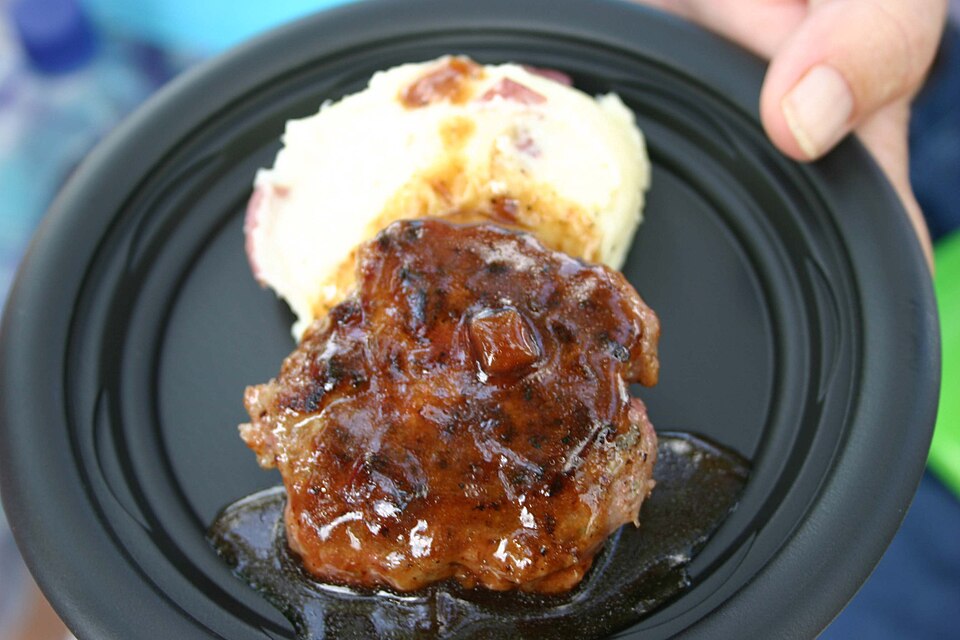
Kjøttkaker i brun saus
 Norwegian · 55 min · 521 kcal
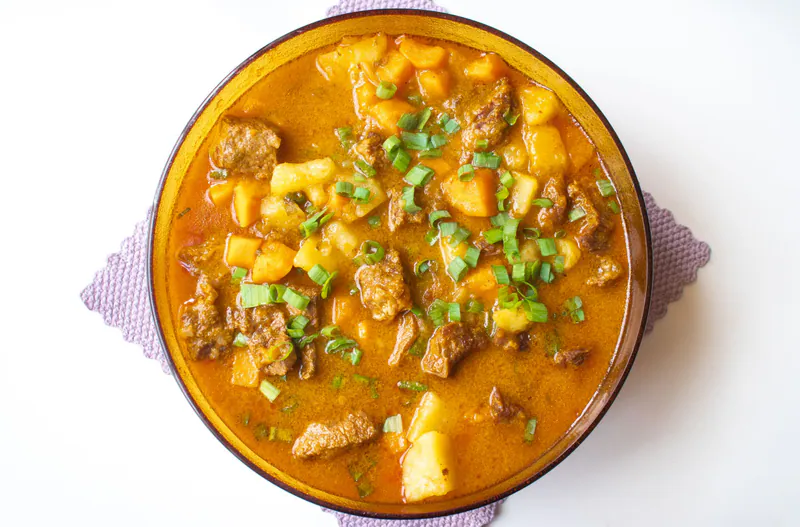
Brun lapskaus
Norwegian · 2 h 5 min · 320 kcal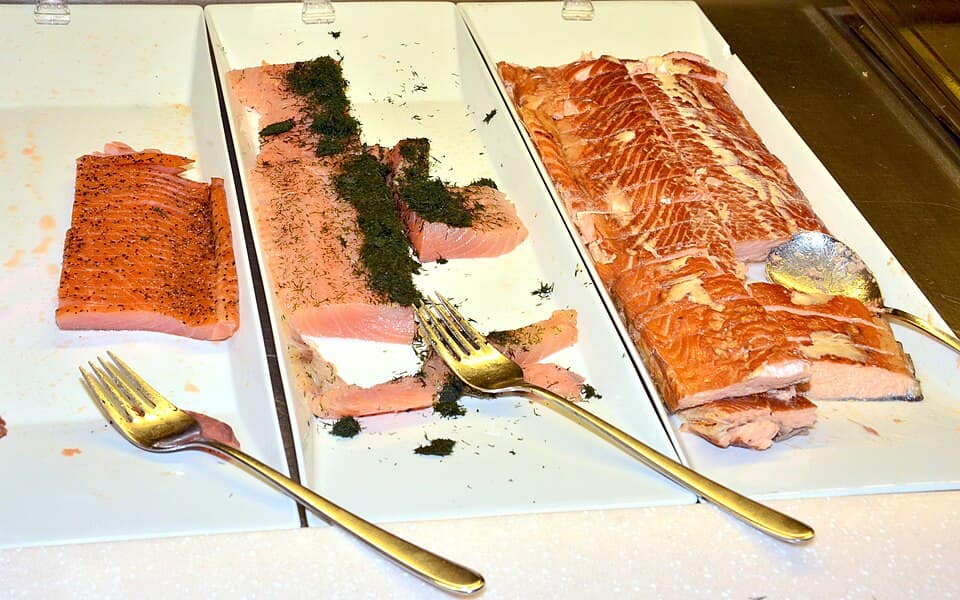
Gravlax with mustard-dill sauce
Scandinavian · 48 h 20 min · 284 kcal
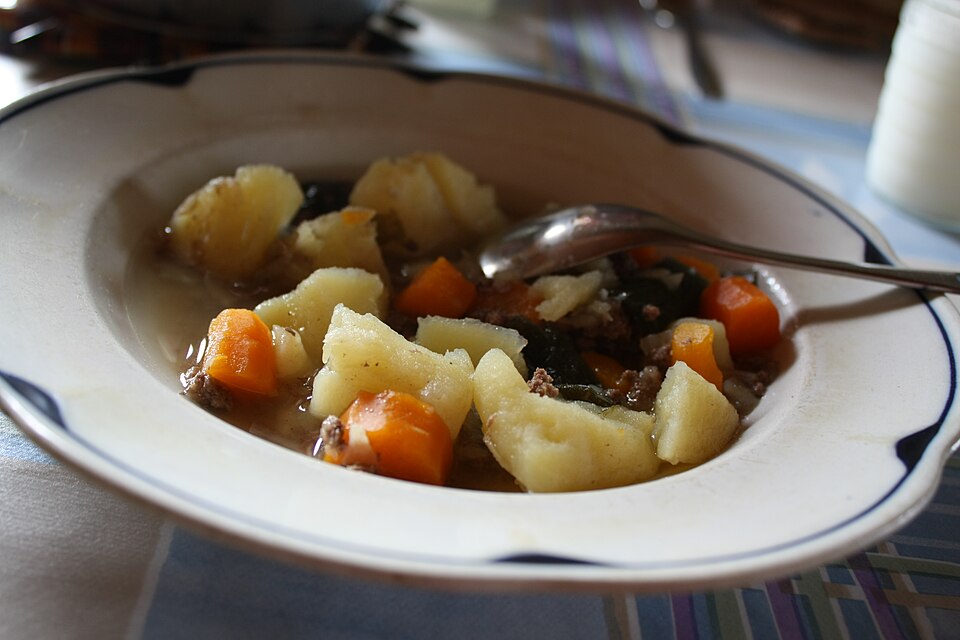
Kjötsúpa
 Icelandic · 2 h · 427 kcal