
Liangpi (cold skin noodles)
Vegetarian
凉皮 · liángpí
Slippery, translucent noodles made by washing wheat dough to separate its starch, steamed into sheets and dressed with chilli oil, black vinegar, garlic and sesame, with chewy pieces of the leftover gluten.
Liangpi (cold skin noodles) is a Chinese noodle dish from China, ready in about 5 hours 20 minutes and made with all-purpose flour and chilli oil. It serves 4 and is rated advanced to cook.
No licensed photograph of this dish yet.
- Prep
- 40 min
- Cook
- 40 min
- Rest
- 4 h
- Total
- 5 h 20 min
- Serves
- 4
- Level
- Advanced
- Calories
- 605
Most of the resting is letting the starch water settle; leaving it overnight in the fridge also works.
Ingredients
Dressing
Method
Step 1
Mix the flour, salt and 230 ml water into a firm dough, knead until smooth and rest 30 minutes.
- 10 min

How it looks · Photo: Klaus Nielsen on Pexels Step 2
Cover the dough with cool water and squeeze and knead it under the water until the water is milky. Pour the starchy water through a sieve into a bowl and repeat with fresh water until it runs nearly clear. What remains in your hands is the gluten.
Step 3
Leave the starch water to settle for at least 4 hours. Steam the gluten for 20 minutes, cool, then cut into cubes.
Step 4
Pour off the clear water on top, stir the starch slurry well and pour a thin layer into an oiled shallow tin. Steam over high heat for 2–3 minutes until it bubbles up and turns translucent.
Step 5
Float the tin in cold water to cool, peel off the sheet and brush with oil. Repeat with the remaining slurry, stirring it each time.
- 25 min
Step 6
Mix all the dressing ingredients. Cut the sheets into wide ribbons and toss with the gluten cubes, cucumber (opens in a new tab), sprouts, dressing and coriander.
- 5 min
About this dish
- Origin
- Shaanxi, China · Well documentedMore food from China
- Dish
- Lunch · Snack · Noodles · Street food
- Cooking method
- Steamed, No-cook
- Taste
- spicy (chilli heat), tangy, garlicky, nutty
- Diet
- Vegan · Dairy-freeWorked out from the ingredients. How labels work
All labels
Vegan · Plant-based · Vegetarian (lacto-ovo) · Eggetarian · Lacto-vegetarian · Ovo-vegetarian · Pescatarian · Flexitarian-friendly · Dairy-free · Egg-free · Alcohol-free · Pork-free · Beef-free - Good for
- Make-ahead · Street food
- Cook more with
- All-purpose flour · Chilli oil · Chinese black vinegar · Soy sauce · Garlic · Tahini
- Techniques
- Steaming · Knife skills · Kneading
Allergens
- May contain: Peanutsfrom chilli oil
- Contains: Wheatfrom all-purpose flour, chinese black vinegar, soy sauce
- Contains: Glutenfrom all-purpose flour, chinese black vinegar, soy sauce
- Contains: Soyfrom chilli oil, soy sauce
- Contains: Sesamefrom chilli oil, tahini
Based on typical versions of these ingredients and not verified allergen-free. Brands differ and cross-contact happens, so always check labels. For severe allergies, follow your clinician’s advice.
Nutrition
605 kcal per serving
Estimated1 serving ≈ 312 g · recipe makes 4
Where the energy comes from
- Protein 9%
- Carbohydrate 58%
- Fat 33%
| Nutrient | Per serving | Per 100 g* |
|---|---|---|
| Energy | 605 kcal | 194 kcal |
| Protein | 13.9 g | 4.4 g |
| Carbohydrate | 87.5 g | 28 g |
| Net carbohydrate | 83.2 g | 26.6 g |
| Sugars | 6 g | 1.9 g |
| Added sugars | 1 g | 0.3 g |
| Fibre | 4.4 g | 1.4 g |
| Fat | 22.2 g | 7.1 g |
| Saturated fat | 2 g | 0.6 g |
| Trans fat | — | — |
| Cholesterol | 0 mg | 0 mg |
| Sodium | 1069 mg | 342 mg |
| Salt equivalent | 2.7 g | 0.9 g |
Vitamins & minerals per serving
- Potassium
- 356 mg
- Calcium
- 82 mg
- Iron
- 6 mg
- Magnesium
- 54 mg
- Vitamin A (RAE)
- 4 µg
- Vitamin C
- 7 mg
- Vitamin D
- 0 µg
- Vitamin B12
- 0 µg
- Folate (DFE)
- 320 µg
How these numbers were made
- Calculated from USDA FoodData Central (SR Legacy) per-100 g values and the listed quantities.
- *Per 100 g of combined raw ingredients; the cooked dish may weigh more or less.
- Optional ingredients are not included: sichuan peppercorns, coriander leaves.
- Chilli oil: Neutral vegetable oil (FDC 172336) used as a stand-in; the chilli solids add little energy.
- Chinese black vinegar: Balsamic vinegar (FDC 172241) used as a stand-in for Chinkiang/Zhenjiang black rice vinegar; both are dark, aged and slightly sweet.
- “—” means the value isn’t known for enough of the ingredients; it is never zero by default.
- Values are estimates for guidance, not for medical dosing. U.S. Department of Agriculture, Agricultural Research Service. FoodData Central, 2019. fdc.nal.usda.gov.
Good to know
Tips
- Use two tins and alternate them so one cools while the other steams.
Common mistakes
- Forgetting to re-stir the starch — it sinks fast and the sheets come out uneven.
Storage
- Sheets are best the same day; they turn hard in the fridge.
Original editorial recipe · FriendsPantry editorial · Not yet independently reviewed · Added · Updated
Sauces, chutneys & dips for this dish
Recipe DNA
How this dish is built
Built from the recipe’s own sections. Each band’s width is its share of the dish by weight. Choose a component to see what it does.
What the dish is built around
Main ingredient
- All-purpose flour400 g
- Cucumber, julienned1 piece · 300 g
- Bean sprouts, blanched100 g
Reviews & corrections
Reviews come from signed-in cooks and appear after a moderator checks them. We never show made-up ratings.
You might also like
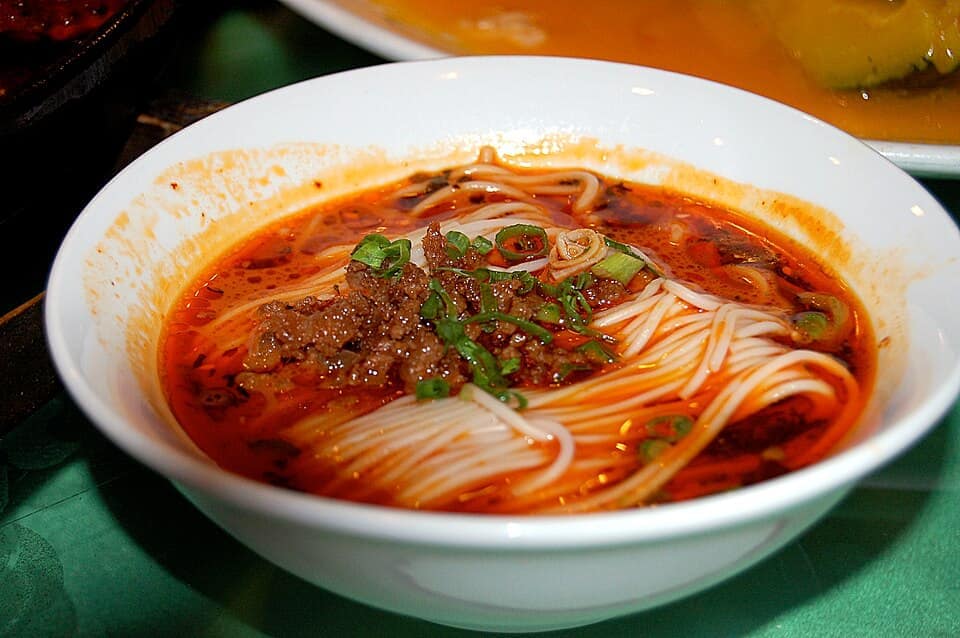
Dan dan noodles
 Sichuan · 25 min · 709 kcal
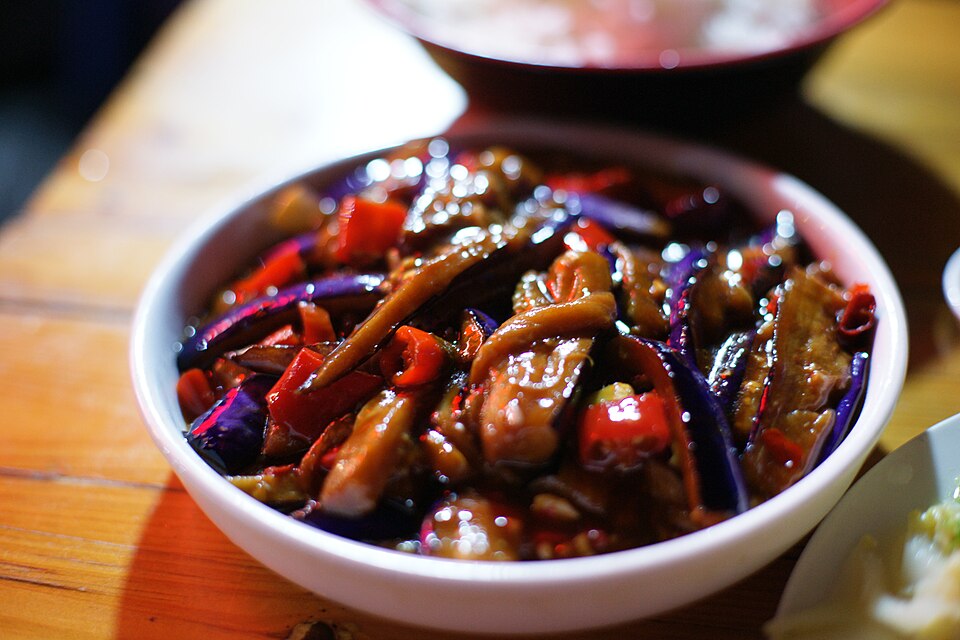
Fish-fragrant aubergine
Sichuan · 35 min · 269 kcal · VeganSichuan cold noodles
Sichuan · 35 min · 579 kcal · Contains egg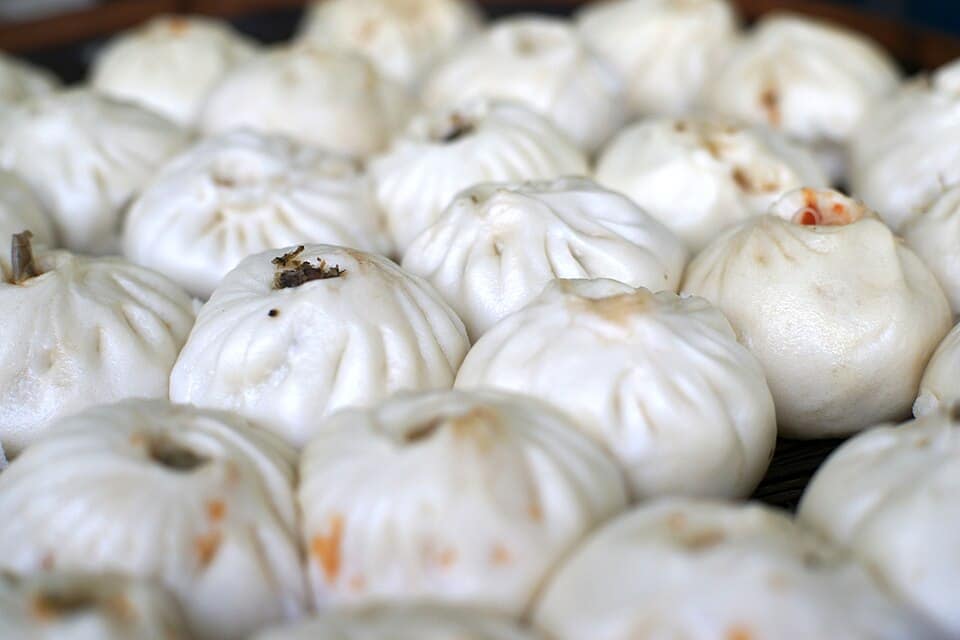
Pork baozi (steamed pork buns)
Chinese · 2 h 25 min · 244 kcal