
Dal makhani
Vegetarian
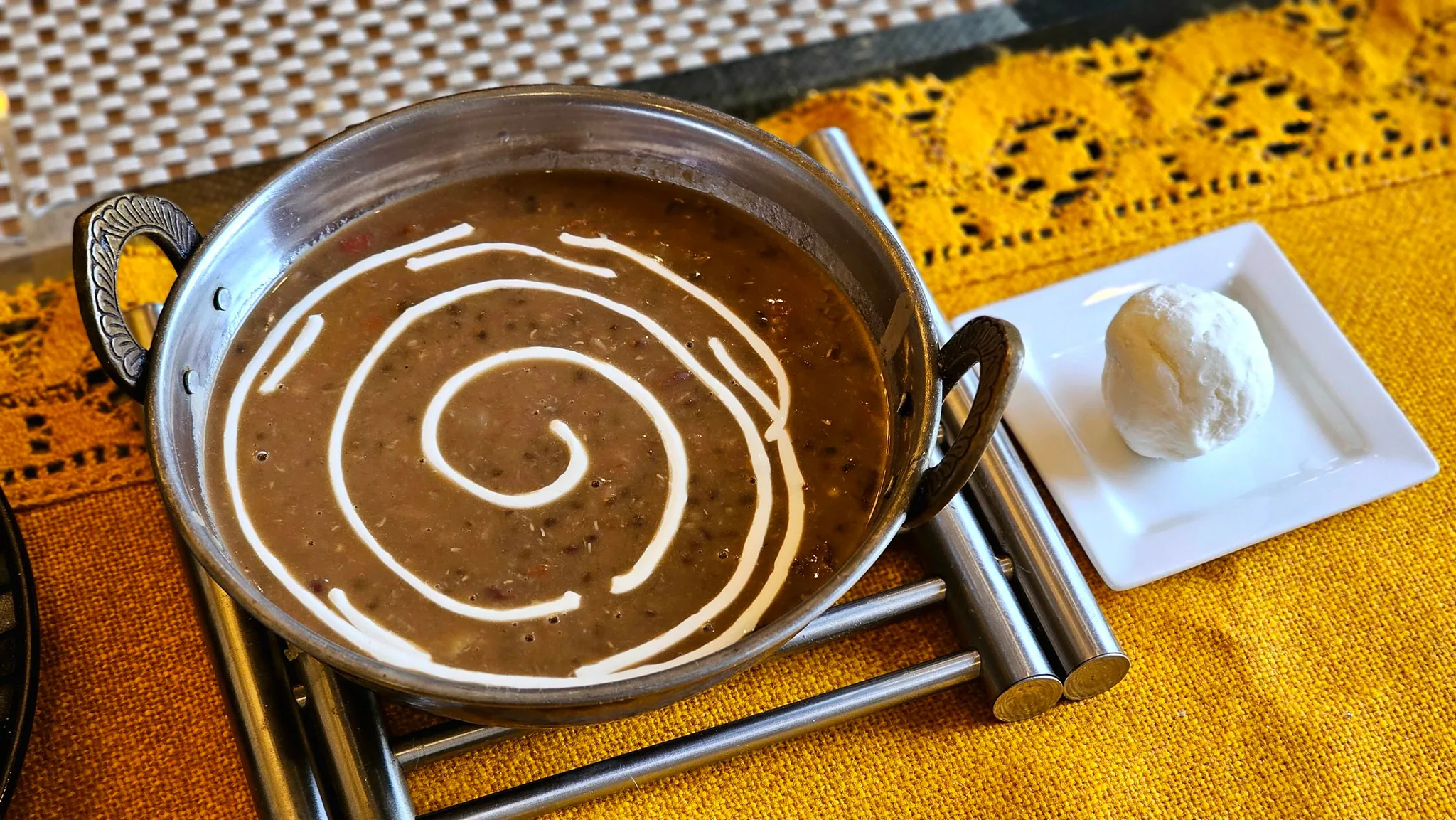
दाल मखनी · dal makhani
Whole black urad lentils and kidney beans simmered slowly with tomato, butter and cream until velvety. A rich Punjabi dal for special dinners.
Dal makhani is a Punjabi curry from India, ready in about 2 hours and made with black gram (urad dal), butter and heavy cream. It serves 4 and is rated intermediate to cook.
- Prep
- 15 min
- Cook
- 1 h 45 min
- Total
- 2 h
- Serves
- 4
- Level
- Intermediate
- Calories
- 390
Plus overnight soaking of the lentils and beans.
Method
Step 1
Drain the soaked lentils and beans. Pressure-cook with the water and 1 tsp of the salt for about 30 minutes (or simmer in a covered pot for 1½–2 hours) until completely soft and starting to break down.
- 35 min
- medium-high heat
- Pressure cooker (opens in a new tab)
Food safety: Dried kidney beans must boil hard for at least 10 minutes to destroy natural toxins — never slow-cook them from raw at low temperature.
Step 2
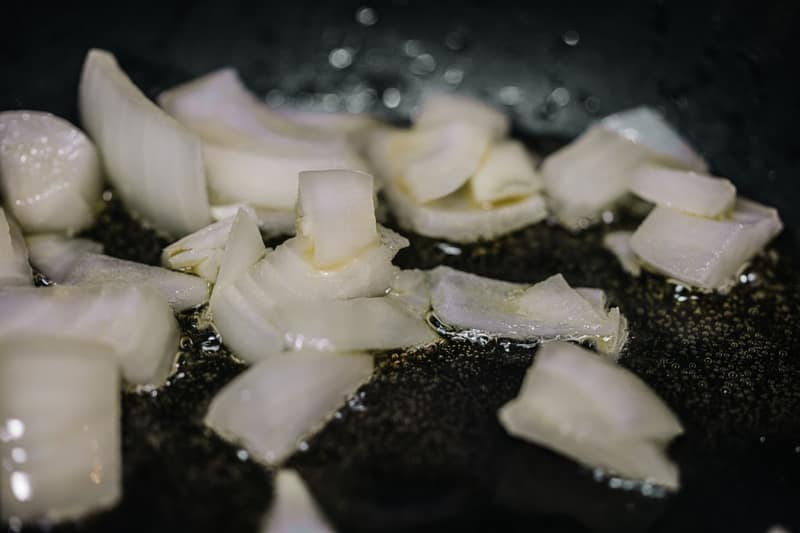
In a heavy pot, melt two-thirds of the butter (opens in a new tab). Add the cumin (opens in a new tab), then the onion (opens in a new tab), and fry until golden. Add ginger, garlic (opens in a new tab) and chilli and cook for a minute.
- 10 min
- medium heat
- Dutch oven / casserole pot (opens in a new tab)
How it looks · Photo: Magda Ehlers on Pexels Step 3
Stir in the passata, chilli powder and remaining salt and cook until the sauce thickens and the butter (opens in a new tab) starts to separate.
- 8 min
- medium heat
Step 4
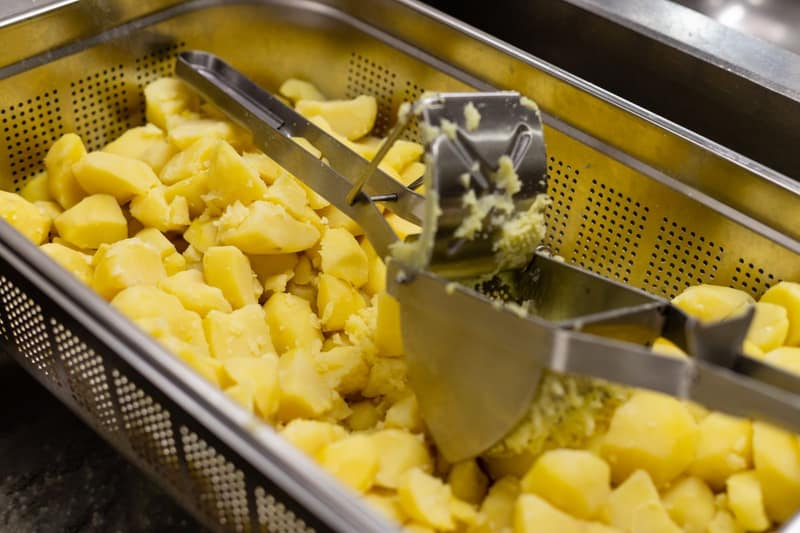
Add the cooked lentils with their liquid. Mash a few spoonfuls against the pot, then simmer very gently, stirring often and adding water as needed, until thick and creamy.
- 45 min
- low heat
The longer and slower it cooks, the creamier it becomes.
How it looks · Photo: Mateusz Feliksik on Pexels Step 5
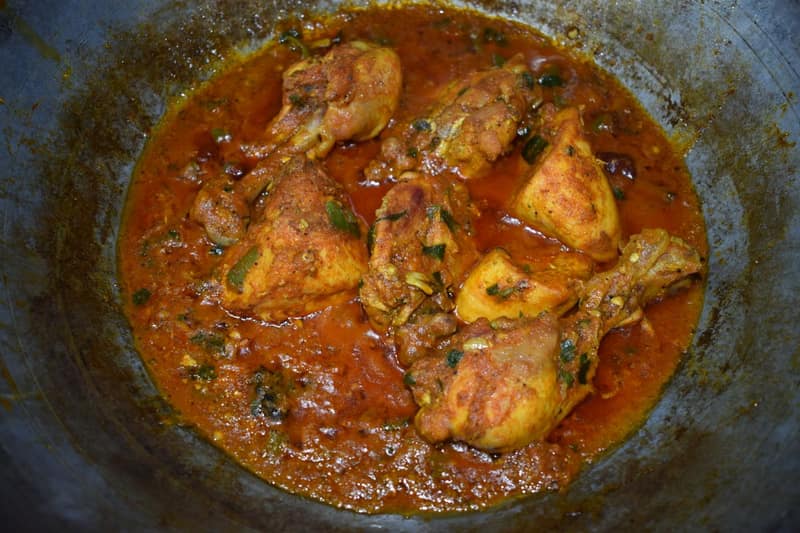
Stir in the garam masala (opens in a new tab), kasuri methi (opens in a new tab), cream and remaining butter (opens in a new tab). Simmer 5 more minutes and serve garnished with coriander.
- 5 min
- low heat
How it looks · Photo: Bachir Mamud on Pexels
About this dish
- Origin
- Punjab / Delhi, Punjab, India · Commonly attributedWidely credited to Punjabi restaurant cooking in Delhi; home versions of slow-cooked black dal are older.Also popular in Pakistan, United KingdomMore food from India
- Dish
- Lunch · Dinner · Curries · Main courses
- Cooking method
- Pressure-cooked, Simmered, Slow-cooked
- Taste
- creamy, buttery, earthy, savoury
- Diet
- Vegetarian (lacto-ovo) · No gluten ingredients · No nut ingredients · High-fibreWith the listed swaps: Vegan, Plant-based, Ovo-vegetarian, Dairy-freeWorked out from the ingredients. How labels work
All labels
Vegetarian (lacto-ovo) · Eggetarian · Lacto-vegetarian · Pescatarian · Flexitarian-friendly · Whole-food focused · No gluten ingredients · Egg-free · No nut ingredients · No added sugar · Alcohol-free · Pork-free · Beef-free · High-fibre · Calorie-conscious - Good for
- Make-ahead · Freezer-friendly · Festive & celebration
- Cook more with
- Black gram (urad dal) · Butter · Heavy cream · Kidney beans (canned) · Cumin · Onion
- Techniques
- Simmering · Pressure cooking
Allergens
- Contains, can be adapted: Milkfrom butter, heavy cream
Based on typical versions of these ingredients and not verified allergen-free. Brands differ and cross-contact happens, so always check labels. For severe allergies, follow your clinician’s advice.
Nutrition
390 kcal per serving
Estimated1 serving ≈ 488 g · recipe makes 4
Where the energy comes from
- Protein 16%
- Carbohydrate 43%
- Fat 42%
| Nutrient | Per serving | Per 100 g* |
|---|---|---|
| Energy | 390 kcal | 80 kcal |
| Protein | 16.1 g | 3.3 g |
| Carbohydrate | 43.2 g | 8.8 g |
| Net carbohydrate | 31.3 g | 6.4 g |
| Sugars | — | — |
| Added sugars | 0 g | 0 g |
| Fibre | 11.9 g | 2.4 g |
| Fat | 18.7 g | 3.8 g |
| Saturated fat | 11.2 g | 2.3 g |
| Trans fat | 0.7 g | 0.1 g |
| Cholesterol | 49 mg | 10 mg |
| Sodium | 1032 mg | 211 mg |
| Salt equivalent | 2.6 g | 0.5 g |
Vitamins & minerals per serving
- Potassium
- 881 mg
- Calcium
- 156 mg
- Iron
- 5.6 mg
- Magnesium
- 166 mg
- Vitamin A (RAE)
- 193 µg
- Vitamin C
- 13 mg
- Vitamin D
- 0.3 µg
- Vitamin B12
- 0.1 µg
- Folate (DFE)
- 125 µg
How these numbers were made
- Calculated from USDA FoodData Central (SR Legacy) per-100 g values and the listed quantities.
- *Per 100 g of combined raw ingredients; the cooked dish may weigh more or less.
- Optional ingredients are not included: coriander leaves.
- Garam masala: Curry powder (FDC 170924) used as a stand-in; both are ground blends of similar dried spices used in teaspoon amounts.
- Dried fenugreek leaves: Fenugreek seed (FDC 171324) used as a stand-in for dried leaves; used in pinches.
- “—” means the value isn’t known for enough of the ingredients; it is never zero by default.
- Values are estimates for guidance, not for medical dosing. U.S. Department of Agriculture, Agricultural Research Service. FoodData Central, 2019. fdc.nal.usda.gov.
Good to know
Tips
- It tastes even better the next day once the flavours have settled.
Common mistakes
- Rushing the final simmer — the dal stays thin and the lentils taste separate rather than creamy.
Serve with
- Serve with naan, jeera rice or plain basmati and a sliced onion salad.
Storage
- Keeps 4 days in the fridge or 3 months frozen.
Reheating
- Reheat gently with a splash of water, as it thickens a lot when cold.
Original editorial recipe · FriendsPantry editorial · Not yet independently reviewed · Added · Updated
Recipe DNA
How this dish is built
Grouped by each ingredient’s role in the dish. Each band’s width is its share of the dish by weight. Choose a component to see what it does.
What the dish is built around
Main ingredient
- Black gram (urad dal), whole black urad, soaked overnight200 g
- Kidney beans (canned), dried, soaked overnight50 g
- Butter50 g
- Tomato passata200 ml · 208 g
- Heavy cream80 ml · 80 g
Masalas in this recipe
Make the masala first, then come back to finish the dish.
Gravy base
Onion-tomato masala base
This recipe makes it as part of the method (361 g for 4 servings). The full masala recipe explains each step in detail.
Dry spice blend
Punjabi garam masala
This recipe uses ½ tsp (1 g for 4 servings).
Also: Bengali garam masala, Kerala (Malabar) garam masala, Mughlai (shahi) garam masala
Reviews & corrections
Reviews come from signed-in cooks and appear after a moderator checks them. We never show made-up ratings.
You might also like
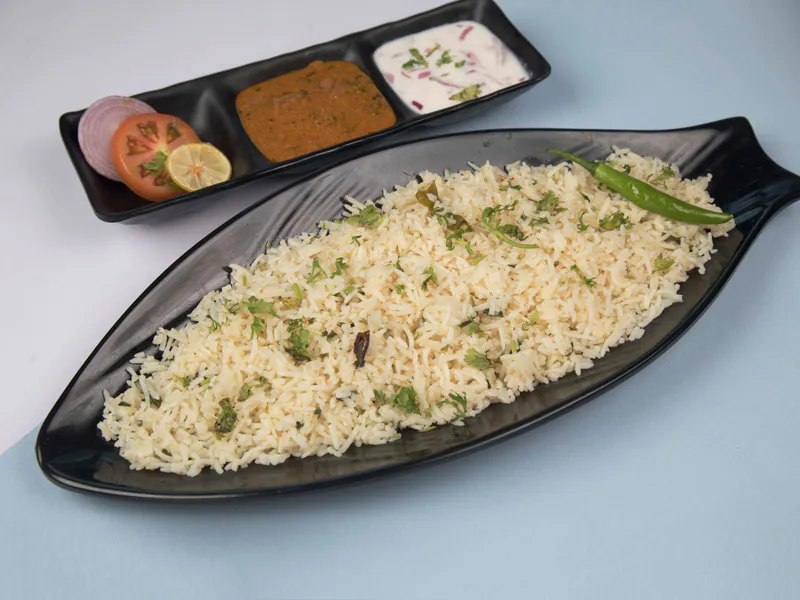
Jeera rice
 Indian · 40 min · 322 kcal · Vegetarian
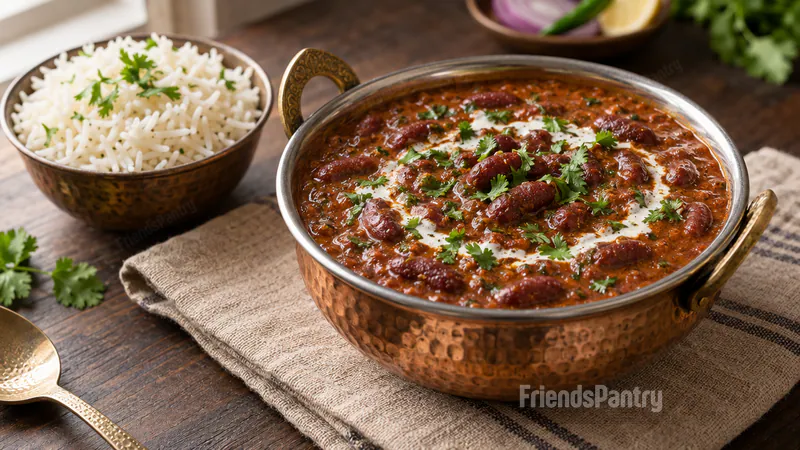
Rajma
Punjabi · 1 h · 296 kcal · Vegan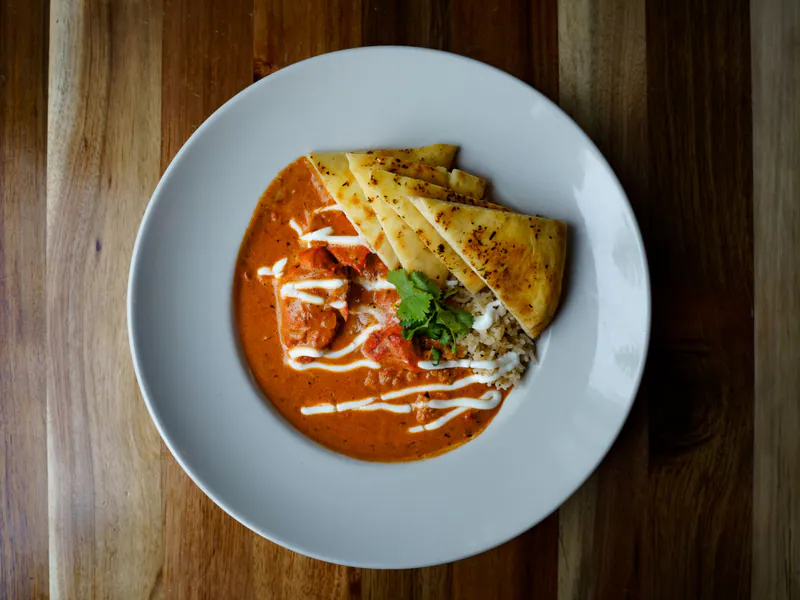
Butter chicken
Punjabi · 2 h 5 min · 559 kcal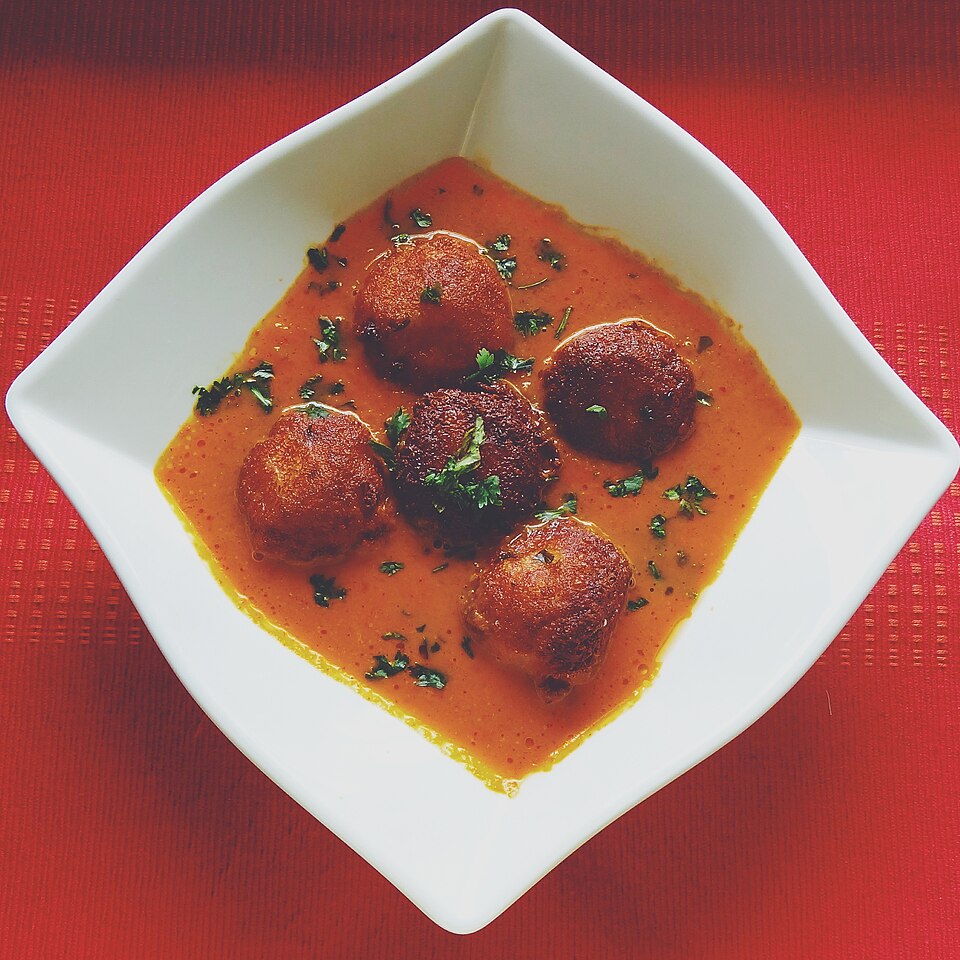
Malai kofta
Indian · 1 h 10 min · 547 kcal · Vegetarian