
Espagnole sauce
Non-vegetarian
Sauce espagnole
Brown stock thickened with a nut-brown roux and slowly simmered with caramelised mirepoix, tomato and herbs. The rich brown mother sauce and the starting point for demi-glace.
Espagnole sauce is a French sauce from France, ready in about 2 hours 20 minutes and made with beef stock, all-purpose flour and tomato paste. It serves 15 and is rated advanced to cook.
No licensed photograph of this dish yet.
- Prep
- 15 min
- Cook
- 2 h 5 min
- Total
- 2 h 20 min
- Serves
- 15
- Level
- Advanced
- Calories
- 91
Method
Step 1
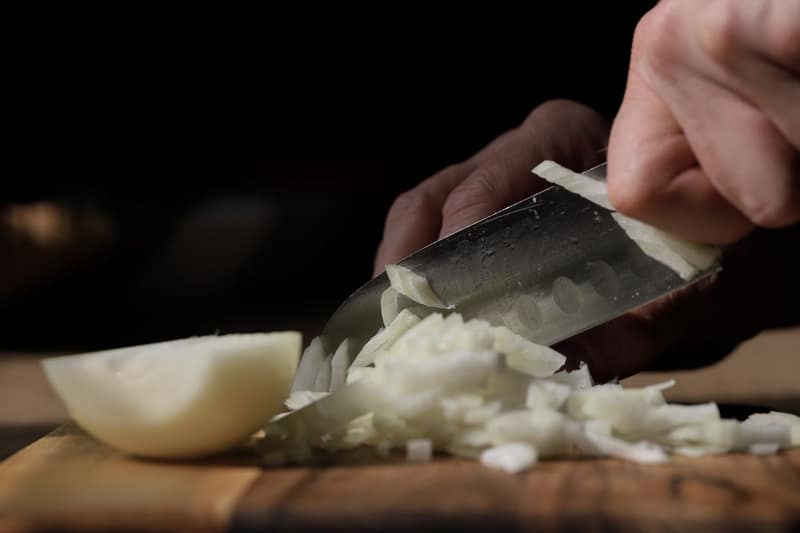
Dice the onion (opens in a new tab), carrot (opens in a new tab) and celery (opens in a new tab) into even 1 cm pieces. Tie the bay leaves (opens in a new tab), thyme (opens in a new tab) and parsley (opens in a new tab) stalks into a bouquet garni with kitchen string. Bring the stock to a simmer and keep it hot.
- 8 min
- medium heat
- Chef's knife (opens in a new tab)
- Chopping board (opens in a new tab)
- Stockpot / large pot (opens in a new tab)
How it looks · Photo: Christina & Peter on Pexels Step 2
Melt 30 g of the butter in a wide, heavy pan over medium heat. Add the mirepoix and cook, stirring now and then, for 10–12 minutes until deeply golden brown at the edges.
- 12 min
- medium heat
- Saucepan (opens in a new tab)
- Wooden spoon (opens in a new tab)
Step 3
Add the tomato paste (opens in a new tab) and stir it through the vegetables for 2–3 minutes until it darkens from bright red to brick-rust and smells sweet (pinçage). Do not let it scorch.
- 3 min
- medium heat
- Wooden spoon (opens in a new tab)
Step 4
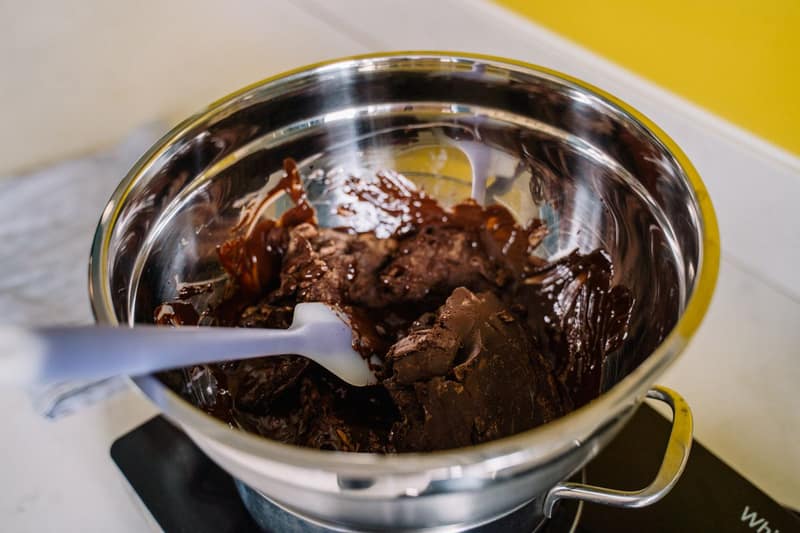
In a large heavy saucepan (opens in a new tab) melt the remaining 70 g butter over medium-low heat, add the flour and stir constantly for 12–15 minutes to make a brown roux: it passes through blond and golden to the colour of milk chocolate or hazelnut skins and smells nutty and toasty. Lower the heat if it colours faster than that; burnt specks mean starting again.
- 15 min
- medium-low heat
- Saucepan (opens in a new tab)
- Wooden spoon (opens in a new tab)
A brown roux has roughly two-thirds of a blond roux's thickening power, which is why espagnole needs more of it.
How it looks · Photo: Anna Tarazevich on Pexels Step 5
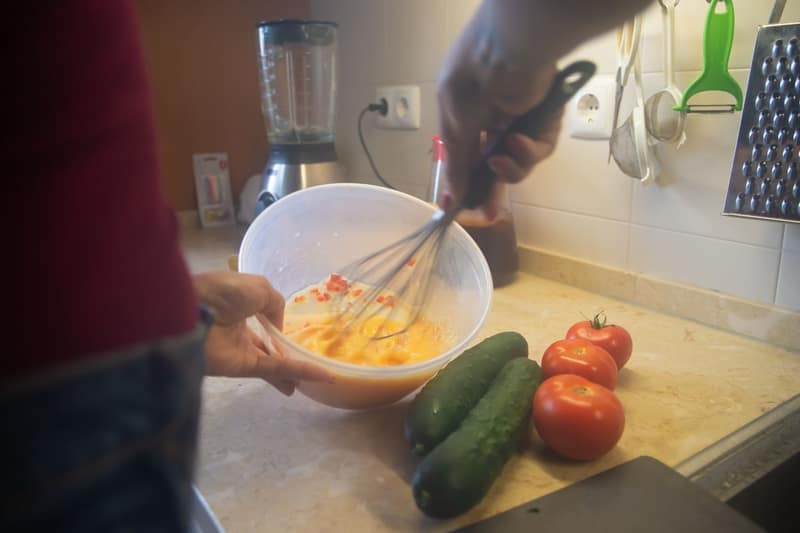
Off the heat, let the roux cool for 2 minutes, then whisk (opens in a new tab) in about 400 ml of the hot stock until smooth and thick. Whisk in the rest of the stock in additions, then add the browned mirepoix with its tomato, the bouquet garni and the crushed peppercorns (opens in a new tab).
Food safety: Lumps form when a hot roux meets hot liquid all at once. Add warm (not boiling) liquid gradually, whisking each addition smooth, or let the roux cool a little first.
How it looks · Photo: Kampus Production on Pexels Step 6
Bring to the boil, then reduce to a bare simmer — just a few lazy bubbles — and cook uncovered for 1½ hours, skimming the fat and scum from the surface every 15 minutes and scraping the bottom so nothing catches. It reduces from about 2.3 litres to about 1.5 litres.
Step 7
Test the consistency: it should be nappe, glossy and dark mahogany, coating the back of a spoon so a finger-line holds. Simmer longer if thin; loosen with hot stock if thick. Strain through a fine sieve, pressing the vegetables lightly; do not force them through.
Step 8
Taste and season with salt only if needed. Use at once, or cool quickly and refrigerate; most espagnole goes on to become demi-glace.
- 2 min
About this dish
- Origin
- France · Well documentedA grande sauce for Carême and Escoffier. The name ('Spanish') has no reliable explanation. Brigade kitchens used brown veal stock; beef stock is the usual home substitute. The proportions here (70 g roux per litre of stock, about 10% mirepoix by stock volume, reduction by a quarter) follow standard professional school formulas.Also popular in United Kingdom, United StatesMore food from France
- Dish
- Dinner · Sauces
- Cooking method
- Simmered, Sautéed
- Taste
- savoury, umami, rich, earthy
- Diet
- No nut ingredients · Low-carbWorked out from the ingredients. How labels work
All labels
Non-vegetarian · Flexitarian-friendly · Egg-free · No nut ingredients · No added sugar · Alcohol-free · Pork-free · Low-carb - Good for
- Make-ahead · Freezer-friendly · Batch cooking
- Cook more with
- Beef stock · All-purpose flour · Tomato paste · Unsalted butter · Onion · Carrot
- Techniques
- Sautéing · Boiling · Simmering · Reduction · Roux thickening
Allergens
- Contains: Milkfrom unsalted butter
- Contains: Wheatfrom all-purpose flour
- Contains: Glutenfrom all-purpose flour
- Contains: Celeryfrom beef stock, celery
Based on typical versions of these ingredients and not verified allergen-free. Brands differ and cross-contact happens, so always check labels. For severe allergies, follow your clinician’s advice.
Nutrition
91 kcal per serving
Calculated1 serving ≈ 100 g · recipe makes 15
Where the energy comes from
- Protein 15%
- Carbohydrate 31%
- Fat 54%
| Nutrient | Per serving | Per 100 g |
|---|---|---|
| Energy | 91 kcal | 91 kcal |
| Protein | 3.5 g | 3.5 g |
| Carbohydrate | 7.1 g | 7.1 g |
| Net carbohydrate | 6.5 g | 6.5 g |
| Sugars | 1.7 g | 1.7 g |
| Added sugars | 0 g | 0 g |
| Fibre | 0.6 g | 0.6 g |
| Fat | 5.6 g | 5.6 g |
| Saturated fat | 3.4 g | 3.4 g |
| Trans fat | — | — |
| Cholesterol | 14 mg | 14 mg |
| Sodium | 350 mg | 350 mg |
| Salt equivalent | 0.9 g | 0.9 g |
Vitamins & minerals per serving
- Potassium
- 327 mg
- Calcium
- 20 mg
- Iron
- 0.8 mg
- Magnesium
- 14 mg
- Vitamin A (RAE)
- 79 µg
- Vitamin C
- 2 mg
- Vitamin D
- 0 µg
- Vitamin B12
- 0 µg
- Folate (DFE)
- 21 µg
How these numbers were made
- Calculated from USDA FoodData Central (SR Legacy) per-100 g values and the listed quantities.
- “—” means the value isn’t known for enough of the ingredients; it is never zero by default.
- Values are estimates for guidance, not for medical dosing. U.S. Department of Agriculture, Agricultural Research Service. FoodData Central, 2019. fdc.nal.usda.gov.
Good to know
Tips
- Patience with the roux and the mirepoix is what gives the colour. Do not use gravy browning to fake it.
- Skim diligently. Escoffier's espagnole was simmered and skimmed for hours, then left overnight and simmered again to make it perfectly clear.
- If your stock is not gelatinous, add 10 g powdered gelatine soaked in cold water near the end for a glossier body.
Common mistakes
- Burning the roux. Black specks make the whole sauce bitter, so start the roux again.
- Using salted stock cubes. Reduction concentrates the salt until the sauce is inedible.
- Boiling hard instead of simmering. The fat emulsifies back into the sauce, so it turns cloudy and greasy.
Serve with
- Reduce with an equal amount of brown stock to make demi-glace.
- Sauce bordelaise, chasseur, poivrade or Robert all start from espagnole or demi-glace.
- Use directly in braises such as boeuf bourguignon to give the sauce body.
Food safety
- Stock-based sauces are a good medium for bacteria. Cool quickly (spread in a shallow container or set the pan in iced water), refrigerate within 2 hours and bring back to a full simmer before serving.
Storage
- Refrigerate in a covered container for up to 5 days; freeze in 250 ml portions for up to 3 months.
Reheating
- Bring to a full simmer, whisking; loosen with stock if it has set to a jelly.
Variations
- Escoffier's espagnole (France): Escoffier added roast veal trimmings and salt pork to the mirepoix and finished with tomato purée, simmering over two days.
- Lenten (fish) espagnole (France): Made with fish stock and a butter roux for fasting days; rarely seen today.
Original editorial recipe · FriendsPantry editorial · Not yet independently reviewed · Added · Updated
Goes with
Recipe DNA
How this dish is built
Grouped by each ingredient’s role in the dish. Each band’s width is its share of the dish by weight. Choose a component to see what it does.
What the dish is built around
Main ingredient
- Unsalted butter, 30 g for the mirepoix, 70 g for the roux (or use clarified butter for the roux)100 g
- All-purpose flour, plain (all-purpose)70 g
- Carrot, peeled and cut into 1 cm dice50 g
- Tomato paste60 g
Make it milder, swap ingredients for your diet, change the batch size or thickness — the original stays as it is.
Customise in Sauce & DrizzleReviews & corrections
Reviews come from signed-in cooks and appear after a moderator checks them. We never show made-up ratings.
You might also like
Demi-glace
 French · 1 h 5 min · 34 kcal
Velouté sauce
French · 45 min · 108 kcalRed wine pan sauce
French · 15 min · 108 kcalOnion gravy
 British · 55 min · 88 kcal