
Amla chutney (Indian gooseberry chutney)
Vegetarian
आंवले की चटनी · āṁvle kī caṭnī
Raw amla ground with coriander, green chilli, ginger and jaggery into a sour, astringent, faintly sweet green chutney. A winter staple in North Indian homes when amla is in season.
Amla chutney (Indian gooseberry chutney) is an Indian condiment, ready in about 15 minutes and made with amla (indian gooseberry), coriander leaves and green chilli. It serves 10 and is rated beginner to cook.
No licensed photograph of this dish yet.
- Prep
- 15 min
- Cook
- 0 min
- Total
- 15 min
- Serves
- 10
- Level
- Beginner
- Calories
- 22
Method
Step 1
Wash the amla (opens in a new tab) and pat dry. Stand each one on the board and slice down around the hard stone in 5–6 segments; discard the stones. Chop the segments roughly.
Step 2
Put the amla (opens in a new tab), green chilli (opens in a new tab), ginger, jaggery, cumin, black salt (opens in a new tab), salt and half the water into the blender (opens in a new tab). Blend in pulses until the amla is finely ground; it is fibrous, so scrape down a few times.
Step 3
Add the coriander and the rest of the water and blend to a thick, fairly smooth paste. It should hold a soft peak on a spoon.
Step 4
Taste: if it is too astringent, add a little more jaggery and salt. Spoon into a clean jar and chill.
About this dish
- Origin
- North India, India · Commonly attributedFresh amla chutney is a widely made home preparation during the amla season (roughly November to February). Some families steam the amla first to reduce astringency; this version is the raw one.More food from India
- Dish
- Lunch · Dinner · Condiments, chutneys & relishes
- Cooking method
- Blended, No-cook
- Taste
- sour, herby, spicy (chilli heat), sweet & sour
- Diet
- Vegan · No gluten ingredients · Dairy-free · No nut ingredients · Low-carbWorked out from the ingredients. How labels work
All labels
Vegan · Plant-based · Vegetarian (lacto-ovo) · Eggetarian · Lacto-vegetarian · Ovo-vegetarian · Pescatarian · Flexitarian-friendly · Whole-food focused · Paleo-style · No gluten ingredients · Dairy-free · Egg-free · No nut ingredients · Alcohol-free · Pork-free · Beef-free · Low-carb · Low-fat · DASH-style - Good for
- Budget-friendly · Everyday
- Cook more with
- Coriander leaves · Green chilli · Fresh ginger · Jaggery / palm sugar · Ground cumin · Black salt (kala namak)
- Techniques
- Wet grinding · Emulsification
Allergens
None of the 14 major allergens appear in the listed ingredients.
Based on typical versions of these ingredients and not verified allergen-free. Brands differ and cross-contact happens, so always check labels. For severe allergies, follow your clinician’s advice.
Nutrition
22 kcal per serving
Estimated1 serving ≈ 29 g · recipe makes 10
Where the energy comes from
- Protein 5%
- Carbohydrate 87%
- Fat 8%
| Nutrient | Per serving | Per 100 g |
|---|---|---|
| Energy | 22 kcal | 74 kcal |
| Protein | 0.3 g | 1 g |
| Carbohydrate | 5.1 g | 17.7 g |
| Net carbohydrate | 4.3 g | 14.7 g |
| Sugars | — | — |
| Added sugars | 2.9 g | 10 g |
| Fibre | 0.9 g | 3 g |
| Fat | 0.2 g | 0.6 g |
| Saturated fat | 0 g | 0 g |
| Trans fat | — | — |
| Cholesterol | 0 mg | 0 mg |
| Sodium | 158 mg | 545 mg |
| Salt equivalent | 0.4 g | 1.4 g |
Vitamins & minerals per serving
- Potassium
- 64 mg
- Calcium
- 11 mg
- Iron
- 0.3 mg
- Magnesium
- 4 mg
- Vitamin A (RAE)
- 13 µg
- Vitamin C
- 8 mg
- Vitamin D
- —
- Vitamin B12
- 0 µg
- Folate (DFE)
- 3 µg
How these numbers were made
- Calculated from USDA FoodData Central (SR Legacy) per-100 g values and the listed quantities.
- Amla (Indian gooseberry): Raw gooseberries (Ribes, FDC 173030) used as a stand-in; amla (Phyllanthus emblica) is an unrelated fruit that is far richer in vitamin C and more astringent, so vitamin C is heavily understated.
- Jaggery / palm sugar: Brown sugar (FDC 168833) used as a stand-in for unrefined cane jaggery and palm sugar.
- Black salt (kala namak): Table salt (FDC 173468) used as a stand-in; kala namak is mostly sodium chloride with sulphur compounds that give its eggy aroma.
- “—” means the value isn’t known for enough of the ingredients; it is never zero by default.
- Values are estimates for guidance, not for medical dosing. U.S. Department of Agriculture, Agricultural Research Service. FoodData Central, 2019. fdc.nal.usda.gov.
Good to know
Tips
- Cut amla darkens in the air, so blend it soon after cutting.
- Salt and jaggery soften amla's astringency; if it still puckers the mouth, steam the segments for 5 minutes and cool before grinding (see variations).
Common mistakes
- Trying to pry the stone out whole: slice the flesh off it instead.
- Adding too much water; amla releases juice as it stands.
Serve with
- Serve with dal-chawal, khichdi, parathas, methi thepla or as a sour side in a winter thali.
Food safety
- Herbs and greens carry soil; wash them in several changes of water because this chutney is not cooked.
Storage
- Refrigerate in a covered jar for up to 4 days.
Variations
- Steamed amla chutney: Steam or pressure-cook the whole amla for 5 minutes, cool, remove the stones and grind as above; milder and less astringent, keeps a day longer.
- Amla mint chutney: Replace half the coriander with mint leaves.
- Tempered amla chutney: Finish with a tadka of mustard oil, cumin seeds and a pinch of asafoetida, as some Uttar Pradesh homes do.
Original editorial recipe · FriendsPantry editorial · Not yet independently reviewed · Added · Updated
Goes with
Recipe DNA
How this dish is built
Grouped by each ingredient’s role in the dish. Each band’s width is its share of the dish by weight. Choose a component to see what it does.
What the dish is built around
Main ingredient
- Amla (Indian gooseberry), washed, flesh sliced off the stone in segments (about 8 amla)170 g
Make it milder, swap ingredients for your diet, change the batch size or thickness — the original stays as it is.
Customise in Sauce & DrizzleReviews & corrections
Reviews come from signed-in cooks and appear after a moderator checks them. We never show made-up ratings.
You might also like
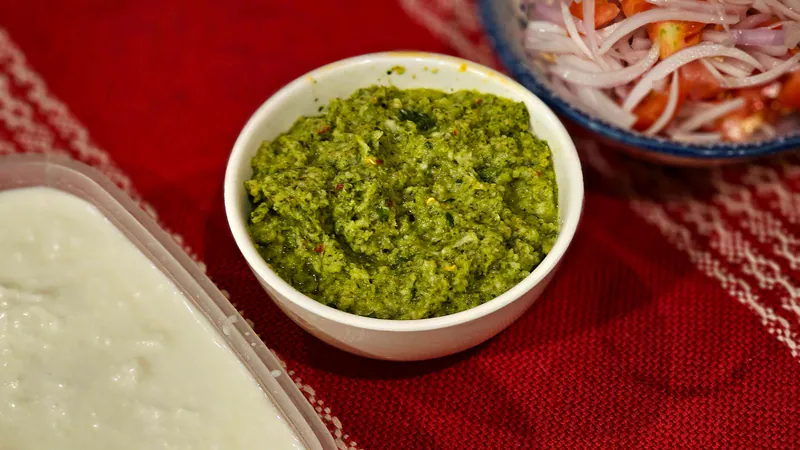
Green chutney (coriander-mint)
 Indian · 10 min · 8 kcal · Vegan
Kairi pudina chutney (raw mango-mint chutney)
Indian · 15 min · 23 kcal · Vegan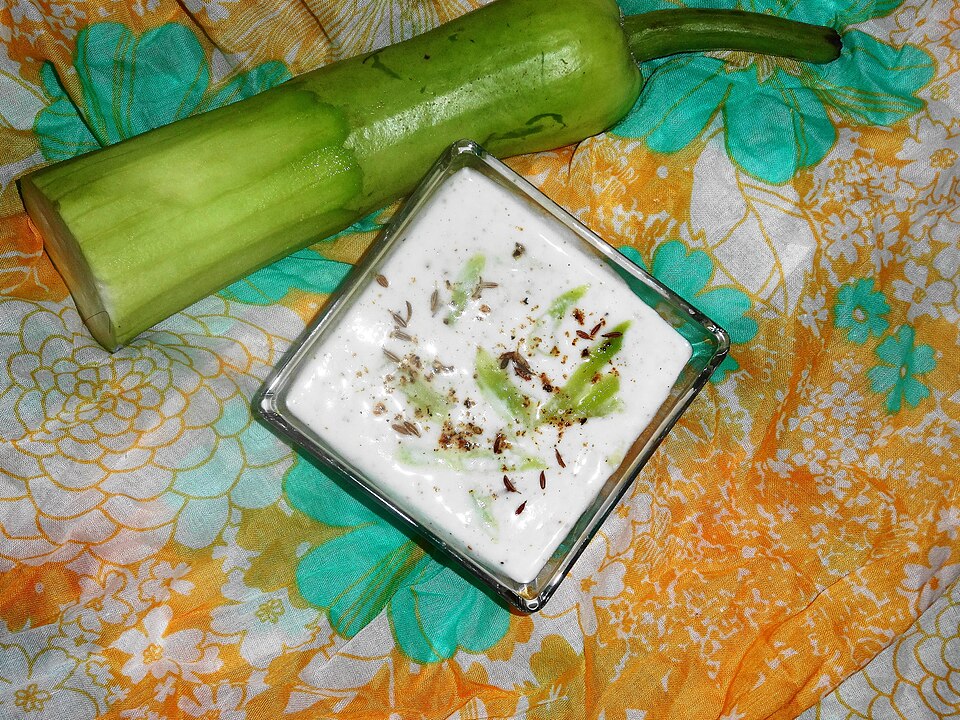
Lauki raita (bottle gourd raita)
Indian · 37 min · 43 kcal · VegetarianMint-yoghurt chutney
Punjabi · 10 min · 24 kcal · Vegetarian