
Japanese curry rice
Non-vegetarian
カレーライス · karē raisu
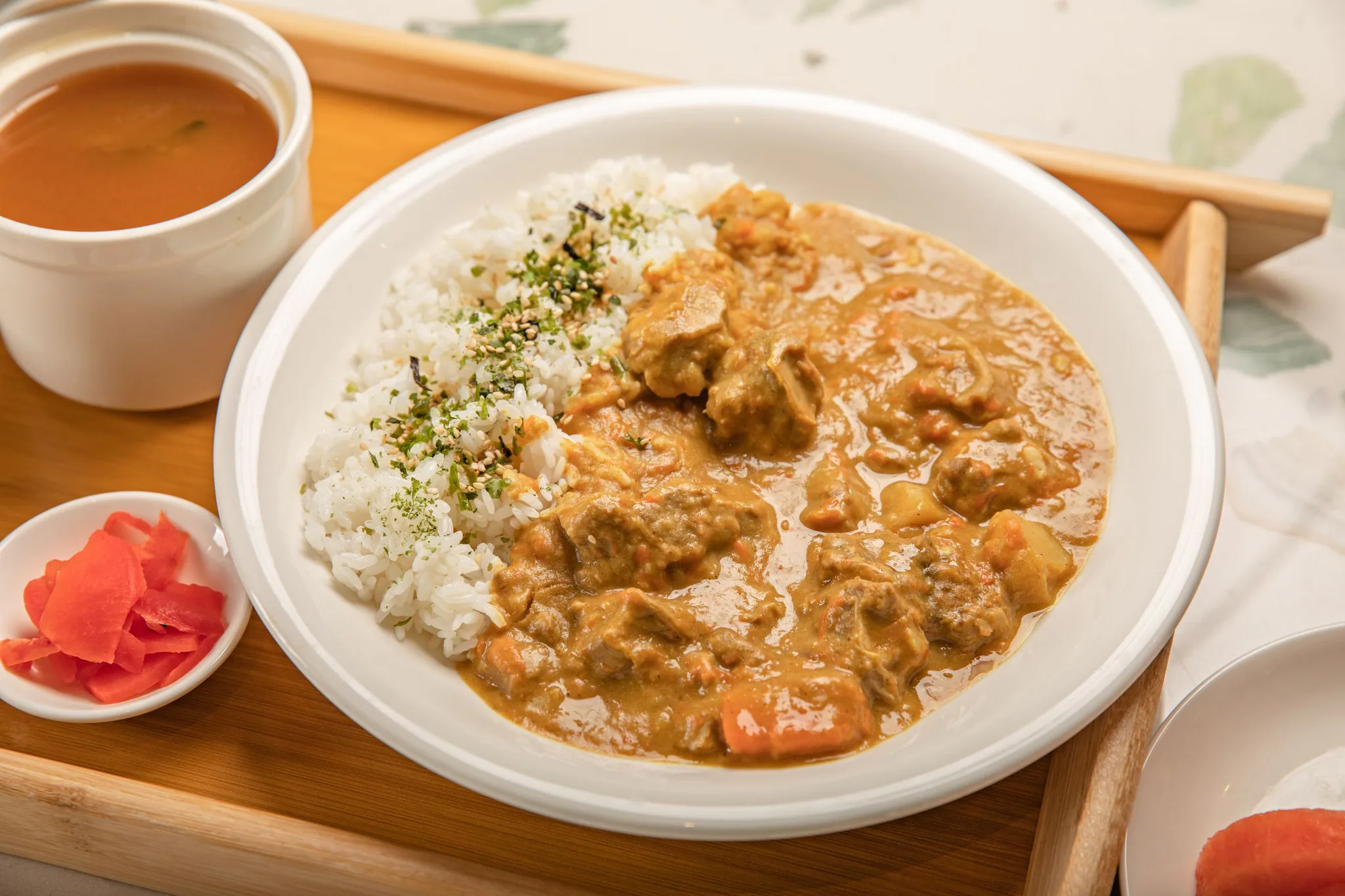
A thick, mildly spiced, slightly sweet curry of chicken, potato and carrot, thickened with a from-scratch butter-and-flour curry roux and served with rice.
Japanese curry rice is a Japanese curry, ready in about 1 hour 5 minutes and made with curry powder and chicken thigh. It serves 4 and is rated easy to cook.
- Prep
- 20 min
- Cook
- 45 min
- Total
- 1 h 5 min
- Serves
- 4
- Level
- Easy
- Calories
- 748
Ingredients
For the roux
Method
Step 1
Make the roux: melt the butter (opens in a new tab) in a frying pan over low heat, stir in the flour and cook, stirring, until it smells nutty and turns light brown. Stir in the curry powder (opens in a new tab) and garam masala (opens in a new tab) for 30 seconds, then take off the heat.
- 10 min
- low heat
- Frying pan / skillet (opens in a new tab)
Step 2
Rinse the rice until the water runs nearly clear and cook it in a rice cooker (opens in a new tab) or covered pan until tender; keep warm.
Step 3
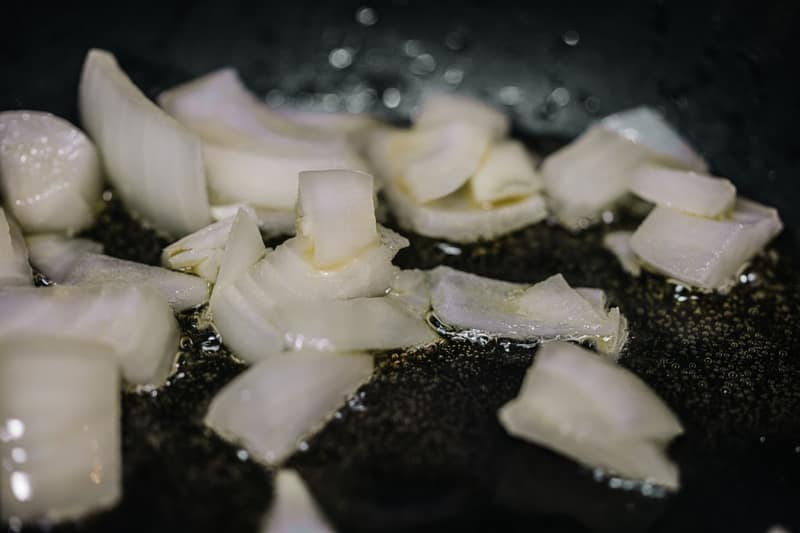
Heat the oil in a pot and cook the onions (opens in a new tab) until soft and golden. Add the garlic (opens in a new tab), ginger and chicken and cook until the chicken is no longer pink outside.
- 10 min
- medium heat
- Dutch oven / casserole pot (opens in a new tab)
Food safety: Wash hands and boards after handling raw chicken.
How it looks · Photo: Magda Ehlers on Pexels Step 4
Add the carrot (opens in a new tab), potato (opens in a new tab), stock and grated apple (opens in a new tab). Simmer, partly covered, until the vegetables are tender.
- 20 min
- medium-low heat
Step 5
Ladle a little hot broth into the roux and whisk smooth, then stir it into the pot with the honey (opens in a new tab), soy sauce (opens in a new tab), ketchup (opens in a new tab), Worcestershire and salt. Simmer, stirring, until thick and glossy.
- 5 min
- low heat
Food safety: Chicken should reach 74 °C.
How it looks · Photo: Kampus Production on Pexels

About this dish
- Origin
- Japan · Well documentedCurry reached Japan via Britain in the late 19th century and developed into its own distinct dish.More food from Japan
- Dish
- Lunch · Dinner · Curries · Rice dishes · Main courses
- Cooking method
- Simmered, Sautéed
- Taste
- aromatic / warmly spiced, sweet & savoury, rich, mild
- Diet
- No nut ingredients · High-proteinWith the listed swaps: Dairy-freeWorked out from the ingredients. How labels work
All labels
Non-vegetarian · Egg-free · No nut ingredients · Alcohol-free · Pork-free · Beef-free · High-protein - Good for
- Freezer-friendly · Batch cooking · Child-friendly · Make-ahead
- Cook more with
- Curry powder · Chicken thigh · Butter · All-purpose flour · Garam masala · Onion
- Techniques
- Sautéing · Simmering · Roux thickening
Allergens
- Contains, can be adapted: Milkfrom butter
- Contains: Fishfrom worcestershire sauce
- Contains: Wheatfrom all-purpose flour, soy sauce
- Contains: Glutenfrom all-purpose flour, soy sauce, worcestershire sauce
- Contains: Soyfrom soy sauce
- May contain: Mustardfrom curry powder, tomato ketchup
- May contain: Celeryfrom curry powder, chicken stock, tomato ketchup, worcestershire sauce
- May contain: Sulphitesfrom worcestershire sauce
Based on typical versions of these ingredients and not verified allergen-free. Brands differ and cross-contact happens, so always check labels. For severe allergies, follow your clinician’s advice.
Nutrition
748 kcal per serving
Estimated1 serving ≈ 591 g · recipe makes 4
Where the energy comes from
- Protein 18%
- Carbohydrate 59%
- Fat 23%
| Nutrient | Per serving | Per 100 g* |
|---|---|---|
| Energy | 748 kcal | 127 kcal |
| Protein | 34 g | 5.8 g |
| Carbohydrate | 109.6 g | 18.6 g |
| Net carbohydrate | — | — |
| Sugars | — | — |
| Added sugars | — | — |
| Fibre | — | — |
| Fat | 19 g | 3.2 g |
| Saturated fat | 7.3 g | 1.2 g |
| Trans fat | — | — |
| Cholesterol | 121 mg | 20 mg |
| Sodium | 1048 mg | 177 mg |
| Salt equivalent | 2.6 g | 0.4 g |
Vitamins & minerals per serving
- Potassium
- 1191 mg
- Calcium
- 79 mg
- Iron
- 4.3 mg
- Magnesium
- 95 mg
- Vitamin A (RAE)
- —
- Vitamin C
- 27 mg
- Vitamin D
- 0 µg
- Vitamin B12
- 0.6 µg
- Folate (DFE)
- 79 µg
How these numbers were made
- Calculated from USDA FoodData Central (SR Legacy) per-100 g values and the listed quantities.
- *Per 100 g of combined raw ingredients; the cooked dish may weigh more or less.
- Garam masala: Curry powder (FDC 170924) used as a stand-in; both are ground blends of similar dried spices used in teaspoon amounts.
- “—” means the value isn’t known for enough of the ingredients; it is never zero by default.
- Values are estimates for guidance, not for medical dosing. U.S. Department of Agriculture, Agricultural Research Service. FoodData Central, 2019. fdc.nal.usda.gov.
Good to know
Tips
- Cook the roux slowly — the browning gives Japanese curry its depth.
Common mistakes
- Adding dry roux straight into the pot makes lumps; loosen it with broth first.
Serve with
- Top with a tonkatsu cutlet for katsu curry, and serve with pickles.
Storage
- Refrigerate for up to 3 days or freeze (without potato is best) for 2 months.
Reheating
- Reheat gently, adding a splash of water as it thickens on standing.
Variations
- Katsu curry: Serve the curry over rice with a sliced tonkatsu or chicken katsu.
Original editorial recipe · FriendsPantry editorial · Not yet independently reviewed · Added · Updated
Sauces, chutneys & dips for this dish
Recipe DNA
How this dish is built
Built from the recipe’s own sections. Each band’s width is its share of the dish by weight. Choose a component to see what it does.
What the dish is built around
Main ingredient
- Chicken thigh, boneless, bite-size pieces400 g
- Carrot, cut into chunks1 piece · 60 g
- Potato, cut into chunks2 piece · 400 g
- Apple, grated0.5 piece · 90 g
- Short-grain rice300 g
Masalas in this recipe
Make the masala first, then come back to finish the dish.
Dry spice blend
Everyday curry powder (British-style)
This recipe uses 2 tbsp (12 g for 4 servings).
Gravy base
Japanese curry roux (homemade)
This recipe makes it as part of the method (94 g for 4 servings). The full masala recipe explains each step in detail.
Dry spice blend
Punjabi garam masala
This recipe uses 1 tsp (2.1 g for 4 servings).
Also: Bengali garam masala, Kerala (Malabar) garam masala, Mughlai (shahi) garam masala
Reviews & corrections
Reviews come from signed-in cooks and appear after a moderator checks them. We never show made-up ratings.
You might also like
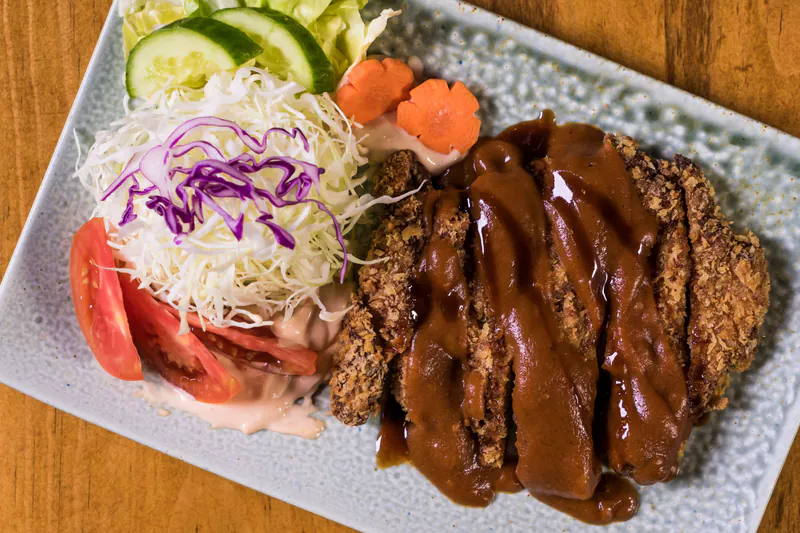
Tonkatsu
 Japanese · 35 min · 712 kcal
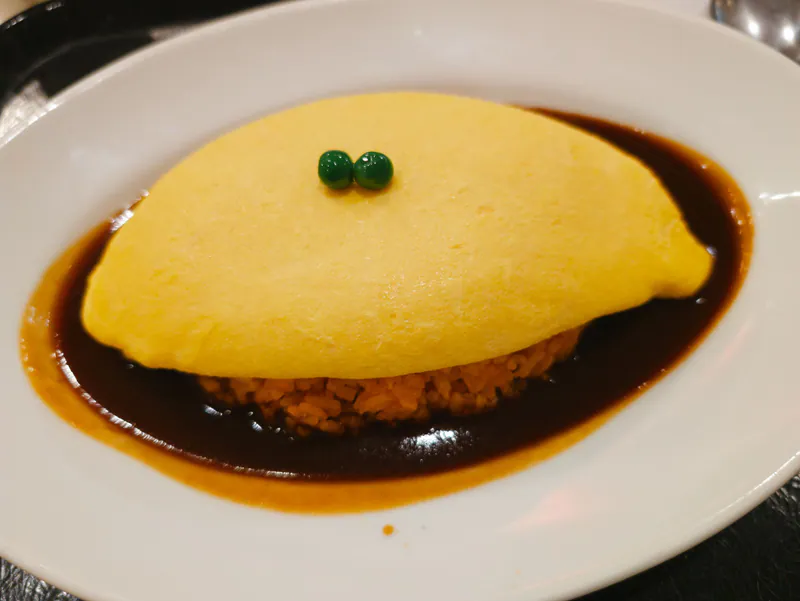
Omurice
Japanese · 25 min · 652 kcal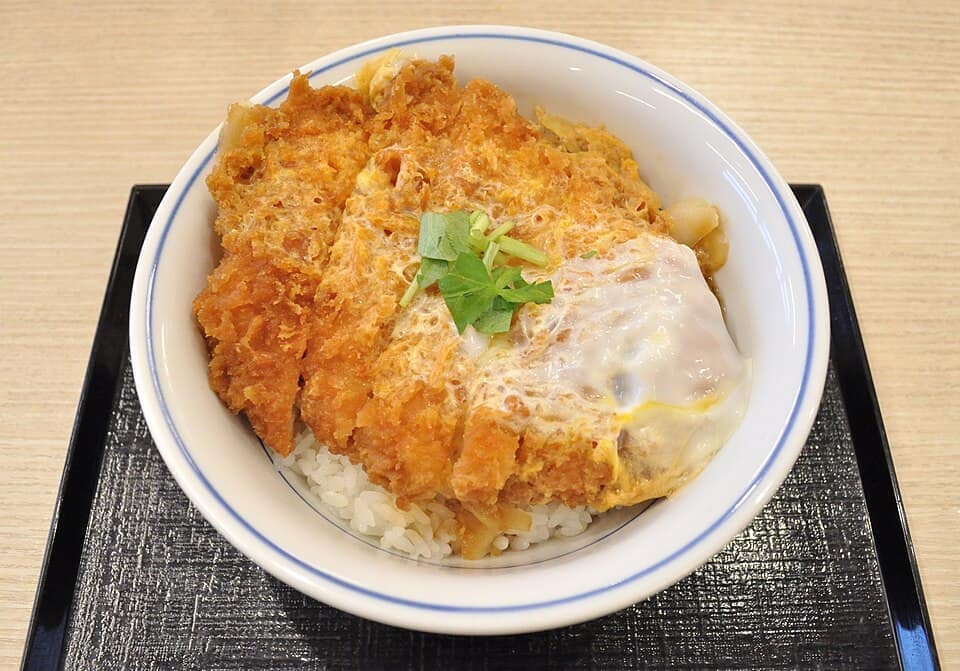
Katsudon
Japanese · 40 min · 1003 kcal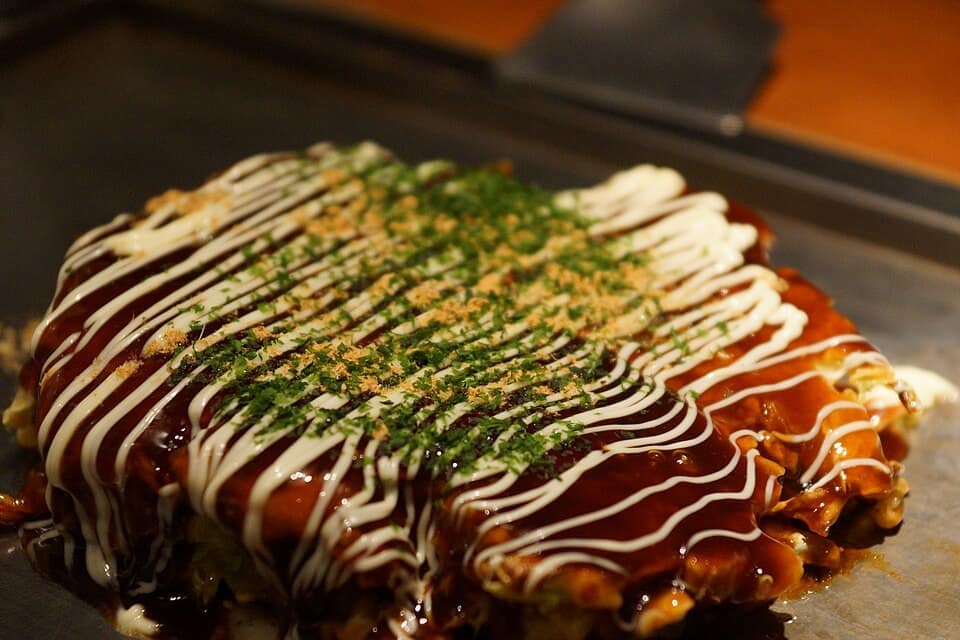
Okonomiyaki
Japanese · 35 min · 658 kcal