
Nasi lemak
Non-vegetarian
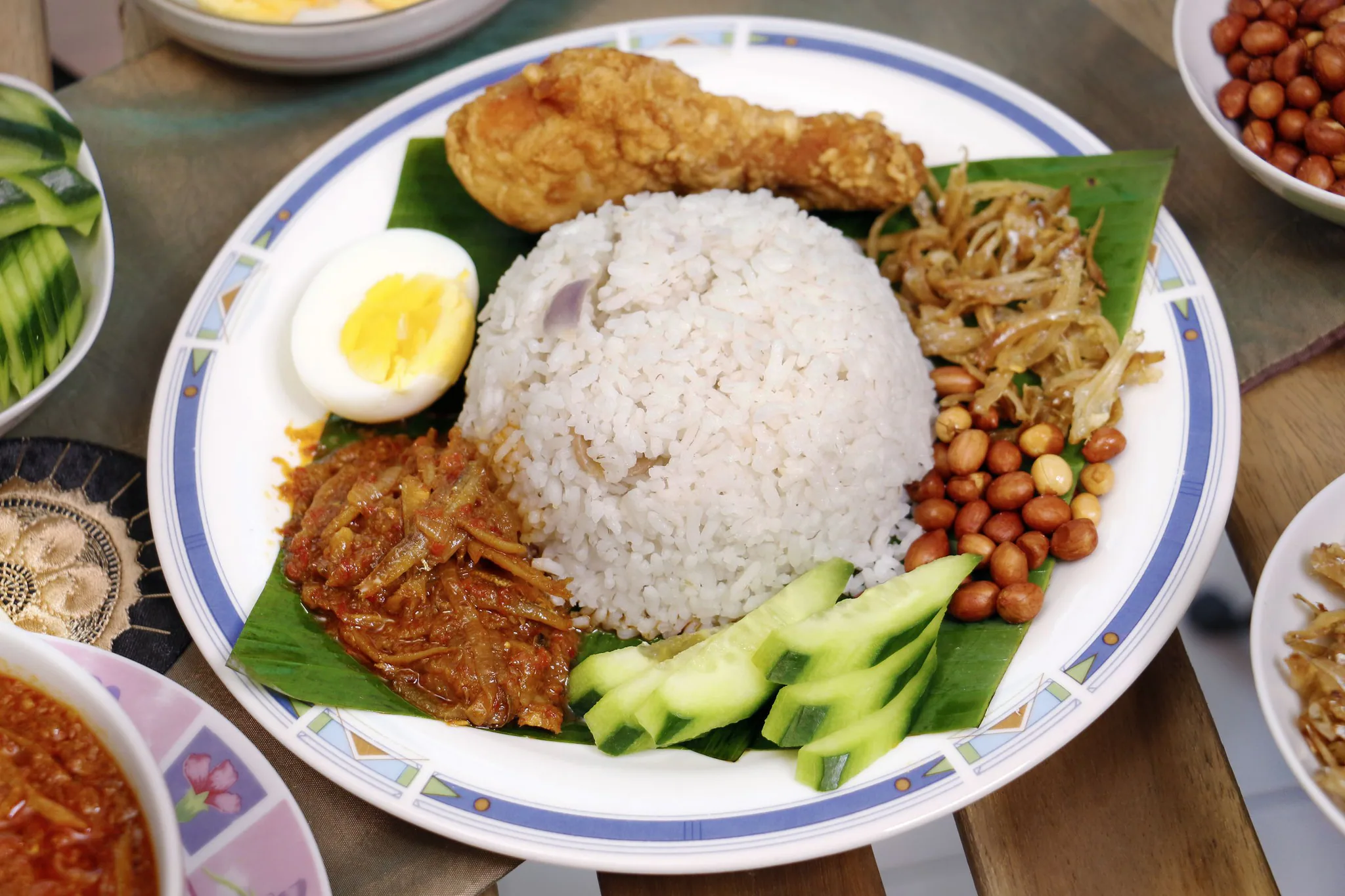
Rice cooked in coconut milk with ginger and lemongrass, served with a sweet-hot sambal, crisp fried anchovies, peanuts, boiled egg and cucumber.
Nasi lemak is a Malaysian rice dish, ready in about 1 hour 25 minutes and made with long-grain white rice, coconut milk and dried whole chillies. It serves 4 and is rated intermediate to cook.
- Prep
- 30 min
- Cook
- 45 min
- Rest
- 10 min
- Total
- 1 h 25 min
- Serves
- 4
- Level
- Intermediate
- Calories
- 963
Ingredients
For the coconut rice
For the sambal
For frying
To serve
Method
Step 1
Rinse the rice well. Put it in a saucepan (opens in a new tab) (or rice cooker) with the coconut milk (opens in a new tab), water, salt, ginger and knotted lemongrass (opens in a new tab). Bring to a simmer, cover and cook on low until the liquid is absorbed, then leave covered off the heat.
- 18 min
- low heat
- Saucepan (opens in a new tab)
Step 2
Blend the drained chillies, shallots (opens in a new tab), garlic (opens in a new tab) and shrimp paste (opens in a new tab) to a fine paste with a splash of water.
Step 3
Heat the oil in a wok (opens in a new tab) and fry the anchovies (opens in a new tab) until crisp and golden; lift out. Fry the peanuts briefly and lift out.
- 6 min
- medium heat
- Wok (opens in a new tab)
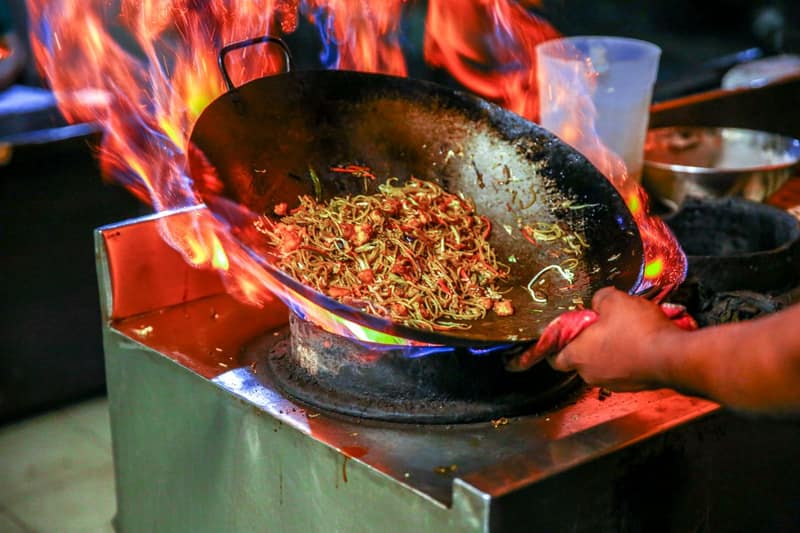
How it looks · Photo: Aesthos AR. Photography on Pexels Step 4
In the same oil, fry the chilli paste over medium-low heat, stirring often, until it darkens and the oil separates (pecah minyak).
- 15 min
- medium-low heat
Step 5
Add the onion (opens in a new tab) rings, tamarind, palm sugar (opens in a new tab) and salt and a handful of the fried anchovies (opens in a new tab). Simmer until thick and glossy, and taste for a sweet, hot, tangy balance.
- 6 min
- low heat
Step 6
Remove the lemongrass (opens in a new tab), fluff the rice and serve with sambal, the remaining anchovies (opens in a new tab), peanuts, boiled egg (opens in a new tab) and cucumber (opens in a new tab).
About this dish
- Origin
- Malaysia · Commonly attributedConsidered Malaysia's national dish; it is equally loved in Singapore and Brunei.Also popular in Singapore, IndonesiaMore food from Malaysia
- Dish
- Breakfast · Lunch · Rice dishes · Main courses
- Cooking method
- Simmered, Pan-fried, Steamed
- Taste
- rich, spicy (chilli heat), sweet & spicy, salty
- Diet
- Pescatarian · No gluten ingredients · Dairy-free · High-proteinWorked out from the ingredients. How labels work
All labels
Pescatarian · Non-vegetarian · Flexitarian-friendly · No gluten ingredients · Dairy-free · Alcohol-free · Pork-free · Beef-free · High-protein - Good for
- Make-ahead
- Cook more with
- Long-grain white rice · Coconut milk · Dried whole chillies · Fresh ginger · Lemongrass · Shallot
- Techniques
- Pan-frying · Simmering · Steaming · Bhunao
Allergens
- Contains: Eggsfrom egg
- Contains: Fishfrom anchovies
- Contains: Crustaceansfrom shrimp paste
- Contains: Peanutsfrom roasted peanuts
Based on typical versions of these ingredients and not verified allergen-free. Brands differ and cross-contact happens, so always check labels. For severe allergies, follow your clinician’s advice.
Nutrition
963 kcal per serving
Estimated1 serving ≈ 528 g · recipe makes 4
Where the energy comes from
- Protein 11%
- Carbohydrate 47%
- Fat 41%
| Nutrient | Per serving | Per 100 g* |
|---|---|---|
| Energy | 963 kcal | 182 kcal |
| Protein | 27.7 g | 5.3 g |
| Carbohydrate | 116.1 g | 22 g |
| Net carbohydrate | — | — |
| Sugars | — | — |
| Added sugars | 6.5 g | 1.2 g |
| Fibre | — | — |
| Fat | 45.1 g | 8.5 g |
| Saturated fat | 18.4 g | 3.5 g |
| Trans fat | — | — |
| Cholesterol | 203 mg | 38 mg |
| Sodium | 1830 mg | 347 mg |
| Salt equivalent | 4.6 g | 0.9 g |
Vitamins & minerals per serving
- Potassium
- 1128 mg
- Calcium
- 191 mg
- Iron
- 10.8 mg
- Magnesium
- 151 mg
- Vitamin A (RAE)
- 163 µg
- Vitamin C
- 10 mg
- Vitamin D
- 1.3 µg
- Vitamin B12
- 0.6 µg
- Folate (DFE)
- 471 µg
How these numbers were made
- Calculated from USDA FoodData Central (SR Legacy) per-100 g values and the listed quantities.
- *Per 100 g of combined raw ingredients; the cooked dish may weigh more or less.
- Shrimp paste: Fish sauce (FDC 174531) at 1.5× as a stand-in salted fermented seafood condiment; protein is understated.
- Tamarind paste: Raw tamarind pulp (FDC 167763). Commercial concentrates vary in water content.
- Jaggery / palm sugar: Brown sugar (FDC 168833) used as a stand-in for unrefined cane jaggery and palm sugar.
- “—” means the value isn’t known for enough of the ingredients; it is never zero by default.
- Values are estimates for guidance, not for medical dosing. U.S. Department of Agriculture, Agricultural Research Service. FoodData Central, 2019. fdc.nal.usda.gov.
Good to know
Tips
- The sambal keeps well — make a double batch.
Common mistakes
- Under-frying the chilli paste leaves the sambal raw-tasting and harsh.
Serve with
- Add fried chicken (ayam goreng) or beef rendang for a fuller plate.
Food safety
- Coconut rice spoils quickly: do not hold it warm for more than 2 hours, and refrigerate leftovers within 1 hour.
- Keep cooked eggs and sambal refrigerated; sambal keeps 1 week in a clean jar.
Storage
- Sambal keeps 1 week refrigerated. Store anchovies and peanuts airtight so they stay crisp.
Reheating
- Steam or microwave the rice with a sprinkle of water.
Variations
- Nasi lemak bungkus: A small portion wrapped in banana leaf and paper, sold as a grab-and-go breakfast.
Original editorial recipe · FriendsPantry editorial · Not yet independently reviewed · Added · Updated
Recipe DNA
How this dish is built
Built from the recipe’s own sections. Each band’s width is its share of the dish by weight. Choose a component to see what it does.
The staple
For the coconut rice
- Long-grain white rice400 g
- Coconut milk300 ml · 294 g
- Water300 ml · 300 g
- Salt1 tsp · 6 g
- Fresh ginger, sliced15 g
- Lemongrass, bruised and knotted1 stalk · 0 g
Reviews & corrections
Reviews come from signed-in cooks and appear after a moderator checks them. We never show made-up ratings.
You might also like
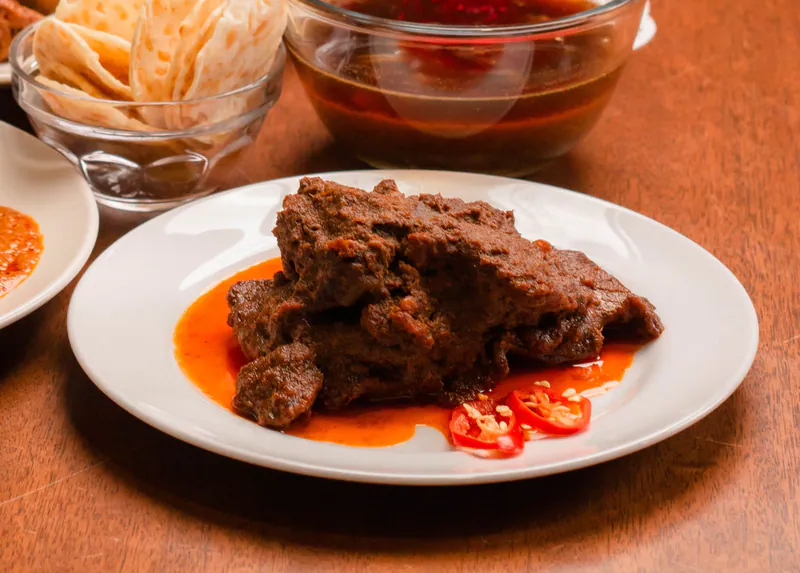
Beef rendang
 Indonesian · 4 h · 672 kcal
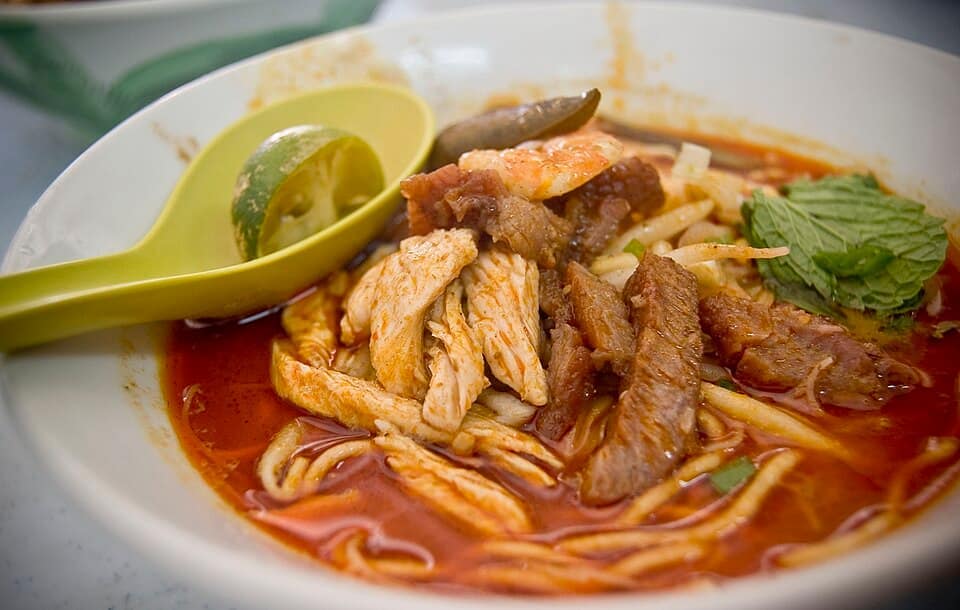
Curry laksa
 Malaysian · 1 h 5 min · 950 kcal
Hainanese chicken rice
 Singaporean · 1 h 35 min · 803 kcal
Kari ayam
Malaysian · 1 h 5 min · 514 kcal