
Homemade tomato ketchup
Vegetarian
Tomatoes simmered with onion, brown sugar, cider vinegar and warm spices, then blended, sieved and reduced until thick, glossy and spoonable. Fresher and less sweet than the bottled kind.
Homemade tomato ketchup is an American condiment from United States, ready in about 1 hour 55 minutes and made with canned tomatoes, brown sugar and apple cider vinegar. It serves 25 and is rated easy to cook.
No licensed photograph of this dish yet.
- Prep
- 10 min
- Cook
- 1 h 15 min
- Rest
- 30 min
- Total
- 1 h 55 min
- Serves
- 25
- Level
- Easy
- Calories
- 27
Method
Step 1
Chop the onion (opens in a new tab) and slice the garlic (opens in a new tab). Heat the oil in a heavy saucepan (opens in a new tab) over medium heat and sweat the onion and garlic for 8 minutes until soft and translucent but not browned.
- 8 min
- medium heat
- Saucepan (opens in a new tab)
- Wooden spoon (opens in a new tab)
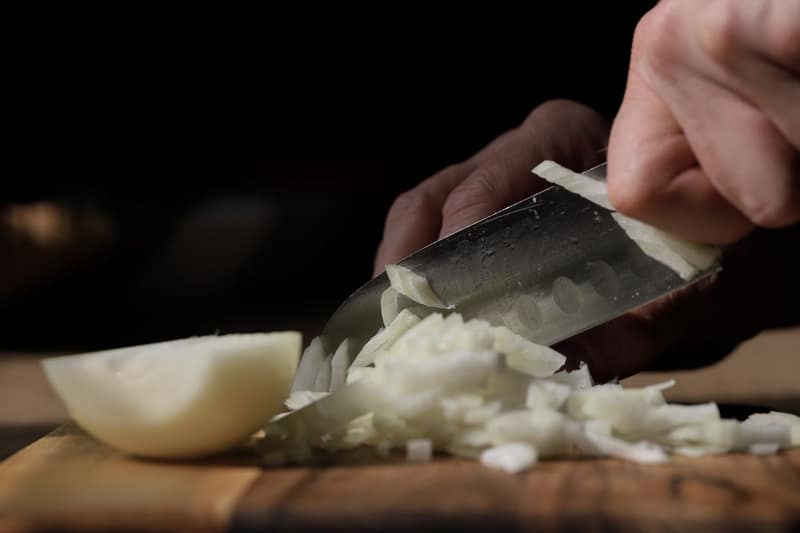
How it looks · Photo: Christina & Peter on Pexels Step 2
Add the tomatoes (crush them with your hands as they go in), tomato paste (opens in a new tab), brown sugar (opens in a new tab), vinegar, salt and all the spices. Bring to the boil, then simmer uncovered for 45 minutes, stirring every 10 minutes, until thick and reduced by about a third.
- 45 min
- medium-low heat
- Wooden spoon (opens in a new tab)
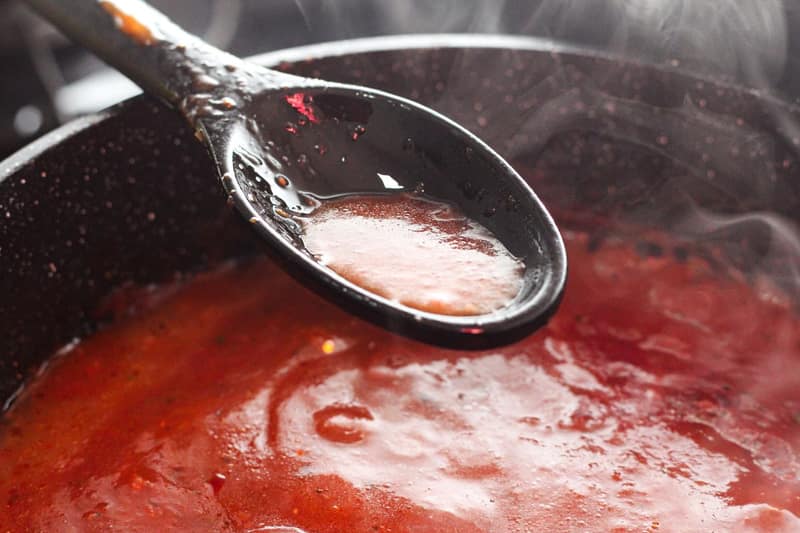
How it looks · Photo: Nanda Mends on Pexels Step 3
Blend until completely smooth with a stick blender, then push through a fine sieve to remove seeds and skin, pressing hard.
Step 4
Return to the clean pan and simmer on low, stirring constantly towards the end (it spits), for 15–25 minutes until thick: a spoonful on a cold plate should hold its shape with no watery ring around it.
- 20 min
- low heat
- Wooden spoon (opens in a new tab)
Food safety: Thick tomato sauces spit hot drops; use a long spoon and partially cover the pan.
Step 5
Taste and balance with a little more sugar, vinegar or salt. Cool for 30 minutes, then pour into clean bottles or jars.
About this dish
- Origin
- United States · Well documentedKetchups in 18th-century Britain were thin sauces of mushrooms, walnuts or fish. Tomato ketchup appears in American recipes by 1812, and Heinz made the thick, sweet bottled style standard from 1876.Also popular in United Kingdom, Canada, PhilippinesMore food from United States
- Dish
- Lunch · Dinner · Snack · Condiments, chutneys & relishes · Sauces
- Cooking method
- Simmered, Blended
- Taste
- sweet & sour, tangy, umami, aromatic / warmly spiced
- Diet
- Vegan · No gluten ingredients · Dairy-free · No nut ingredients · Low-carbWorked out from the ingredients. How labels work
All labels
Vegan · Plant-based · Vegetarian (lacto-ovo) · Eggetarian · Lacto-vegetarian · Ovo-vegetarian · Pescatarian · Flexitarian-friendly · No gluten ingredients · Dairy-free · Egg-free · No nut ingredients · Alcohol-free · Pork-free · Beef-free · Low-carb · DASH-style - Good for
- Make-ahead · Child-friendly · Batch cooking
- Cook more with
- Canned tomatoes · Brown sugar · Apple cider vinegar · Tomato paste · Onion · Garlic
- Techniques
- Boiling · Simmering · Wet grinding · Reduction · Emulsification
Allergens
- Contains: Mustardfrom mustard seeds
- Contains: Celeryfrom celery seed
Based on typical versions of these ingredients and not verified allergen-free. Brands differ and cross-contact happens, so always check labels. For severe allergies, follow your clinician’s advice.
Nutrition
27 kcal per serving
Calculated1 serving ≈ 21 g · recipe makes 25
Where the energy comes from
- Protein 6%
- Carbohydrate 72%
- Fat 22%
| Nutrient | Per serving | Per 100 g |
|---|---|---|
| Energy | 27 kcal | 132 kcal |
| Protein | 0.4 g | 2 g |
| Carbohydrate | 5.2 g | 25.2 g |
| Net carbohydrate | 4.5 g | 21.4 g |
| Sugars | 4.3 g | 20.9 g |
| Added sugars | 3.1 g | 14.9 g |
| Fibre | 0.8 g | 3.8 g |
| Fat | 0.7 g | 3.2 g |
| Saturated fat | 0.1 g | 0.3 g |
| Trans fat | — | — |
| Cholesterol | 0 mg | 0 mg |
| Sodium | 148 mg | 709 mg |
| Salt equivalent | 0.4 g | 1.8 g |
Vitamins & minerals per serving
- Potassium
- 92 mg
- Calcium
- 17 mg
- Iron
- 0.3 mg
- Magnesium
- 5 mg
- Vitamin A (RAE)
- 7 µg
- Vitamin C
- 5 mg
- Vitamin D
- 0 µg
- Vitamin B12
- 0 µg
- Folate (DFE)
- 4 µg
How these numbers were made
- Calculated from USDA FoodData Central (SR Legacy) per-100 g values and the listed quantities.
- Optional ingredients are not included: paprika.
- “—” means the value isn’t known for enough of the ingredients; it is never zero by default.
- Values are estimates for guidance, not for medical dosing. U.S. Department of Agriculture, Agricultural Research Service. FoodData Central, 2019. fdc.nal.usda.gov.
Good to know
Tips
- Keep tasting at the reduction stage: the sweetness and acidity become stronger as it thickens.
Common mistakes
- Under-reducing, which gives a watery ketchup that weeps on the plate.
- Too much clove or allspice, which tastes medicinal.
Serve with
- Chips, burgers and hot dogs.
- Base for Marie Rose, cocktail sauce and sweet and sour sauce.
- Glaze for meatloaf.
Food safety
- Use scrupulously clean jars (wash in hot soapy water, then dry in a 120 °C oven for 15 minutes or boil for 10 minutes) and always serve with a clean, dry spoon.
Storage
- Refrigerate in clean, covered jars or bottles for up to 4 weeks; freeze up to 6 months.
Variations
- Banana ketchup (Philippines): The Philippine ketchup made from bananas, vinegar, sugar and spices, coloured red; created during wartime tomato shortages.
- Smoky chipotle ketchup (United States): Blend a chipotle in adobo into the finished ketchup.
Original editorial recipe · FriendsPantry editorial · Not yet independently reviewed · Added · Updated
Goes with
- Fish and chips
- Classic beef burger
- Full English breakfast
- Tortang talong
- Tomato and egg stir-fryused in the recipe
- Sweet and sour porkused in the recipe
- Oyster omeletteused in the recipe
- Tonkatsuused in the recipe
- Japanese curry riceused in the recipe
- Okonomiyakiused in the recipe
- Yakisobaused in the recipe
- Korean fried chicken (yangnyeom)used in the recipe
- Mee goreng mamakused in the recipe
- Singapore chilli crabused in the recipe
- BBQ pulled porkused in the recipe
- Brown stew chickenused in the recipe
- Aussie meat pieused in the recipe
- Corn frittersused in the recipe
- Bun kebabused in the recipe
- Takoyaki (octopus balls)used in the recipe
- Omuriceused in the recipe
- Beef lok lakused in the recipe
- Ayam masak merahused in the recipe
- Roti johnused in the recipe
- Chipsi mayaiused in the recipe
- Makaronilaatikkoused in the recipe
- Bajan macaroni pieused in the recipe
- Bahamian conch frittersused in the recipe
- Ceviche ecuatoriano de camarónused in the recipe
- Sausage rollsused in the recipe
- Indo-Chinese schezwan sauceused in the recipe
- Cantonese sweet and sour sauceused in the recipe
- Yangnyeom chicken sauceused in the recipe
- Marie Rose sauceused in the recipe
- Cocktail sauce (American)used in the recipe
- Kansas City-style barbecue sauceused in the recipe
- Thousand Island dressingused in the recipe
- Tonkatsu sauceused in the recipe
Recipe DNA
How this dish is built
Grouped by each ingredient’s role in the dish. Each band’s width is its share of the dish by weight. Choose a component to see what it does.
What the dish is built around
Main ingredient
- Canned tomatoes, whole plum tomatoes (two 400 g cans)800 g
- Tomato paste30 g
Make it milder, swap ingredients for your diet, change the batch size or thickness — the original stays as it is.
Customise in Sauce & DrizzleReviews & corrections
Reviews come from signed-in cooks and appear after a moderator checks them. We never show made-up ratings.
You might also like
Homemade brown sauce
 British · 1 h 5 min · 41 kcal · Vegan
Kansas City-style barbecue sauce
 American · 35 min · 50 kcal
Marie Rose sauce
British · 20 min · 180 kcalCocktail sauce (American)
American · 35 min · 34 kcal