
Lahpet thoke
Non-vegetarian
လက်ဖက်သုပ် · lahpet thouk
Myanmar's famous tea leaf salad: tangy fermented tea leaves tossed with cabbage, tomato, crunchy peanuts, sesame and fried garlic, dressed with lime and fish sauce.
Lahpet thoke is a Burmese salad from Myanmar, ready in about 20 minutes and made with fermented tea leaves and roasted peanuts. It serves 4 and is rated easy to cook.
No licensed photograph of this dish yet.
- Prep
- 15 min
- Cook
- 5 min
- Total
- 20 min
- Serves
- 4
- Level
- Easy
- Calories
- 201
Method
Step 1
Fry the garlic (opens in a new tab) slices in the oil over medium-low heat until pale golden. Lift out and cool; keep the oil.
- 5 min
- medium-low heat
- Frying pan / skillet (opens in a new tab)
Step 3
Toss the cabbage (opens in a new tab), tomato (opens in a new tab) and chillies with the tea leaves, fish sauce (opens in a new tab), lime juice (opens in a new tab) and salt.
- 3 min
Step 4
Just before serving, add the peanuts, sesame seeds (opens in a new tab) and crisp garlic (opens in a new tab) so they stay crunchy.
- 1 min
About this dish
- Origin
- Myanmar · Well documentedFermented tea is eaten in Myanmar as a dish, not drunk, and is offered to guests as a sign of hospitality.More food from Myanmar
- Dish
- Lunch · Snack · Salads · Appetizers & starters
- Cooking method
- Raw, Fermented
- Taste
- tangy, bitter, nutty, spicy (chilli heat)
- Diet
- Pescatarian · No gluten ingredients · Dairy-free · Keto-style · Low-carbWith the listed swaps: Vegan, Plant-based, Vegetarian (lacto-ovo), Eggetarian, Lacto-vegetarian, Ovo-vegetarianWorked out from the ingredients. How labels work
All labels
Pescatarian · Non-vegetarian · Flexitarian-friendly · No gluten ingredients · Dairy-free · Egg-free · No added sugar · Alcohol-free · Pork-free · Beef-free · Keto-style · Low-carb - Good for
- Minimal cleanup
- Cook more with
- Roasted peanuts · Garlic · Peanut oil · Cabbage · Tomato · Sesame seeds
- Techniques
- Fermentation
Allergens
- Contains, can be adapted: Fishfrom fish sauce
- May contain: Crustaceansfrom fish sauce
- Contains: Peanutsfrom peanut oil, roasted peanuts
- Contains: Sesamefrom sesame seeds
Based on typical versions of these ingredients and not verified allergen-free. Brands differ and cross-contact happens, so always check labels. For severe allergies, follow your clinician’s advice.
Nutrition
201 kcal per serving
Estimated1 serving ≈ 124 g · recipe makes 4
Where the energy comes from
- Protein 9%
- Carbohydrate 21%
- Fat 70%
| Nutrient | Per serving | Per 100 g* |
|---|---|---|
| Energy | 201 kcal | 162 kcal |
| Protein | 5 g | 4 g |
| Carbohydrate | 11 g | 8.8 g |
| Net carbohydrate | 6.8 g | 5.5 g |
| Sugars | 3.9 g | 3.1 g |
| Added sugars | 0 g | 0 g |
| Fibre | 4.2 g | 3.4 g |
| Fat | 16.7 g | 13.5 g |
| Saturated fat | 2.7 g | 2.2 g |
| Trans fat | — | — |
| Cholesterol | 0 mg | 0 mg |
| Sodium | 505 mg | 406 mg |
| Salt equivalent | 1.3 g | 1 g |
Vitamins & minerals per serving
- Potassium
- 298 mg
- Calcium
- 111 mg
- Iron
- 1.3 mg
- Magnesium
- 58 mg
- Vitamin A (RAE)
- 223 µg
- Vitamin C
- 30 mg
- Vitamin D
- 0 µg
- Vitamin B12
- 0 µg
- Folate (DFE)
- 49 µg
How these numbers were made
- Calculated from USDA FoodData Central (SR Legacy) per-100 g values and the listed quantities.
- *Per 100 g of combined raw ingredients; the cooked dish may weigh more or less.
- Fermented tea leaves: Raw grape leaves (FDC 168575) used as a stand-in for Burmese fermented tea leaves (lahpet); both are tender edible leaves, but tea leaves also contain caffeine.
- “—” means the value isn’t known for enough of the ingredients; it is never zero by default.
- Values are estimates for guidance, not for medical dosing. U.S. Department of Agriculture, Agricultural Research Service. FoodData Central, 2019. fdc.nal.usda.gov.
Good to know
Tips
- Add fried split peas or broad beans if you can buy them for the full crunchy mix.
Common mistakes
- Dressing the crunchy elements too early — they go soft.
Serve with
- Serve with rice, or alone with green tea as a snack.
Storage
- Eat freshly mixed; opened tea leaves keep in the fridge for weeks.
Variations
- Lahpet tray: Served unmixed in a lacquered tray with compartments for each crunchy element.
Original editorial recipe · FriendsPantry editorial · Not yet independently reviewed · Added · Updated
Recipe DNA
How this dish is built
Grouped by each ingredient’s role in the dish. Each band’s width is its share of the dish by weight. Choose a component to see what it does.
What the dish is built around
Main ingredient
- Fermented tea leaves60 g
- Cabbage, very finely shredded150 g
- Tomato, sliced1 piece · 120 g
- Roasted peanuts40 g
- Lime juice2 tbsp · 31 g
Reviews & corrections
Reviews come from signed-in cooks and appear after a moderator checks them. We never show made-up ratings.
You might also like
Shan tofu salad
 Burmese · 2 h 30 min · 292 kcal · Vegan
Shan noodles
Burmese · 45 min · 665 kcal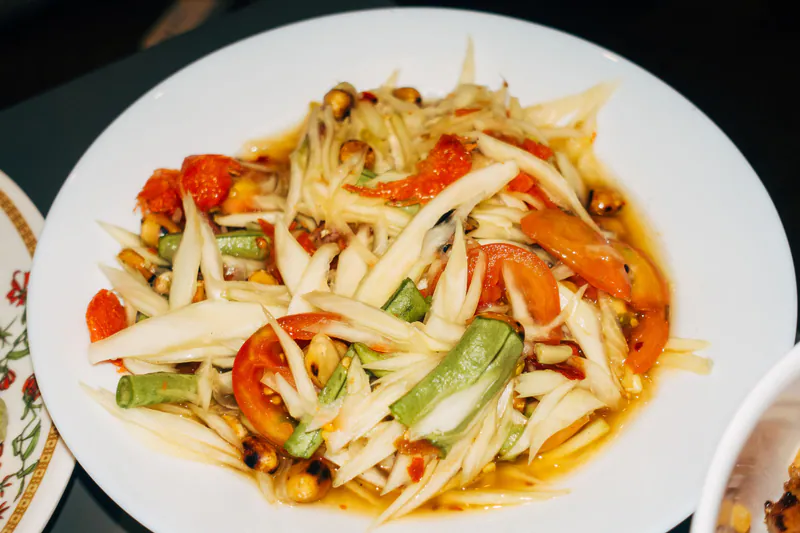
Som tam
 Thai · 20 min · 214 kcal
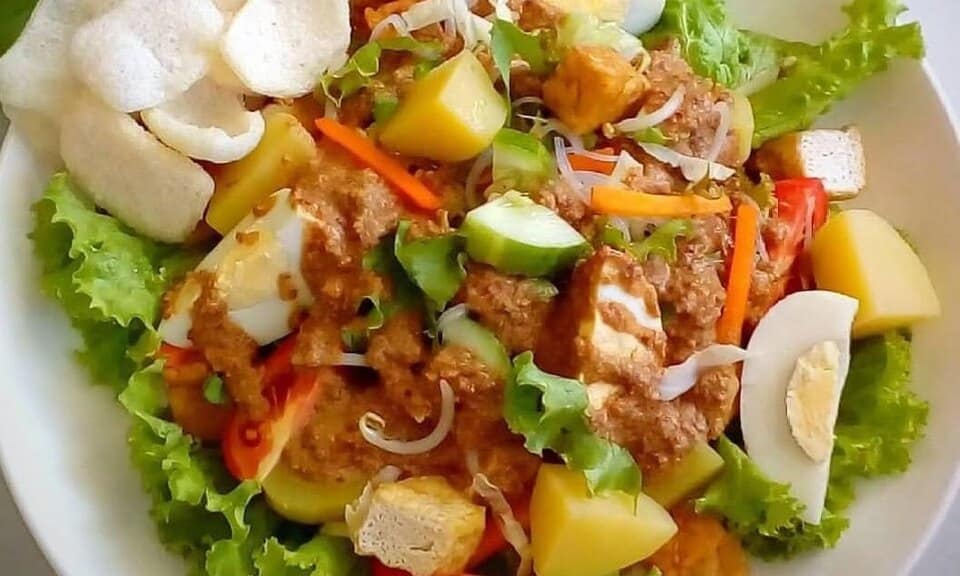
Gado-gado
 Indonesian · 55 min · 682 kcal · Contains egg