
International · Middle Eastern
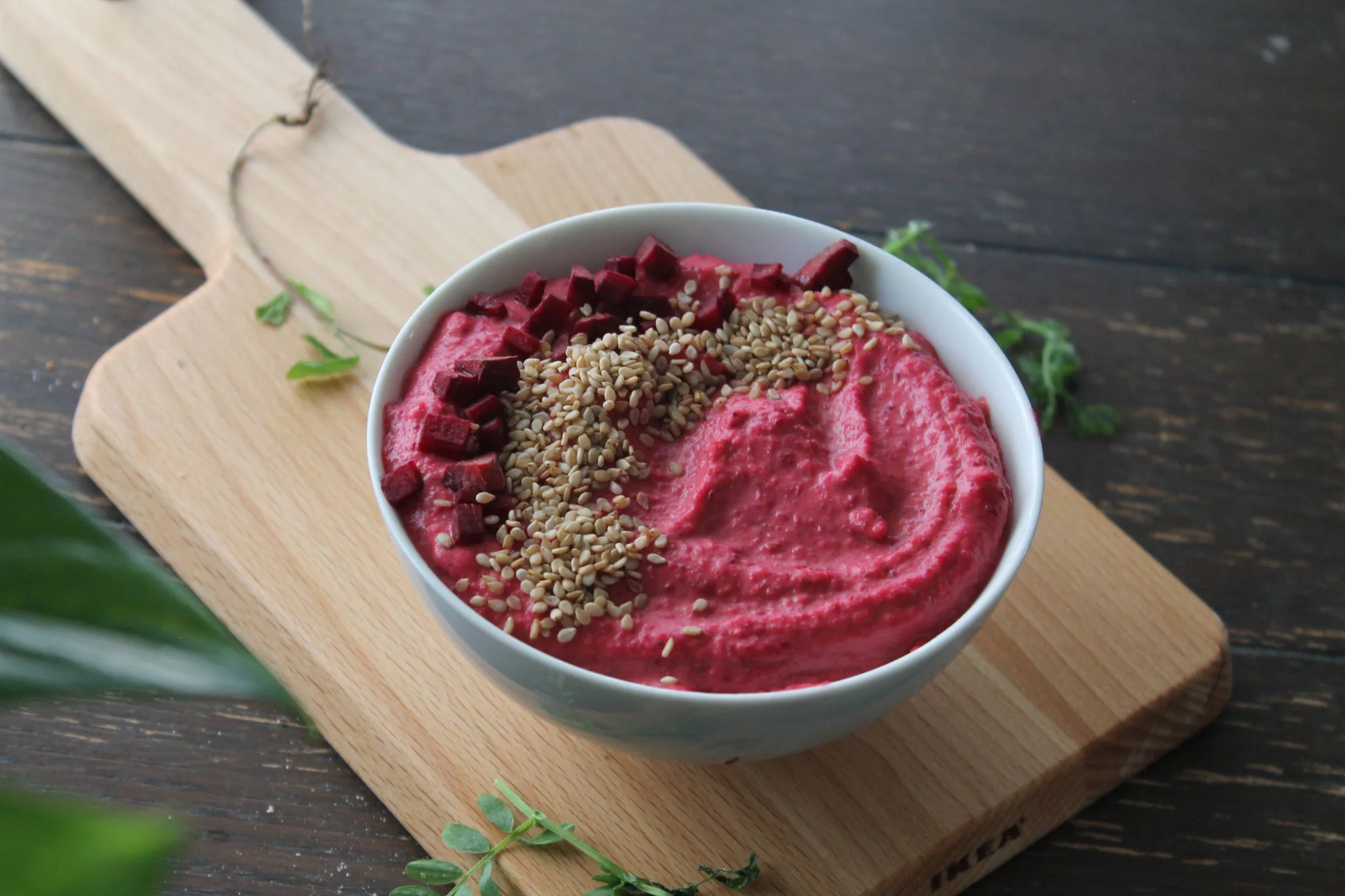
Beetroot hummus
Vegetarian
Hummus blended with roasted beetroot, a little less tahini and a touch of cumin, turning it a vivid magenta with an earthy sweetness. A modern adaptation, not a traditional Levantine dish.
Beetroot hummus is an International dip, ready in about 1 hour 35 minutes and made with dried chickpeas, beetroot and tahini. It serves 8 and is rated easy to cook.
- Prep
- 15 min
- Cook
- 1 h
- Rest
- 20 min
- Total
- 1 h 35 min
- Serves
- 8
- Level
- Easy
- Calories
- 160
Plus 12 hours soaking the dried chickpeas. The beetroot roasts while the chickpeas cook.
Ingredients
For the chickpeas
For the beetroot
For the hummus
To finish
Method
Step 1
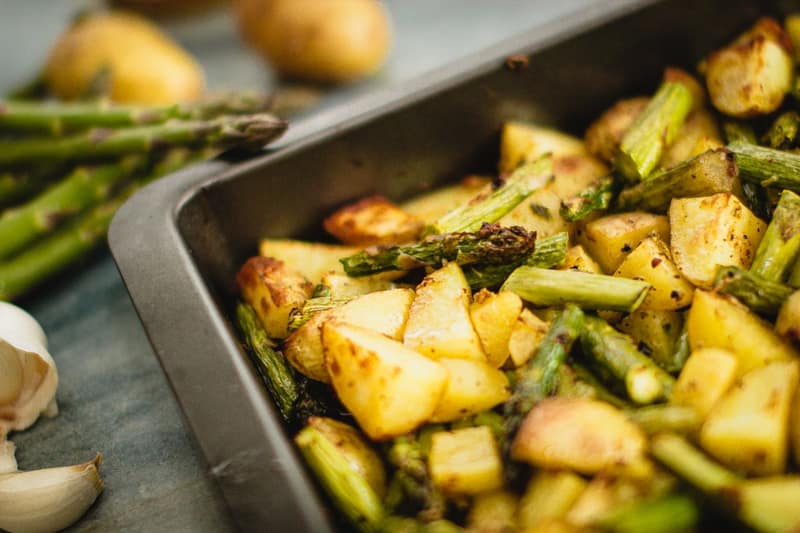
Heat the oven (opens in a new tab) to 200 °C (180 °C fan). Wrap each beetroot (opens in a new tab) in foil, set on a baking tray and roast for 50–60 minutes, until a knife slides into the centre with no resistance. Cool for 20 minutes, then rub off the skins with kitchen paper (wear gloves to avoid pink hands) and cut into 2 cm chunks.
- 60 min
- 200°C · 180 °C fan
- Oven (opens in a new tab)
- Baking tray / sheet (opens in a new tab)
How it looks · Photo: locrifa on Pexels Step 2
Soak the dried chickpeas (opens in a new tab) the night before: cover them with at least three times their volume of cold water and leave for 12 hours at cool room temperature (or in the fridge in hot weather). They double in size. Drain and rinse. If you are using canned chickpeas instead, drain and rinse them and go straight to the next step.
Step 3
Put the drained chickpeas in a saucepan (opens in a new tab) over medium-high heat with the bicarbonate of soda (opens in a new tab) and stir for about 3 minutes, until they look a little dry and are coated. Pour in the cold water, bring to the boil and skim off the grey foam and the loose skins that float up.
- 8 min
- medium-high heat
- Saucepan (opens in a new tab)
- Slotted spoon (opens in a new tab)
Bicarbonate makes the water alkaline, which loosens the skins and softens the starch, so the chickpeas break down to a silky purée. More than the recipe says makes them taste soapy.
Step 4
Simmer until the chickpeas are completely soft, skimming off skins as they rise: one should squash to a smooth paste between thumb and finger with no chalky centre, and many will be splitting. Allow 25–45 minutes for soaked dried chickpeas (opens in a new tab) (older ones take longer) and about 10 minutes for canned. Drain while hot and keep them warm; warm chickpeas blend smoother. If you use canned chickpeas without simmering, pinch each one so the skin slips off instead (about 10 minutes for a can).
- 40 min
- medium-low heat
- Saucepan (opens in a new tab)
- Colander (opens in a new tab)
Step 5
Blend the lemon juice (opens in a new tab), garlic (opens in a new tab) and salt in the food processor (opens in a new tab) for 20 seconds and leave 10 minutes; the acid softens the garlic's raw bite.
Step 6
Add the tahini (opens in a new tab) and blend 30 seconds until thick, then add half the ice water with the motor running until the paste turns pale and smooth.
Step 7
Add the warm chickpeas, the beetroot (opens in a new tab) and the cumin. Blend continuously for 3–4 minutes, scraping down twice, until completely smooth and evenly coloured. Add the remaining ice water only if needed; it should be thick enough to hold a swirl.
Step 8
Taste for salt and lemon (beetroot (opens in a new tab) needs a little more of both). Spread in a bowl, drizzle with olive oil (opens in a new tab) and scatter with dill (opens in a new tab) and crumbled feta (opens in a new tab).
- 2 min
How it looks · Photo: Klaus Nielsen on Pexels
About this dish
- Origin
- Not attributed to one place · Origin uncertainA modern adaptation popularised by cafés and food writers in the UK, Australia and North America in the 2000s–2010s. The hummus technique underneath is the traditional Levantine one.Also popular in United Kingdom, Australia, United States
- Dish
- Lunch · Snack · Dips & spreads
- Cooking method
- Roasted, Boiled, Blended
- Taste
- earthy, sweet, nutty, creamy
- Diet
- Vegetarian (lacto-ovo) · No gluten ingredients · No nut ingredients · Low-carbWithout the optional extras: Vegan, Plant-based, Ovo-vegetarian, Dairy-freeWorked out from the ingredients. How labels work
All labels
Vegetarian (lacto-ovo) · Eggetarian · Lacto-vegetarian · Pescatarian · Flexitarian-friendly · Whole-food focused · No gluten ingredients · Egg-free · No nut ingredients · No added sugar · Alcohol-free · Pork-free · Beef-free · Mediterranean-style · Low-carb · DASH-style - Good for
- Make-ahead · Child-friendly
- Cook more with
- Dried chickpeas · Beetroot · Tahini · Baking soda · Lemon juice · Garlic
- Techniques
- Roasting · Boiling · Simmering · Wet grinding · Knife skills
Allergens
- Contains, can be adapted: Milkfrom feta
- Contains: Sesamefrom tahini
Based on typical versions of these ingredients and not verified allergen-free. Brands differ and cross-contact happens, so always check labels. For severe allergies, follow your clinician’s advice.
Nutrition
160 kcal per serving
Estimated1 serving ≈ 86 g · recipe makes 8
Where the energy comes from
- Protein 13%
- Carbohydrate 37%
- Fat 50%
| Nutrient | Per serving | Per 100 g |
|---|---|---|
| Energy | 160 kcal | 186 kcal |
| Protein | 5.6 g | 6.5 g |
| Carbohydrate | 15.5 g | 18 g |
| Net carbohydrate | 11.7 g | 13.5 g |
| Sugars | 3.9 g | 4.6 g |
| Added sugars | 0 g | 0 g |
| Fibre | 3.8 g | 4.4 g |
| Fat | 9.4 g | 10.8 g |
| Saturated fat | 1.3 g | 1.5 g |
| Trans fat | — | — |
| Cholesterol | 0 mg | 0 mg |
| Sodium | 390 mg | 452 mg |
| Salt equivalent | 1 g | 1.1 g |
Vitamins & minerals per serving
- Potassium
- 268 mg
- Calcium
- 84 mg
- Iron
- 2.1 mg
- Magnesium
- 35 mg
- Vitamin A (RAE)
- 2 µg
- Vitamin C
- 5 mg
- Vitamin D
- 0 µg
- Vitamin B12
- 0 µg
- Folate (DFE)
- 130 µg
How these numbers were made
- Calculated from USDA FoodData Central (SR Legacy) per-100 g values and the listed quantities.
- Optional ingredients are not included: dill, feta.
- Ice: Frozen water; same composition as water.
- “—” means the value isn’t known for enough of the ingredients; it is never zero by default.
- Values are estimates for guidance, not for medical dosing. U.S. Department of Agriculture, Agricultural Research Service. FoodData Central, 2019. fdc.nal.usda.gov.
Good to know
Tips
- Boiled beetroot works too (30–40 minutes in salted water) but is wetter and less sweet; reduce the ice water further.
- A little orange zest or a pinch of ground coriander suits the earthiness.
Common mistakes
- Using beetroot pickled in vinegar, which makes the hummus sour and thin.
- Adding the full amount of water as for plain hummus; it ends up runny.
Serve with
- On a meze board with plain hummus and labneh for colour contrast.
- Spread on toast or in a wrap with feta, rocket and walnuts.
Storage
- Refrigerate in a covered container with a thin film of olive oil on top for up to 4 days. Hummus firms up when cold; stir in a spoonful of cold water and let it come to room temperature for 20 minutes before serving. It freezes for up to 2 months, though the texture becomes slightly grainy.
Variations
- Beetroot and walnut: Blend in 30 g toasted walnuts with the beetroot for a deeper, nuttier dip.
Original editorial recipe · FriendsPantry editorial · Not yet independently reviewed · Added · Updated
Goes with
Recipe DNA
How this dish is built
Make it milder, swap ingredients for your diet, change the batch size or thickness — the original stays as it is.
Customise in Sauce & DrizzleReviews & corrections
Reviews come from signed-in cooks and appear after a moderator checks them. We never show made-up ratings.
You might also like
Hummus
Levantine · 15 min · 274 kcal · Vegan
Roasted garlic hummus
International · 1 h 35 min · 219 kcal · Vegan
Muhammara
 Syrian · 45 min · 219 kcal · Vegan
Roasted red pepper hummus
International · 1 h 5 min · 169 kcal · Vegan