
Thai yellow curry paste
Non-vegetarian
พริกแกงกะหรี่ · phrik kaeng kari
A mild, golden paste of dry-roasted shallots, garlic and ginger pounded with soaked dried chillies, lemongrass, turmeric, toasted coriander and cumin, curry powder and shrimp paste. The gentle, Indian-influenced base for Thai yellow chicken and potato curry.
Thai yellow curry paste is a Thai condiment from Thailand, ready in about 40 minutes and made with dried whole chillies, shallot and turmeric. It serves 7 and is rated intermediate to cook.
No licensed photograph of this dish yet.
- Prep
- 25 min
- Cook
- 15 min
- Total
- 40 min
- Serves
- 7
- Level
- Intermediate
- Calories
- 22
Method
Step 1
Soak the deseeded chillies in just-boiled water for 15 minutes; squeeze dry and chop.
- 15 min
Food safety: Wear gloves or wash your hands well after handling chillies, and keep them away from your eyes.
Step 2
Meanwhile roast the unpeeled shallots (opens in a new tab), garlic (opens in a new tab) and ginger slices in a dry pan over medium heat, turning, for 8–10 minutes until the skins are blackened in patches and the flesh is soft. Cool slightly and peel.
- 10 min
- medium heat
- Frying pan / skillet (opens in a new tab)
Step 3
In the same pan, dry-roast the coriander and cumin over medium-low heat for 1–2 minutes until fragrant, and toast the foil-wrapped shrimp paste (opens in a new tab). Cool the seeds and pound to a powder.
- 3 min
- medium-low heat
- Frying pan / skillet (opens in a new tab)
- Mortar and pestle (opens in a new tab)
Food safety: Toast shrimp paste wrapped in foil with the fan on — it is pungent — and note that it makes the paste unsuitable for anyone with a shellfish allergy.
Step 4
Pound the chillies with the salt, then the lemongrass (opens in a new tab), then the roasted ginger, shallots (opens in a new tab) and garlic (opens in a new tab) until smooth. Work in the turmeric (opens in a new tab), curry powder (opens in a new tab), ground seeds and shrimp paste (opens in a new tab). (A food processor (opens in a new tab) works well here because the roasted aromatics are soft; add water only by the teaspoon.)
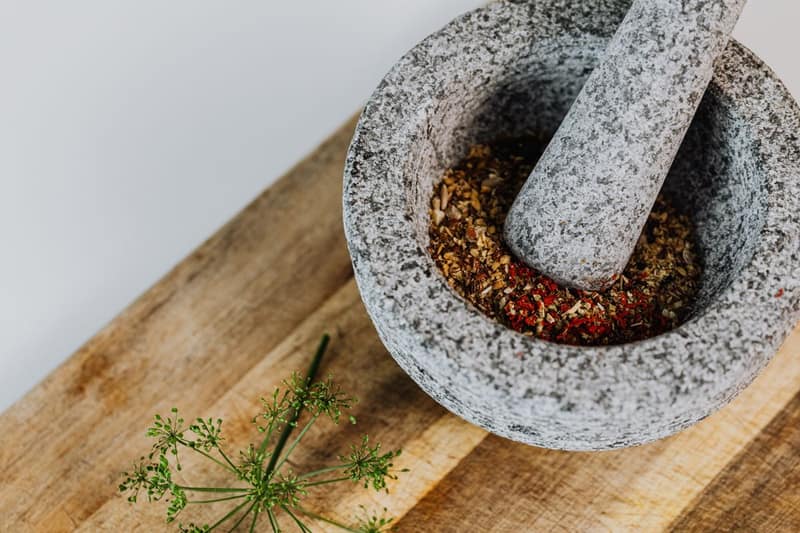
How it looks · Photo: https://kaboompics.com/ on Pexels Step 5
Jar and chill. Fry in coconut cream for 3–4 minutes until fragrant and golden before adding chicken, potatoes and coconut milk.
About this dish
- Origin
- Thailand · Commonly attributedKaeng kari shows Indian and Malay influence (the name comes from 'curry' and it uses curry powder). Roasting the shallots and garlic before pounding is the characteristic technique.More food from Thailand
- Dish
- Condiments, chutneys & relishes
- Cooking method
- Roasted, Toasted
- Taste
- aromatic / warmly spiced, savoury, sweet, spicy (chilli heat)
- Diet
- Pescatarian · No gluten ingredients · Dairy-free · No nut ingredientsWorked out from the ingredients. How labels work
All labels
Pescatarian · Non-vegetarian · Flexitarian-friendly · No gluten ingredients · Dairy-free · Egg-free · No nut ingredients · No added sugar · Alcohol-free · Pork-free · Beef-free · Low-fat · DASH-style - Good for
- Make-ahead · Freezer-friendly
- Cook more with
- Dried whole chillies · Shallot · Turmeric · Garlic · Fresh ginger · Lemongrass
- Techniques
- Roasting · Toasting · Spice roasting (dry-roasting)
Allergens
- Contains: Crustaceansfrom shrimp paste
- May contain: Mustardfrom curry powder
- May contain: Celeryfrom curry powder
Based on typical versions of these ingredients and not verified allergen-free. Brands differ and cross-contact happens, so always check labels. For severe allergies, follow your clinician’s advice.
Nutrition
22 kcal per serving
Estimated1 serving ≈ 15 g · recipe makes 7
Where the energy comes from
- Protein 14%
- Carbohydrate 71%
- Fat 14%
| Nutrient | Per serving | Per 100 g |
|---|---|---|
| Energy | 22 kcal | 147 kcal |
| Protein | 0.9 g | 5.8 g |
| Carbohydrate | 4.5 g | 30.1 g |
| Net carbohydrate | — | — |
| Sugars | — | — |
| Added sugars | 0 g | 0 g |
| Fibre | — | — |
| Fat | 0.4 g | 2.8 g |
| Saturated fat | 0 g | 0.3 g |
| Trans fat | — | — |
| Cholesterol | 0 mg | 0 mg |
| Sodium | 253 mg | 1689 mg |
| Salt equivalent | 0.6 g | 4.2 g |
Vitamins & minerals per serving
- Potassium
- 116 mg
- Calcium
- 22 mg
- Iron
- 1.1 mg
- Magnesium
- 12 mg
- Vitamin A (RAE)
- 15 µg
- Vitamin C
- 2 mg
- Vitamin D
- 0 µg
- Vitamin B12
- 0 µg
- Folate (DFE)
- 5 µg
How these numbers were made
- Calculated from USDA FoodData Central (SR Legacy) per-100 g values and the listed quantities.
- Shrimp paste: Fish sauce (FDC 174531) at 1.5× as a stand-in salted fermented seafood condiment; protein is understated.
- “—” means the value isn’t known for enough of the ingredients; it is never zero by default.
- Values are estimates for guidance, not for medical dosing. U.S. Department of Agriculture, Agricultural Research Service. FoodData Central, 2019. fdc.nal.usda.gov.
Good to know
Tips
- Roasting mellows the shallots and garlic; it is what makes yellow curry taste rounder and sweeter than red.
Common mistakes
- Skipping the roasting and using raw shallots, which makes a sharper paste closer to red curry.
Serve with
- Thai yellow chicken curry with potatoes, yellow curry with fish, and as a seasoning for curry-fried crab.
Food safety
- Toast shrimp paste wrapped in foil with the fan on — it is pungent — and note that it makes the paste unsuitable for anyone with a shellfish allergy.
- Keep refrigerated.
Storage
- Pack into a clean jar, press cling film onto the surface or cover with a thin layer of oil, and refrigerate; or freeze in tablespoon portions in an ice-cube tray and bag them. Keeps about 10 days in the fridge and 3 months frozen.
Variations
- Southern Thai yellow paste (kaeng lueang): A different, sour southern curry: fresh turmeric and bird's eye chillies with garlic and shrimp paste, no dry spices — used for fish and green papaya soup-curries.
Original editorial recipe · FriendsPantry editorial · Not yet independently reviewed · Added · Updated
About this masala
- Type
- Curry paste
- Texture
- Smooth paste
- One batch makes
- about 105 g
- Keeps
- 10 days
- Store
- Covered, in the fridge
- Recipe
- Traditional
Central Thailand. Makes Thai yellow curry paste, the ingredient our dish recipes list. All masalas
Used in
Amounts are each dish’s own quantity, for the servings it is written for. “Make enough” opens this recipe scaled for that dish.
- Thai yellow chicken curryMade fresh in the recipe (pounded or blended in step 1) · 191 g for 4 servingsMake enough
Recipe DNA
How this dish is built
Masalas in this recipe
Make the masala first, then come back to finish the dish.
Dry spice blend
Everyday curry powder (British-style)
This recipe uses 4 g (4 g for 7 tablespoons (about 15 g each)).
Reviews & corrections
Reviews come from signed-in cooks and appear after a moderator checks them. We never show made-up ratings.
You might also like
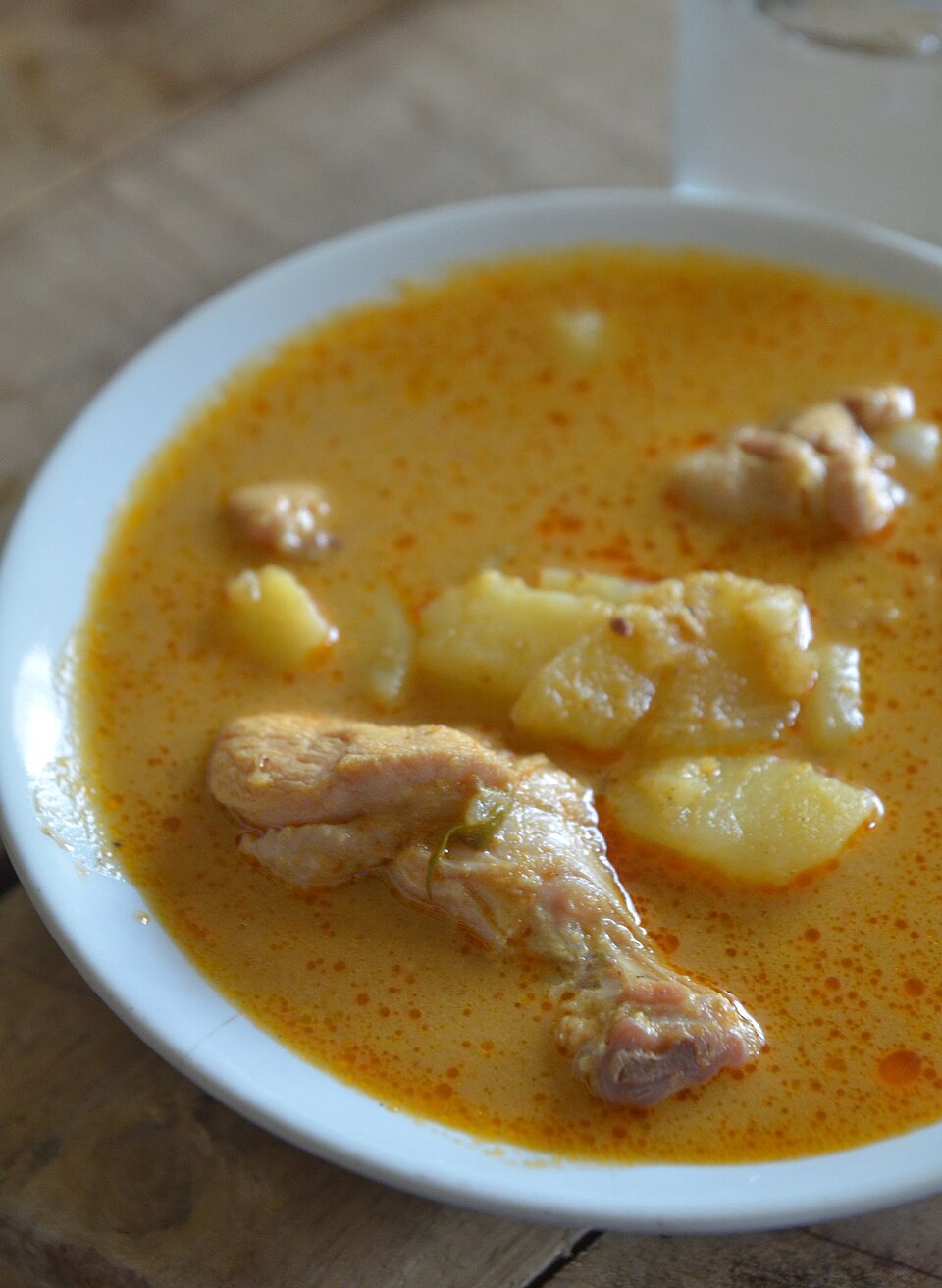
Thai yellow chicken curry
 Thai · 50 min · 524 kcal
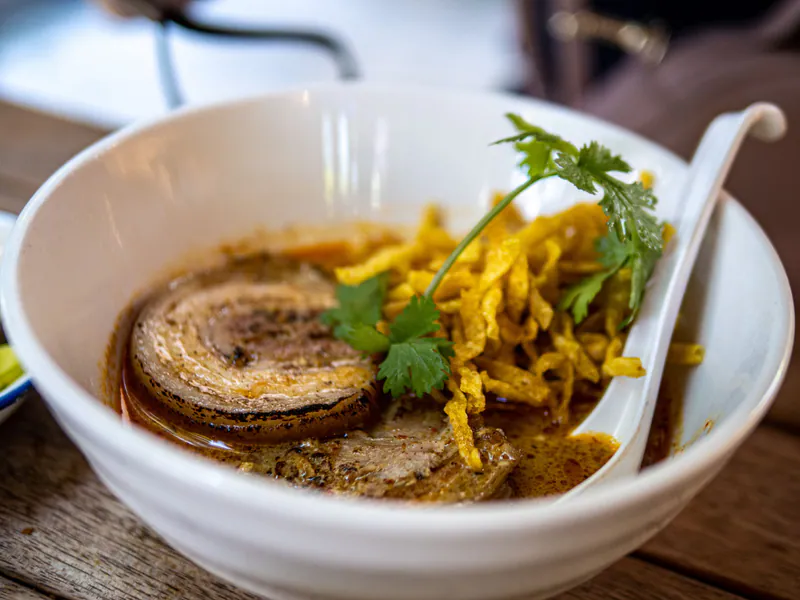
Khao soi gai
Thai · 1 h 15 min · 998 kcalThai red curry paste
Thai · 45 min · 17 kcalMassaman curry paste
Thai · 50 min · 23 kcal