
Rough puff pastry
Vegetarian
A quick, all-butter flaky pastry made by folding chunks of cold butter into a simple flour-and-water dough with a few letter folds — most of the rise of full puff pastry in a fraction of the time.
Rough puff pastry is a British pastry from United Kingdom, ready in about 2 hours 20 minutes and made with all-purpose flour and unsalted butter. It serves 8 and is rated intermediate to cook.
No licensed photograph of this dish yet.
- Prep
- 30 min
- Cook
- 0 min
- Rest
- 1 h 50 min
- Total
- 2 h 20 min
- Serves
- 8
- Level
- Intermediate
- Calories
- 338
Method
Step 1
Mix the flour and salt in a bowl and toss in the butter cubes so each is coated. Don't rub them in — you want visible lumps of butter.
Step 2
Add the lemon juice (opens in a new tab) and most of the ice water and mix gently with a knife or your fingertips into a shaggy, rough dough that just holds together, adding the rest of the water only if needed. Press into a flat rectangle, wrap and chill 20 minutes.
- 4 min
Step 3
On a floured surface, roll into a rectangle three times as long as it is wide (about 45 × 15 cm), keeping the edges straight with a bench scraper (opens in a new tab). It will look streaky and messy at first — that's right.
Step 4
Fold the top third down and the bottom third up like a letter, turn 90° and roll and fold again. Wrap and chill 30 minutes.
- 5 min
Step 5
Repeat the two roll-and-folds twice more with 30 minutes' chilling in between (6 single folds in all). By the end the dough should look smooth with fine streaks of butter. Chill at least 30 minutes before using.
- 10 min
If butter breaks through, dust the spot with flour and chill before continuing.
Step 6
To bake: roll 3–5 mm thick, cut with a sharp knife (don't drag, which seals the layers), chill shapes 15 minutes, egg-wash the tops only and bake at 220 °C (fan 200 °C) until puffed and deep golden — 15–25 minutes depending on size.
- 4 min
- 220°C · fan 200 °C, when baking the finished pastry
About this dish
- Origin
- United Kingdom · Commonly attributed'Rough puff' is the usual British name; similar quick methods are used across Europe as a shortcut to classic puff pastry.Also popular in Ireland, France, AustraliaMore food from United Kingdom
- Dish
- Lunch · Dinner · Pastries
- Cooking method
- Oven-baked
- Taste
- buttery, rich, mild
- Diet
- Vegetarian (lacto-ovo) · No nut ingredientsWith the listed swaps: Vegan, Plant-based, Ovo-vegetarian, Dairy-freeWorked out from the ingredients. How labels work
All labels
Vegetarian (lacto-ovo) · Eggetarian · Lacto-vegetarian · Pescatarian · Flexitarian-friendly · Egg-free · No nut ingredients · No added sugar · Alcohol-free · Pork-free · Beef-free - Good for
- Make-ahead · Freezer-friendly
- Cook more with
- All-purpose flour · Unsalted butter
- Techniques
- Baking
Allergens
- Contains, can be adapted: Milkfrom unsalted butter
- Contains: Wheatfrom all-purpose flour
- Contains: Glutenfrom all-purpose flour
Based on typical versions of these ingredients and not verified allergen-free. Brands differ and cross-contact happens, so always check labels. For severe allergies, follow your clinician’s advice.
Nutrition
338 kcal per serving
Calculated1 serving ≈ 75 g · recipe makes 8
Where the energy comes from
- Protein 4%
- Carbohydrate 28%
- Fat 68%
| Nutrient | Per serving | Per 100 g |
|---|---|---|
| Energy | 338 kcal | 450 kcal |
| Protein | 3.5 g | 4.7 g |
| Carbohydrate | 23.9 g | 31.8 g |
| Net carbohydrate | 23 g | 30.7 g |
| Sugars | 0.1 g | 0.1 g |
| Added sugars | 0 g | 0 g |
| Fibre | 0.8 g | 1.1 g |
| Fat | 25.7 g | 34.2 g |
| Saturated fat | 15.8 g | 21.1 g |
| Trans fat | — | — |
| Cholesterol | 67 mg | 90 mg |
| Sodium | 150 mg | 200 mg |
| Salt equivalent | 0.4 g | 0.5 g |
Vitamins & minerals per serving
- Potassium
- 41 mg
- Calcium
- 14 mg
- Iron
- 1.5 mg
- Magnesium
- 8 mg
- Vitamin A (RAE)
- 214 µg
- Vitamin C
- 0 mg
- Vitamin D
- 0 µg
- Vitamin B12
- 0.1 µg
- Folate (DFE)
- 92 µg
How these numbers were made
- Calculated from USDA FoodData Central (SR Legacy) per-100 g values and the listed quantities.
- Optional ingredients are not included: lemon juice.
- “—” means the value isn’t known for enough of the ingredients; it is never zero by default.
- Values are estimates for guidance, not for medical dosing. U.S. Department of Agriculture, Agricultural Research Service. FoodData Central, 2019. fdc.nal.usda.gov.
Good to know
Tips
- Keep everything cold: chill the flour and bowl on a warm day.
Common mistakes
- Kneading the dough or overworking it, which makes the pastry tough and shrink.
Serve with
- Use for sausage rolls, pie lids, Eccles cakes, palmiers, cheese straws or tarte Tatin.
Storage
- Keeps 3 days well wrapped in the fridge or 3 months frozen.
Original editorial recipe · FriendsPantry editorial · Not yet independently reviewed · Added · Updated
Recipe DNA
How this dish is built
Grouped by each ingredient’s role in the dish. Each band’s width is its share of the dish by weight. Choose a component to see what it does.
What the dish is built around
Main ingredient
- All-purpose flour250 g
- Unsalted butter, very cold, cut into 1.5 cm cubes250 g
Baker’s notes
Customise in Bread & BakeryTimeline and readiness cues
Mix and knead · about 30 min
Keep the butter and dough at the same cool, pliable temperature; chill between folds.
Rest · about 1 h 50 min
Covered so it doesn't dry out; relaxed dough rolls and shapes without springing back.
- Start to finish: about 2 h 20 min. Times are a guide — warmth changes everything; follow the cues.
The dough
| Ingredient | Role | Weight | Baker’s % |
|---|---|---|---|
| All-purpose flour | Flour | 250 g | 100% |
| Unsalted butter | Fat | 250 g | 100% |
| Salt | Salt | 3 g | 1.2% |
- Total flour
- 250 g
- Hydration
- —
- With milk, eggs…
- 0%
- Wholegrain
- 0%
Hydration = water ÷ flour × 100. Milk is about 87% water and eggs about 75%, so they’re shown separately as “with milk, eggs…”.
- Salt 1.2% — on the low side (1.8–2.2% is typical for bread).
- Fat 100% — a rich, tender dough.
If something goes wrong
Pale crust
Likely causes
- Oven too cool
- Too little sugar or no milk/egg for browning
- Over-fermented (yeast ate the sugars)
What to do
- Check the oven with a thermometer
- Brush with egg wash or milk
- Shorten the fermentation
Burnt bottom
Likely causes
- Tray too close to the heat
- Dark tray absorbs more heat
- Too much sugar in the dough
What to do
- Bake on the middle shelf
- Double up trays or use a light-coloured one
- Lower the temperature 10–15 °C and bake a little longer
Pastry didn't puff or layers leaked butter
Likely causes
- Butter too warm and melted into the dough
- Layers sealed when cutting
- Oven not hot enough
What to do
- Chill between folds; keep everything cold
- Cut straight down with a sharp knife — don't drag
- Bake hot (200–220 °C) so the water in the butter steams the layers apart
Reviews & corrections
Reviews come from signed-in cooks and appear after a moderator checks them. We never show made-up ratings.
You might also like
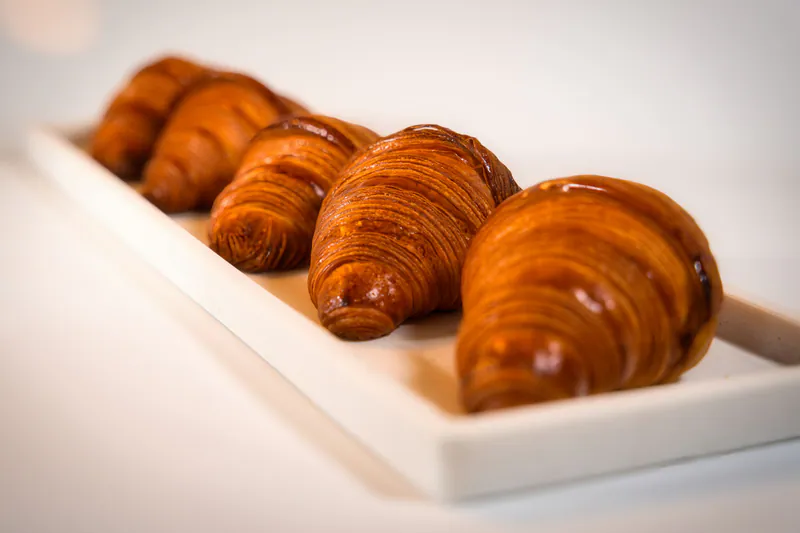
Croissants
 French · 19 h 20 min · 281 kcal · Contains egg
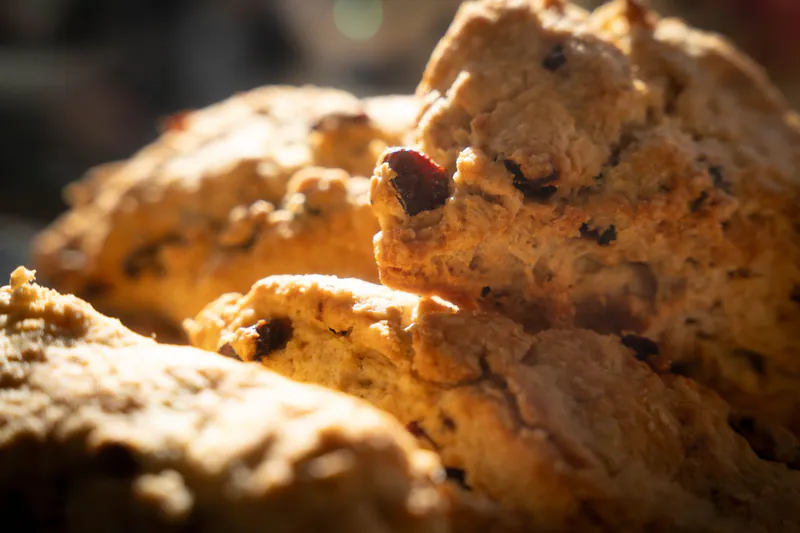
Scones
 British · 27 min · 270 kcal · Vegetarian
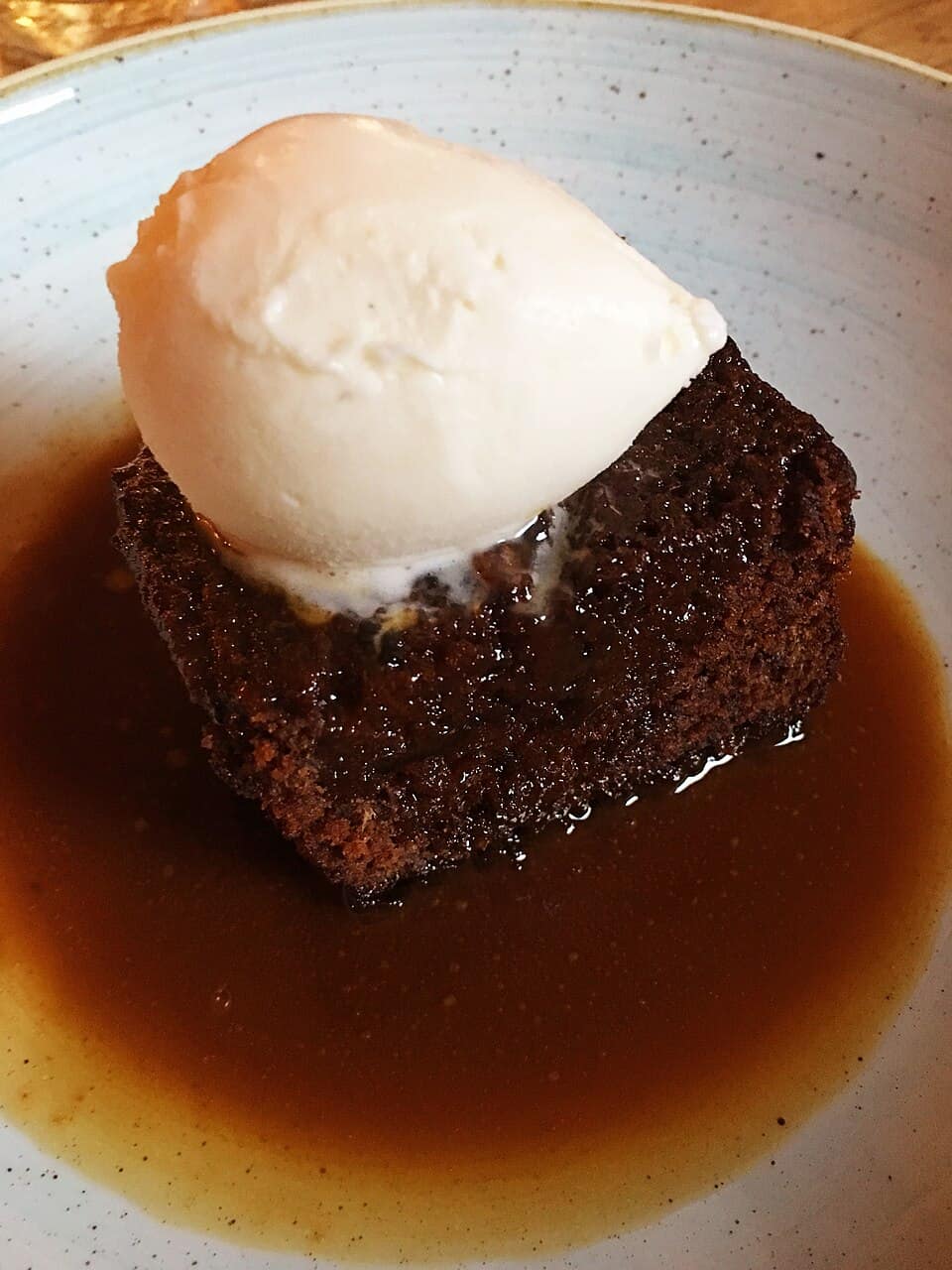
Sticky toffee pudding
British · 1 h 10 min · 566 kcal · Contains egg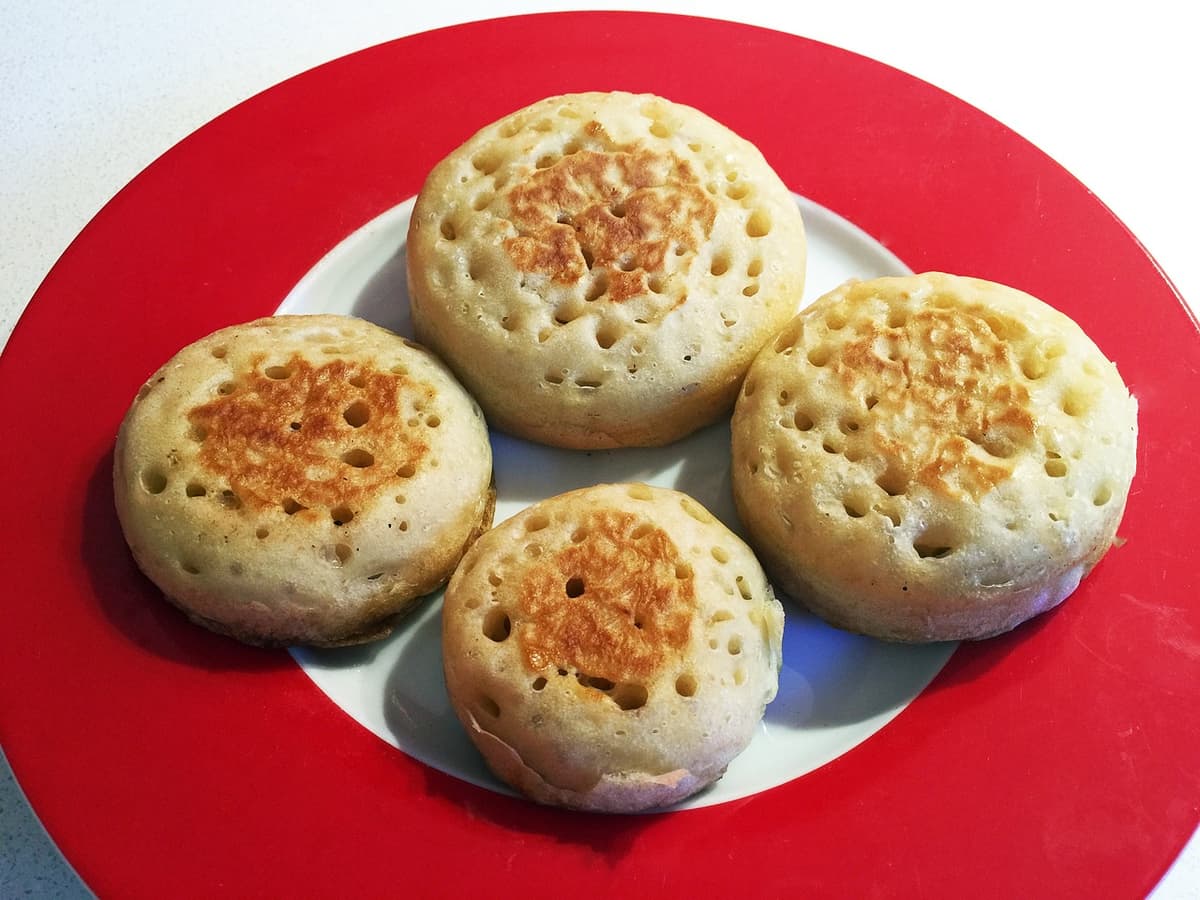
Crumpets
British · 2 h 5 min · 135 kcal · Vegetarian