
Sattu paratha
Vegetarian
सत्तू पराठा · sattu paratha
Bihar's best-known paratha: roasted gram flour mixed with onion, garlic, ginger, nigella and ajwain, moistened with mustard oil and lemon, and sealed into wheat dough. Earthy, sharp and filling.
Sattu paratha is an Indian bread, ready in about 1 hour 4 minutes and made with whole-wheat flour, sattu (roasted gram flour) and mustard oil. It serves 6 and is rated intermediate to cook.
No licensed photograph of this dish yet.
- Prep
- 20 min
- Cook
- 24 min
- Rest
- 20 min
- Total
- 1 h 4 min
- Serves
- 6
- Level
- Intermediate
- Calories
- 363
Ingredients
For the dough
For the filling
For cooking
Method
Step 1
Mix the atta (opens in a new tab) and salt, rub in the oil, then add the water a little at a time, kneading for about 5 minutes into a soft, smooth dough that no longer sticks to your fingers. Cover and rest for 20 minutes so it rolls out without springing back.
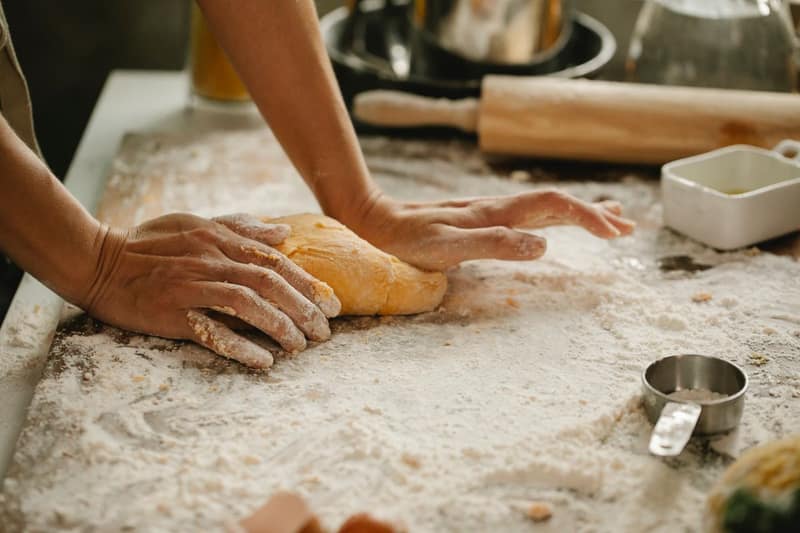
How it looks · Photo: Klaus Nielsen on Pexels Step 2
Mix the sattu (opens in a new tab) with the onion (opens in a new tab), garlic (opens in a new tab), ginger, chilli, coriander, ajwain (opens in a new tab), nigella seeds (opens in a new tab), mustard oil (opens in a new tab), lemon juice (opens in a new tab) and salt. Sprinkle in the water a spoonful at a time until the mixture holds together when pressed but is still crumbly.
- 8 min
Too wet and it turns pasty; too dry and it spills out when you roll.
Step 3
Divide the dough and the filling into 6 equal portions. Flatten a dough ball into a 10 cm cup, pack in one portion of filling, then pleat the edges up over it and pinch firmly to seal. Turn it seam-side down, press flat, dust with flour and roll lightly from the centre outwards into a 17 cm round.
If filling peeps through, patch the spot with a pinch of dry flour and keep rolling more gently.
Step 4
Lay a paratha on a hot tawa or heavy pan over medium-high heat. When small bubbles appear (about 30 seconds) flip it; after another 30 seconds brush the top with ghee (opens in a new tab), flip again and press the edges with a spatula (opens in a new tab) until golden-brown patches form. Brush and cook the second side the same way — 3 to 4 minutes per paratha in all.
- 24 min
- medium-high heat
- Griddle / tawa (opens in a new tab)
- Spatula (opens in a new tab)
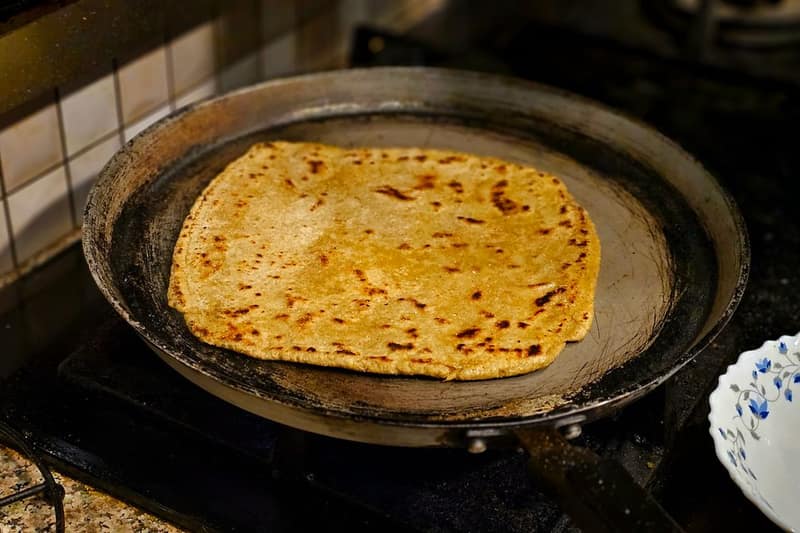
How it looks · Photo: Muhammad Khawar Nazir on Pexels
About this dish
- Origin
- Bihar, India · Commonly attributedStrongly associated with Bihar and neighbouring Jharkhand and eastern Uttar Pradesh, where sattu is an everyday staple.More food from India
- Dish
- Breakfast · Lunch · Dinner · Breads & flatbreads
- Cooking method
- Pan-fried
- Taste
- earthy, nutty, garlicky, tangy
- Diet
- Vegetarian (lacto-ovo) · No nut ingredientsWith the listed swaps: Vegan, Plant-based, Ovo-vegetarian, Dairy-freeWorked out from the ingredients. How labels work
All labels
Vegetarian (lacto-ovo) · Eggetarian · Lacto-vegetarian · Pescatarian · Flexitarian-friendly · Egg-free · No nut ingredients · No added sugar · Alcohol-free · Pork-free · Beef-free - Good for
- Everyday · Budget-friendly · Portable / lunchbox
- Cook more with
- Whole-wheat flour · Sattu (roasted gram flour) · Mustard oil · Onion · Garlic · Fresh ginger
- Techniques
- Pan-frying · Kneading
Allergens
- Contains, can be adapted: Milkfrom ghee
- Contains: Wheatfrom whole-wheat flour
- Contains: Glutenfrom whole-wheat flour
- Contains, can be adapted: Mustardfrom mustard oil
Based on typical versions of these ingredients and not verified allergen-free. Brands differ and cross-contact happens, so always check labels. For severe allergies, follow your clinician’s advice.
Nutrition
363 kcal per serving
Estimated1 serving ≈ 143 g · recipe makes 6
Where the energy comes from
- Protein 13%
- Carbohydrate 56%
- Fat 30%
| Nutrient | Per serving | Per 100 g* |
|---|---|---|
| Energy | 363 kcal | 253 kcal |
| Protein | 12.6 g | 8.8 g |
| Carbohydrate | 53.1 g | 37 g |
| Net carbohydrate | 44.7 g | 31.2 g |
| Sugars | 3.6 g | 2.5 g |
| Added sugars | 0 g | 0 g |
| Fibre | 8.4 g | 5.8 g |
| Fat | 12.6 g | 8.8 g |
| Saturated fat | 4.4 g | 3.1 g |
| Trans fat | — | — |
| Cholesterol | 15 mg | 10 mg |
| Sodium | 505 mg | 352 mg |
| Salt equivalent | 1.3 g | 0.9 g |
Vitamins & minerals per serving
- Potassium
- 440 mg
- Calcium
- 41 mg
- Iron
- 3.1 mg
- Magnesium
- 114 mg
- Vitamin A (RAE)
- 52 µg
- Vitamin C
- 8 mg
- Vitamin D
- 0 µg
- Vitamin B12
- 0 µg
- Folate (DFE)
- 135 µg
How these numbers were made
- Calculated from USDA FoodData Central (SR Legacy) per-100 g values and the listed quantities.
- *Per 100 g of combined raw ingredients; the cooked dish may weigh more or less.
- Not counted (tiny amounts or “to taste”): ajwain, nigella seeds.
- Sattu (roasted gram flour): Chickpea flour (FDC 174288) used as a stand-in; sattu is flour of roasted, husked black chickpeas, very close in composition.
- “—” means the value isn’t known for enough of the ingredients; it is never zero by default.
- Values are estimates for guidance, not for medical dosing. U.S. Department of Agriculture, Agricultural Research Service. FoodData Central, 2019. fdc.nal.usda.gov.
Good to know
Tips
- Taste the filling: sattu needs plenty of salt and sourness to come alive.
Common mistakes
- Skipping the binding water — dry sattu bursts through the dough.
Serve with
- Serve with baingan bharta, aloo chokha, curd or a sharp mango pickle.
Storage
- Keeps a day at room temperature wrapped in a cloth, or 3 days in the fridge — a classic travel food.
Reheating
- Reheat on a dry tawa over medium heat for about a minute a side until crisp and hot through.
History
Sattu — flour of roasted pulses or grains — is a cheap, long-keeping staple across Bihar, where it is also drunk as a cooling summer sherbet and stuffed into litti.
Confidence: Commonly attributed
Original editorial recipe · FriendsPantry editorial · Not yet independently reviewed · Added · Updated
Recipe DNA
How this dish is built
Built from the recipe’s own sections. Each band’s width is its share of the dish by weight. Choose a component to see what it does.
Structure
For the dough
- Whole-wheat flour300 g
- Salt0.5 tsp · 3 g
- Neutral vegetable oil2 tsp · 9.1 g
- Water189 ml · 189 g
Baker’s notes
Customise in Bread & BakeryTimeline and readiness cues
Mix and knead · about 44 min
Knead until smooth and soft; it should feel like an earlobe.
Rest · about 20 min
Covered so it doesn't dry out; relaxed dough rolls and shapes without springing back.
- Start to finish: about 1 h 4 min. Times are a guide — warmth changes everything; follow the cues.
The dough
| Ingredient | Role | Weight | Baker’s % |
|---|---|---|---|
| Whole-wheat flour | Flour | 300 g | 100% |
| Water | Water | 189 g | 63% |
| Neutral vegetable oil | Fat | 9 g | 3% |
| Salt | Salt | 3 g | 1% |
- Total flour
- 300 g
- Hydration
- 63%
- With milk, eggs…
- 63%
- Wholegrain
- 100%
Hydration = water ÷ flour × 100. Milk is about 87% water and eggs about 75%, so they’re shown separately as “with milk, eggs…”.
- Medium dough (55–65%) — soft and easy to knead; sandwich loaves and rolls.
- Salt 1% — on the low side (1.8–2.2% is typical for bread).
- 100% wholegrain — absorbs more water and gives a denser, nuttier loaf.
If something goes wrong
Pale crust
Likely causes
- Oven too cool
- Too little sugar or no milk/egg for browning
- Over-fermented (yeast ate the sugars)
What to do
- Check the oven with a thermometer
- Brush with egg wash or milk
- Shorten the fermentation
Burnt bottom
Likely causes
- Tray too close to the heat
- Dark tray absorbs more heat
- Too much sugar in the dough
What to do
- Bake on the middle shelf
- Double up trays or use a light-coloured one
- Lower the temperature 10–15 °C and bake a little longer
Tough or chewy flatbread
Likely causes
- Dough too stiff
- Not rested
- Cooked too slowly on too cool a pan
What to do
- Add water until the dough is soft and slightly tacky
- Rest 20–30 minutes covered so the gluten relaxes
- Cook on a very hot tawa or pan — quickly
Reviews & corrections
Reviews come from signed-in cooks and appear after a moderator checks them. We never show made-up ratings.
You might also like
Dal paratha
 Indian · 3 h 24 min · 334 kcal · Vegetarian
Litti chokha
Indian · 1 h 35 min · 721 kcal · Vegetarian
Chicken biryani
Indian · 2 h 55 min · 681 kcal
Aloo paratha
Punjabi · 1 h 15 min · 430 kcal · Vegetarian