
Okonomiyaki
Non-vegetarian
お好み焼き · okonomiyaki
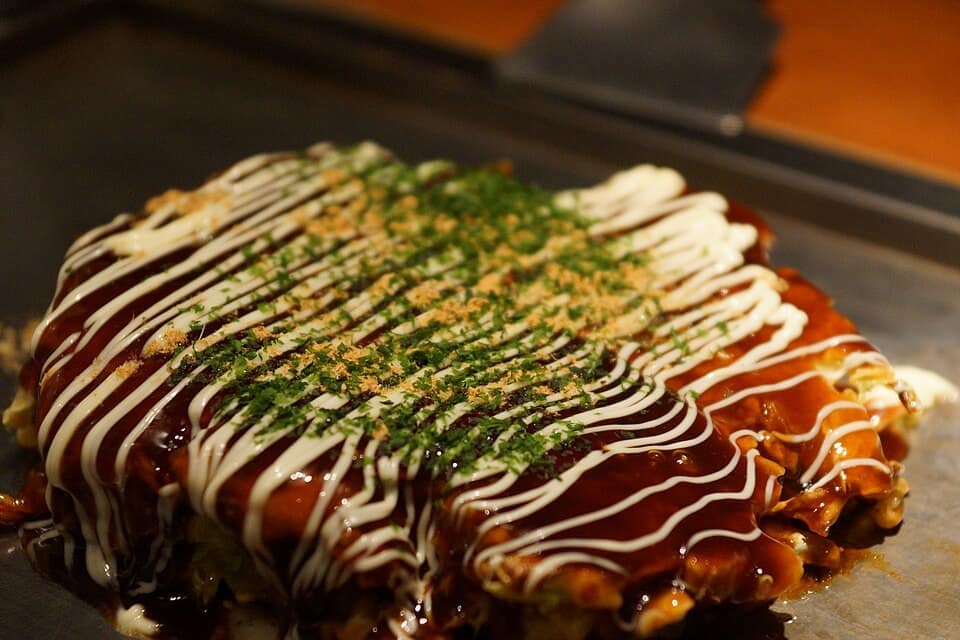
A thick savoury pancake packed with shredded cabbage and topped with pork belly, cooked on a griddle and finished with tangy okonomi sauce, mayonnaise and bonito flakes.
Okonomiyaki is a Japanese main course, ready in about 35 minutes and made with all-purpose flour and cabbage. It serves 2 and is rated easy to cook.
- Prep
- 15 min
- Cook
- 20 min
- Total
- 35 min
- Serves
- 2
- Level
- Easy
- Calories
- 658
Ingredients
For the okonomi sauce
Method
Step 1
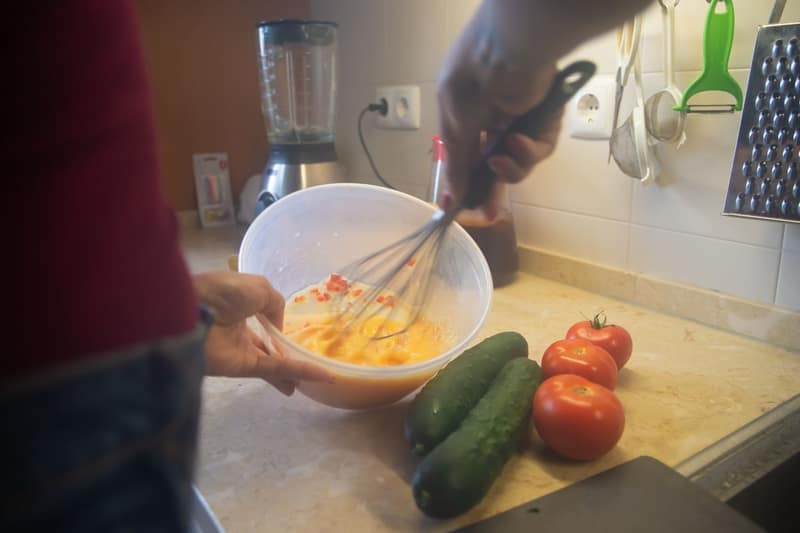
Whisk the flour, dashi (opens in a new tab), eggs (opens in a new tab) and salt into a smooth batter. Fold in the cabbage (opens in a new tab) and spring onion (opens in a new tab) until everything is coated.
- 5 min
How it looks · Photo: Kampus Production on Pexels Step 2
Mix the Worcestershire, ketchup (opens in a new tab), soy sauce (opens in a new tab) and honey (opens in a new tab) for the sauce.
- 1 min
Step 3
Heat half the oil in a frying pan over medium heat. Spoon in half the batter and shape into a round about 2 cm thick. Lay half the pork slices on top.
- 2 min
- medium heat
- Frying pan / skillet (opens in a new tab)
Step 4
Cook until the underside is golden, then flip and cook pork-side down until the pork is crisp and the centre is set. Repeat with the rest.
- 14 min
- medium heat
Food safety: Make sure the pork is cooked through and the batter set in the middle.
Step 5
Brush with the sauce, drizzle with mayonnaise (opens in a new tab) and scatter with bonito flakes (opens in a new tab) and nori (opens in a new tab). Cut into wedges.
- 1 min
How it looks · Photo: Klaus Nielsen on Pexels
About this dish
- Origin
- Kansai (Osaka) style, Japan · Well documentedMore food from Japan
- Dish
- Lunch · Dinner · Main courses · Street food
- Cooking method
- Pan-fried
- Taste
- savoury, sweet & savoury, umami, mild
- Diet
- Dairy-free · No nut ingredients · High-proteinWith the listed swaps: Pescatarian, Pork-freeWorked out from the ingredients. How labels work
All labels
Non-vegetarian · Flexitarian-friendly · Dairy-free · No nut ingredients · Alcohol-free · Beef-free · High-protein - Good for
- Street food · Budget-friendly · Everyday
- Cook more with
- All-purpose flour · Cabbage · Dashi · Egg · Spring onion · Pork belly
- Techniques
- Pan-frying
Allergens
- Contains: Eggsfrom egg, mayonnaise
- Contains: Fishfrom dashi, worcestershire sauce, katsuobushi (bonito flakes)
- Contains: Wheatfrom all-purpose flour, soy sauce
- Contains: Glutenfrom all-purpose flour, worcestershire sauce, soy sauce
- Contains: Soyfrom soy sauce
- May contain: Mustardfrom tomato ketchup, mayonnaise
- May contain: Celeryfrom worcestershire sauce, tomato ketchup
- May contain: Sulphitesfrom worcestershire sauce
Based on typical versions of these ingredients and not verified allergen-free. Brands differ and cross-contact happens, so always check labels. For severe allergies, follow your clinician’s advice.
Nutrition
658 kcal per serving
Estimated1 serving ≈ 414 g · recipe makes 2
Where the energy comes from
- Protein 12%
- Carbohydrate 34%
- Fat 53%
| Nutrient | Per serving | Per 100 g* |
|---|---|---|
| Energy | 658 kcal | 159 kcal |
| Protein | 20 g | 4.8 g |
| Carbohydrate | 56.8 g | 13.7 g |
| Net carbohydrate | 51.2 g | 12.4 g |
| Sugars | 11.8 g | 2.9 g |
| Added sugars | — | — |
| Fibre | 5.5 g | 1.3 g |
| Fat | 39.2 g | 9.5 g |
| Saturated fat | 12 g | 2.9 g |
| Trans fat | — | — |
| Cholesterol | 223 mg | 54 mg |
| Sodium | 947 mg | 229 mg |
| Salt equivalent | 2.4 g | 0.6 g |
Vitamins & minerals per serving
- Potassium
- 766 mg
- Calcium
- 131 mg
- Iron
- 5.3 mg
- Magnesium
- 50 mg
- Vitamin A (RAE)
- 101 µg
- Vitamin C
- 60 mg
- Vitamin D
- —
- Vitamin B12
- 1.3 µg
- Folate (DFE)
- 247 µg
How these numbers were made
- Calculated from USDA FoodData Central (SR Legacy) per-100 g values and the listed quantities.
- *Per 100 g of combined raw ingredients; the cooked dish may weigh more or less.
- Optional ingredients are not included: mayonnaise, katsuobushi (bonito flakes), nori.
- Dashi: Home-prepared fish stock (FDC 172885) used as a stand-in for katsuobushi-kombu dashi; both are very low in energy.
- “—” means the value isn’t known for enough of the ingredients; it is never zero by default.
- Values are estimates for guidance, not for medical dosing. U.S. Department of Agriculture, Agricultural Research Service. FoodData Central, 2019. fdc.nal.usda.gov.
Good to know
Tips
- Press the pancake gently only once after flipping — pressing repeatedly makes it dense.
Common mistakes
- Overmixing the batter after adding the cabbage knocks out the air and makes the pancake dense.
- Pressing down on the pancake with the spatula while it cooks — it should stay thick and fluffy.
Serve with
- Serve straight from the pan with cold tea or beer.
Storage
- Refrigerate for up to 2 days.
Reheating
- Reheat in a covered frying pan over medium-low heat.
Variations
- Hiroshima-style: Thin crêpe, cabbage, pork and yakisoba noodles layered rather than mixed.
Original editorial recipe · FriendsPantry editorial · Not yet independently reviewed · Added · Updated
Sauces, chutneys & dips for this dish
Recipe DNA
How this dish is built
Built from the recipe’s own sections. Each band’s width is its share of the dish by weight. Choose a component to see what it does.
What the dish is built around
Main ingredient
- All-purpose flour100 g
- Egg2 piece · 100 g
- Cabbage, finely shredded300 g
- Pork belly, very thinly sliced100 g
- Katsuobushi (bonito flakes) (optional)3 g
- Nori, crumbled (optional)1 sheet · 3 g
Reviews & corrections
Reviews come from signed-in cooks and appear after a moderator checks them. We never show made-up ratings.
You might also like
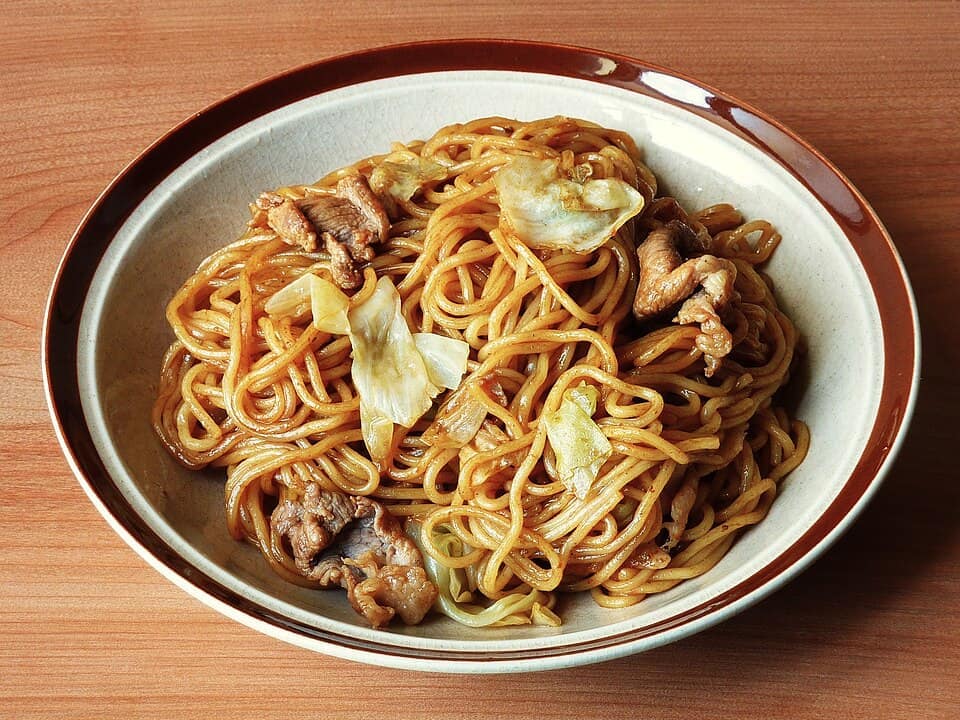
Yakisoba
 Japanese · 27 min · 677 kcal
Takoyaki (octopus balls)
Japanese · 35 min · 322 kcal
Tonkatsu
Japanese · 35 min · 712 kcal
Japanese curry rice
Japanese · 1 h 5 min · 748 kcal