
Osaman
Vegetarian
ઓસામણ · osāmaṇ
A thin, sweet-sour Gujarati lentil soup made from well-cooked toor dal diluted and strained, flavoured with ginger, green chilli, kokum and jaggery and tempered with cloves and cinnamon.
Osaman is a Gujarati soup from India, ready in about 45 minutes and made with toor dal (split pigeon peas) and jaggery / palm sugar. It serves 4 and is rated easy to cook.
No licensed photograph of this dish yet.
- Prep
- 10 min
- Cook
- 35 min
- Total
- 45 min
- Serves
- 4
- Level
- Easy
- Calories
- 108
Ingredients
For the tempering
Method
Step 1
Cook the toor dal (opens in a new tab) with 400 ml of the water and the turmeric (opens in a new tab) until it is completely broken down (about 4 whistles in a pressure cooker (opens in a new tab)).
- 20 min
- medium heat
- Pressure cooker (opens in a new tab)
Step 2
Whisk the dal with the remaining water until smooth, then pour it through a sieve into a saucepan (opens in a new tab), pressing through as much as you can. It should be thin like a broth.
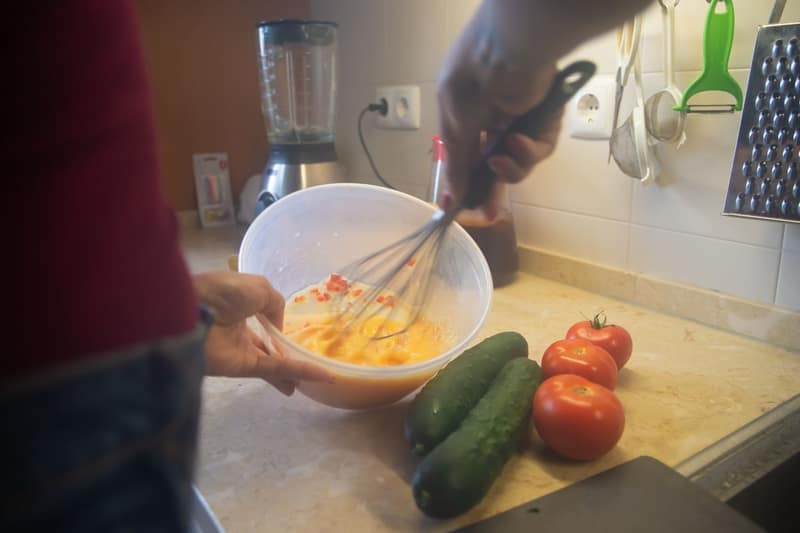
How it looks · Photo: Kampus Production on Pexels Step 3
Add the ginger, green chilli (opens in a new tab), kokum (opens in a new tab), jaggery and salt and simmer for 8–10 minutes until the jaggery dissolves and the kokum has given up its colour.
- 10 min
- medium-low heat
Step 4
Heat the ghee (opens in a new tab), crackle the mustard seeds (opens in a new tab) and cumin (opens in a new tab), then add the cloves (opens in a new tab), cinnamon (opens in a new tab), curry leaves (opens in a new tab) and asafoetida (opens in a new tab). Pour over the osaman and add the coriander.
- 2 min
- medium heat
About this dish
- Origin
- Gujarat, India · Commonly attributedMore food from India
- Dish
- Lunch · Dinner · Soups
- Cooking method
- Boiled, Simmered
- Taste
- sweet & sour, tangy, aromatic / warmly spiced, mild
- Diet
- Vegetarian (lacto-ovo) · No nut ingredients · Low-carbWith the listed swaps: Vegan, Plant-based, Ovo-vegetarian, Dairy-freeWorked out from the ingredients. How labels work
All labels
Vegetarian (lacto-ovo) · Eggetarian · Lacto-vegetarian · Pescatarian · Flexitarian-friendly · Whole-food focused · Egg-free · No nut ingredients · Alcohol-free · Pork-free · Beef-free · Low-carb · Low-fat - Good for
- Everyday · Budget-friendly
- Cook more with
- Toor dal (split pigeon peas) · Jaggery / palm sugar · Turmeric · Fresh ginger · Green chilli · Kokum
- Techniques
- Boiling · Simmering · Pressure cooking
Allergens
- Contains, can be adapted: Milkfrom ghee
- May contain: Wheatfrom asafoetida
- May contain: Glutenfrom asafoetida
- Contains: Mustardfrom mustard seeds
Based on typical versions of these ingredients and not verified allergen-free. Brands differ and cross-contact happens, so always check labels. For severe allergies, follow your clinician’s advice.
Nutrition
108 kcal per serving
Estimated1 serving ≈ 335 g · recipe makes 4
Where the energy comes from
- Protein 16%
- Carbohydrate 62%
- Fat 22%
| Nutrient | Per serving | Per 100 g* |
|---|---|---|
| Energy | 108 kcal | 32 kcal |
| Protein | 4.4 g | 1.3 g |
| Carbohydrate | 17.5 g | 5.2 g |
| Net carbohydrate | 14 g | 4.2 g |
| Sugars | — | — |
| Added sugars | 3.2 g | 1 g |
| Fibre | 3.5 g | 1.1 g |
| Fat | 2.8 g | 0.8 g |
| Saturated fat | 1.5 g | 0.4 g |
| Trans fat | 0 g | 0 g |
| Cholesterol | 6 mg | 2 mg |
| Sodium | 740 mg | 221 mg |
| Salt equivalent | 1.9 g | 0.6 g |
Vitamins & minerals per serving
- Potassium
- 311 mg
- Calcium
- 71 mg
- Iron
- 1.5 mg
- Magnesium
- 47 mg
- Vitamin A (RAE)
- 22 µg
- Vitamin C
- 4 mg
- Vitamin D
- 0 µg
- Vitamin B12
- 0 µg
- Folate (DFE)
- 87 µg
How these numbers were made
- Calculated from USDA FoodData Central (SR Legacy) per-100 g values and the listed quantities.
- *Per 100 g of combined raw ingredients; the cooked dish may weigh more or less.
- Not counted (tiny amounts or “to taste”): curry leaves, asafoetida.
- Kokum: Tamarind (FDC 167763) as a stand-in sour dried fruit; kokum is used in small amounts.
- Jaggery / palm sugar: Brown sugar (FDC 168833) used as a stand-in for unrefined cane jaggery and palm sugar.
- “—” means the value isn’t known for enough of the ingredients; it is never zero by default.
- Values are estimates for guidance, not for medical dosing. U.S. Department of Agriculture, Agricultural Research Service. FoodData Central, 2019. fdc.nal.usda.gov.
Good to know
Tips
- Adjust the sweet-sour balance at the end with more jaggery or a squeeze of lemon — Gujarati households vary widely.
Common mistakes
- Not straining the dal — osaman should be a thin, smooth broth with no grainy bits.
Serve with
- Sip from a bowl, or serve with rice and khichdi.
Storage
- Keeps 3 days refrigerated.
Reheating
- Reheat gently; it may need a splash of water.
Original editorial recipe · FriendsPantry editorial · Not yet independently reviewed · Added · Updated
Recipe DNA
How this dish is built
Built from the recipe’s own sections. Each band’s width is its share of the dish by weight. Choose a component to see what it does.
Reviews & corrections
Reviews come from signed-in cooks and appear after a moderator checks them. We never show made-up ratings.
You might also like
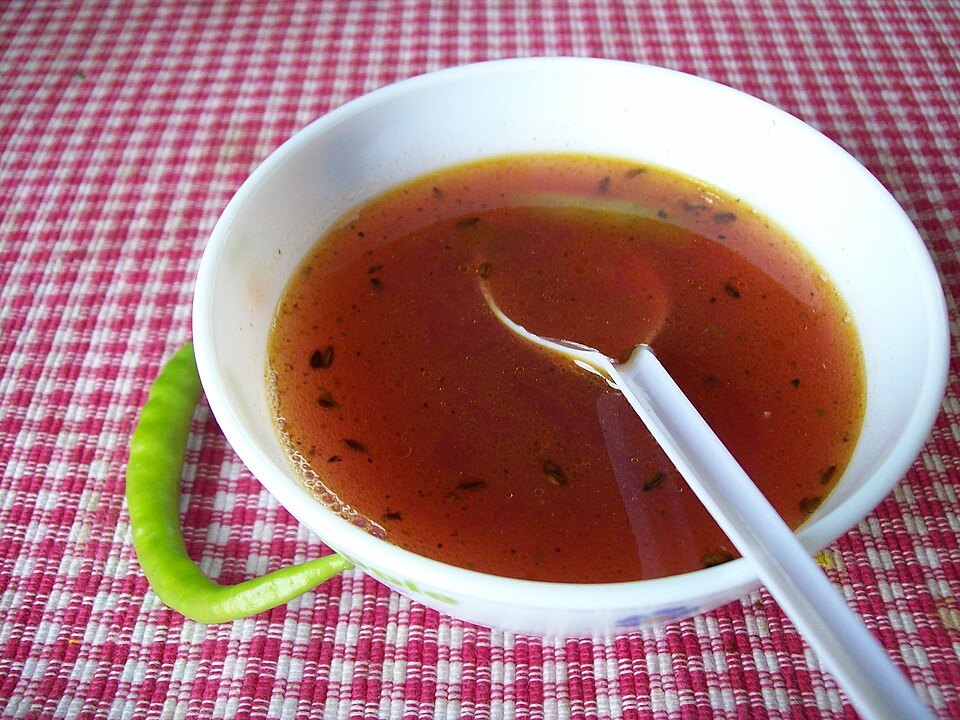
Tomato saar
 Indian · 35 min · 76 kcal · Vegetarian
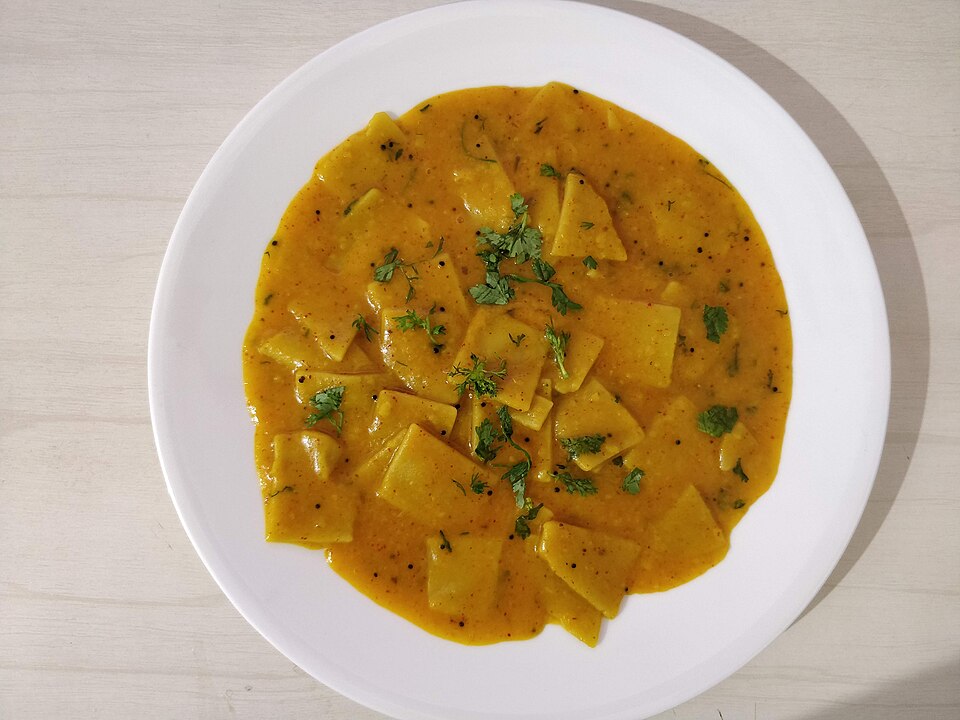
Dal dhokli
Gujarati · 1 h 10 min · 368 kcal · VegetarianGujarati dal
Gujarati · 50 min · 212 kcal · Vegetarian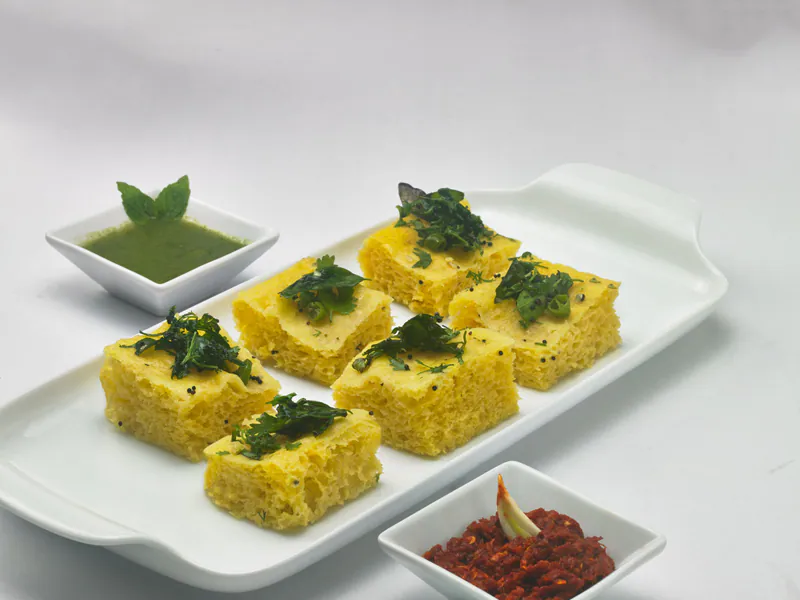
Khaman dhokla
Gujarati · 45 min · 284 kcal · Vegan