
Tarte Tatin
Vegetarian
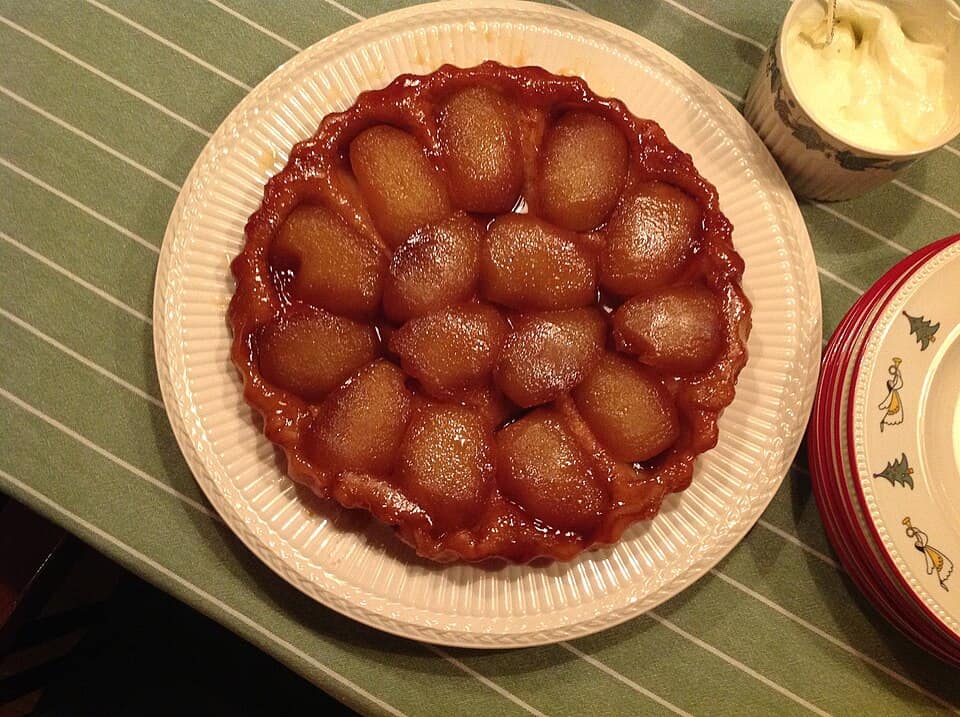
Apples cooked in buttery caramel under a lid of pastry, then turned out so the glossy, burnished fruit sits on top. A French classic that is easier than it looks with shop-bought puff pastry.
Tarte Tatin is a French dessert from France, ready in about 1 hour 20 minutes and made with sugar, apple and all-butter puff pastry. It serves 8 and is rated intermediate to cook.
- Prep
- 20 min
- Cook
- 50 min
- Rest
- 10 min
- Total
- 1 h 20 min
- Serves
- 8
- Level
- Intermediate
- Calories
- 417
Method
Step 1
Heat the oven (opens in a new tab) to 200 °C. In a 24 cm ovenproof frying pan, melt the sugar (opens in a new tab) over medium heat without stirring, swirling the pan, until it becomes an amber caramel. Off the heat, stir in the butter (opens in a new tab) and salt.
- 8 min
- 200°C
- medium heat
- Frying pan / skillet (opens in a new tab)
Food safety: Caramel is extremely hot — keep children away and don't touch or taste it.
Step 2
Pack the apple quarters tightly into the pan, rounded side down. Cook over medium-low heat for 10–15 minutes, basting, until the apples (opens in a new tab) soften and the caramel thickens.
- 15 min
- medium-low heat
Step 3
Roll the pastry slightly larger than the pan, lay it over the apples (opens in a new tab) and tuck the edges down inside the pan. Prick a few holes in it.
Step 5
Rest for 10 minutes, then put a plate over the pan and carefully invert the tart. Serve warm with cream.
- 10 min
Food safety: Use oven gloves when inverting; hot caramel may run.
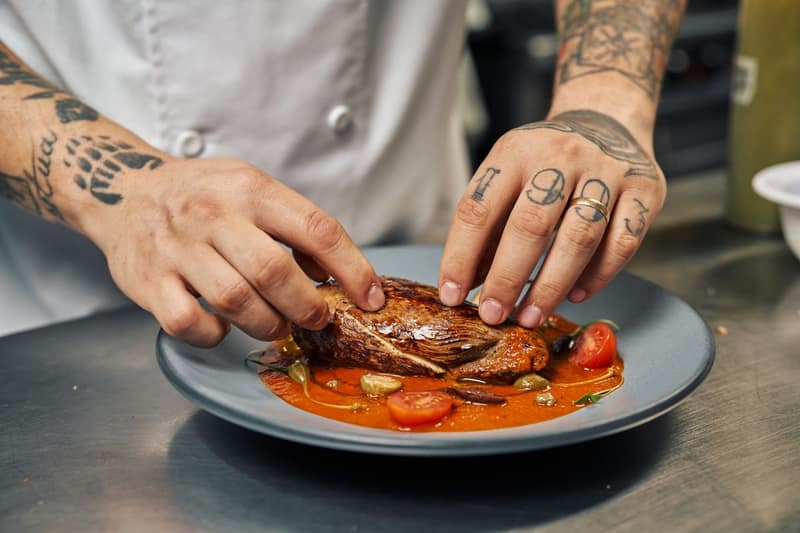
How it looks · Photo: Willians Huerta on Pexels
About this dish
- Origin
- Centre-Val de Loire (Lamotte-Beuvron), France · Commonly attributedPopularly credited to the Tatin sisters' hotel; the story is more legend than record.Also popular in United KingdomMore food from France
- Dish
- Dessert · Desserts · Pastries
- Cooking method
- Oven-baked
- Taste
- sweet, buttery, fruity
- Diet
- Vegetarian (lacto-ovo) · No nut ingredientsWorked out from the ingredients. How labels work
All labels
Vegetarian (lacto-ovo) · Eggetarian · Lacto-vegetarian · Pescatarian · Flexitarian-friendly · Egg-free · No nut ingredients · Alcohol-free · Pork-free · Beef-free · Low-sodium - Good for
- Festive & celebration
- Cook more with
- Sugar · Apple · All-butter puff pastry · Butter
- Techniques
- Baking
Allergens
- Contains: Milkfrom butter, all-butter puff pastry, heavy cream
- Contains: Wheatfrom all-butter puff pastry
- Contains: Glutenfrom all-butter puff pastry
Based on typical versions of these ingredients and not verified allergen-free. Brands differ and cross-contact happens, so always check labels. For severe allergies, follow your clinician’s advice.
Nutrition
417 kcal per serving
Estimated1 serving ≈ 201 g · recipe makes 8
Where the energy comes from
- Protein 3%
- Carbohydrate 52%
- Fat 45%
| Nutrient | Per serving | Per 100 g* |
|---|---|---|
| Energy | 417 kcal | 207 kcal |
| Protein | 3.3 g | 1.7 g |
| Carbohydrate | 55.4 g | 27.5 g |
| Net carbohydrate | 51.6 g | 25.6 g |
| Sugars | 33 g | 16.4 g |
| Added sugars | 18.8 g | 9.3 g |
| Fibre | 3.8 g | 1.9 g |
| Fat | 21.6 g | 10.7 g |
| Saturated fat | 7.7 g | 3.8 g |
| Trans fat | — | — |
| Cholesterol | 16 mg | 8 mg |
| Sodium | 169 mg | 84 mg |
| Salt equivalent | 0.4 g | 0.2 g |
Vitamins & minerals per serving
- Potassium
- 171 mg
- Calcium
- 14 mg
- Iron
- 1.2 mg
- Magnesium
- 13 mg
- Vitamin A (RAE)
- 55 µg
- Vitamin C
- 6 mg
- Vitamin D
- —
- Vitamin B12
- 0 µg
- Folate (DFE)
- 54 µg
How these numbers were made
- Calculated from USDA FoodData Central (SR Legacy) per-100 g values and the listed quantities.
- *Per 100 g of combined raw ingredients; the cooked dish may weigh more or less.
- Optional ingredients are not included: heavy cream.
- All-butter puff pastry: Frozen puff pastry (FDC 172790). Shop-bought puff pastry varies; some brands use vegetable fat.
- “—” means the value isn’t known for enough of the ingredients; it is never zero by default.
- Values are estimates for guidance, not for medical dosing. U.S. Department of Agriculture, Agricultural Research Service. FoodData Central, 2019. fdc.nal.usda.gov.
Good to know
Tips
- Choose apples that hold their shape, such as Cox, Braeburn or Granny Smith.
Common mistakes
- Turning it out too late — once the caramel sets, the apples stick to the pan.
Storage
- Best on the day; keeps 2 days in the fridge.
Reheating
- Warm briefly in a low oven.
Variations
- Pear tarte Tatin: Use firm pears instead of apples.
Original editorial recipe · FriendsPantry editorial · Not yet independently reviewed · Added · Updated
Sauces, chutneys & dips for this dish
Recipe DNA
How this dish is built
Grouped by each ingredient’s role in the dish. Each band’s width is its share of the dish by weight. Choose a component to see what it does.
Baker’s notes
Customise in Bread & BakeryTimeline and readiness cues
Mix and knead · about 30 min
Keep the butter and dough at the same cool, pliable temperature; chill between folds.
Rest · about 10 min
Covered so it doesn't dry out; relaxed dough rolls and shapes without springing back.
Bake · about 28 min at 200 °C
Deep golden; bread sounds hollow when tapped underneath, or reads 93–96 °C inside (enriched breads 88–90 °C).
- Start to finish: about 1 h 8 min. Times are a guide — warmth changes everything; follow the cues.
If something goes wrong
Pale crust
Likely causes
- Oven too cool
- Too little sugar or no milk/egg for browning
- Over-fermented (yeast ate the sugars)
What to do
- Check the oven with a thermometer
- Brush with egg wash or milk
- Shorten the fermentation
Burnt bottom
Likely causes
- Tray too close to the heat
- Dark tray absorbs more heat
- Too much sugar in the dough
What to do
- Bake on the middle shelf
- Double up trays or use a light-coloured one
- Lower the temperature 10–15 °C and bake a little longer
Pastry didn't puff or layers leaked butter
Likely causes
- Butter too warm and melted into the dough
- Layers sealed when cutting
- Oven not hot enough
What to do
- Chill between folds; keep everything cold
- Cut straight down with a sharp knife — don't drag
- Bake hot (200–220 °C) so the water in the butter steams the layers apart
Reviews & corrections
Reviews come from signed-in cooks and appear after a moderator checks them. We never show made-up ratings.
You might also like
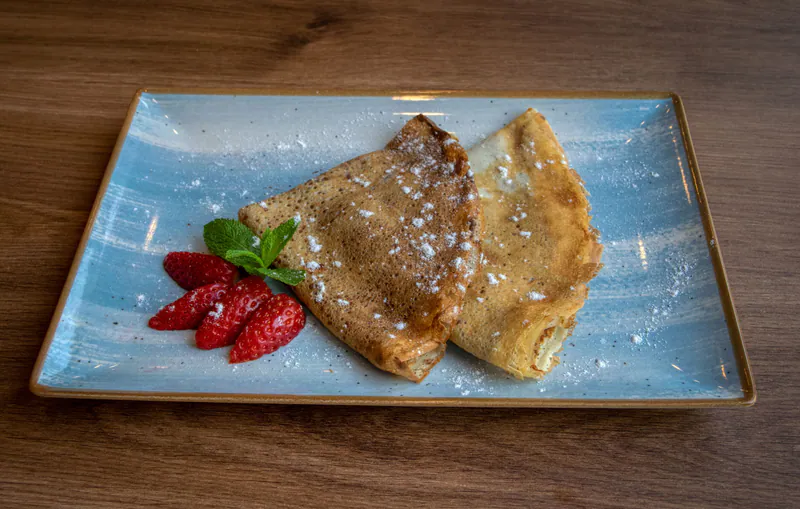
Crêpes
 French · 55 min · 263 kcal · Contains egg
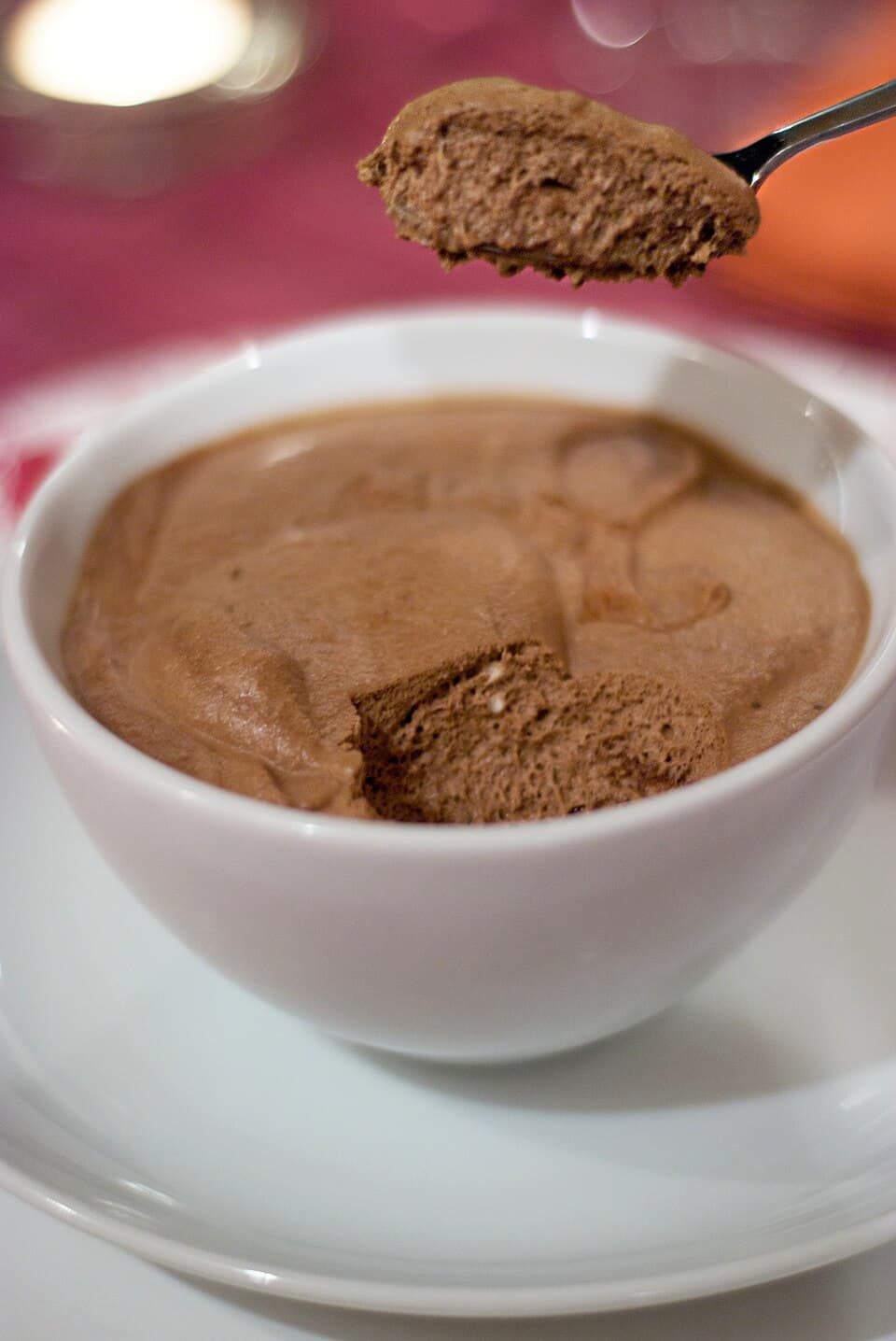
Chocolate mousse
French · 4 h 25 min · 344 kcal · Contains egg
Clafoutis aux cerises
French · 1 h 10 min · 228 kcal · Contains egg
Chocolate éclairs
French · 3 h 30 min · 342 kcal · Contains egg