
Japchae
Non-vegetarian
잡채 · japchae
Chewy sweet potato glass noodles tossed with beef, spinach, mushrooms and colourful vegetables in a sesame-soy dressing. Served warm or at room temperature, often at celebrations.
Japchae is a Korean noodle dish from South Korea, ready in about 45 minutes and made with glass noodles, soy sauce and toasted sesame oil. It serves 4 and is rated intermediate to cook.
No licensed photograph of this dish yet.
- Prep
- 25 min
- Cook
- 20 min
- Total
- 45 min
- Serves
- 4
- Level
- Intermediate
- Calories
- 464
Method
Step 1
Mix the soy sauce (opens in a new tab), sugar (opens in a new tab), sesame oil (opens in a new tab) and garlic (opens in a new tab). Toss the beef with 1 tbsp of this dressing and set aside.
- 5 min
Step 2
Boil the noodles until tender but chewy, about 6–7 minutes. Add the spinach (opens in a new tab) for the last 30 seconds, then drain and rinse both under cold water. Squeeze the spinach and cut the noodles a few times with scissors.
- 8 min
- high heat
- Stockpot / large pot (opens in a new tab)
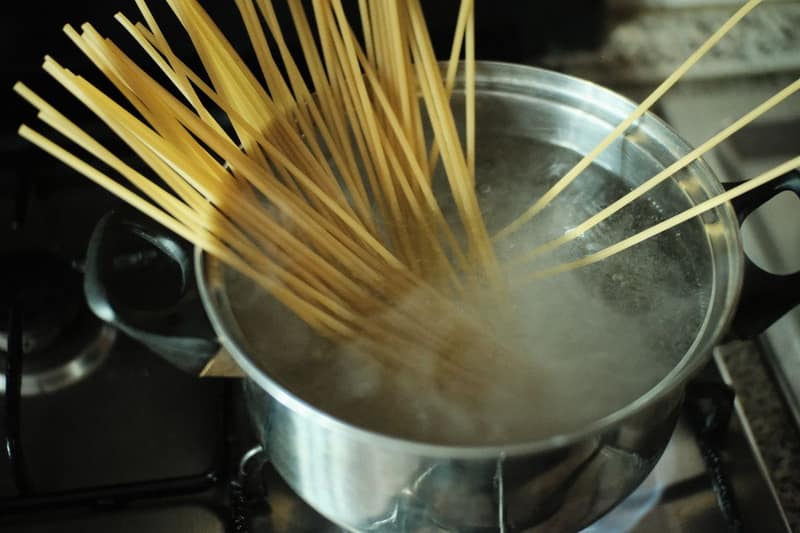
How it looks · Photo: Gianpiero Ferraro on Pexels Step 3
Heat half the oil in a wok (opens in a new tab) and stir-fry the onion (opens in a new tab), carrot (opens in a new tab), pepper (opens in a new tab) and mushrooms with the salt until just tender. Tip into a large bowl.
- 5 min
- medium-high heat
- Wok (opens in a new tab)
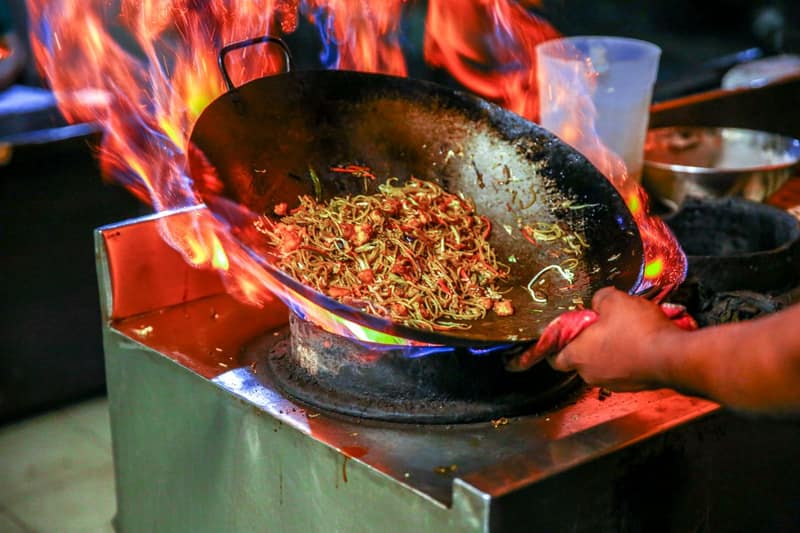
How it looks · Photo: Aesthos AR. Photography on Pexels Step 4
Add the remaining oil and stir-fry the beef until cooked.
- 3 min
- high heat
Step 5
Add the noodles, spinach (opens in a new tab) and remaining dressing to the bowl with the vegetables and beef and toss well. Finish with black pepper (opens in a new tab), sesame seeds (opens in a new tab) and spring onion (opens in a new tab).
- 3 min
About this dish
- Origin
- South Korea · Well documentedMore food from South Korea
- Dish
- Lunch · Dinner · Noodles · Side dishes · Main courses
- Cooking method
- Stir-fried, Boiled, Blanched
- Taste
- sweet & savoury, nutty, mild, garlicky
- Diet
- Dairy-free · No nut ingredientsWith the listed swaps: Vegan, Plant-based, Vegetarian (lacto-ovo), Eggetarian, Lacto-vegetarian, Ovo-vegetarian, Pescatarian, Beef-freeWorked out from the ingredients. How labels work
All labels
Non-vegetarian · Flexitarian-friendly · Dairy-free · Egg-free · No nut ingredients · Alcohol-free · Pork-free - Good for
- Festive & celebration · Make-ahead · Portable / lunchbox
- Cook more with
- Glass noodles · Soy sauce · Toasted sesame oil · Beef sirloin steak · Sugar · Garlic
- Techniques
- Stir-frying · Boiling · Blanching
Allergens
- Contains, can be adapted: Wheatfrom soy sauce
- Contains, can be adapted: Glutenfrom soy sauce
- Contains: Soyfrom soy sauce
- Contains: Sesamefrom toasted sesame oil, sesame seeds
Based on typical versions of these ingredients and not verified allergen-free. Brands differ and cross-contact happens, so always check labels. For severe allergies, follow your clinician’s advice.
Nutrition
464 kcal per serving
Calculated1 serving ≈ 274 g · recipe makes 4
Where the energy comes from
- Protein 11%
- Carbohydrate 51%
- Fat 39%
| Nutrient | Per serving | Per 100 g* |
|---|---|---|
| Energy | 464 kcal | 170 kcal |
| Protein | 12.8 g | 4.7 g |
| Carbohydrate | 59.6 g | 21.8 g |
| Net carbohydrate | 55.7 g | 20.3 g |
| Sugars | 8.8 g | 3.2 g |
| Added sugars | 4.7 g | 1.7 g |
| Fibre | 3.9 g | 1.4 g |
| Fat | 20.2 g | 7.4 g |
| Saturated fat | — | — |
| Trans fat | — | — |
| Cholesterol | — | — |
| Sodium | 1298 mg | 474 mg |
| Salt equivalent | 3.2 g | 1.2 g |
Vitamins & minerals per serving
- Potassium
- 688 mg
- Calcium
- 112 mg
- Iron
- 3.8 mg
- Magnesium
- 76 mg
- Vitamin A (RAE)
- —
- Vitamin C
- —
- Vitamin D
- 0.1 µg
- Vitamin B12
- —
- Folate (DFE)
- 113 µg
How these numbers were made
- Calculated from USDA FoodData Central (SR Legacy) per-100 g values and the listed quantities.
- *Per 100 g of combined raw ingredients; the cooked dish may weigh more or less.
- “—” means the value isn’t known for enough of the ingredients; it is never zero by default.
- Values are estimates for guidance, not for medical dosing. U.S. Department of Agriculture, Agricultural Research Service. FoodData Central, 2019. fdc.nal.usda.gov.
Good to know
Tips
- Toss the noodles with the dressing while still a little warm so they absorb it.
Common mistakes
- Overcooking the noodles makes them clump and turn mushy.
Serve with
- Serve as part of a spread of banchan or as a light main with rice.
Food safety
- Stir-fry the beef until no longer pink.
- Refrigerate leftovers within 2 hours and eat within 3 days.
Storage
- Refrigerate for up to 3 days.
Reheating
- Warm in a pan or microwave until the noodles soften again; refrigerated noodles turn firm.
Original editorial recipe · FriendsPantry editorial · Not yet independently reviewed · Added · Updated
Recipe DNA
How this dish is built
Grouped by each ingredient’s role in the dish. Each band’s width is its share of the dish by weight. Choose a component to see what it does.
What the dish is built around
Main ingredient
- Glass noodles, Korean sweet potato noodles (dangmyeon)200 g
- Beef sirloin steak, cut into thin strips150 g
- Spinach, washed, roots trimmed150 g
- Carrot, cut into matchsticks1 piece · 60 g
- Red bell pepper, thinly sliced1 piece · 120 g
- Shiitake mushrooms, sliced5 piece · 95 g
Reviews & corrections
Reviews come from signed-in cooks and appear after a moderator checks them. We never show made-up ratings.
You might also like
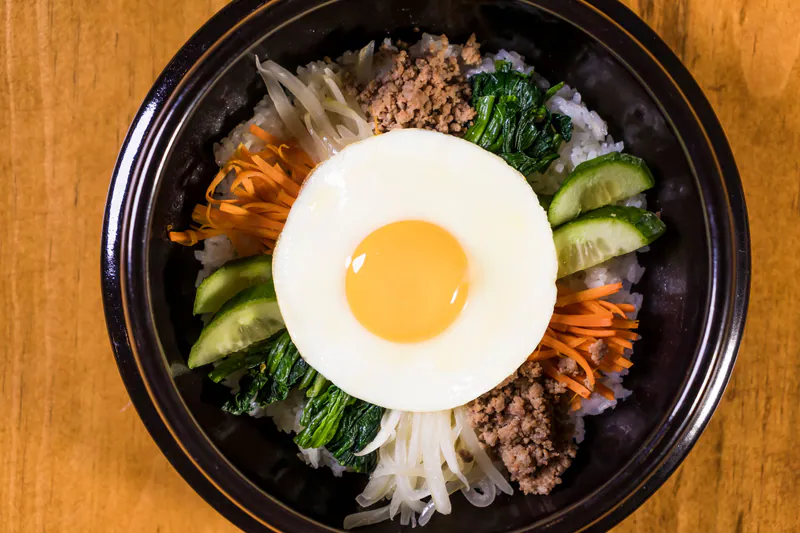
Bibimbap
 Korean · 1 h · 657 kcal
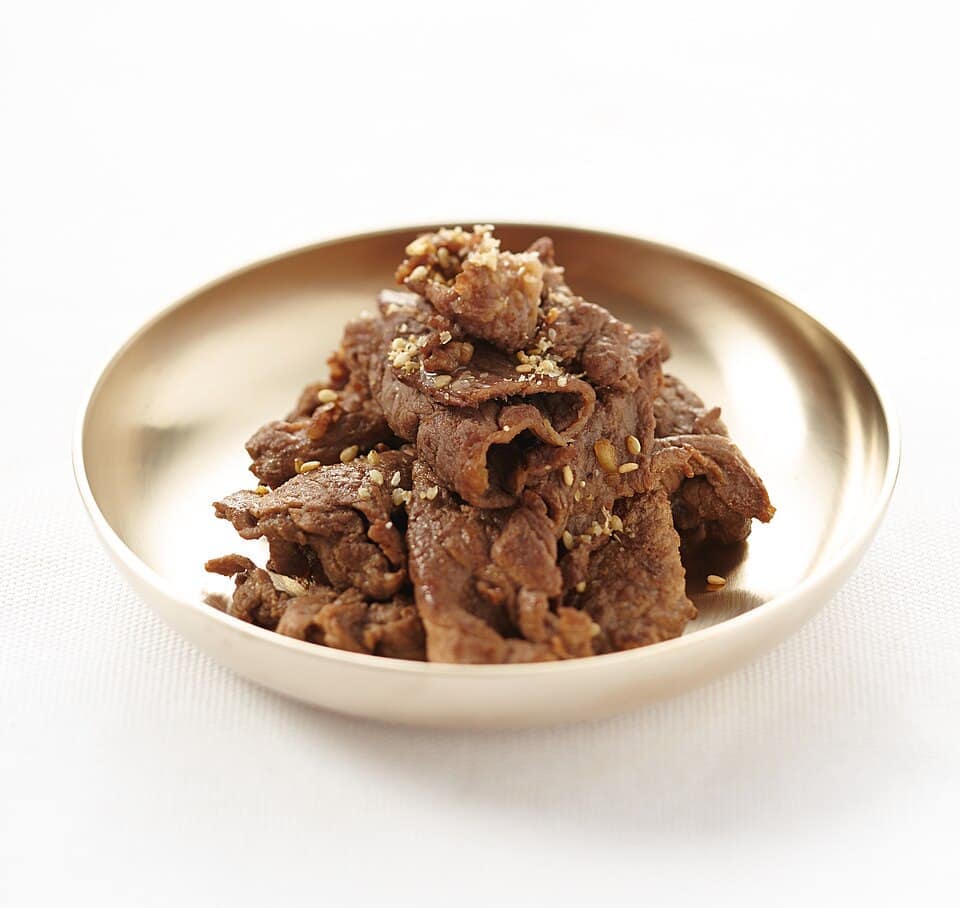
Beef bulgogi
Korean · 55 min · 288 kcal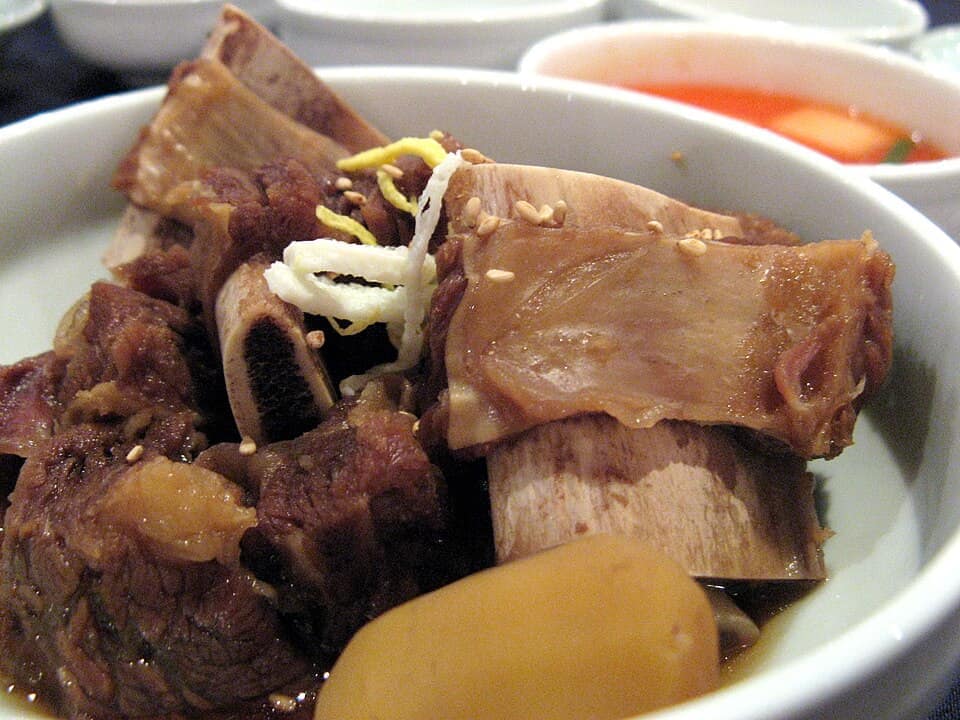
Galbi-jjim
Korean · 2 h 40 min · 599 kcal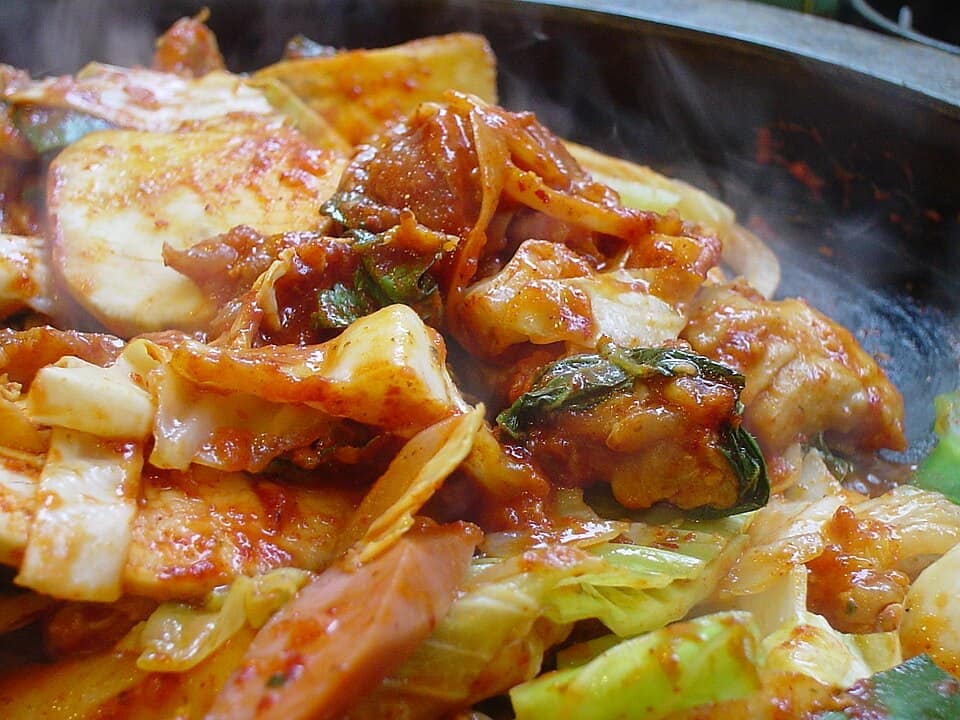
Dakgalbi
Korean · 1 h 10 min · 349 kcal