
Lahoh
Vegetarian
A thin, spongy fermented pancake cooked on one side only so the top is full of holes. Eaten for breakfast in Djibouti and Yemen with honey, ghee or tea, or torn into soups.
Lahoh is a Djiboutian bread, ready in about 4 hours 35 minutes and made with all-purpose flour, sorghum meal and dried yeast. It serves 4 and is rated easy to cook.
No licensed photograph of this dish yet.
- Prep
- 10 min
- Cook
- 25 min
- Rest
- 4 h
- Total
- 4 h 35 min
- Serves
- 4
- Level
- Easy
- Calories
- 308
Many cooks ferment the batter overnight for a tangier result.
Method
Step 1
Whisk (opens in a new tab) the flours, yeast, sugar (opens in a new tab), salt and water into a smooth, pourable batter like single cream.
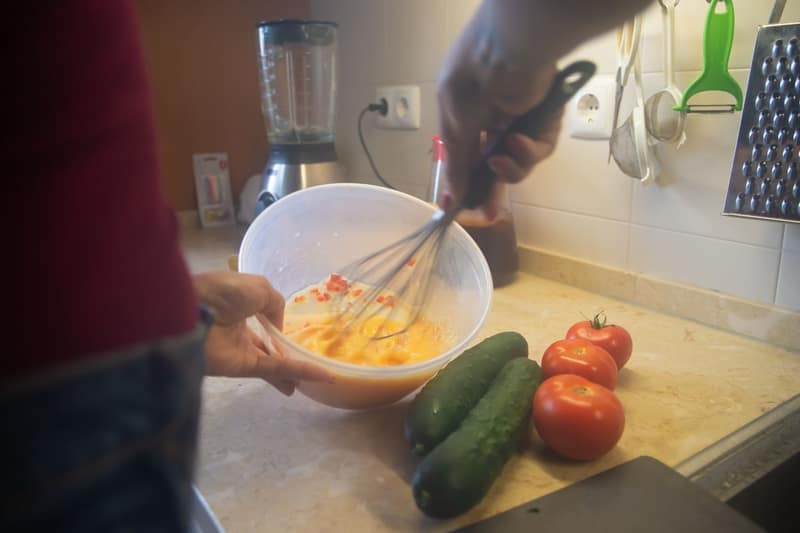
How it looks · Photo: Kampus Production on Pexels Step 2
Cover and leave in a warm place until bubbly and slightly sour-smelling.
- 240 min
- 28°C · warm place
Step 3
Heat a non-stick pan over medium heat and wipe with a little oil. Pour in a ladle of batter and spread it in a spiral from the centre with the base of the ladle.
- 2 min
- medium heat
- Frying pan / skillet (opens in a new tab)
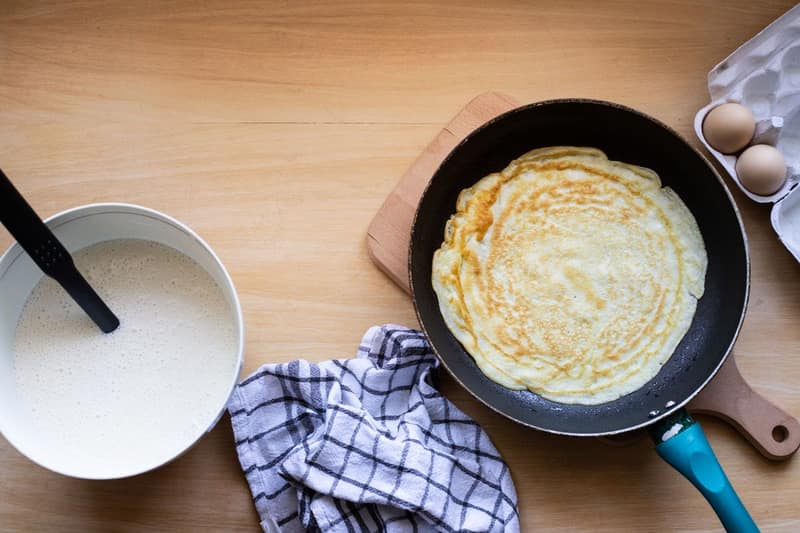
How it looks · Photo: Mateusz Feliksik on Pexels Step 4
Cover and cook without flipping until the top is dry and full of holes and the base is golden. Stack and repeat.
- 23 min
- medium heat
Step 5
Serve warm drizzled with ghee (opens in a new tab) and honey (opens in a new tab), or with tea, stews or fah-fah.
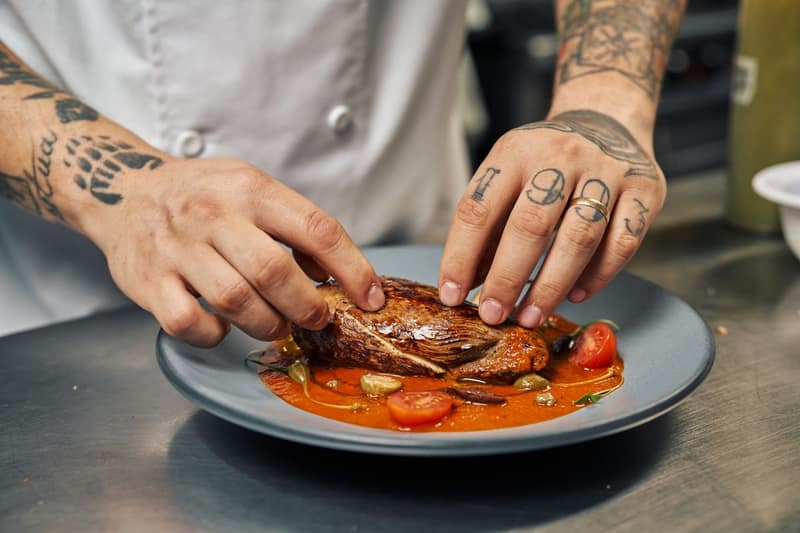
How it looks · Photo: Willians Huerta on Pexels
About this dish
- Origin
- Not attributed to one place · Origin disputedClaimed by Djibouti, Somalia (where it is called canjeero or laxoox) and Yemen; the recipes are closely related.Also popular in Djibouti, Yemen, Somalia
- Dish
- Breakfast · Breads & flatbreads
- Cooking method
- Fermented, Pan-fried
- Taste
- sour, mild
- Diet
- Vegetarian (lacto-ovo) · No nut ingredientsWithout the optional extras: Vegan, Plant-based, Ovo-vegetarian, Dairy-freeWorked out from the ingredients. How labels work
All labels
Vegetarian (lacto-ovo) · Eggetarian · Lacto-vegetarian · Pescatarian · Flexitarian-friendly · Egg-free · No nut ingredients · Alcohol-free · Pork-free · Beef-free · Low-fat · DASH-style - Good for
- Budget-friendly · Make-ahead
- Cook more with
- All-purpose flour · Sorghum meal · Dried yeast · Sugar
- Techniques
- Pan-frying · Fermentation
Allergens
- Contains, can be adapted: Milkfrom ghee
- Contains: Wheatfrom all-purpose flour
- Contains: Glutenfrom all-purpose flour
Based on typical versions of these ingredients and not verified allergen-free. Brands differ and cross-contact happens, so always check labels. For severe allergies, follow your clinician’s advice.
Nutrition
308 kcal per serving
Calculated1 serving ≈ 218 g · recipe makes 4
Where the energy comes from
- Protein 10%
- Carbohydrate 76%
- Fat 14%
| Nutrient | Per serving | Per 100 g* |
|---|---|---|
| Energy | 308 kcal | 141 kcal |
| Protein | 7.6 g | 3.5 g |
| Carbohydrate | 58.7 g | 26.9 g |
| Net carbohydrate | 55.5 g | 25.4 g |
| Sugars | 1.7 g | 0.8 g |
| Added sugars | 1 g | 0.5 g |
| Fibre | 3.2 g | 1.5 g |
| Fat | 4.8 g | 2.2 g |
| Saturated fat | 0.5 g | 0.2 g |
| Trans fat | — | — |
| Cholesterol | — | — |
| Sodium | 296 mg | 136 mg |
| Salt equivalent | 0.7 g | 0.3 g |
Vitamins & minerals per serving
- Potassium
- 142 mg
- Calcium
- 25 mg
- Iron
- 3.1 mg
- Magnesium
- 45 mg
- Vitamin A (RAE)
- 0 µg
- Vitamin C
- 0 mg
- Vitamin D
- —
- Vitamin B12
- —
- Folate (DFE)
- 169 µg
How these numbers were made
- Calculated from USDA FoodData Central (SR Legacy) per-100 g values and the listed quantities.
- *Per 100 g of combined raw ingredients; the cooked dish may weigh more or less.
- Optional ingredients are not included: honey, ghee.
- “—” means the value isn’t known for enough of the ingredients; it is never zero by default.
- Values are estimates for guidance, not for medical dosing. U.S. Department of Agriculture, Agricultural Research Service. FoodData Central, 2019. fdc.nal.usda.gov.
Good to know
Tips
- If the first lahoh doesn't show lots of holes, thin the batter with a spoon of water.
Common mistakes
- Flipping the pancake — lahoh is cooked on one side only.
Serve with
- With sugar, ghee and spiced tea for breakfast, or alongside fah-fah or suqaar.
Storage
- Keeps 2 days wrapped at room temperature; the batter keeps 2 days refrigerated.
Original editorial recipe · FriendsPantry editorial · Not yet independently reviewed · Added · Updated
Recipe DNA
How this dish is built
Grouped by each ingredient’s role in the dish. Each band’s width is its share of the dish by weight. Choose a component to see what it does.
Baker’s notes
Customise in Bread & BakeryTimeline and readiness cues
Mix and knead · about 10 min
Weigh everything. Knead until smooth and elastic: a small piece stretches thin enough to see light through (the windowpane test).
First rise (bulk) · about 4 h
Bubbly on top, risen and smelling pleasantly sour.
Bake · about 25 min
Deep golden; bread sounds hollow when tapped underneath, or reads 93–96 °C inside (enriched breads 88–90 °C).
- Start to finish: about 4 h 35 min. Times are a guide — warmth changes everything; follow the cues.
If something goes wrong
Pale crust
Likely causes
- Oven too cool
- Too little sugar or no milk/egg for browning
- Over-fermented (yeast ate the sugars)
What to do
- Check the oven with a thermometer
- Brush with egg wash or milk
- Shorten the fermentation
Burnt bottom
Likely causes
- Tray too close to the heat
- Dark tray absorbs more heat
- Too much sugar in the dough
What to do
- Bake on the middle shelf
- Double up trays or use a light-coloured one
- Lower the temperature 10–15 °C and bake a little longer
Tough or chewy flatbread
Likely causes
- Dough too stiff
- Not rested
- Cooked too slowly on too cool a pan
What to do
- Add water until the dough is soft and slightly tacky
- Rest 20–30 minutes covered so the gluten relaxes
- Cook on a very hot tawa or pan — quickly
Reviews & corrections
Reviews come from signed-in cooks and appear after a moderator checks them. We never show made-up ratings.
You might also like
Canjeero
 Somali · 3 h 40 min · 253 kcal · Vegetarian
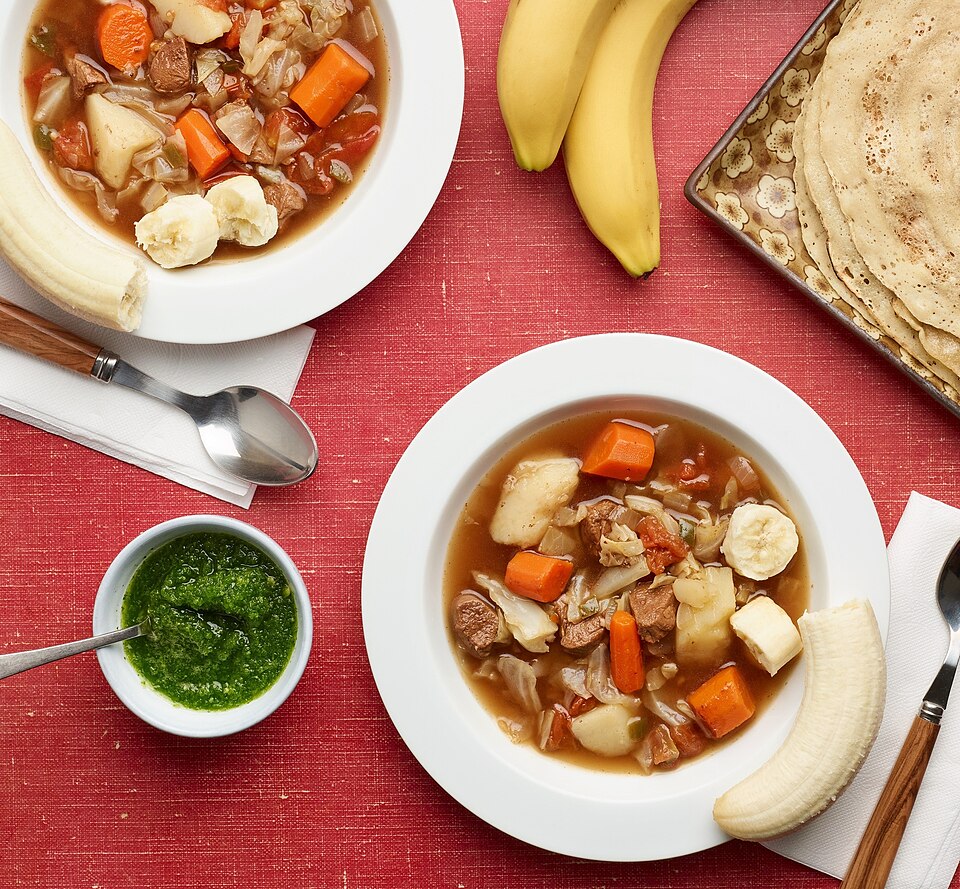
Fah-fah
 Djiboutian · 2 h · 224 kcal
Somali shaah
Somali · 10 min · 89 kcal · Vegetarian
Mantou (steamed buns)
 Chinese · 2 h 10 min · 205 kcal · Vegan