
Ethiopian coffee (jebena buna)
Vegetarian
ጀበና ቡና · jebena buna
Freshly roasted coffee boiled in a clay jebena and poured in a thin stream into small cups — the heart of the Ethiopian and Eritrean coffee ceremony, served over three rounds.
Ethiopian coffee (jebena buna) is an Ethiopian hot drink, ready in about 30 minutes and made with finely ground coffee. It serves 6 and is rated intermediate to cook.
No licensed photograph of this dish yet.
- Prep
- 15 min
- Cook
- 10 min
- Rest
- 5 min
- Total
- 30 min
- Serves
- 6
- Level
- Intermediate
- Calories
- 2
Method
Step 1
If starting from green beans, wash them and roast 30 g in a dry heavy pan over medium heat, stirring constantly, for 10–15 minutes until dark brown, glossy and fragrant. Let the smoke waft over guests, as at a ceremony, then grind or pound the beans.
- 12 min
- medium heat
- Frying pan / skillet (opens in a new tab)
- Mortar and pestle (opens in a new tab)
- Coffee / spice grinder (opens in a new tab)
Food safety: Roasting coffee smokes — ventilate well.
Step 2
Bring the water to the boil in a jebena or small saucepan (opens in a new tab), add the coffee, stir and let it rise to the boil. Lower the heat and simmer for 3–5 minutes.
- 5 min
- medium-low heat
- Saucepan (opens in a new tab)
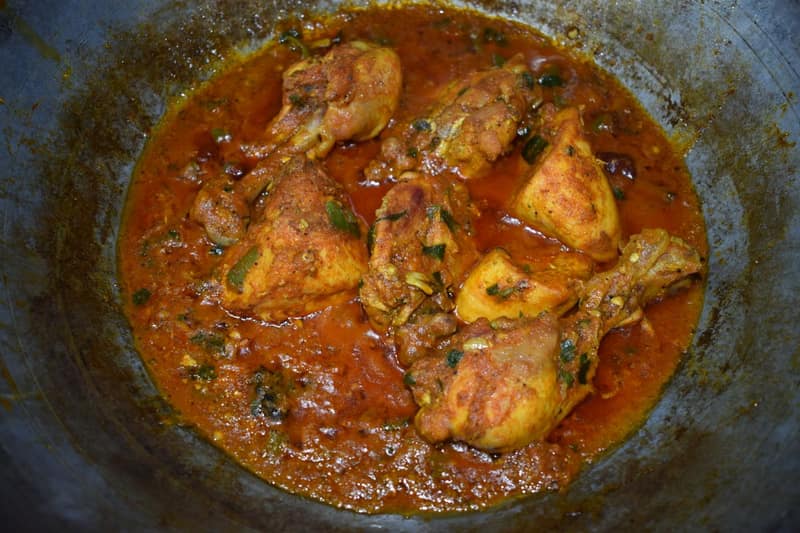
How it looks · Photo: Bachir Mamud on Pexels Step 3
Take off the heat and let the grounds settle for 3–5 minutes (tilt the jebena on a ring so they collect at the bottom).
- 5 min
Step 4
Pour from a height in one continuous thin stream into small handleless cups without stopping, so the grounds stay behind. Serve with sugar (opens in a new tab) (or salt).
- 2 min
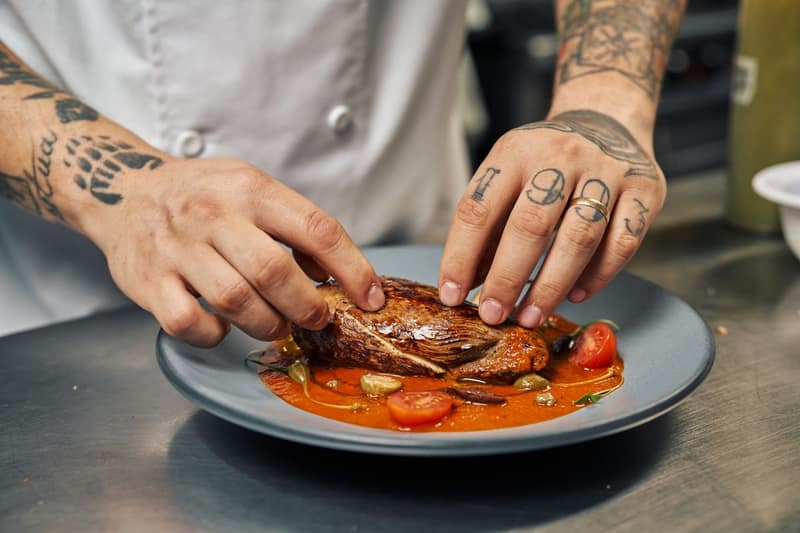
How it looks · Photo: Willians Huerta on Pexels Step 5
For the second (tona) and third (bereka) rounds, add more water to the same grounds, boil again, settle and pour. Each round is lighter.
- 8 min
- medium-low heat
About this dish
- Origin
- Ethiopia · Well documentedThe coffee ceremony is a central hospitality ritual in both Ethiopia and Eritrea.Also popular in EritreaMore food from Ethiopia
- Dish
- Breakfast · Snack · Hot drinks
- Cooking method
- Boiled
- Taste
- bitter, rich, smoky, aromatic / warmly spiced
- Diet
- Vegan · No gluten ingredients · Dairy-free · No nut ingredients · Low-carbWithout the optional extras: Whole-food focused, Paleo-style, No added sugarWorked out from the ingredients. How labels work
All labels
Vegan · Plant-based · Vegetarian (lacto-ovo) · Eggetarian · Lacto-vegetarian · Ovo-vegetarian · Pescatarian · Flexitarian-friendly · No gluten ingredients · Dairy-free · Egg-free · No nut ingredients · Alcohol-free · Pork-free · Beef-free · Low-carb · Low-fat · Low-sodium · DASH-style - Good for
- Festive & celebration
- Cook more with
- Finely ground coffee
- Techniques
- Boiling · Simmering · Fermentation
Allergens
None of the 14 major allergens appear in the listed ingredients.
Based on typical versions of these ingredients and not verified allergen-free. Brands differ and cross-contact happens, so always check labels. For severe allergies, follow your clinician’s advice.
Nutrition
2 kcal per serving
Estimated1 serving ≈ 101 g · recipe makes 6
Where the energy comes from
- Protein 20%
- Carbohydrate 80%
- Fat 0%
| Nutrient | Per serving | Per 100 g* |
|---|---|---|
| Energy | 2 kcal | 2 kcal |
| Protein | 0.1 g | 0.1 g |
| Carbohydrate | 0.4 g | 0.4 g |
| Net carbohydrate | 0.4 g | 0.4 g |
| Sugars | 0 g | 0 g |
| Added sugars | 0 g | 0 g |
| Fibre | 0 g | 0 g |
| Fat | 0 g | 0 g |
| Saturated fat | 0 g | 0 g |
| Trans fat | 0 g | 0 g |
| Cholesterol | 0 mg | 0 mg |
| Sodium | 2 mg | 2 mg |
| Salt equivalent | 0 g | 0 g |
Vitamins & minerals per serving
- Potassium
- 18 mg
- Calcium
- 11 mg
- Iron
- 0 mg
- Magnesium
- 4 mg
- Vitamin A (RAE)
- 0 µg
- Vitamin C
- 0 mg
- Vitamin D
- 0 µg
- Vitamin B12
- 0 µg
- Folate (DFE)
- 0 µg
How these numbers were made
- Calculated from USDA FoodData Central (SR Legacy) per-100 g values and the listed quantities.
- *Per 100 g of combined raw ingredients; the cooked dish may weigh more or less.
- Optional ingredients are not included: sugar, salt.
- Finely ground coffee: Instant coffee powder used as a stand-in for the soluble part of roasted ground coffee; list the grams actually consumed with consumedGrams.
- “—” means the value isn’t known for enough of the ingredients; it is never zero by default.
- Values are estimates for guidance, not for medical dosing. U.S. Department of Agriculture, Agricultural Research Service. FoodData Central, 2019. fdc.nal.usda.gov.
Good to know
Tips
- A small twist of horsehair or a clean fibre plug in the jebena spout catches stray grounds as you pour.
Common mistakes
- Stopping and starting the pour, which stirs up the grounds.
Serve with
- With popcorn, roasted barley (kolo) or bread, and frankincense burning nearby.
Storage
- Drink each round fresh; re-boiled coffee from a previous day tastes stale.
History
Coffee arabica is native to the highlands of south-western Ethiopia, and drinking it at a shared ceremony is a long-standing tradition there.
Confidence: Well documented
Original editorial recipe · FriendsPantry editorial · Not yet independently reviewed · Added · Updated
Recipe DNA
How this dish is built
Less sweet, dairy-free, caffeine-free or for more people — the original stays as it is.
Customise in Sip & BlendReviews & corrections
Reviews come from signed-in cooks and appear after a moderator checks them. We never show made-up ratings.
You might also like
Moka pot coffee
 Italian · 8 min · 3 kcal · Vegan
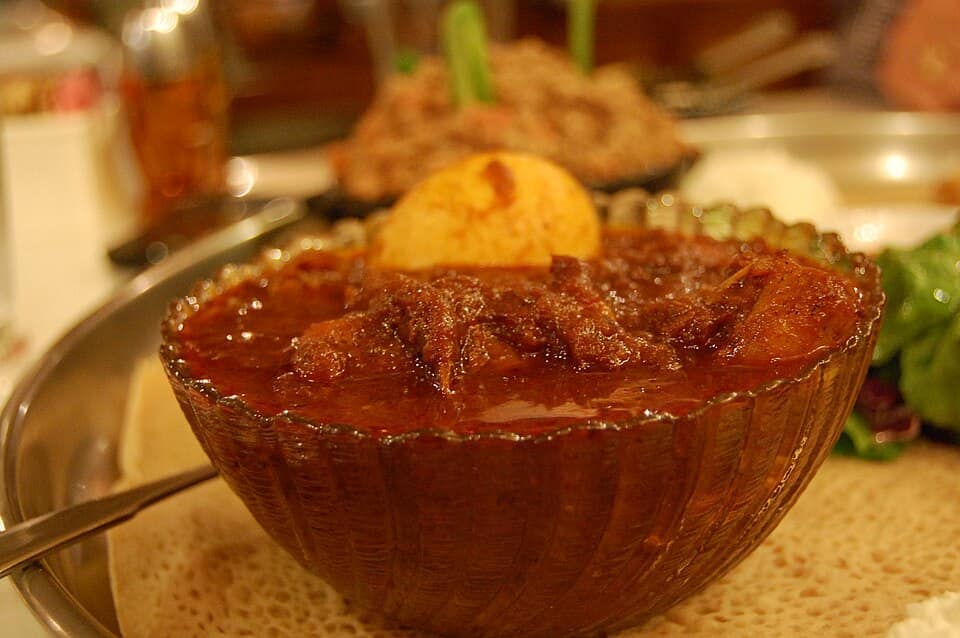
Doro wat
 Ethiopian · 2 h 20 min · 591 kcal
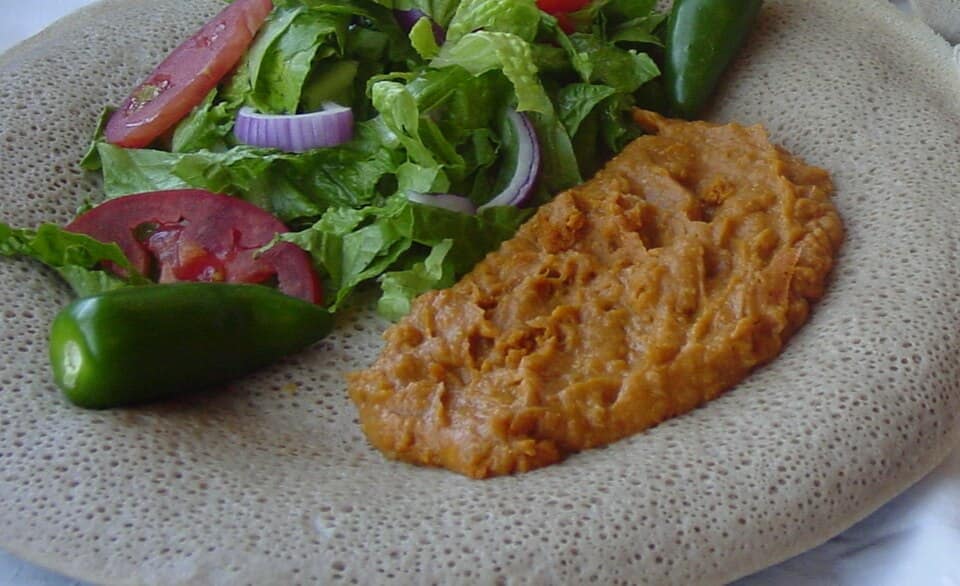
Shiro
Ethiopian · 40 min · 273 kcal · Vegan
Injera
Ethiopian · 48 h 55 min · 165 kcal · Vegan