
Chole bhature
Vegetarian
छोले भटूरे · chole bhature
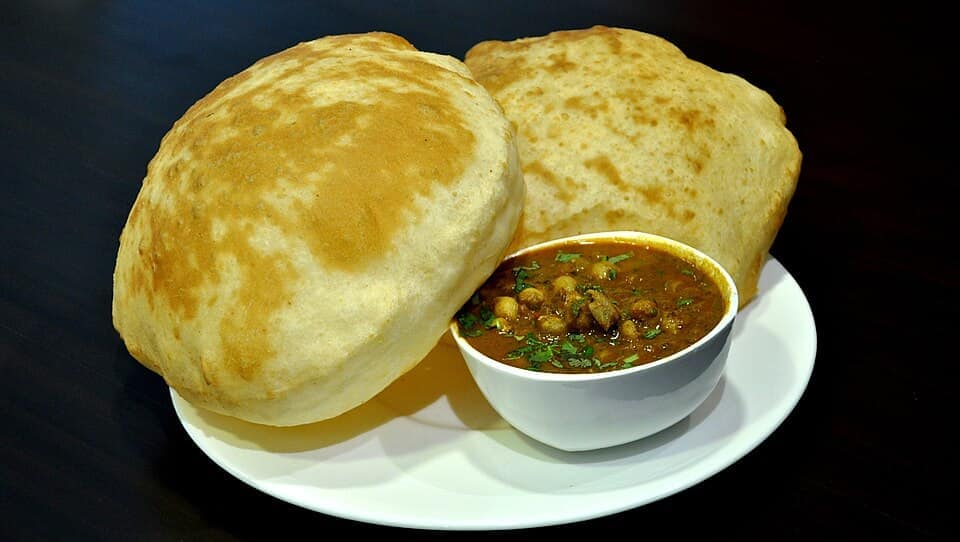
Dark, tangy Punjabi chickpea curry served with puffy deep-fried leavened bread. A hearty weekend breakfast or lunch across North India.
Chole bhature is a Punjabi curry from India, ready in about 3 hours 35 minutes and made with dried chickpeas and all-purpose flour. It serves 4 and is rated intermediate to cook.
- Prep
- 25 min
- Cook
- 1 h 10 min
- Rest
- 2 h
- Total
- 3 h 35 min
- Serves
- 4
- Level
- Intermediate
- Calories
- 727
Plus overnight soaking of the chickpeas.
Ingredients
For the chole
For the bhature
For frying
To serve
Method
Step 1
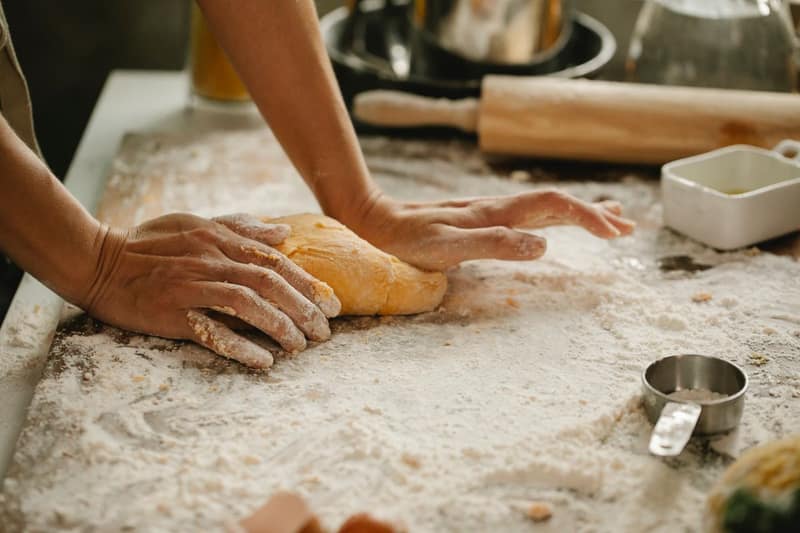
For the bhature, mix flour, semolina (opens in a new tab), baking powder (opens in a new tab), sugar (opens in a new tab) and salt. Add the yogurt (opens in a new tab) and enough water to knead a soft dough. Coat with a little oil, cover and rest at least 2 hours.
- 10 min
How it looks · Photo: Klaus Nielsen on Pexels Step 2
Pressure-cook the soaked chickpeas with the tea, water and 1 tsp salt for 20–25 minutes until very soft (or simmer about 1½ hours). Discard the tea bag.
Step 3
Heat 3 tbsp oil, crackle the cumin (opens in a new tab), then fry the onions (opens in a new tab) until deep brown. Add ginger and garlic (opens in a new tab), then the tomato (opens in a new tab) and ground spices, and cook until the oil separates.
- 15 min
- medium heat
Step 4
Add the chickpeas with some cooking liquid, the tamarind, garam masala (opens in a new tab) and remaining salt. Mash a few chickpeas and simmer until thick.
- 15 min
- medium-low heat
How it looks · Photo: Mateusz Feliksik on Pexels Step 5
Heat the frying oil to 190 °C. Roll a portion of dough into an oval about 3 mm thick and slide it into the oil. Press gently with a slotted spoon so it puffs, turn once and fry until pale golden. Drain and repeat.
Food safety: Never leave hot oil unattended; slide the dough in away from you and keep a lid nearby.
Step 6
Serve the chole hot with bhature, sliced onion (opens in a new tab) and lemon (opens in a new tab) wedges.
How it looks · Photo: Willians Huerta on Pexels
About this dish
- Origin
- Punjab / Delhi, Punjab, India · Commonly attributedAlso popular in PakistanMore food from India
- Dish
- Breakfast · Brunch · Lunch · Curries · Breads & flatbreads · Street food · Main courses
- Cooking method
- Pressure-cooked, Simmered, Deep-fried
- Taste
- tangy, spicy (chilli heat), savoury, aromatic / warmly spiced
- Diet
- Vegetarian (lacto-ovo) · No nut ingredients · High-proteinWorked out from the ingredients. How labels work
All labels
Vegetarian (lacto-ovo) · Eggetarian · Lacto-vegetarian · Pescatarian · Flexitarian-friendly · Egg-free · No nut ingredients · Alcohol-free · Pork-free · Beef-free · High-protein - Good for
- Festive & celebration · Street food
- Cook more with
- Dried chickpeas · All-purpose flour · Black tea (brewed) · Cumin · Onion · Fresh ginger
- Techniques
- Deep-frying · Simmering · Pressure cooking · Bhunao · Kneading
Allergens
- Contains: Milkfrom yogurt
- Contains: Wheatfrom all-purpose flour, semolina, baking powder
- Contains: Glutenfrom all-purpose flour, semolina, baking powder
Based on typical versions of these ingredients and not verified allergen-free. Brands differ and cross-contact happens, so always check labels. For severe allergies, follow your clinician’s advice.
Nutrition
727 kcal per serving
Estimated1 serving ≈ 518 g · recipe makes 4
Where the energy comes from
- Protein 11%
- Carbohydrate 55%
- Fat 34%
| Nutrient | Per serving | Per 100 g* |
|---|---|---|
| Energy | 727 kcal | 140 kcal |
| Protein | 20.5 g | 4 g |
| Carbohydrate | 101.3 g | 19.5 g |
| Net carbohydrate | 90 g | 17.4 g |
| Sugars | 13.5 g | 2.6 g |
| Added sugars | 1 g | 0.2 g |
| Fibre | 11.3 g | 2.2 g |
| Fat | 28 g | 5.4 g |
| Saturated fat | 2.7 g | 0.5 g |
| Trans fat | — | — |
| Cholesterol | 3 mg | 1 mg |
| Sodium | 1322 mg | 255 mg |
| Salt equivalent | 3.3 g | 0.6 g |
Vitamins & minerals per serving
- Potassium
- 835 mg
- Calcium
- 199 mg
- Iron
- 6.8 mg
- Magnesium
- 93 mg
- Vitamin A (RAE)
- 44 µg
- Vitamin C
- 17 mg
- Vitamin D
- 0 µg
- Vitamin B12
- 0.1 µg
- Folate (DFE)
- 507 µg
How these numbers were made
- Calculated from USDA FoodData Central (SR Legacy) per-100 g values and the listed quantities.
- *Per 100 g of combined raw ingredients; the cooked dish may weigh more or less.
- Optional ingredients are not included: red onion, lemon.
- Garam masala: Curry powder (FDC 170924) used as a stand-in; both are ground blends of similar dried spices used in teaspoon amounts.
- Tamarind paste: Raw tamarind pulp (FDC 167763). Commercial concentrates vary in water content.
- “—” means the value isn’t known for enough of the ingredients; it is never zero by default.
- Values are estimates for guidance, not for medical dosing. U.S. Department of Agriculture, Agricultural Research Service. FoodData Central, 2019. fdc.nal.usda.gov.
Good to know
Tips
- The oil must be hot enough that the bhatura rises to the surface within seconds, or it won't puff.
Common mistakes
- Under-browning the onions — they give chole its deep colour and flavour.
Serve with
- Add a pickle and a glass of sweet lassi.
Storage
- Chole keeps 4 days refrigerated or 3 months frozen. Bhature are best freshly fried.
Reheating
- Reheat chole with a splash of water.
Original editorial recipe · FriendsPantry editorial · Not yet independently reviewed · Added · Updated
Sauces, chutneys & dips for this dish
Recipe DNA
How this dish is built
Masalas in this recipe
Make the masala first, then come back to finish the dish.
Dry spice blend
Punjabi garam masala
This recipe uses 1½ tsp (3.1 g for 4 servings).
Also: Bengali garam masala, Kerala (Malabar) garam masala, Mughlai (shahi) garam masala
Baker’s notes
Customise in Bread & BakeryTimeline and readiness cues
Mix and knead · about 25 min
Mix only until no dry flour remains — overmixing makes it tough and tunnelled.
Rest · about 2 h
Covered so it doesn't dry out; relaxed dough rolls and shapes without springing back.
Bake · about 15 min
Risen and golden; a skewer in the centre comes out clean or with a few moist crumbs; the top springs back.
- Start to finish: about 2 h 40 min. Times are a guide — warmth changes everything; follow the cues.
The dough
| Ingredient | Role | Weight | Baker’s % |
|---|---|---|---|
| All-purpose flour | Flour | 250 g | 89.3% |
| Semolina | Flour | 30 g | 10.7% |
| Yogurt | Other liquid | 100 g | 35.7% |
| Water | Water | 60 g | 21.4% |
| Baking powder | Raising agent | 4 g | 1.6% |
| Sugar | Sugar | 4 g | 1.5% |
| Salt | Salt | 3 g | 1.1% |
- Total flour
- 280 g
- Hydration
- 21.4%
- With milk, eggs…
- 51.8%
- Wholegrain
- 0%
Hydration = water ÷ flour × 100. Milk is about 87% water and eggs about 75%, so they’re shown separately as “with milk, eggs…”.
- Stiff dough (under 55% hydration) — firm, easy to roll; typical of bagels, pretzels and many flatbreads.
- Milk, eggs and other liquids add about 30 points of extra water, so it handles like a 52% dough.
- Salt 1.1% — on the low side (1.8–2.2% is typical for bread).
If something goes wrong
Pale crust
Likely causes
- Oven too cool
- Too little sugar or no milk/egg for browning
- Over-fermented (yeast ate the sugars)
What to do
- Check the oven with a thermometer
- Brush with egg wash or milk
- Shorten the fermentation
Burnt bottom
Likely causes
- Tray too close to the heat
- Dark tray absorbs more heat
- Too much sugar in the dough
What to do
- Bake on the middle shelf
- Double up trays or use a light-coloured one
- Lower the temperature 10–15 °C and bake a little longer
Tough or chewy flatbread
Likely causes
- Dough too stiff
- Not rested
- Cooked too slowly on too cool a pan
What to do
- Add water until the dough is soft and slightly tacky
- Rest 20–30 minutes covered so the gluten relaxes
- Cook on a very hot tawa or pan — quickly
Reviews & corrections
Reviews come from signed-in cooks and appear after a moderator checks them. We never show made-up ratings.
You might also like
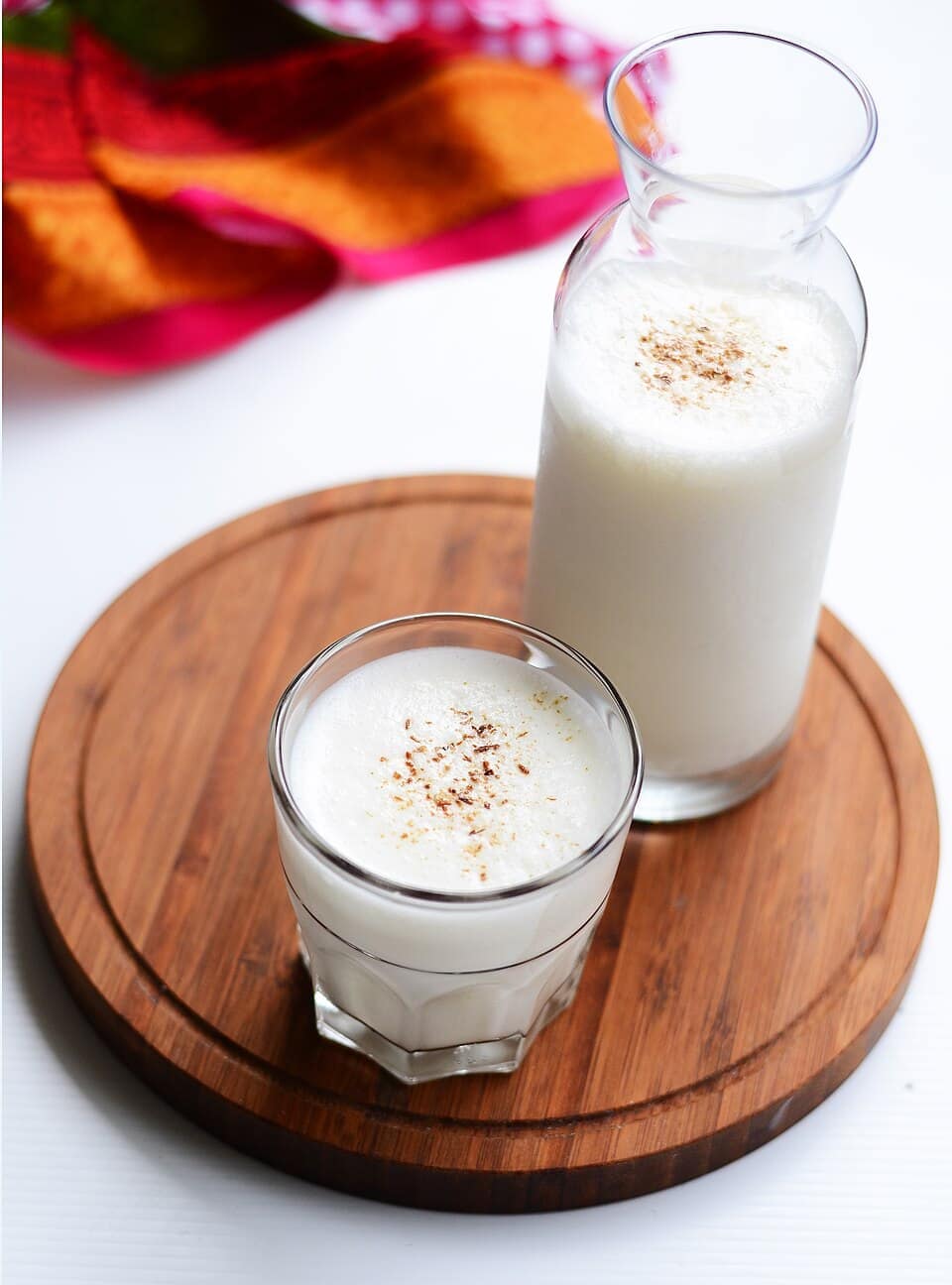
Sweet lassi
 Punjabi · 5 min · 191 kcal · Vegetarian
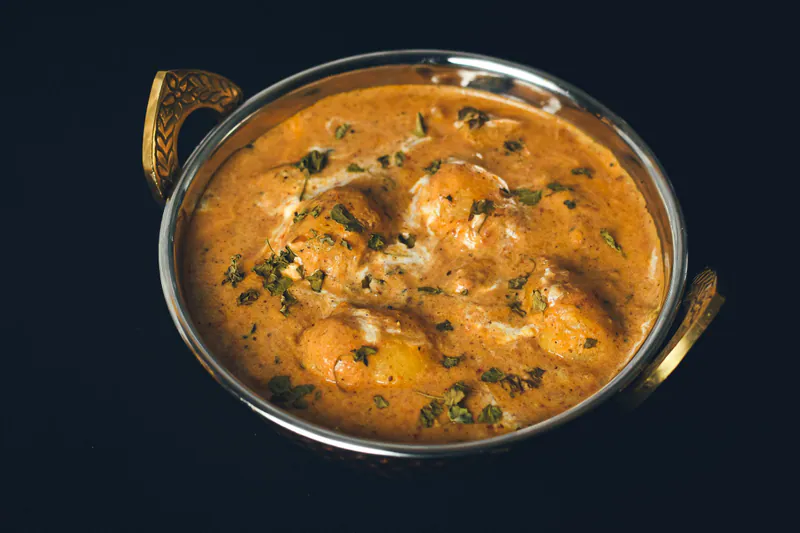
Punjabi dum aloo
Punjabi · 55 min · 277 kcal · Vegetarian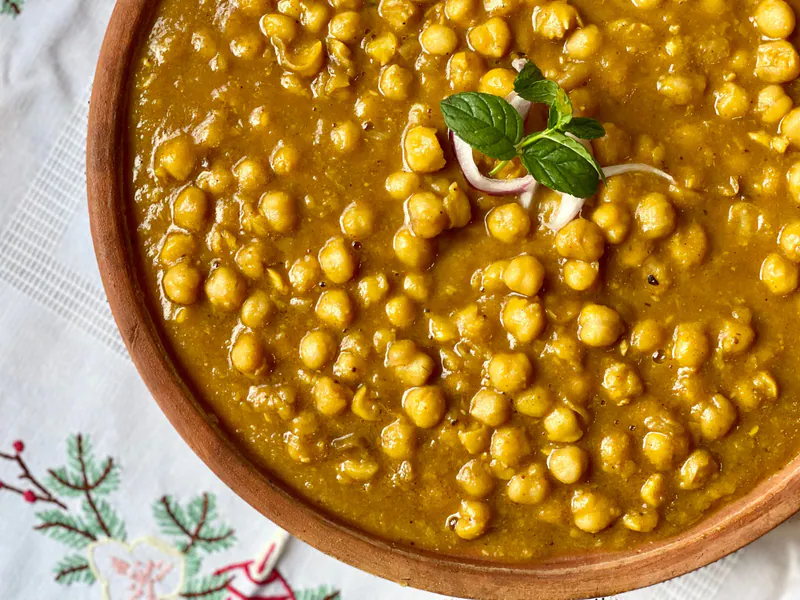
Chana masala
Punjabi · 50 min · 316 kcal · Vegan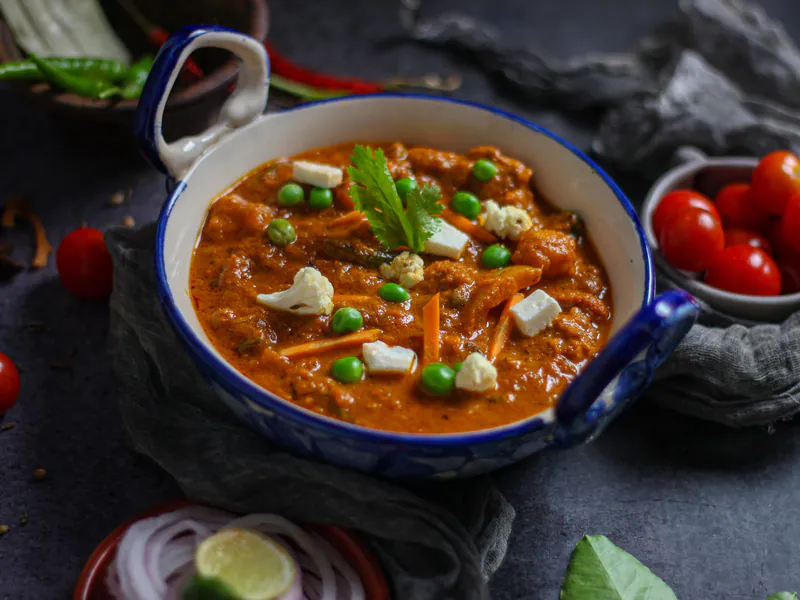
Matar paneer
Punjabi · 35 min · 328 kcal · Vegetarian