
Beshbarmak
Non-vegetarian
Бешбармақ · Besbarmaq
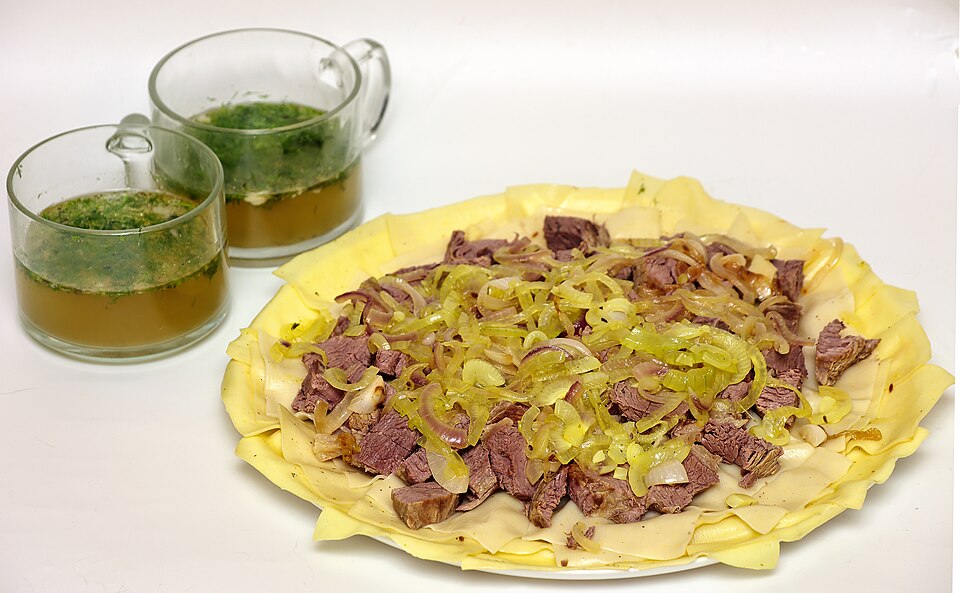
Long-simmered meat served over wide sheets of hand-rolled noodles and topped with soft onions cooked in the broth. Kazakhstan's festive national dish, eaten with the rich broth on the side.
Beshbarmak is a Kazakh main course from Kazakhstan, ready in about 3 hours 35 minutes and made with lamb shoulder, all-purpose flour and onion. It serves 6 and is rated intermediate to cook.
- Prep
- 35 min
- Cook
- 2 h 40 min
- Rest
- 20 min
- Total
- 3 h 35 min
- Serves
- 6
- Level
- Intermediate
- Calories
- 671
Ingredients
Meat and broth
Noodles
Onion topping (tuzdyk)
Method
Step 1
Put the meat in a large pot with the cold water. Bring slowly to the boil and skim off all the grey foam as it rises.
- 15 min
- medium-high heat
- Stockpot / large pot (opens in a new tab)
Food safety: Wash hands and boards after handling raw meat.
Step 2
Add the whole onion (opens in a new tab), bay leaves (opens in a new tab) and pepper (opens in a new tab), lower the heat and simmer very gently, partly covered, until the meat is tender enough to pull apart. Add the salt for the last 30 minutes.
- 140 min
- low heat
Step 3
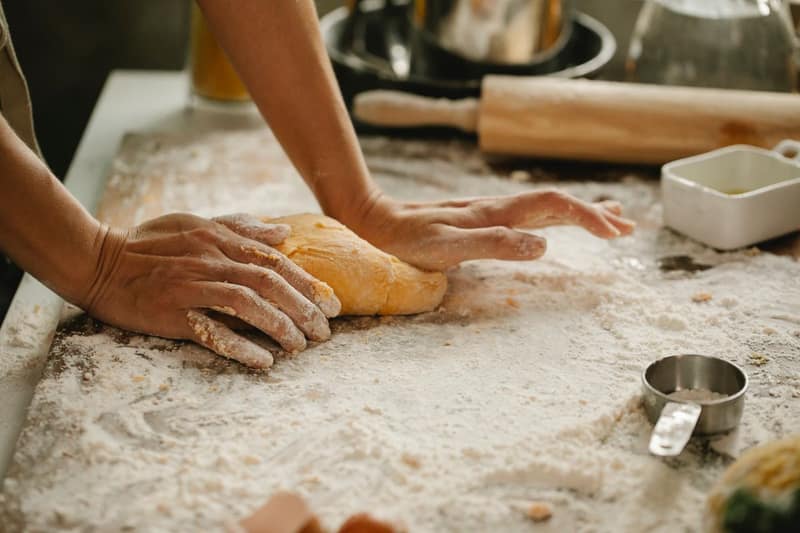
Meanwhile mix the flour, egg (opens in a new tab), water and salt into a firm dough, knead until smooth, cover and rest for 20 minutes.
- 10 min
How it looks · Photo: Klaus Nielsen on Pexels Step 4
Roll the dough very thin (1–2 mm) on a floured surface and cut into 7–8 cm squares or diamonds. Let them dry slightly while the meat finishes.
Step 5
Lift out the meat and cut it into thin slices; keep warm. Ladle about 300 ml of broth into a small pan, add the sliced onions (opens in a new tab) and pepper (opens in a new tab) and simmer until the onions are soft.
- 8 min
- medium heat
- Saucepan (opens in a new tab)
Step 6
Bring the rest of the broth back to a boil and cook the noodle sheets in batches for 3–4 minutes until tender. Lift them onto a large platter.
- 10 min
- high heat
Step 7
Pile the sliced meat over the noodles, spoon over the onions (opens in a new tab) with their broth and scatter with dill (opens in a new tab). Serve the remaining hot broth (sorpa) in bowls alongside.
- 3 min
How it looks · Photo: Klaus Nielsen on Pexels
About this dish
- Origin
- Kazakhstan · Well documentedShared with Kyrgyz cooking (where it is often called tuuralgan et); the name means "five fingers", as it was eaten by hand.Also popular in KyrgyzstanMore food from Kazakhstan
- Dish
- Lunch · Dinner · Main courses · Noodles
- Cooking method
- Boiled, Simmered
- Taste
- savoury, rich, mild
- Diet
- Dairy-free · No nut ingredients · High-proteinWorked out from the ingredients. How labels work
All labels
Non-vegetarian · Dairy-free · No nut ingredients · No added sugar · Alcohol-free · Pork-free · Beef-free · High-protein - Good for
- Festive & celebration · Make-ahead
- Cook more with
- Lamb shoulder · All-purpose flour · Onion · Bay leaves · Egg
Allergens
- Contains: Eggsfrom egg
- Contains: Wheatfrom all-purpose flour
- Contains: Glutenfrom all-purpose flour
Based on typical versions of these ingredients and not verified allergen-free. Brands differ and cross-contact happens, so always check labels. For severe allergies, follow your clinician’s advice.
Nutrition
671 kcal per serving
Calculated1 serving ≈ 801 g · recipe makes 6
Where the energy comes from
- Protein 20%
- Carbohydrate 26%
- Fat 53%
| Nutrient | Per serving | Per 100 g* |
|---|---|---|
| Energy | 671 kcal | 84 kcal |
| Protein | 33.8 g | 4.2 g |
| Carbohydrate | 44.1 g | 5.5 g |
| Net carbohydrate | 41.7 g | 5.2 g |
| Sugars | 2.5 g | 0.3 g |
| Added sugars | 0 g | 0 g |
| Fibre | 2.4 g | 0.3 g |
| Fat | 39.5 g | 4.9 g |
| Saturated fat | 16.8 g | 2.1 g |
| Trans fat | — | — |
| Cholesterol | 131 mg | 16 mg |
| Sodium | 1103 mg | 138 mg |
| Salt equivalent | 2.8 g | 0.3 g |
Vitamins & minerals per serving
- Potassium
- 586 mg
- Calcium
- 97 mg
- Iron
- 4.4 mg
- Magnesium
- 57 mg
- Vitamin A (RAE)
- 37 µg
- Vitamin C
- 4 mg
- Vitamin D
- 0.5 µg
- Vitamin B12
- 3.2 µg
- Folate (DFE)
- —
How these numbers were made
- Calculated from USDA FoodData Central (SR Legacy) per-100 g values and the listed quantities.
- *Per 100 g of combined raw ingredients; the cooked dish may weigh more or less.
- Optional ingredients are not included: dill.
- “—” means the value isn’t known for enough of the ingredients; it is never zero by default.
- Values are estimates for guidance, not for medical dosing. U.S. Department of Agriculture, Agricultural Research Service. FoodData Central, 2019. fdc.nal.usda.gov.
Good to know
Tips
- The broth is part of the meal — season it carefully and serve it in small bowls.
- Cook the meat a day ahead; chill the broth and lift off excess fat if you prefer it lighter.
Common mistakes
- Boiling the meat hard makes the broth cloudy and the meat tough — keep it at a bare simmer.
Serve with
- Serve with bowls of broth and black tea, and baursak on the table.
Storage
- Keep meat and broth (separately from the noodles) in the fridge for up to 3 days.
Reheating
- Reheat the meat in the broth; cook fresh noodles or warm leftovers briefly in simmering broth.
Variations
- Kyrgyz beshbarmak (Kyrgyzstan): Noodles are often cut into thin strips and mixed with finely chopped meat and onion broth.
- Horse-meat beshbarmak: Made with horse meat and kazy (horse sausage) for weddings and holidays.
Original editorial recipe · FriendsPantry editorial · Not yet independently reviewed · Added · Updated
Recipe DNA
How this dish is built
Built from the recipe’s own sections. Each band’s width is its share of the dish by weight. Choose a component to see what it does.
The liquid foundation
Meat and broth
- Lamb shoulder, in 3–4 large pieces1000 g
- Water3 l · 3000 g
- Onion, peeled, left whole1 piece · 110 g
- Bay leaves3 leaf · 0.6 g
- Black pepper0.5 tsp · 1.2 g
- Salt2 tsp · 12 g
Reviews & corrections
Reviews come from signed-in cooks and appear after a moderator checks them. We never show made-up ratings.
You might also like
Baursak
 Kazakh · 1 h 55 min · 386 kcal · Contains egg
Kazakh milk tea
Kazakh · 10 min · 31 kcal · Vegetarian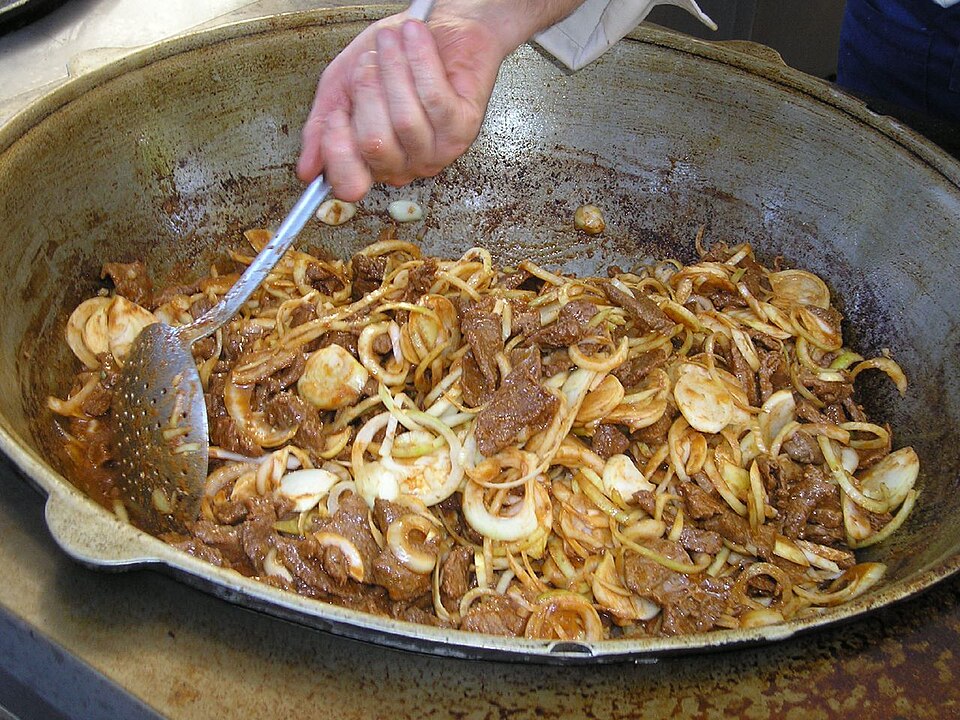
Kuyrdak
Kazakh · 1 h 15 min · 673 kcal
Uzbek manti
 Uzbek · 2 h 5 min · 737 kcal