
Kanji (fermented carrot drink)
Vegetarian
काँजी · kāñjī
A tangy, deep purple North Indian drink of black carrots fermented for a few days in salted water with crushed mustard seed and red chilli.
Kanji (fermented carrot drink) is an Indian cold drink, ready in about 72 hours 15 minutes and made with carrot and mustard seeds. It serves 8 and is rated easy to cook.
No licensed photograph of this dish yet.
- Prep
- 15 min
- Cook
- 0 min
- Total
- 72 h 15 min
- Serves
- 8
- Level
- Easy
- Calories
- 33
Plus 3–5 days fermenting at warm room temperature.
Method
Step 1
Wash a 2-litre glass or ceramic jar with hot soapy water, rinse well and let it dry.
Step 2
Put the carrots (opens in a new tab) (and beetroot (opens in a new tab), if using) into the jar with the crushed mustard seed (opens in a new tab), salt, black salt (opens in a new tab) and chilli powder. Pour over the cooled boiled water and stir well with a clean spoon.
Step 3
Make sure the vegetables are submerged, cover the mouth with muslin tied with string and leave in a warm, sunny spot for 3–5 days, stirring once a day with a clean, dry spoon.
- 2 min
Food safety: Keep the vegetables under the liquid. Discard the batch if you see fuzzy mould or it smells rotten rather than pleasantly sour.
Step 4
When it tastes pleasantly sour and pungent, refrigerate. Serve chilled in small glasses with a few carrot (opens in a new tab) pieces.
- 2 min
About this dish
- Origin
- North India (Punjab, Delhi and Uttar Pradesh), India · Commonly attributedA late-winter drink, often made around Holi when black carrots are in season.Also popular in PakistanMore food from India
- Dish
- Snack · Lunch · Cold drinks
- Cooking method
- Fermented, No-cook
- Taste
- sour, salty, spicy (chilli heat), earthy
- Diet
- Vegan · No gluten ingredients · Dairy-free · No nut ingredients · Low-carbWorked out from the ingredients. How labels work
All labels
Vegan · Plant-based · Vegetarian (lacto-ovo) · Eggetarian · Lacto-vegetarian · Ovo-vegetarian · Pescatarian · Flexitarian-friendly · Whole-food focused · Paleo-style · No gluten ingredients · Dairy-free · Egg-free · No nut ingredients · No added sugar · Alcohol-free · Pork-free · Beef-free · Low-carb · Low-fat - Good for
- Make-ahead · Budget-friendly
- Cook more with
- Carrot · Mustard seeds · Black salt (kala namak) · Cayenne / chilli powder
- Techniques
- Fermentation
Allergens
- Contains: Mustardfrom mustard seeds
Based on typical versions of these ingredients and not verified allergen-free. Brands differ and cross-contact happens, so always check labels. For severe allergies, follow your clinician’s advice.
Nutrition
33 kcal per serving
Estimated1 serving ≈ 243 g · recipe makes 8
Where the energy comes from
- Protein 12%
- Carbohydrate 62%
- Fat 25%
| Nutrient | Per serving | Per 100 g* |
|---|---|---|
| Energy | 33 kcal | 13 kcal |
| Protein | 1.1 g | 0.4 g |
| Carbohydrate | 5.5 g | 2.3 g |
| Net carbohydrate | 3.8 g | 1.6 g |
| Sugars | 2.5 g | 1 g |
| Added sugars | 0 g | 0 g |
| Fibre | 1.7 g | 0.7 g |
| Fat | 1 g | 0.4 g |
| Saturated fat | 0.1 g | 0 g |
| Trans fat | 0 g | 0 g |
| Cholesterol | 0 mg | 0 mg |
| Sodium | 1175 mg | 484 mg |
| Salt equivalent | 2.9 g | 1.2 g |
Vitamins & minerals per serving
- Potassium
- 181 mg
- Calcium
- 42 mg
- Iron
- 0.4 mg
- Magnesium
- 18 mg
- Vitamin A (RAE)
- 422 µg
- Vitamin C
- 3 mg
- Vitamin D
- 0 µg
- Vitamin B12
- 0 µg
- Folate (DFE)
- 13 µg
How these numbers were made
- Calculated from USDA FoodData Central (SR Legacy) per-100 g values and the listed quantities.
- *Per 100 g of combined raw ingredients; the cooked dish may weigh more or less.
- Optional ingredients are not included: beetroot.
- Black salt (kala namak): Table salt (FDC 173468) used as a stand-in; kala namak is mostly sodium chloride with sulphur compounds that give its eggy aroma.
- “—” means the value isn’t known for enough of the ingredients; it is never zero by default.
- Values are estimates for guidance, not for medical dosing. U.S. Department of Agriculture, Agricultural Research Service. FoodData Central, 2019. fdc.nal.usda.gov.
Good to know
Tips
- The brine is about 1.5% salt; warm weather speeds fermentation, so start tasting from day 3.
Common mistakes
- Using chlorinated tap water straight from the tap, which can slow fermentation; boil and cool it first.
Serve with
- Serve with moong dal pakoras or vadas.
Food safety
- Use clean utensils every time you stir or ladle.
- Refrigerate once sour; discard if mould forms or it smells off.
Storage
- Keeps about 1 week in the fridge once fermented.
Variations
- Kanji vada (India): Rajasthani and North Indian version with small fried lentil dumplings soaked in the kanji.
Original editorial recipe · FriendsPantry editorial · Not yet independently reviewed · Added · Updated
Recipe DNA
How this dish is built
Grouped by each ingredient’s role in the dish. Each band’s width is its share of the dish by weight. Choose a component to see what it does.
Less sweet, dairy-free, caffeine-free or for more people — the original stays as it is.
Customise in Sip & BlendReviews & corrections
Reviews come from signed-in cooks and appear after a moderator checks them. We never show made-up ratings.
You might also like
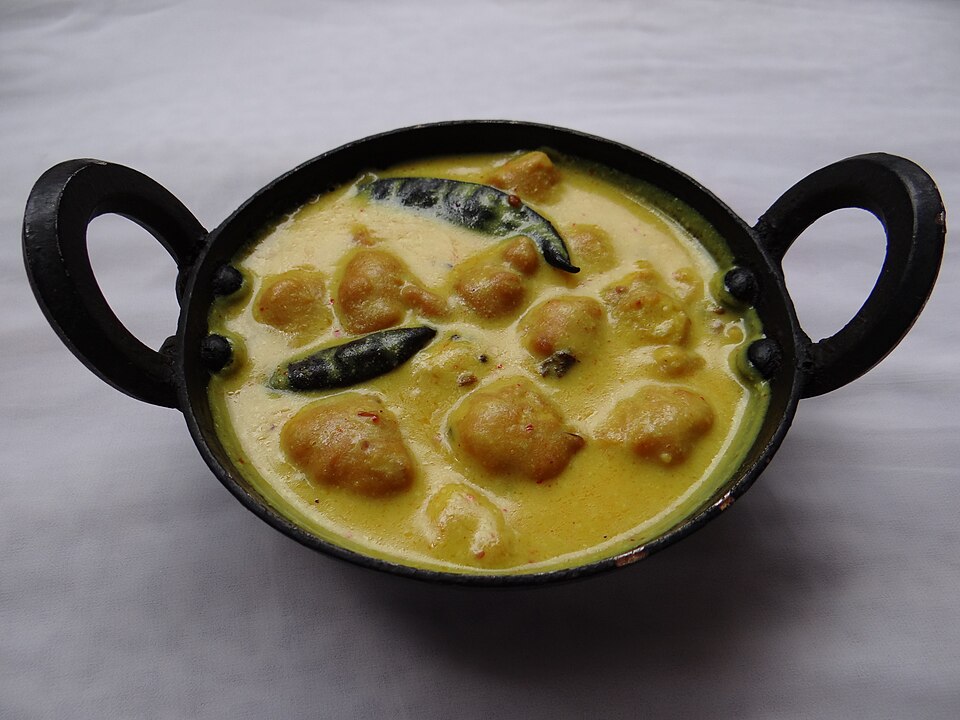
Kadhi pakora
 Punjabi · 1 h 5 min · 274 kcal · Vegetarian
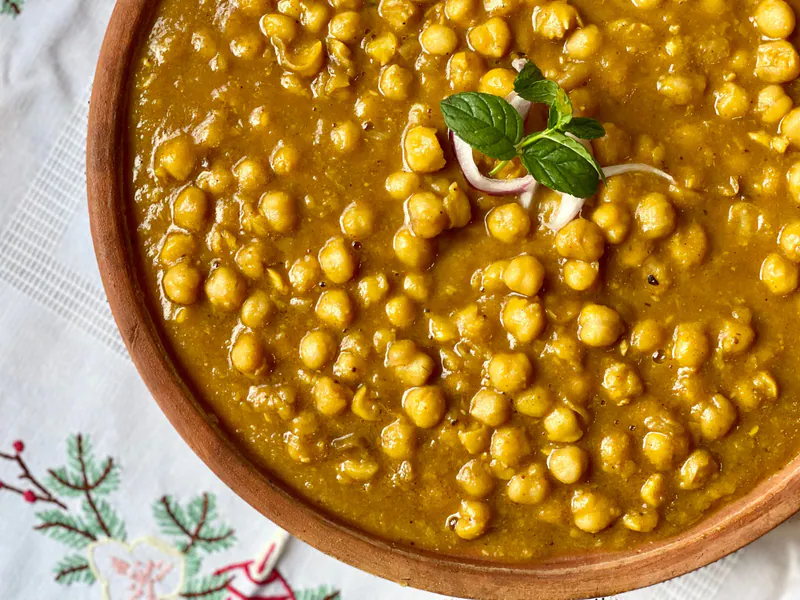
Chana masala
Punjabi · 50 min · 316 kcal · Vegan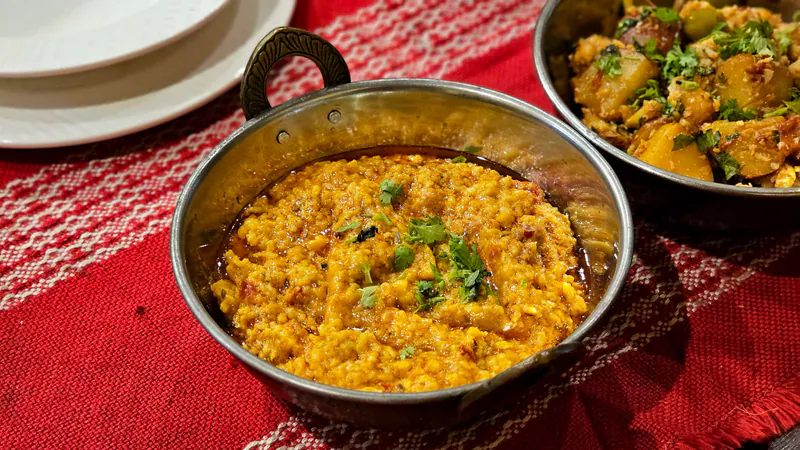
Dal tadka with red lentils
Indian · 40 min · 268 kcal · Vegetarian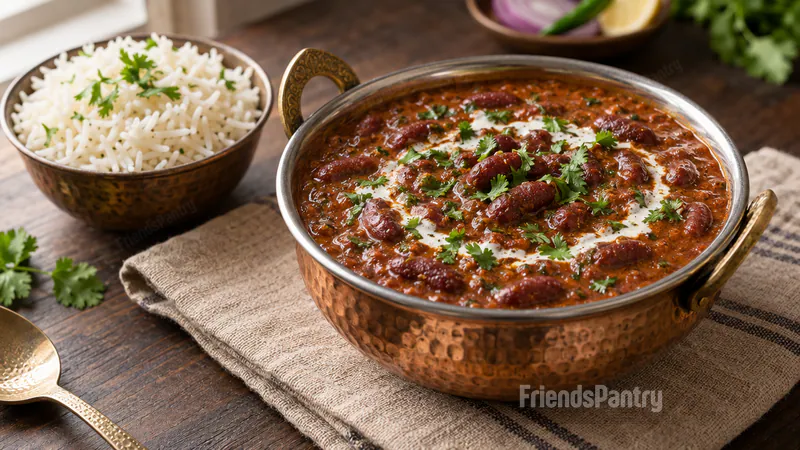
Rajma
Punjabi · 1 h · 296 kcal · Vegan