
Poulet nyembwe
Non-vegetarian
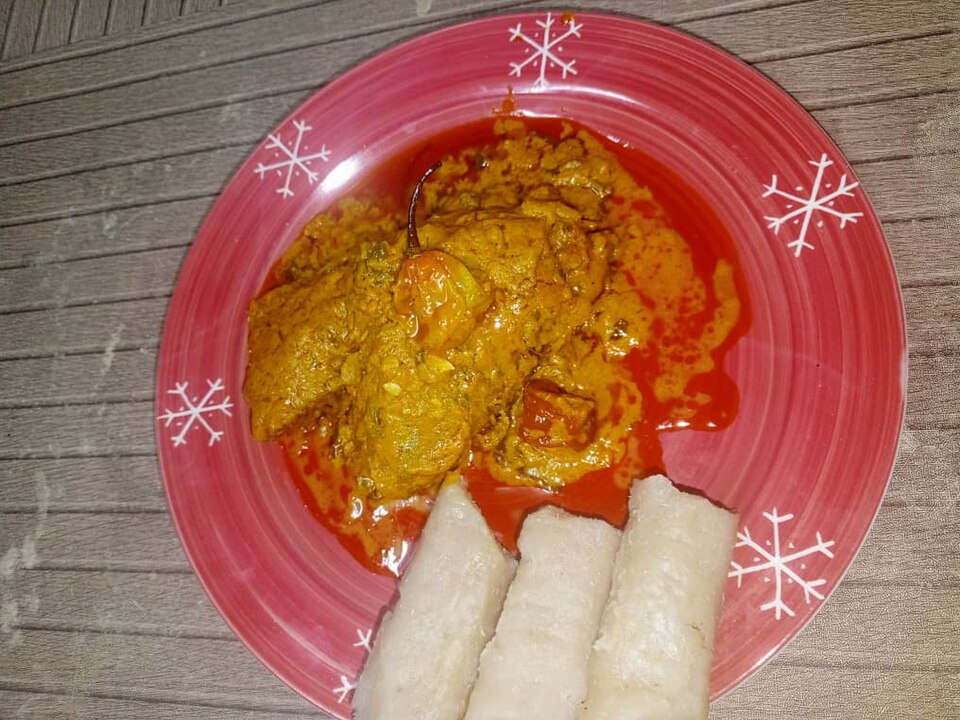
Gabon's national dish: chicken simmered slowly in a velvety palm-nut sauce with onion, garlic and chilli, usually served with rice, cassava or plantains.
Poulet nyembwe is a Gabonese stew, ready in about 1 hour 25 minutes and made with chicken pieces, skin-on and red palm oil. It serves 6 and is rated easy to cook.
- Prep
- 15 min
- Cook
- 1 h 10 min
- Total
- 1 h 25 min
- Serves
- 6
- Level
- Easy
- Calories
- 570
Method
Step 1
Season the chicken with the garlic (opens in a new tab), ginger, 1 tsp salt and the pepper (opens in a new tab). Brown in 2 tbsp of the palm oil (opens in a new tab) and set aside.
- 12 min
- medium-high heat
- Dutch oven / casserole pot (opens in a new tab)
Step 2
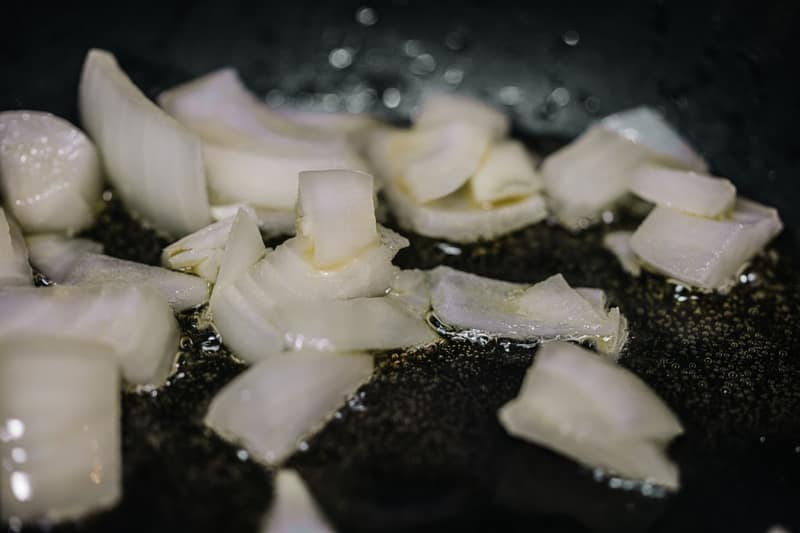
Cook the onions (opens in a new tab) in the remaining palm oil (opens in a new tab) until soft and sweet, without browning.
- 8 min
- medium-low heat
How it looks · Photo: Magda Ehlers on Pexels Step 3
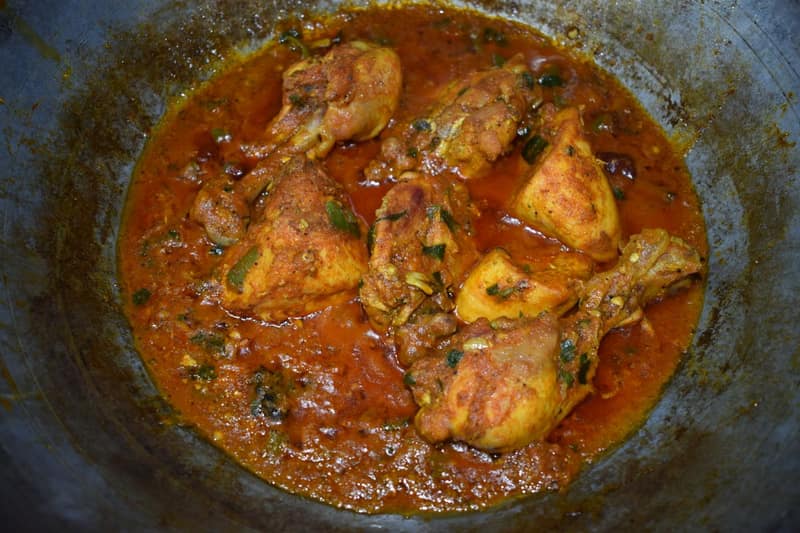
Return the chicken with the water, chilli and remaining salt. Cover and simmer gently, stirring occasionally, until the chicken is very tender and the sauce has thickened.
- 40 min
- low heat
Food safety: Chicken should reach 74 °C at the thickest part.
How it looks · Photo: Bachir Mamud on Pexels Step 4
Add the okra (opens in a new tab) for the last 10 minutes if using. Remove the chilli (or burst it for more heat) and serve with rice.
- 10 min
- low heat

How it looks · Photo: Willians Huerta on Pexels
About this dish
- Origin
- Gabon · Well documentedNyembwe is the Gabonese name for palm-nut sauce; similar dishes exist across Central Africa.Also popular in Republic of the Congo, CameroonMore food from Gabon
- Dish
- Lunch · Dinner · Stews & braises · Main courses
- Cooking method
- Braised, Simmered
- Taste
- rich, savoury, earthy, spicy (chilli heat)
- Diet
- No gluten ingredients · Dairy-free · No nut ingredients · Keto-style · Low-carb · High-proteinWithout the optional extras: Whole-food focused, Paleo-styleWorked out from the ingredients. How labels work
All labels
Non-vegetarian · No gluten ingredients · Dairy-free · Egg-free · No nut ingredients · No added sugar · Alcohol-free · Pork-free · Beef-free · Keto-style · Low-carb · High-protein - Good for
- One-pot · Festive & celebration · Make-ahead
- Cook more with
- Chicken pieces, skin-on · Red palm oil · Onion · Garlic · Fresh red chilli
Allergens
None of the 14 major allergens appear in the listed ingredients.
Based on typical versions of these ingredients and not verified allergen-free. Brands differ and cross-contact happens, so always check labels. For severe allergies, follow your clinician’s advice.
Nutrition
570 kcal per serving
Calculated1 serving ≈ 356 g · recipe makes 6
Where the energy comes from
- Protein 27%
- Carbohydrate 3%
- Fat 70%
| Nutrient | Per serving | Per 100 g* |
|---|---|---|
| Energy | 570 kcal | 160 kcal |
| Protein | 37.8 g | 10.6 g |
| Carbohydrate | 4.5 g | 1.3 g |
| Net carbohydrate | 3.8 g | 1.1 g |
| Sugars | 1.6 g | 0.5 g |
| Added sugars | 0 g | 0 g |
| Fibre | 0.7 g | 0.2 g |
| Fat | 43.8 g | 12.3 g |
| Saturated fat | 15.4 g | 4.3 g |
| Trans fat | 0.2 g | 0.1 g |
| Cholesterol | 150 mg | 42 mg |
| Sodium | 727 mg | 204 mg |
| Salt equivalent | 1.8 g | 0.5 g |
Vitamins & minerals per serving
- Potassium
- 448 mg
- Calcium
- 47 mg
- Iron
- 2 mg
- Magnesium
- 47 mg
- Vitamin A (RAE)
- 83 µg
- Vitamin C
- 8 mg
- Vitamin D
- 0.4 µg
- Vitamin B12
- 0.6 µg
- Folate (DFE)
- 19 µg
How these numbers were made
- Calculated from USDA FoodData Central (SR Legacy) per-100 g values and the listed quantities.
- *Per 100 g of combined raw ingredients; the cooked dish may weigh more or less.
- Optional ingredients are not included: fresh ginger, okra, long-grain white rice.
- “—” means the value isn’t known for enough of the ingredients; it is never zero by default.
- Values are estimates for guidance, not for medical dosing. U.S. Department of Agriculture, Agricultural Research Service. FoodData Central, 2019. fdc.nal.usda.gov.
Good to know
Tips
- Low, slow simmering lets the palm sauce turn velvety; boiling hard makes it oily.
Common mistakes
- Browning the onions — they should cook gently until sweet so the palm sauce stays clean-tasting.
Serve with
- Serve with rice, boiled cassava, bâtons de manioc or plantains, and sautéed cassava leaves.
Storage
- Keeps 3 days refrigerated; freezes well.
Reheating
- Reheat gently, covered.
Original editorial recipe · FriendsPantry editorial · Not yet independently reviewed · Added · Updated
Recipe DNA
How this dish is built
Grouped by each ingredient’s role in the dish. Each band’s width is its share of the dish by weight. Choose a component to see what it does.
What the dish is built around
Main ingredient
- Chicken pieces, skin-on, cut into pieces1.2 kg · 1200 g
- Fresh red chilli, whole, pricked1 piece · 6 g
- Okra, sliced (optional)150 g
- Long-grain white rice (optional)300 g
Reviews & corrections
Reviews come from signed-in cooks and appear after a moderator checks them. We never show made-up ratings.
You might also like
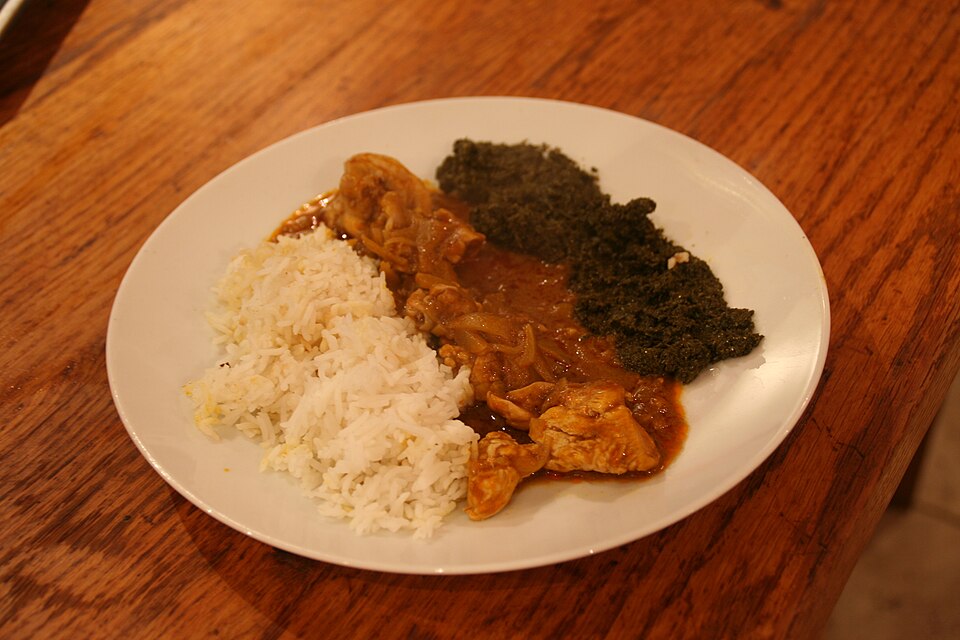
Moambe chicken
 Congolese · 1 h 15 min · 593 kcal
Muamba de galinha
 Angolan · 1 h 20 min · 637 kcal
Gabonese fish bouillon
 Gabonese · 45 min · 151 kcal
Moroccan chicken tagine with olives and lemon
 Moroccan · 1 h 30 min · 718 kcal