
Bissara
Vegetarian
بيصارة · bissara
A thick, velvety purée of dried split fava beans and garlic, finished with a generous swirl of olive oil, cumin and paprika. A warming, cheap breakfast or supper in northern Morocco.
Bissara is a Moroccan soup from Morocco, ready in about 1 hour and made with fava beans (dried), garlic and olive oil. It serves 4 and is rated easy to cook.
- Prep
- 10 min
- Cook
- 50 min
- Total
- 1 h
- Serves
- 4
- Level
- Easy
- Calories
- 385
Plus overnight soaking of the beans.
Method
Step 1
Drain the soaked beans and put them in a pot with the garlic (opens in a new tab) and water. Bring to the boil and skim off the foam.
- 10 min
- high heat
- Saucepan (opens in a new tab)
Step 2
Simmer, partly covered, until the beans collapse completely, stirring now and then.
- 40 min
- medium-low heat
Step 3
Blend until very smooth, adding hot water for a soup or keeping it thick for a dip. Stir in half the olive oil (opens in a new tab), 1 tsp cumin (opens in a new tab), the salt and lemon juice (opens in a new tab).
Food safety: Blend hot purée in batches with the lid vented.
Step 4
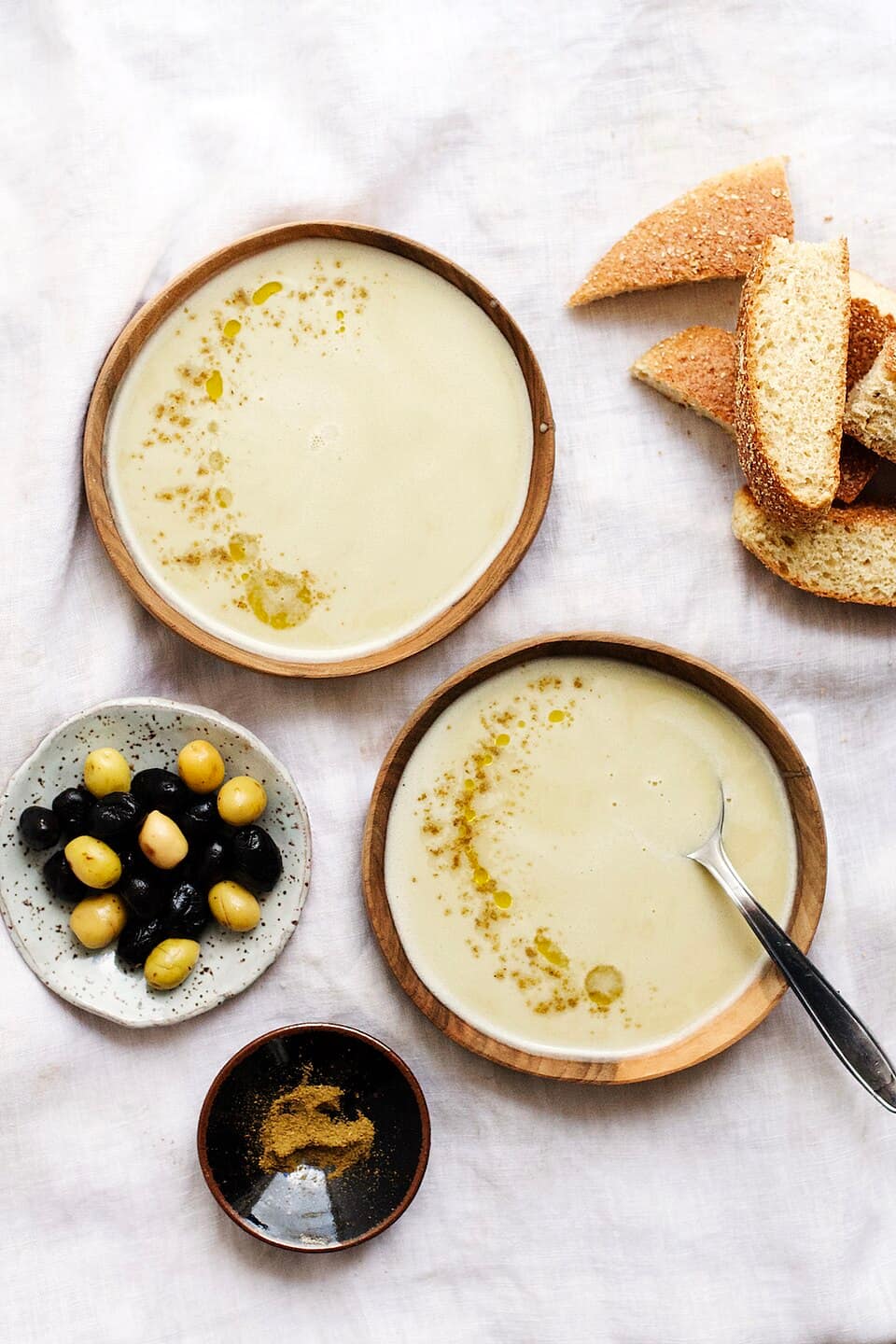
Ladle into bowls and finish with the rest of the olive oil (opens in a new tab), cumin (opens in a new tab), paprika (opens in a new tab) and cayenne. Serve with bread.

How it looks · Photo: Willians Huerta on Pexels
About this dish
- Origin
- Morocco · Commonly attributedBissara (also besarah) is eaten in Morocco and Egypt in different styles; this soupy, cumin-topped version is Moroccan.Also popular in EgyptMore food from Morocco
- Dish
- Breakfast · Dinner · Soups · Dips & spreads
- Cooking method
- Simmered, Blended
- Taste
- earthy, garlicky, creamy
- Diet
- Vegan · Dairy-free · No nut ingredients · High-protein · High-fibreWithout the optional extras: Whole-food focused, No gluten ingredientsWorked out from the ingredients. How labels work
All labels
Vegan · Plant-based · Vegetarian (lacto-ovo) · Eggetarian · Lacto-vegetarian · Ovo-vegetarian · Pescatarian · Flexitarian-friendly · Dairy-free · Egg-free · No nut ingredients · No added sugar · Alcohol-free · Pork-free · Beef-free · High-protein · High-fibre · Carb-conscious · Calorie-conscious - Good for
- Budget-friendly · One-pot · Make-ahead · Freezer-friendly
- Cook more with
- Fava beans (dried) · Garlic · Cumin · Paprika
- Techniques
- Boiling · Simmering · Wet grinding · Emulsification · Stock making
Allergens
- Contains, can be adapted: Wheatfrom crusty bread / baguette
- Contains, can be adapted: Glutenfrom crusty bread / baguette
- May contain: Sesamefrom crusty bread / baguette
Based on typical versions of these ingredients and not verified allergen-free. Brands differ and cross-contact happens, so always check labels. For severe allergies, follow your clinician’s advice.
Nutrition
385 kcal per serving
Calculated1 serving ≈ 396 g · recipe makes 4
Where the energy comes from
- Protein 20%
- Carbohydrate 46%
- Fat 34%
| Nutrient | Per serving | Per 100 g* |
|---|---|---|
| Energy | 385 kcal | 97 kcal |
| Protein | 20.1 g | 5.1 g |
| Carbohydrate | 45.7 g | 11.5 g |
| Net carbohydrate | 26.6 g | 6.7 g |
| Sugars | 4.4 g | 1.1 g |
| Added sugars | 0 g | 0 g |
| Fibre | 19.1 g | 4.8 g |
| Fat | 14.9 g | 3.8 g |
| Saturated fat | 2.1 g | 0.5 g |
| Trans fat | 0 g | 0 g |
| Cholesterol | 0 mg | 0 mg |
| Sodium | 747 mg | 189 mg |
| Salt equivalent | 1.9 g | 0.5 g |
Vitamins & minerals per serving
- Potassium
- 840 mg
- Calcium
- 124 mg
- Iron
- 5.8 mg
- Magnesium
- 155 mg
- Vitamin A (RAE)
- 17 µg
- Vitamin C
- 2 mg
- Vitamin D
- 0 µg
- Vitamin B12
- 0 µg
- Folate (DFE)
- 318 µg
How these numbers were made
- Calculated from USDA FoodData Central (SR Legacy) per-100 g values and the listed quantities.
- *Per 100 g of combined raw ingredients; the cooked dish may weigh more or less.
- Optional ingredients are not included: lemon juice, cayenne / chilli powder, crusty bread / baguette.
- “—” means the value isn’t known for enough of the ingredients; it is never zero by default.
- Values are estimates for guidance, not for medical dosing. U.S. Department of Agriculture, Agricultural Research Service. FoodData Central, 2019. fdc.nal.usda.gov.
Good to know
Tips
- Use good olive oil for finishing — it is as much a seasoning as the cumin.
Common mistakes
- Being shy with the olive oil and cumin — they are the seasoning.
Serve with
- Serve piping hot with bread, olives and extra oil at the table.
Food safety
- People with G6PD deficiency (favism) should avoid fava beans.
Storage
- Refrigerate up to 4 days; it sets firm — loosen with water.
Reheating
- Reheat gently, whisking in hot water.
Variations
- With split peas: Some cooks make bissara with dried split peas instead of fava beans.
Original editorial recipe · FriendsPantry editorial · Not yet independently reviewed · Added · Updated
Sauces, chutneys & dips for this dish
Recipe DNA
How this dish is built
Grouped by each ingredient’s role in the dish. Each band’s width is its share of the dish by weight. Choose a component to see what it does.
What the dish is built around
Main ingredient
- Fava beans (dried), dried, split and skinned; soaked overnight300 g
- Garlic, peeled4 clove · 16 g
- Crusty bread / baguette (optional)4 slice · 140 g
Reviews & corrections
Reviews come from signed-in cooks and appear after a moderator checks them. We never show made-up ratings.
You might also like
Zaalouk
 Moroccan · 50 min · 139 kcal · Vegan
Loubia (Maghrebi white bean stew)
 Algerian · 40 min · 267 kcal · Vegan
Kefta tagine with eggs
Moroccan · 50 min · 475 kcal
Moroccan chicken tagine with olives and lemon
Moroccan · 1 h 30 min · 718 kcal