
Mulgikapsad
Non-vegetarian
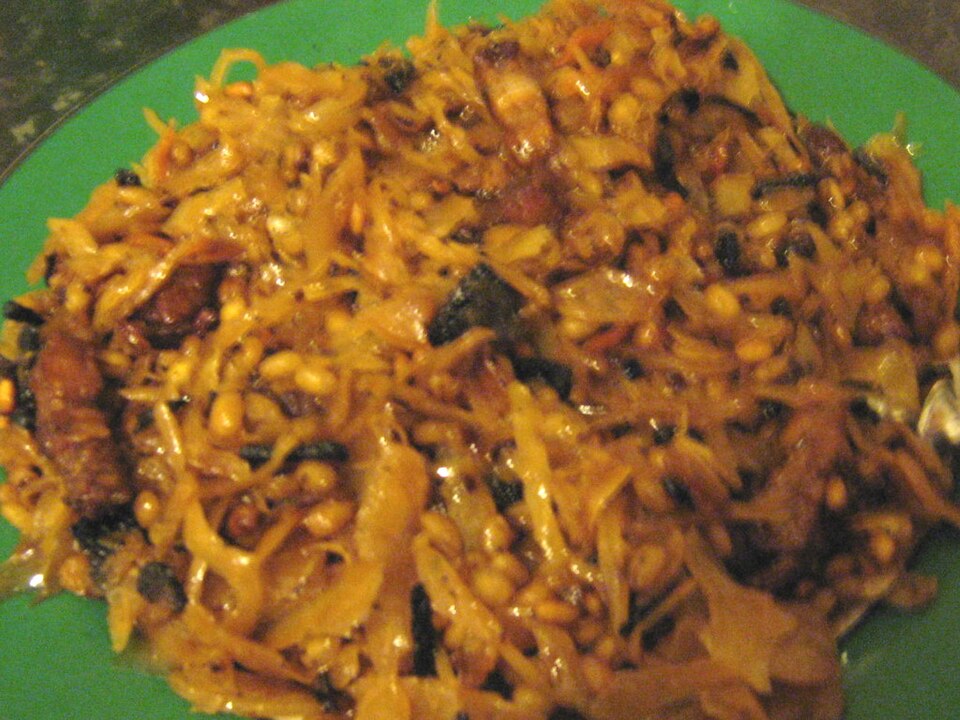
Sauerkraut slowly stewed with fatty pork and pearl barley until soft and mellow. An Estonian winter and Christmas classic, served with boiled potatoes.
Mulgikapsad is an Estonian stew, ready in about 2 hours 15 minutes and made with sauerkraut, pork belly and pearl barley. It serves 6 and is rated easy to cook.
- Prep
- 15 min
- Cook
- 2 h
- Total
- 2 h 15 min
- Serves
- 6
- Level
- Easy
- Calories
- 476
Method
Step 1
Put the sauerkraut (opens in a new tab), pork, barley (opens in a new tab) and onion (opens in a new tab) in a heavy pot with the water and salt.
Step 2
Bring to the boil, then cover and simmer very gently, stirring occasionally and adding water if it catches, until the pork is tender and the barley (opens in a new tab) soft.
- 110 min
- low heat
Step 3
Stir in the sugar, taste for salt and cook uncovered for a final 10 minutes so it is moist but not soupy. Serve with boiled potatoes (opens in a new tab).
- 10 min
- low heat

How it looks · Photo: Willians Huerta on Pexels
About this dish
- Origin
- Mulgimaa, Estonia · Well documentedMore food from Estonia
- Dish
- Dinner · Stews & braises · Main courses
- Cooking method
- Stewed, Slow-cooked
- Taste
- sour, savoury, rich
- Diet
- Dairy-free · No nut ingredients · Low-carbWorked out from the ingredients. How labels work
All labels
Non-vegetarian · Dairy-free · Egg-free · No nut ingredients · Alcohol-free · Beef-free · Low-carb · Carb-conscious · Calorie-conscious - Good for
- One-pot · Make-ahead · Freezer-friendly · Festive & celebration
- Cook more with
- Sauerkraut · Pork belly · Pearl barley · Pork shoulder · Brown sugar
Allergens
- Contains: Glutenfrom pearl barley
Based on typical versions of these ingredients and not verified allergen-free. Brands differ and cross-contact happens, so always check labels. For severe allergies, follow your clinician’s advice.
Nutrition
476 kcal per serving
Calculated1 serving ≈ 411 g · recipe makes 6
Where the energy comes from
- Protein 14%
- Carbohydrate 19%
- Fat 68%
| Nutrient | Per serving | Per 100 g* |
|---|---|---|
| Energy | 476 kcal | 116 kcal |
| Protein | 16.4 g | 4 g |
| Carbohydrate | 22.3 g | 5.4 g |
| Net carbohydrate | 14.9 g | 3.6 g |
| Sugars | 5.3 g | 1.3 g |
| Added sugars | 2.2 g | 0.5 g |
| Fibre | 7.4 g | 1.8 g |
| Fat | 35.9 g | 8.7 g |
| Saturated fat | 12.9 g | 3.1 g |
| Trans fat | — | — |
| Cholesterol | 72 mg | 17 mg |
| Sodium | 1252 mg | 305 mg |
| Salt equivalent | 3.1 g | 0.8 g |
Vitamins & minerals per serving
- Potassium
- 577 mg
- Calcium
- 79 mg
- Iron
- 3.7 mg
- Magnesium
- 49 mg
- Vitamin A (RAE)
- 4 µg
- Vitamin C
- 25 mg
- Vitamin D
- —
- Vitamin B12
- 0.8 µg
- Folate (DFE)
- 47 µg
How these numbers were made
- Calculated from USDA FoodData Central (SR Legacy) per-100 g values and the listed quantities.
- *Per 100 g of combined raw ingredients; the cooked dish may weigh more or less.
- Optional ingredients are not included: onion, potato.
- “—” means the value isn’t known for enough of the ingredients; it is never zero by default.
- Values are estimates for guidance, not for medical dosing. U.S. Department of Agriculture, Agricultural Research Service. FoodData Central, 2019. fdc.nal.usda.gov.
Good to know
Tips
- It can also be baked covered at 160 °C for the same time, which avoids sticking.
Common mistakes
- Rinsing all the flavour out of the sauerkraut — rinse only if it is very sour.
Food safety
- Simmer until the pork is tender and cooked through.
- Cool leftovers quickly (shallow containers) and refrigerate within 2 hours; reheat until piping hot (75 °C).
Storage
- Keeps 4 days chilled and tastes better reheated.
Reheating
- Reheat gently with a splash of water.
Original editorial recipe · FriendsPantry editorial · Not yet independently reviewed · Added · Updated
Recipe DNA
How this dish is built
Grouped by each ingredient’s role in the dish. Each band’s width is its share of the dish by weight. Choose a component to see what it does.
What the dish is built around
Main ingredient
- Sauerkraut1000 g
- Pork belly, cut into chunks300 g
- Pork shoulder, cut into chunks300 g
- Pearl barley, rinsed100 g
- Potato (optional)800 g
Reviews & corrections
Reviews come from signed-in cooks and appear after a moderator checks them. We never show made-up ratings.
You might also like
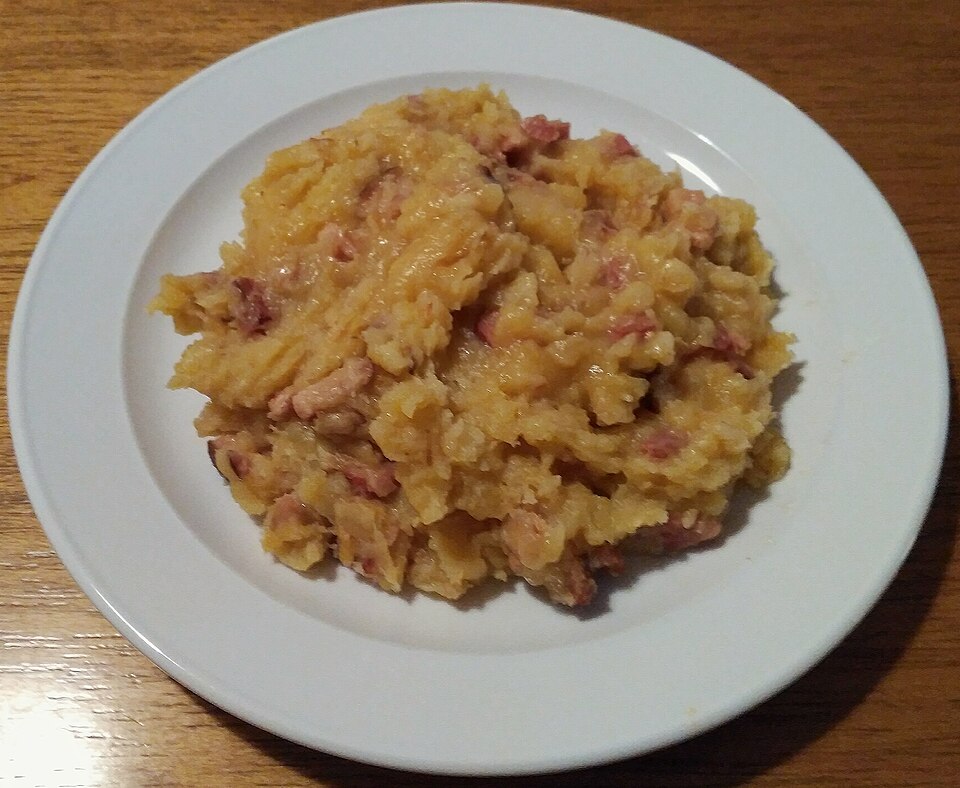
Mulgipuder
 Estonian · 1 h 5 min · 434 kcal
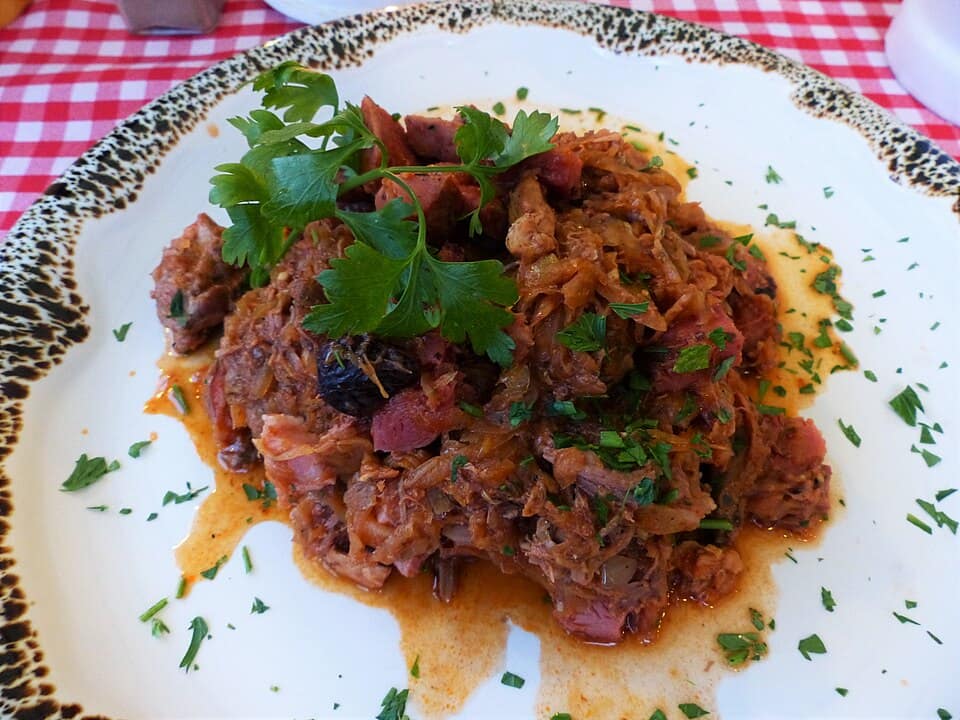
Bigos
 Polish · 2 h 55 min · 353 kcal
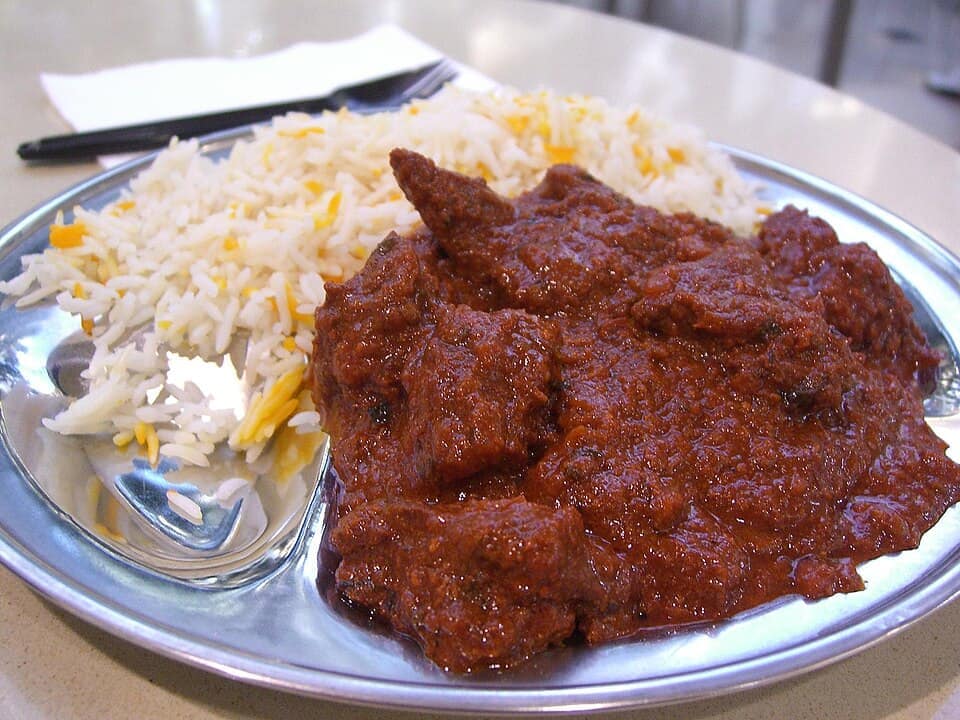
Pork vindaloo
 Goan · 2 h · 558 kcal
Haleem
 Pakistani · 4 h · 364 kcal