
Wholegrain mustard
Vegetarian
Moutarde à l'ancienne
Yellow and brown mustard seeds soaked in cider vinegar and white wine, then partly ground and sweetened with a little honey. The result is a coarse, popping, hot-and-tangy mustard that mellows as it matures.
Wholegrain mustard is a French condiment from France, ready in about 72 hours 10 minutes and made with mustard seeds and apple cider vinegar. It serves 20 and is rated beginner to cook.
No licensed photograph of this dish yet.
- Prep
- 10 min
- Cook
- 0 min
- Rest
- 72 h
- Total
- 72 h 10 min
- Serves
- 20
- Level
- Beginner
- Calories
- 31
1–2 days soaking, then 2–3 days maturing in the fridge before it is at its best.
Method
Step 1
Put the mustard seeds (opens in a new tab) in a clean jar, pour over the vinegar and wine, stir, cover and leave at room temperature for 24–48 hours. The seeds swell and absorb nearly all the liquid; top up with a spoonful of vinegar if they look dry.
Step 2
Tip about a third of the soaked seeds into a food processor (opens in a new tab) or mortar with the honey (opens in a new tab), salt and turmeric (opens in a new tab) and grind to a thick paste, 1–2 minutes.
Step 3
Stir the paste back into the whole seeds, adding a little cold water if needed for a thick, spreadable texture. Pack into the clean jar and seal.
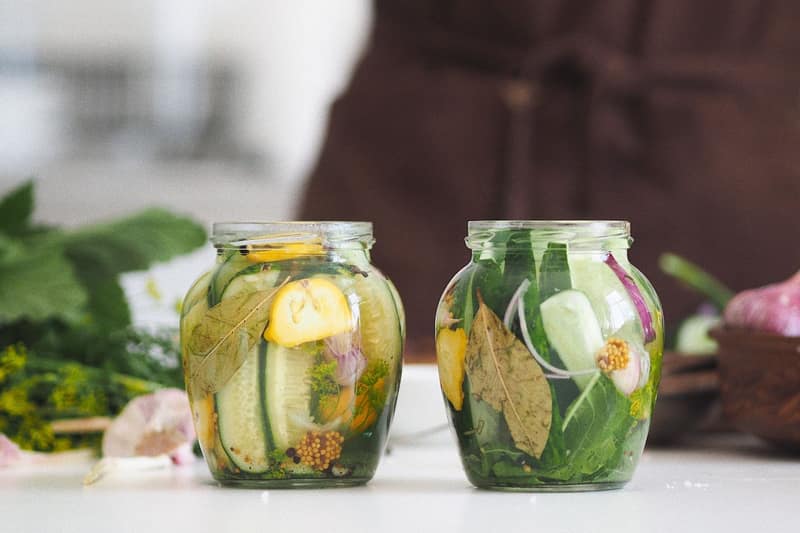
How it looks · Photo: Maria Verkhoturtseva on Pexels Step 4
Refrigerate for 2–3 days before using: freshly made mustard is harsh and bitter, and it mellows into a rounded heat as it rests.
- 1 min
About this dish
- Origin
- Meaux and Dijon, France · Commonly attributedCoarse-grained mustards were made long before smooth Dijon; Meaux mustard (sold in stoneware pots) is the best-known French example, and British wholegrain mustards are similar. This is a standard home method.Also popular in United Kingdom, GermanyMore food from France
- Dish
- Lunch · Dinner · Condiments, chutneys & relishes
- Cooking method
- Blended, No-cook
- Taste
- spicy (chilli heat), tangy, peppery
- Diet
- Vegetarian (lacto-ovo) · No gluten ingredients · Dairy-free · No nut ingredients · Low-carbWith the listed swaps: Alcohol-freeWorked out from the ingredients. How labels work
All labels
Vegetarian (lacto-ovo) · Eggetarian · Lacto-vegetarian · Ovo-vegetarian · Pescatarian · Flexitarian-friendly · Whole-food focused · Paleo-style · No gluten ingredients · Dairy-free · Egg-free · No nut ingredients · Pork-free · Beef-free · Low-carb · DASH-style - Good for
- Make-ahead · Budget-friendly
- Cook more with
- Mustard seeds · Apple cider vinegar · Dry white wine · Honey
- Techniques
- Wet grinding · Emulsification
Allergens
- Contains: Mustardfrom mustard seeds
- Contains, can be adapted: Sulphitesfrom dry white wine
Based on typical versions of these ingredients and not verified allergen-free. Brands differ and cross-contact happens, so always check labels. For severe allergies, follow your clinician’s advice.
Nutrition
31 kcal per serving
Calculated1 serving ≈ 16 g · recipe makes 20
Where the energy comes from
- Protein 17%
- Carbohydrate 29%
- Fat 54%
| Nutrient | Per serving | Per 100 g |
|---|---|---|
| Energy | 31 kcal | 202 kcal |
| Protein | 1.3 g | 8.4 g |
| Carbohydrate | 2.2 g | 13.9 g |
| Net carbohydrate | 1.5 g | 10 g |
| Sugars | 1 g | 6.5 g |
| Added sugars | 0.6 g | 4 g |
| Fibre | 0.6 g | 3.9 g |
| Fat | 1.8 g | 11.7 g |
| Saturated fat | 0.1 g | 0.6 g |
| Trans fat | 0 g | 0 g |
| Cholesterol | 0 mg | 0 mg |
| Sodium | 98 mg | 633 mg |
| Salt equivalent | 0.2 g | 1.6 g |
Vitamins & minerals per serving
- Potassium
- 44 mg
- Calcium
- 14 mg
- Iron
- 0.5 mg
- Magnesium
- 19 mg
- Vitamin A (RAE)
- 0 µg
- Vitamin C
- 0 mg
- Vitamin D
- 0 µg
- Vitamin B12
- 0 µg
- Folate (DFE)
- 8 µg
How these numbers were made
- Calculated from USDA FoodData Central (SR Legacy) per-100 g values and the listed quantities.
- Optional ingredients are not included: turmeric.
- “—” means the value isn’t known for enough of the ingredients; it is never zero by default.
- Values are estimates for guidance, not for medical dosing. U.S. Department of Agriculture, Agricultural Research Service. FoodData Central, 2019. fdc.nal.usda.gov.
Good to know
Tips
- Mustard heat develops when ground seeds meet cold liquid and is fixed by acid; grinding with hot liquid gives a milder mustard.
- More brown seeds make it hotter; more yellow seeds make it milder and creamier.
Common mistakes
- Tasting it on day one and judging it too bitter. Give it time.
- Grinding it all smooth; the whole seeds are the point.
Serve with
- Ham, sausages, pork pies and charcuterie.
- Whisked into vinaigrette or cream sauces for pork and chicken.
- Cheese boards and ploughman's lunch.
Food safety
- Use scrupulously clean jars (wash in hot soapy water, then dry in a 120 °C oven for 15 minutes or boil for 10 minutes) and always serve with a clean, dry spoon.
Storage
- Refrigerate in a clean, sealed jar for up to 3 months.
Variations
- Beer mustard (Germany): Brown ale or stout replaces the wine for a malty, German- or British-style mustard.
- Honey mustard (grainy) (United Kingdom): Double the honey for a sweeter mustard for glazes.
Original editorial recipe · FriendsPantry editorial · Not yet independently reviewed · Added · Updated
Goes with
Recipe DNA
How this dish is built
Grouped by each ingredient’s role in the dish. Each band’s width is its share of the dish by weight. Choose a component to see what it does.
The spice and seasoning backbone
Spices, masalas & pastes
- Mustard seeds, 60 g yellow (white) seeds and 40 g brown seeds100 g
- Salt5 g
- Turmeric (optional)0.5 g
Make it milder, swap ingredients for your diet, change the batch size or thickness — the original stays as it is.
Customise in Sauce & DrizzleReviews & corrections
Reviews come from signed-in cooks and appear after a moderator checks them. We never show made-up ratings.
You might also like
Honey mustard sauce
 American · 5 min · 105 kcal · Contains egg
Classic French vinaigrette
 French · 5 min · 121 kcal · Vegan
Kasundi (Bengali mustard sauce)
 Bengali · 4 h 15 min · 55 kcal · Vegan
Piccalilli
 British · 12 h 40 min · 28 kcal · Vegan