
Beef rendang
Non-vegetarian
Rendang daging
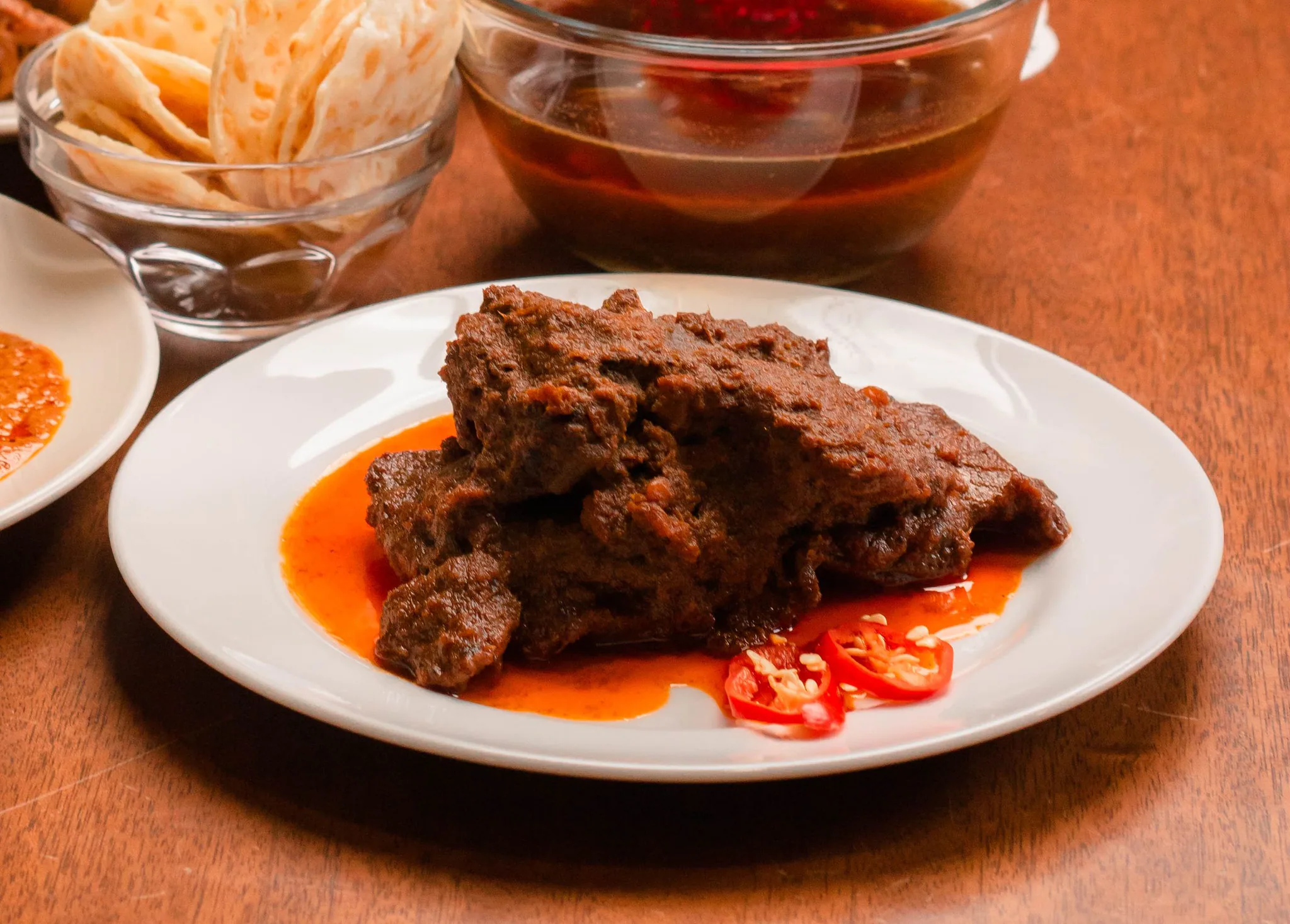
Beef slowly cooked in coconut milk and a paste of chillies, shallots, ginger and lemongrass for hours until the liquid disappears and the meat is dark, tender and coated in spice.
Beef rendang is an Indonesian curry, ready in about 4 hours and made with dried whole chillies, beef chuck and coconut milk. It serves 6 and is rated intermediate to cook.
- Prep
- 30 min
- Cook
- 3 h 30 min
- Total
- 4 h
- Serves
- 6
- Level
- Intermediate
- Calories
- 672
Ingredients
For the spice paste
Method
Step 1
Blend the shallots (opens in a new tab), garlic (opens in a new tab), ginger, chillies and turmeric (opens in a new tab) to a smooth paste with a splash of water.
Step 2
Fry the paste in the oil in a heavy pot until fragrant and slightly darkened.
- 8 min
- medium heat
- Dutch oven / casserole pot (opens in a new tab)
Step 3
Add the beef, coconut milk (opens in a new tab), lemongrass (opens in a new tab), galangal (opens in a new tab), lime leaves and whole spices. Bring to the boil, then simmer uncovered, stirring now and then.
- 120 min
- medium-low heat
Step 4
Meanwhile toast the desiccated coconut (opens in a new tab) in a dry pan until deep golden, then pound or grind it to an oily paste.
- 8 min
- medium-low heat
- Frying pan / skillet (opens in a new tab)
Step 5
When the sauce has reduced to a thick gravy, stir in the kerisik, tamarind, palm sugar (opens in a new tab) and salt. Keep cooking on low, stirring more often, until the liquid is gone and the beef fries in the released coconut oil and turns dark brown.
- 70 min
- low heat
Stir constantly in the last 20 minutes so the paste does not catch.
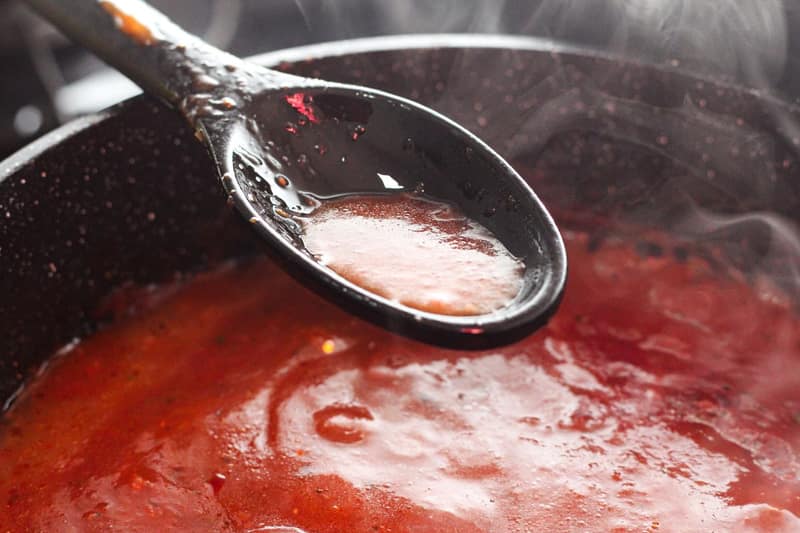
How it looks · Photo: Nanda Mends on Pexels Step 6
Discard the lemongrass (opens in a new tab), galangal (opens in a new tab) and whole spices if you like, and rest before serving.
About this dish
- Origin
- West Sumatra (Minangkabau), Indonesia · Well documentedAlso popular in Malaysia, SingaporeMore food from Indonesia
- Dish
- Lunch · Dinner · Curries · Stews & braises · Main courses
- Cooking method
- Slow-cooked, Braised
- Taste
- rich, spicy (chilli heat), aromatic / warmly spiced, savoury
- Diet
- No gluten ingredients · Dairy-free · No nut ingredients · High-proteinWorked out from the ingredients. How labels work
All labels
Non-vegetarian · No gluten ingredients · Dairy-free · Egg-free · No nut ingredients · Alcohol-free · Pork-free · High-protein - Good for
- Make-ahead · Freezer-friendly · Festive & celebration · Batch cooking
- Cook more with
- Dried whole chillies · Beef chuck · Coconut milk · Shallot · Garlic · Fresh ginger
Allergens
None of the 14 major allergens appear in the listed ingredients.
Based on typical versions of these ingredients and not verified allergen-free. Brands differ and cross-contact happens, so always check labels. For severe allergies, follow your clinician’s advice.
Nutrition
672 kcal per serving
Estimated1 serving ≈ 390 g · recipe makes 6
Where the energy comes from
- Protein 24%
- Carbohydrate 14%
- Fat 62%
| Nutrient | Per serving | Per 100 g* |
|---|---|---|
| Energy | 672 kcal | 172 kcal |
| Protein | 41.8 g | 10.7 g |
| Carbohydrate | 24.8 g | 6.4 g |
| Net carbohydrate | — | — |
| Sugars | — | — |
| Added sugars | 2.2 g | 0.6 g |
| Fibre | — | — |
| Fat | 48.7 g | 12.5 g |
| Saturated fat | 33.7 g | 8.6 g |
| Trans fat | — | — |
| Cholesterol | 107 mg | 27 mg |
| Sodium | 747 mg | 191 mg |
| Salt equivalent | 1.9 g | 0.5 g |
Vitamins & minerals per serving
- Potassium
- 1341 mg
- Calcium
- 92 mg
- Iron
- 10.6 mg
- Magnesium
- 132 mg
- Vitamin A (RAE)
- 46 µg
- Vitamin C
- 12 mg
- Vitamin D
- 0.2 µg
- Vitamin B12
- 3.8 µg
- Folate (DFE)
- 50 µg
How these numbers were made
- Calculated from USDA FoodData Central (SR Legacy) per-100 g values and the listed quantities.
- *Per 100 g of combined raw ingredients; the cooked dish may weigh more or less.
- Not counted (tiny amounts or “to taste”): makrut lime leaves.
- Galangal: Fresh ginger used as a stand-in: no galangal entry in FDC SR Legacy, and galangal is a closely related rhizome used in similar small amounts.
- Star anise / anise: Anise seed (FDC 171316) used as a stand-in for star anise.
- Tamarind paste: Raw tamarind pulp (FDC 167763). Commercial concentrates vary in water content.
- Jaggery / palm sugar: Brown sugar (FDC 168833) used as a stand-in for unrefined cane jaggery and palm sugar.
- “—” means the value isn’t known for enough of the ingredients; it is never zero by default.
- Values are estimates for guidance, not for medical dosing. U.S. Department of Agriculture, Agricultural Research Service. FoodData Central, 2019. fdc.nal.usda.gov.
Good to know
Tips
- Rendang tastes better the next day as the spices settle.
Common mistakes
- Stopping while it is still saucy — that is kalio, a lighter stage of the same dish.
Serve with
- Serve with steamed rice, nasi lemak or ketupat.
Food safety
- Cool leftover rendang within 2 hours and refrigerate; it keeps 4–5 days and reheats until piping hot (75 °C).
- The long final fry needs constant stirring — the sugar and coconut solids catch and burn quickly at that stage.
Storage
- Refrigerate up to 5 days or freeze 3 months.
Reheating
- Reheat gently in a pan with a spoonful of water.
Variations
- Rendang ayam (Malaysia): Chicken rendang, cooked for a shorter time and usually left a little saucier.
History
Rendang comes from the Minangkabau people of West Sumatra, where long cooking helped the meat keep for days without refrigeration.
Confidence: Commonly attributed
Original editorial recipe · FriendsPantry editorial · Not yet independently reviewed · Added · Updated
Recipe DNA
How this dish is built
Built from the recipe’s own sections. Each band’s width is its share of the dish by weight. Choose a component to see what it does.
What the dish is built around
Main ingredient
- Beef chuck, chuck or shin, cut into 5 cm chunks1 kg · 1000 g
- Desiccated coconut, toasted dark golden and pounded (kerisik)50 g
Masalas in this recipe
Make the masala first, then come back to finish the dish.
Wet masala
Rempah for rendang
This recipe makes it as part of the method (345 g for 6 servings). The full masala recipe explains each step in detail.
Reviews & corrections
Reviews come from signed-in cooks and appear after a moderator checks them. We never show made-up ratings.
You might also like
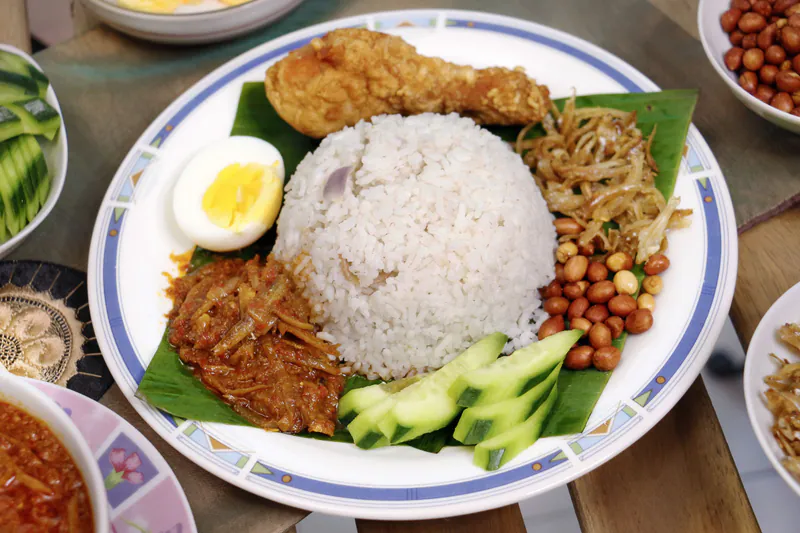
Nasi lemak
 Malaysian · 1 h 25 min · 963 kcal
Gulai kambing
 Indonesian · 2 h · 500 kcal
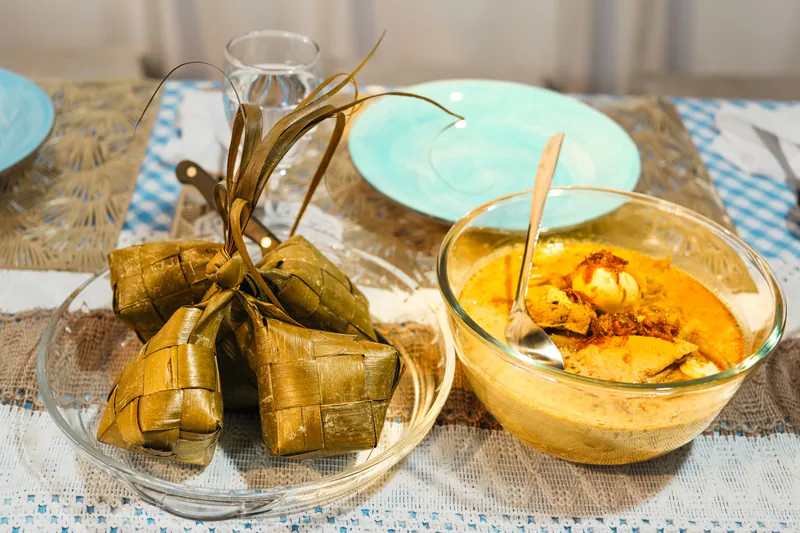
Kari ayam
Malaysian · 1 h 5 min · 514 kcal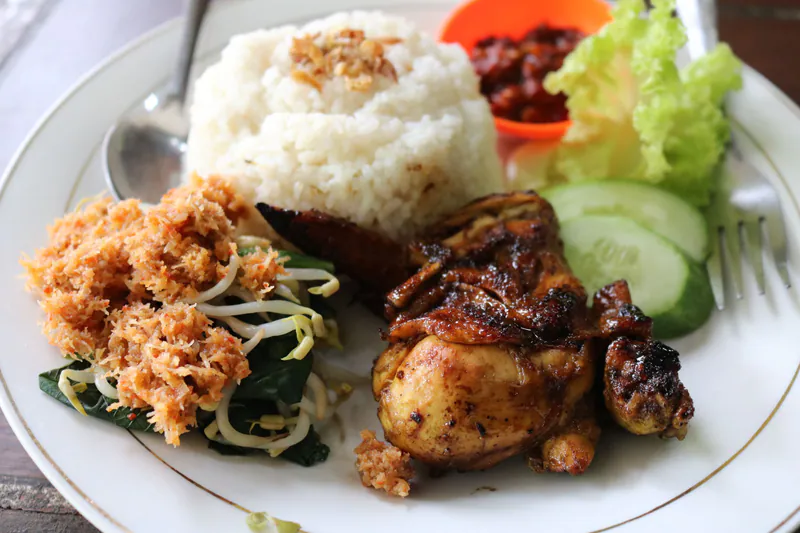
Ayam bakar
Indonesian · 1 h 15 min · 716 kcal