
Scotch eggs
Non-vegetarian
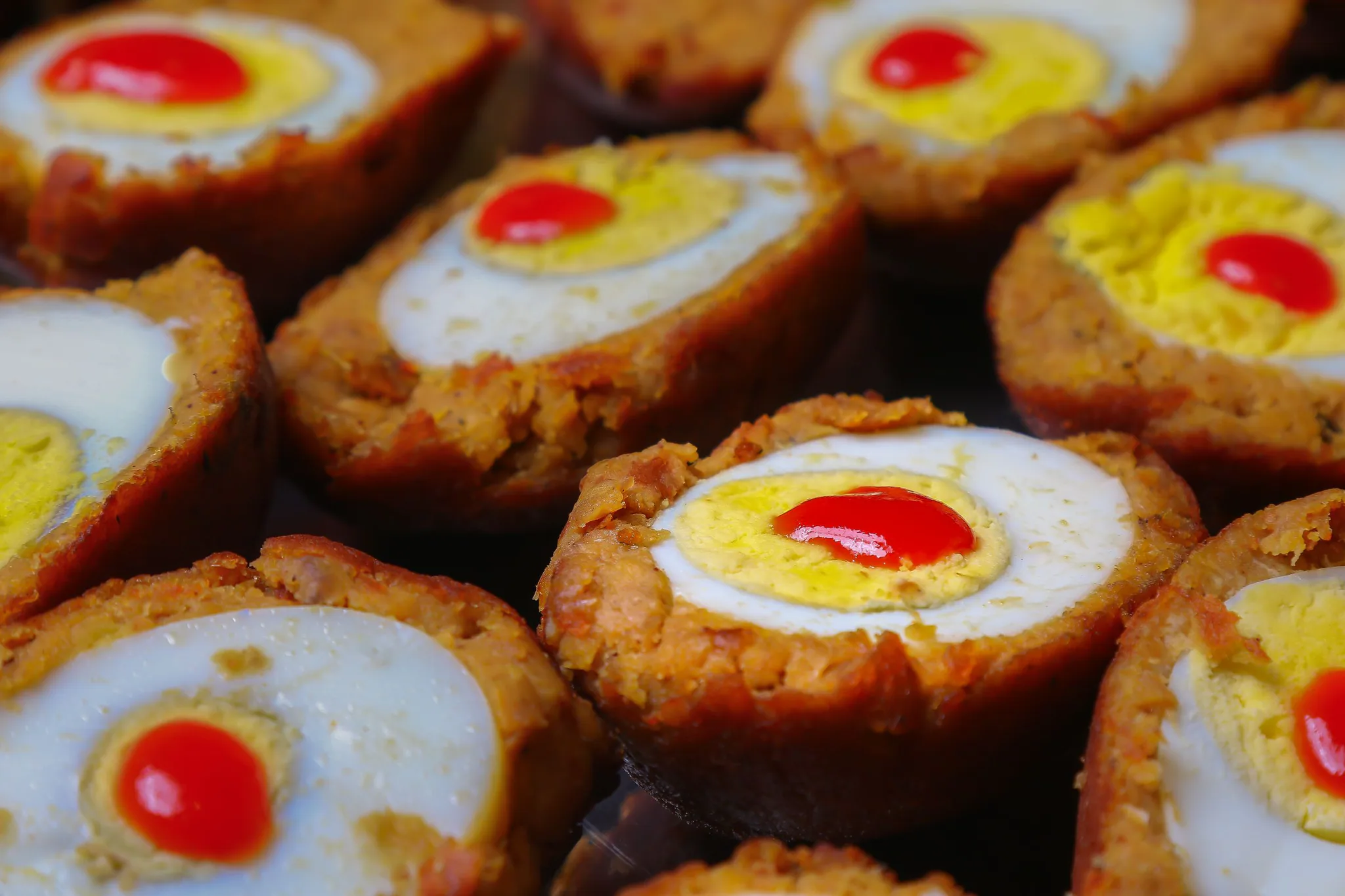
Eggs boiled until the yolk is just soft, wrapped in seasoned sausage meat, crumbed and fried until crisp and golden — a British picnic and pub classic.
Scotch eggs is a British egg dish, ready in about 1 hour 20 minutes and made with egg, pork sausage and panko. It serves 4 and is rated advanced to cook.
- Prep
- 30 min
- Cook
- 20 min
- Rest
- 30 min
- Total
- 1 h 20 min
- Serves
- 4
- Level
- Advanced
- Calories
- 599
Method
Step 1
Lower 4 eggs (opens in a new tab) into boiling water and cook for 7 minutes for a soft, just-set yolk (10 minutes for hard). Cool in iced water, then peel carefully.
- 7 min
- high heat
- Saucepan (opens in a new tab)
Step 2
Mix the sausage (opens in a new tab) meat with the parsley (opens in a new tab), mustard, salt and pepper (opens in a new tab) and divide into 4. Flatten each portion into a 12 cm round on clingfilm, put a floured egg (opens in a new tab) in the centre and use the film to wrap the meat around it evenly, sealing the joins.
Wet hands stop the meat sticking.
Step 3
Roll each in flour, then the 2 beaten eggs (opens in a new tab), then panko (opens in a new tab); repeat egg and crumbs for a thicker crust. Chill for 30 minutes to firm up.
- 8 min
Step 4
Heat the oil in a deep heavy pot to 170 °C. Fry two at a time for 7–8 minutes, turning, until deep golden and the sausage (opens in a new tab) meat reaches 71 °C at its thickest point. Drain on kitchen paper.
- 16 min
- 170°C · oil
- Dutch oven / casserole pot (opens in a new tab)
- Food thermometer (opens in a new tab)
- Slotted spoon (opens in a new tab)
Food safety: Fill the pot no more than a third with oil, keep a lid nearby and never leave hot oil unattended.
About this dish
- Origin
- England, United Kingdom · Origin disputedLondon's Fortnum & Mason claims to have invented them in 1738; others link them to Yorkshire or to Indian nargisi kofta. No claim is proven.More food from United Kingdom
- Dish
- Lunch · Snack · Egg dishes · Finger food · Appetizers & starters
- Cooking method
- Boiled, Deep-fried
- Taste
- savoury, peppery, rich
- Diet
- Dairy-free · No nut ingredients · High-proteinWorked out from the ingredients. How labels work
All labels
Non-vegetarian · Dairy-free · No nut ingredients · No added sugar · Alcohol-free · Beef-free · High-protein - Good for
- Portable / lunchbox · Make-ahead
- Cook more with
- Egg · Pork sausage · Panko · Parsley · All-purpose flour
- Techniques
- Deep-frying · Boiling
Allergens
- May contain: Milkfrom panko
- Contains: Eggsfrom egg, panko
- Contains: Wheatfrom pork sausage, all-purpose flour, panko
- Contains: Glutenfrom pork sausage, all-purpose flour, panko
- May contain: Soyfrom panko
- Contains, can be adapted: Mustardfrom prepared mustard
- May contain: Sulphitesfrom pork sausage, prepared mustard
Based on typical versions of these ingredients and not verified allergen-free. Brands differ and cross-contact happens, so always check labels. For severe allergies, follow your clinician’s advice.
Nutrition
599 kcal per serving
Estimated1 serving ≈ 219 g · recipe makes 4
Where the energy comes from
- Protein 19%
- Carbohydrate 20%
- Fat 61%
| Nutrient | Per serving | Per 100 g* |
|---|---|---|
| Energy | 599 kcal | 274 kcal |
| Protein | 27.7 g | 12.7 g |
| Carbohydrate | 29.2 g | 13.4 g |
| Net carbohydrate | 27.8 g | 12.7 g |
| Sugars | 3.1 g | 1.4 g |
| Added sugars | 0 g | 0 g |
| Fibre | 1.4 g | 0.7 g |
| Fat | 40.3 g | 18.4 g |
| Saturated fat | 11.8 g | 5.4 g |
| Trans fat | — | — |
| Cholesterol | 348 mg | 159 mg |
| Sodium | — | — |
| Salt equivalent | — | — |
Vitamins & minerals per serving
- Potassium
- 381 mg
- Calcium
- 103 mg
- Iron
- 4.8 mg
- Magnesium
- 39 mg
- Vitamin A (RAE)
- 125 µg
- Vitamin C
- 2 mg
- Vitamin D
- —
- Vitamin B12
- 1.8 µg
- Folate (DFE)
- —
How these numbers were made
- Calculated from USDA FoodData Central (SR Legacy) per-100 g values and the listed quantities.
- *Per 100 g of combined raw ingredients; the cooked dish may weigh more or less.
- Optional ingredients are not included: prepared mustard.
- Not counted (tiny amounts or “to taste”): salt, black pepper — so sodium is shown as unknown.
- Panko: Plain dry breadcrumbs (FDC 174928) used as a stand-in for Japanese panko.
- “—” means the value isn’t known for enough of the ingredients; it is never zero by default.
- Values are estimates for guidance, not for medical dosing. U.S. Department of Agriculture, Agricultural Research Service. FoodData Central, 2019. fdc.nal.usda.gov.
Good to know
Tips
- If the crumbs brown before the meat is done, finish in a 180 °C oven for 5 minutes.
Common mistakes
- A thick, uneven layer of meat — it cooks unevenly and the egg overcooks.
Food safety
- Sausage meat must be cooked through to at least 71 °C (160 °F).
- Runny or lightly cooked eggs: the UK Food Standards Agency says hen eggs with the British Lion mark or from the Laid in Britain scheme can be eaten lightly cooked by everyone, including young children, pregnant people and older adults (but not people who are severely immunocompromised). Otherwise — and following USDA advice in the US — cook eggs until white and yolk are firm for vulnerable groups, or use pasteurised eggs. Duck, goose and quail eggs should always be cooked through.
Storage
- Keep in the fridge for up to 2 days; eat cold or at room temperature.
Original editorial recipe · FriendsPantry editorial · Not yet independently reviewed · Added · Updated
Recipe DNA
How this dish is built
Grouped by each ingredient’s role in the dish. Each band’s width is its share of the dish by weight. Choose a component to see what it does.
What the dish is built around
Main ingredient
- Egg6 piece · 300 g
- Pork sausage400 g
- All-purpose flour40 g
- Panko100 g
Reviews & corrections
Reviews come from signed-in cooks and appear after a moderator checks them. We never show made-up ratings.
You might also like
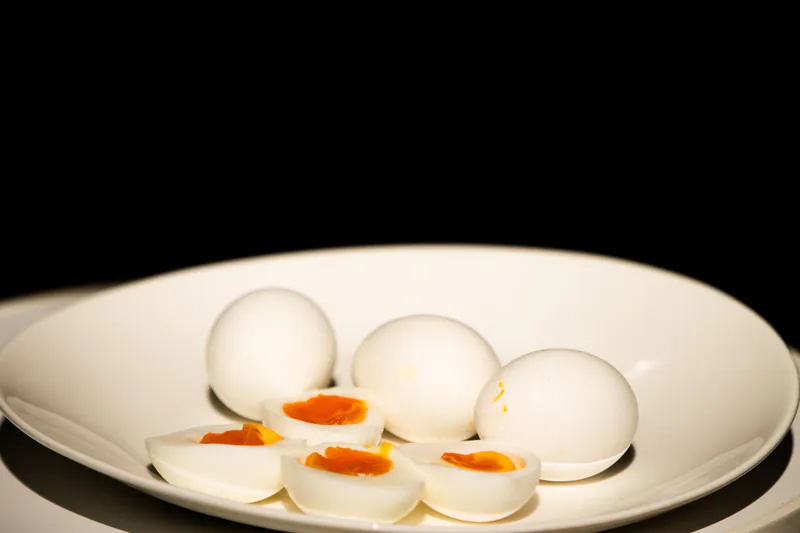
Boiled Eggs (Soft or Hard)
International · 17 min · 143 kcal · Contains egg
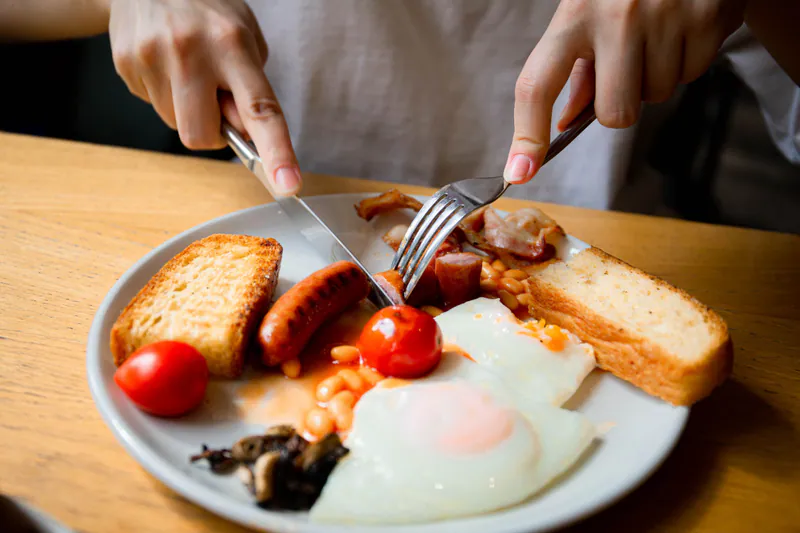
Full English breakfast
 British · 40 min · 671 kcal
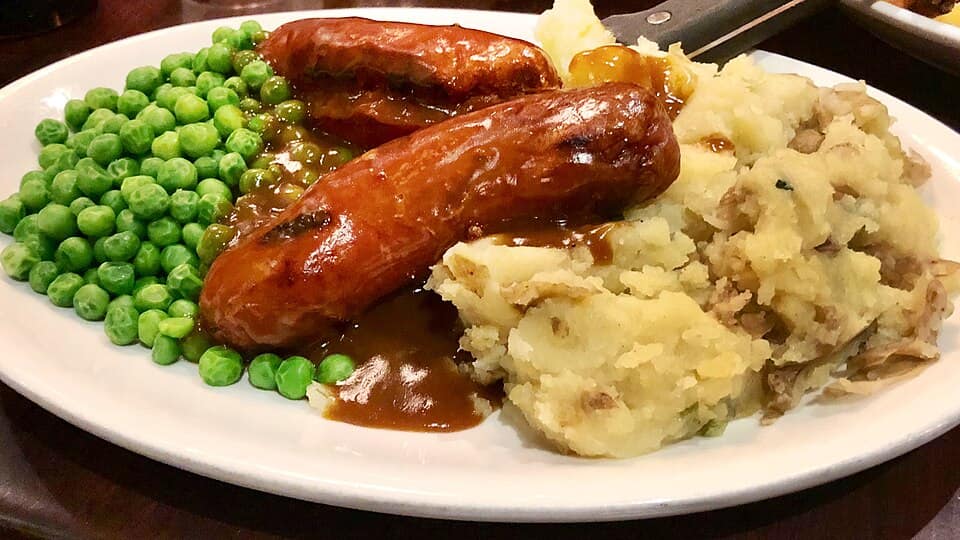
Bangers and mash with onion gravy
British · 55 min · 822 kcal
Bitterballen
 Dutch · 6 h 30 min · 424 kcal