
Levantine · Palestinian · Lebanese
Msabbaha (warm whole-chickpea hummus)
Vegetarian
مسبحة · msabbaḥa
Very soft, warm chickpeas folded through a lemony tahini sauce so some burst and thicken it while most stay whole, finished with olive oil, cumin, paprika and parsley. Looser and chunkier than smooth hummus, and eaten warm.
Msabbaha (warm whole-chickpea hummus) is a Levantine dip, ready in about 1 hour and made with dried chickpeas and tahini. It serves 4 and is rated easy to cook.
No licensed photograph of this dish yet.
- Prep
- 15 min
- Cook
- 45 min
- Total
- 1 h
- Serves
- 4
- Level
- Easy
- Calories
- 392
Plus 12 hours soaking the dried chickpeas.
Ingredients
For the chickpeas
For the tahini sauce
To finish
Method
Step 1
Soak the dried chickpeas (opens in a new tab) the night before: cover them with at least three times their volume of cold water and leave for 12 hours at cool room temperature (or in the fridge in hot weather). They double in size. Drain and rinse. If you are using canned chickpeas instead, drain and rinse them and go straight to the next step.
Step 2
Put the drained chickpeas in a saucepan (opens in a new tab) over medium-high heat with the bicarbonate of soda (opens in a new tab) and stir for about 3 minutes, until they look a little dry and are coated. Pour in the cold water, bring to the boil and skim off the grey foam and the loose skins that float up.
- 8 min
- medium-high heat
- Saucepan (opens in a new tab)
- Slotted spoon (opens in a new tab)
Bicarbonate makes the water alkaline, which loosens the skins and softens the starch, so the chickpeas break down to a silky purée. More than the recipe says makes them taste soapy.
Step 3
Simmer until the chickpeas are completely soft, skimming off skins as they rise: one should squash to a smooth paste between thumb and finger with no chalky centre, and many will be splitting. Allow 25–45 minutes for soaked dried chickpeas (opens in a new tab) (older ones take longer) and about 10 minutes for canned. Drain while hot and keep them warm; warm chickpeas blend smoother. If you use canned chickpeas without simmering, pinch each one so the skin slips off instead (about 10 minutes for a can).
- 40 min
- medium-low heat
- Saucepan (opens in a new tab)
- Colander (opens in a new tab)
Step 4
While the chickpeas simmer, make the tahini (opens in a new tab) sauce: whisk (opens in a new tab) 45 ml of the lemon juice (opens in a new tab) with one crushed garlic clove (opens in a new tab) and the salt and leave 5 minutes. Whisk in the tahini; it will seize into a stiff paste. Whisk in the ice water a spoonful at a time until the sauce turns pale and smooth and pours like double cream.
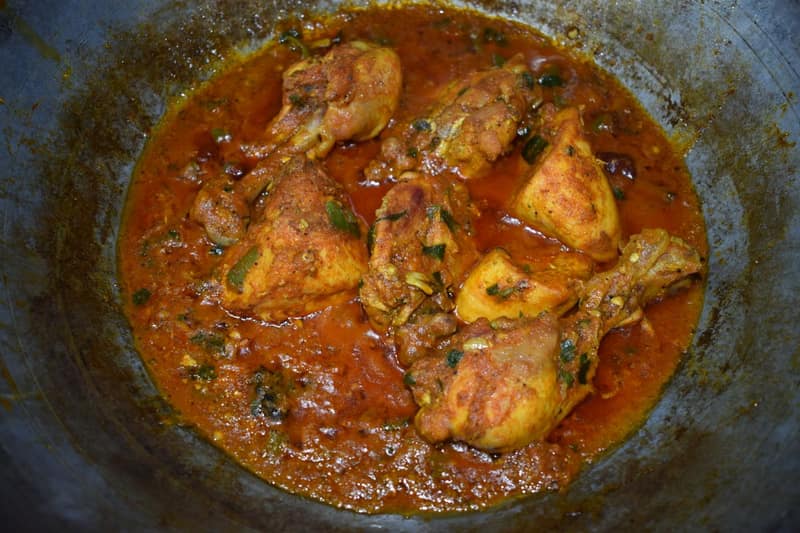
How it looks · Photo: Bachir Mamud on Pexels Step 5
For the dressing, mix the remaining 15 ml lemon juice (opens in a new tab) with the second crushed garlic clove (opens in a new tab) and the green chilli (opens in a new tab).
- 2 min
Step 6
Set aside a few spoonfuls of the hot drained chickpeas for the top. Tip the rest into the tahini (opens in a new tab) sauce with 2–3 tablespoons of their hot cooking liquid and stir hard with a spoon, crushing about a quarter of the chickpeas against the side of the bowl, until the sauce thickens into a loose, chunky purée that slowly spreads on a plate.
Step 7
Spoon into shallow bowls while warm, top with the reserved whole chickpeas, a spoonful of the chilli dressing, the olive oil (opens in a new tab), cumin, paprika (opens in a new tab) and parsley (opens in a new tab). Serve straight away.
- 2 min
About this dish
- Origin
- Levant · Commonly attributedEaten in Palestine, Lebanon, Syria and Jordan, and at hummus shops in Israel; the name refers to the chickpeas 'swimming' in their sauce. Mashawsha (Galilee) is a closely related version. Proportions follow common hummus-shop practice.Also popular in Palestine, Lebanon, Syria, Jordan, Israel
- Dish
- Breakfast · Lunch · Dips & spreads · Appetizers & starters
- Cooking method
- Boiled, Simmered
- Taste
- nutty, creamy, tangy, garlicky
- Diet
- Vegan · No gluten ingredients · Dairy-free · No nut ingredientsWorked out from the ingredients. How labels work
All labels
Vegan · Plant-based · Vegetarian (lacto-ovo) · Eggetarian · Lacto-vegetarian · Ovo-vegetarian · Pescatarian · Flexitarian-friendly · Whole-food focused · No gluten ingredients · Dairy-free · Egg-free · No nut ingredients · No added sugar · Alcohol-free · Pork-free · Beef-free · Mediterranean-style · Carb-conscious - Good for
- Budget-friendly · Everyday
- Cook more with
- Dried chickpeas · Tahini · Baking soda · Lemon juice · Garlic · Ground cumin
Allergens
- Contains: Sesamefrom tahini
Based on typical versions of these ingredients and not verified allergen-free. Brands differ and cross-contact happens, so always check labels. For severe allergies, follow your clinician’s advice.
Nutrition
392 kcal per serving
Estimated1 serving ≈ 175 g · recipe makes 4
Where the energy comes from
- Protein 14%
- Carbohydrate 37%
- Fat 49%
| Nutrient | Per serving | Per 100 g |
|---|---|---|
| Energy | 392 kcal | 224 kcal |
| Protein | 14.4 g | 8.2 g |
| Carbohydrate | 38.3 g | 21.9 g |
| Net carbohydrate | 29.9 g | 17.1 g |
| Sugars | 5.9 g | 3.4 g |
| Added sugars | 0 g | 0 g |
| Fibre | 8.4 g | 4.8 g |
| Fat | 22.1 g | 12.6 g |
| Saturated fat | 3 g | 1.7 g |
| Trans fat | — | — |
| Cholesterol | 0 mg | 0 mg |
| Sodium | 737 mg | 421 mg |
| Salt equivalent | 1.8 g | 1.1 g |
Vitamins & minerals per serving
- Potassium
- 493 mg
- Calcium
- 173 mg
- Iron
- 4.6 mg
- Magnesium
- 72 mg
- Vitamin A (RAE)
- 14 µg
- Vitamin C
- 10 mg
- Vitamin D
- 0 µg
- Vitamin B12
- 0 µg
- Folate (DFE)
- 306 µg
How these numbers were made
- Calculated from USDA FoodData Central (SR Legacy) per-100 g values and the listed quantities.
- Optional ingredients are not included: green chilli.
- Ice: Frozen water; same composition as water.
- “—” means the value isn’t known for enough of the ingredients; it is never zero by default.
- Values are estimates for guidance, not for medical dosing. U.S. Department of Agriculture, Agricultural Research Service. FoodData Central, 2019. fdc.nal.usda.gov.
Good to know
Tips
- The chickpeas must be properly soft; a firm chickpea will not thicken the sauce and feels raw in a warm dish.
- Keep a little cooking liquid: it is starchy and loosens msabbaha better than water when you reheat it.
Common mistakes
- Blending it smooth; msabbaha should be visibly chunky.
- Serving it cold; it is meant to be warm, and the tahini tightens as it cools.
Serve with
- With warm pita, raw onion wedges, pickles and fresh mint for breakfast, as at hummus shops.
- Alongside falafel and smooth hummus for a weekend spread.
Storage
- Best eaten warm the day it is made. Refrigerate leftovers up to 3 days; rewarm gently in a pan with a splash of water or cooking liquid.
Reheating
- Warm over low heat with 2–3 tbsp water, stirring, until steaming; do not boil hard or the tahini can split.
Variations
- Mashawsha (Israel): The Galilee and Nazareth version: chickpeas crushed a little more and dressed with a sharper lemon-garlic-chilli sauce.
- Balila (Lebanon): Lebanese and Syrian warm chickpeas with garlic, lemon, cumin and olive oil, without tahini.
Original editorial recipe · FriendsPantry editorial · Not yet independently reviewed · Added · Updated
Goes with
Recipe DNA
How this dish is built
Built from the recipe’s own sections. Each band’s width is its share of the dish by weight. Choose a component to see what it does.
Make it milder, swap ingredients for your diet, change the batch size or thickness — the original stays as it is.
Customise in Sauce & DrizzleReviews & corrections
Reviews come from signed-in cooks and appear after a moderator checks them. We never show made-up ratings.
You might also like
Hummus
Levantine · 15 min · 274 kcal · Vegan
Fattet hummus
Levantine · 25 min · 604 kcal · Vegetarian
Falafel
Middle Eastern · 13 h 15 min · 432 kcal · Vegan
Tahini sauce (taratur)
Levantine · 5 min · 82 kcal · Vegan