
Nam prik pao (Thai chilli jam)
Non-vegetarian
น้ำพริกเผา · nam phrik phao
Dark, sticky Thai chilli paste of fried shallots, garlic, dried chillies and dried shrimp, cooked down with tamarind, palm sugar and fish sauce into a smoky-sweet jam.
Nam prik pao (Thai chilli jam) is a Thai condiment from Thailand, ready in about 50 minutes and made with shallot and dried whole chillies. It serves 20 and is rated intermediate to cook.
No licensed photograph of this dish yet.
- Prep
- 20 min
- Cook
- 30 min
- Total
- 50 min
- Serves
- 20
- Level
- Intermediate
- Calories
- 83
Method
Step 1
Heat the oil in a wok (opens in a new tab) over medium heat. Fry the shallots (opens in a new tab), stirring, until evenly golden; lift out with a slotted spoon (opens in a new tab). Repeat with the garlic (opens in a new tab), which colours faster.
- 12 min
- medium heat
- Wok (opens in a new tab)
- Slotted spoon (opens in a new tab)
Food safety: Hot oil — keep the wok steady and add ingredients gently to avoid splashes.
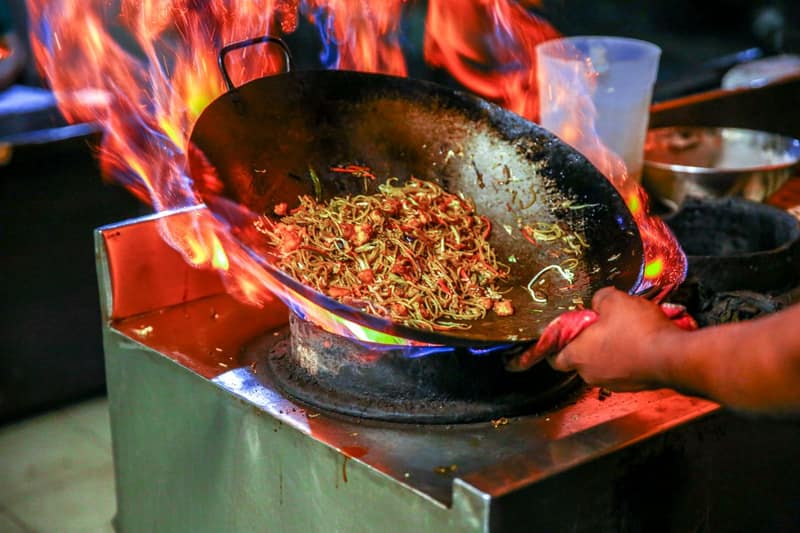
How it looks · Photo: Aesthos AR. Photography on Pexels Step 2
Fry the dried chillies for 20–30 seconds until they darken a shade, then the dried shrimp (opens in a new tab) for a minute. Lift both out.
- 2 min
- medium-low heat
Chillies go from roasted to burnt in seconds; burnt chillies make the jam bitter.
Step 3
Blend the fried shallots (opens in a new tab), garlic (opens in a new tab), chillies and shrimp with a few spoonfuls of the frying oil until you have a thick, slightly coarse paste.
Step 4
Return the paste to the wok (opens in a new tab) with the remaining oil. Add the tamarind, palm sugar (opens in a new tab), fish sauce (opens in a new tab) and salt and cook on low heat, stirring often, until dark red-brown, thick and jammy with oil pooling on the surface.
- 12 min
- low heat
Step 5
Cool and spoon into a clean jar, topping it with the red oil.
About this dish
- Origin
- Thailand · Well documentedMore food from Thailand
- Dish
- Lunch · Dinner · Condiments, chutneys & relishes · Sauces
- Cooking method
- Shallow-fried, Simmered, Blended
- Taste
- sweet & spicy, smoky, umami, sour
- Diet
- Pescatarian · No gluten ingredients · Dairy-free · No nut ingredients · Keto-style · Low-carbWorked out from the ingredients. How labels work
All labels
Pescatarian · Non-vegetarian · Flexitarian-friendly · No gluten ingredients · Dairy-free · Egg-free · No nut ingredients · Alcohol-free · Pork-free · Beef-free · Keto-style · Low-carb · DASH-style - Good for
- Make-ahead
- Cook more with
- Shallot · Dried whole chillies · Garlic · Dried shrimp · Tamarind paste · Jaggery / palm sugar
- Techniques
- Shallow-frying · Simmering · Wet grinding · Emulsification
Allergens
- Contains: Fishfrom fish sauce
- Contains: Crustaceansfrom dried shrimp, fish sauce
Based on typical versions of these ingredients and not verified allergen-free. Brands differ and cross-contact happens, so always check labels. For severe allergies, follow your clinician’s advice.
Nutrition
83 kcal per serving
Estimated1 serving ≈ 16 g · recipe makes 20
Where the energy comes from
- Protein 7%
- Carbohydrate 33%
- Fat 60%
| Nutrient | Per serving | Per 100 g |
|---|---|---|
| Energy | 83 kcal | 517 kcal |
| Protein | 1.6 g | 10.1 g |
| Carbohydrate | 7 g | 43.8 g |
| Net carbohydrate | 6.3 g | 39.7 g |
| Sugars | 4.3 g | 26.8 g |
| Added sugars | 2.9 g | 18.2 g |
| Fibre | 0.7 g | 4.1 g |
| Fat | 5.7 g | 35.6 g |
| Saturated fat | 0.4 g | 2.7 g |
| Trans fat | — | — |
| Cholesterol | 2 mg | 14 mg |
| Sodium | 277 mg | 1732 mg |
| Salt equivalent | 0.7 g | 4.3 g |
Vitamins & minerals per serving
- Potassium
- 109 mg
- Calcium
- 16 mg
- Iron
- 0.4 mg
- Magnesium
- 11 mg
- Vitamin A (RAE)
- 14 µg
- Vitamin C
- 2 mg
- Vitamin D
- 0.1 µg
- Vitamin B12
- 0.2 µg
- Folate (DFE)
- 5 µg
How these numbers were made
- Calculated from USDA FoodData Central (SR Legacy) per-100 g values and the listed quantities.
- Dried shrimp: Dried salted cod (FDC 174190) used as a stand-in: both are dried, very protein-dense seafood; no dried-shrimp entry exists in FDC SR Legacy.
- Tamarind paste: Raw tamarind pulp (FDC 167763). Commercial concentrates vary in water content.
- Jaggery / palm sugar: Brown sugar (FDC 168833) used as a stand-in for unrefined cane jaggery and palm sugar.
- “—” means the value isn’t known for enough of the ingredients; it is never zero by default.
- Values are estimates for guidance, not for medical dosing. U.S. Department of Agriculture, Agricultural Research Service. FoodData Central, 2019. fdc.nal.usda.gov.
Good to know
Tips
- Taste at the end: it should be sweet first, then hot, salty and faintly sour.
Common mistakes
- Rushing the final cook on high heat — the sugar catches before the paste darkens properly.
Serve with
- Stir into tom yum or tom kha soup, or fry with rice, chicken or squid.
- Spread on toast or crackers, or toss with stir-fried morning glory.
Food safety
- Contains shellfish (dried shrimp) and fish sauce. Keep refrigerated under its oil and use a clean, dry spoon.
Storage
- Refrigerate in a clean jar, covered with its oil, for up to 1 month.
Variations
- Vegetarian nam prik pao: Leave out the shrimp and use soy sauce or salt instead of fish sauce.
Original editorial recipe · FriendsPantry editorial · Not yet independently reviewed · Added · Updated
Goes with
Recipe DNA
How this dish is built
Grouped by each ingredient’s role in the dish. Each band’s width is its share of the dish by weight. Choose a component to see what it does.
What the dish is built around
Main ingredient
- Shallot, thinly sliced150 g
- Dried shrimp, rinsed and patted dry30 g
Make it milder, swap ingredients for your diet, change the batch size or thickness — the original stays as it is.
Customise in Sauce & DrizzleReviews & corrections
Reviews come from signed-in cooks and appear after a moderator checks them. We never show made-up ratings.
You might also like
Nam jim kai (Thai sweet chilli sauce)
 Thai · 45 min · 66 kcal · Vegan
Nam jim jaew
Thai · 16 min · 51 kcalMassaman curry with beef
Thai · 2 h 55 min · 741 kcal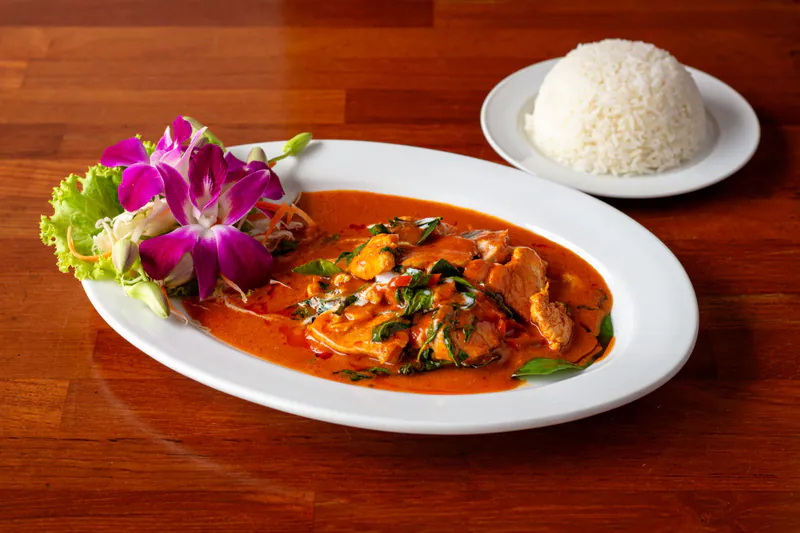
Thai red curry with chicken and bamboo shoots
Thai · 55 min · 682 kcal