
Moussaka
Non-vegetarian
Μουσακάς · Mousakás
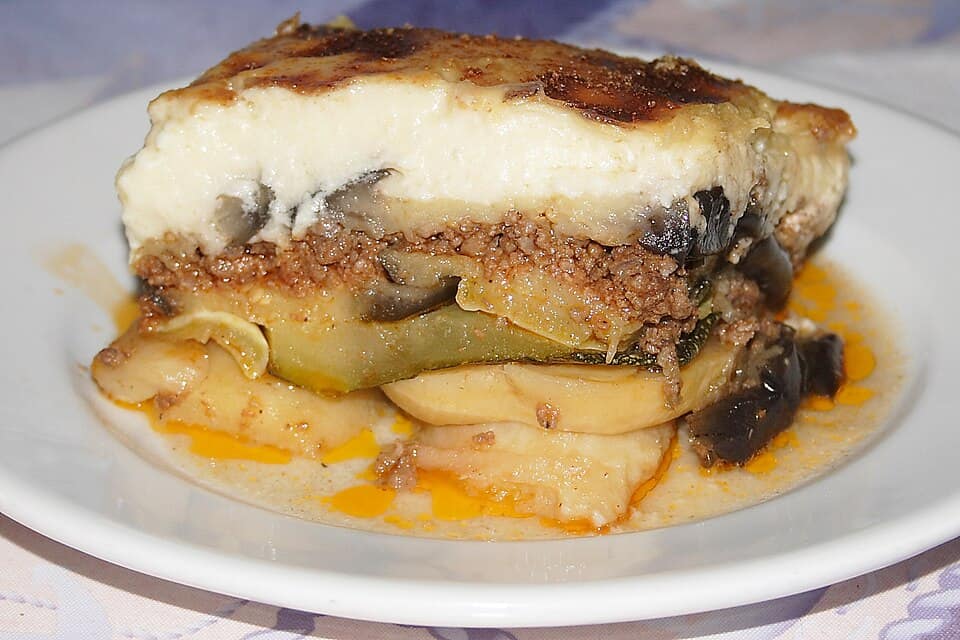
Greece's famous baked dish of golden aubergine slices layered with a cinnamon-scented lamb and tomato sauce under a thick, custardy béchamel topping.
Moussaka is a Greek bake from Greece, ready in about 2 hours 40 minutes and made with eggplant, ground lamb and milk. It serves 8 and is rated intermediate to cook.
- Prep
- 30 min
- Cook
- 1 h 40 min
- Rest
- 30 min
- Total
- 2 h 40 min
- Serves
- 8
- Level
- Intermediate
- Calories
- 552
Ingredients
For the aubergine
For the meat sauce
For the béchamel
Method
Step 1
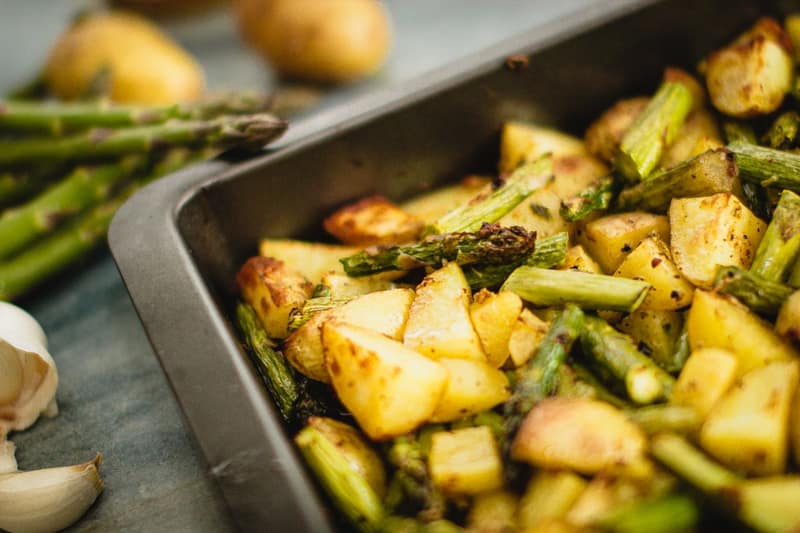
Heat the oven (opens in a new tab) to 220 °C. Brush the aubergine (opens in a new tab) slices with about 4 tablespoons of oil, sprinkle with salt and roast on trays until soft and golden, turning once.
Roasting uses far less oil than the traditional frying.
How it looks · Photo: locrifa on Pexels Step 2
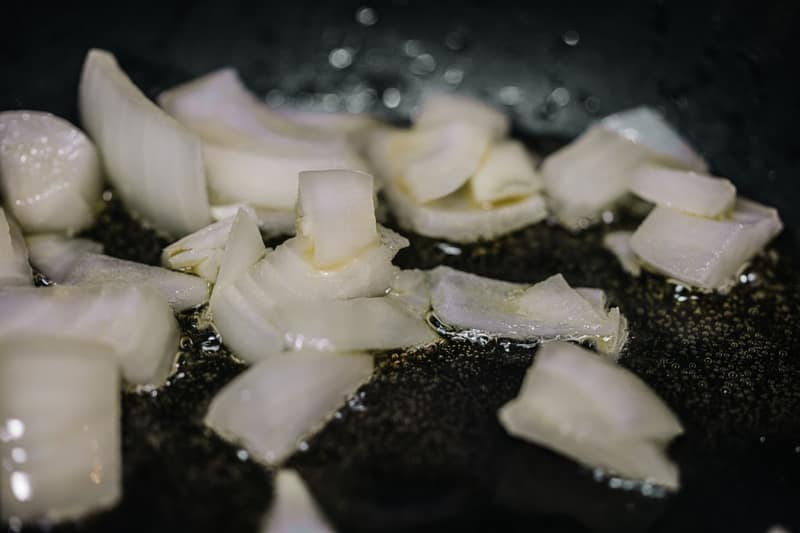
Meanwhile soften the onion (opens in a new tab) and garlic (opens in a new tab) in the remaining oil, add the lamb and brown well. Add the wine and let it bubble, then stir in the tomatoes, tomato paste (opens in a new tab), cinnamon (opens in a new tab), allspice (opens in a new tab), salt and pepper (opens in a new tab). Simmer until thick.
- 30 min
- medium-low heat
- Frying pan / skillet (opens in a new tab)
How it looks · Photo: Magda Ehlers on Pexels Step 3
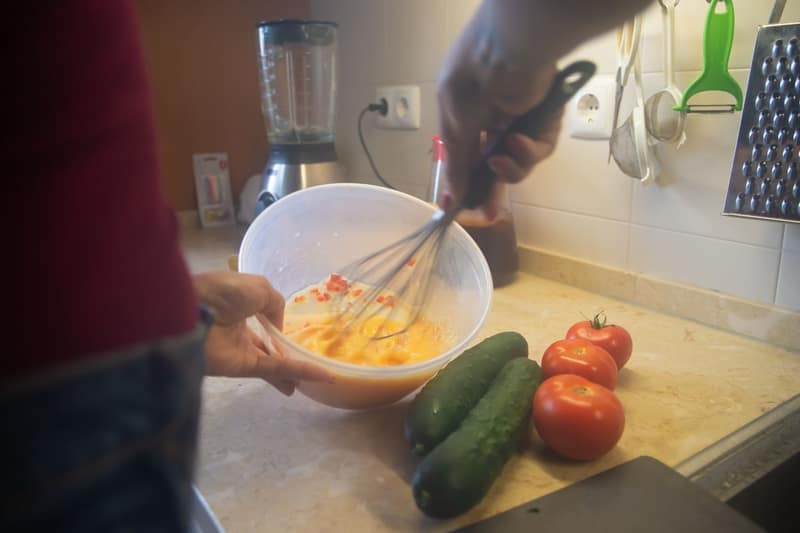
Make the béchamel: melt the butter (opens in a new tab), whisk (opens in a new tab) in the flour, then gradually whisk in the milk (opens in a new tab) and simmer until thick. Off the heat, whisk in the yolks, nutmeg (opens in a new tab), salt and half the cheese.
- 12 min
- medium heat
- Saucepan (opens in a new tab)
- Whisk (opens in a new tab)
How it looks · Photo: Kampus Production on Pexels Step 4
Lower the oven (opens in a new tab) to 180 °C. Layer half the aubergine (opens in a new tab) in a deep baking dish (opens in a new tab), then the meat sauce, then the remaining aubergine. Pour over the béchamel and scatter with the rest of the cheese.
- 8 min
- 180°C
- Baking dish (opens in a new tab)
Step 5
Bake until the top is puffed and deep golden, then rest for at least 30 minutes before cutting.
- 45 min
- 180°C
- Oven (opens in a new tab)
About this dish
- Origin
- Greece · Commonly attributedDishes called moussaka exist across the Balkans and Middle East; the layered béchamel version is Greek and popularised in the early 20th century.Also popular in United KingdomMore food from Greece
- Dish
- Lunch · Dinner · Casseroles & bakes · Main courses
- Cooking method
- Roasted, Simmered, Oven-baked
- Taste
- rich, aromatic / warmly spiced, savoury, creamy
- Diet
- No nut ingredients · Low-carb · High-proteinWorked out from the ingredients. How labels work
All labels
Non-vegetarian · No nut ingredients · No added sugar · Pork-free · Beef-free · Low-carb · High-protein · Carb-conscious - Good for
- Make-ahead · Freezer-friendly · Festive & celebration
- Cook more with
- Eggplant · Ground lamb · Milk · Onion · Garlic · Dry red wine
- Techniques
- Roasting · Baking · Simmering · Roux thickening
Allergens
- Contains: Milkfrom butter, milk, parmesan
- Contains: Eggsfrom egg yolk
- Contains: Wheatfrom all-purpose flour
- Contains: Glutenfrom all-purpose flour
- Contains: Sulphitesfrom dry red wine
Based on typical versions of these ingredients and not verified allergen-free. Brands differ and cross-contact happens, so always check labels. For severe allergies, follow your clinician’s advice.
Nutrition
552 kcal per serving
Calculated1 serving ≈ 454 g · recipe makes 8
Where the energy comes from
- Protein 16%
- Carbohydrate 18%
- Fat 66%
| Nutrient | Per serving | Per 100 g* |
|---|---|---|
| Energy | 552 kcal | 122 kcal |
| Protein | 21.8 g | 4.8 g |
| Carbohydrate | 24.8 g | 5.5 g |
| Net carbohydrate | 18.1 g | 4 g |
| Sugars | 12.8 g | 2.8 g |
| Added sugars | 0 g | 0 g |
| Fibre | 6.7 g | 1.5 g |
| Fat | 40.2 g | 8.9 g |
| Saturated fat | 16.2 g | 3.6 g |
| Trans fat | — | — |
| Cholesterol | 131 mg | 29 mg |
| Sodium | 722 mg | 159 mg |
| Salt equivalent | 1.8 g | 0.4 g |
Vitamins & minerals per serving
- Potassium
- 855 mg
- Calcium
- 253 mg
- Iron
- 2.7 mg
- Magnesium
- 63 mg
- Vitamin A (RAE)
- 138 µg
- Vitamin C
- 12 mg
- Vitamin D
- 1.5 µg
- Vitamin B12
- 2.3 µg
- Folate (DFE)
- 91 µg
How these numbers were made
- Calculated from USDA FoodData Central (SR Legacy) per-100 g values and the listed quantities.
- *Per 100 g of combined raw ingredients; the cooked dish may weigh more or less.
- “—” means the value isn’t known for enough of the ingredients; it is never zero by default.
- Values are estimates for guidance, not for medical dosing. U.S. Department of Agriculture, Agricultural Research Service. FoodData Central, 2019. fdc.nal.usda.gov.
Good to know
Tips
- A layer of thinly sliced fried or roasted potato on the base is a common addition that helps it hold together.
Common mistakes
- Cutting it hot — it needs to rest to set into neat slices.
Serve with
- Serve with a Greek salad and bread.
Food safety
- Brown the minced lamb until no pink remains (71 °C).
- Cool leftovers within 2 hours and refrigerate.
Storage
- Keeps 3 days in the fridge or 3 months frozen.
Reheating
- Reheat covered at 180 °C for 25–30 minutes, until piping hot (75 °C) in the centre.
Variations
- Vegetarian moussaka: Replace the lamb with brown lentils cooked in the same spiced tomato sauce.
Original editorial recipe · FriendsPantry editorial · Not yet independently reviewed · Added · Updated
Sauces, chutneys & dips for this dish
Recipe DNA
How this dish is built
Reviews & corrections
Reviews come from signed-in cooks and appear after a moderator checks them. We never show made-up ratings.
You might also like
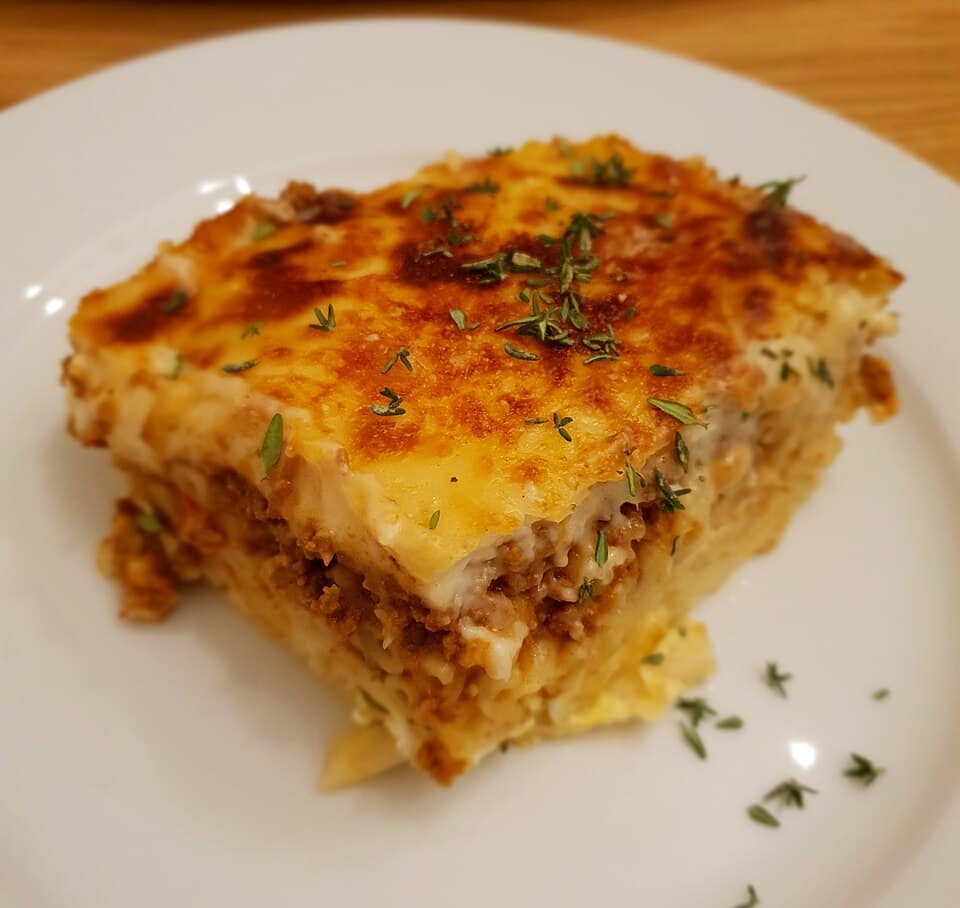
Pastitsio
 Greek · 2 h 30 min · 689 kcal
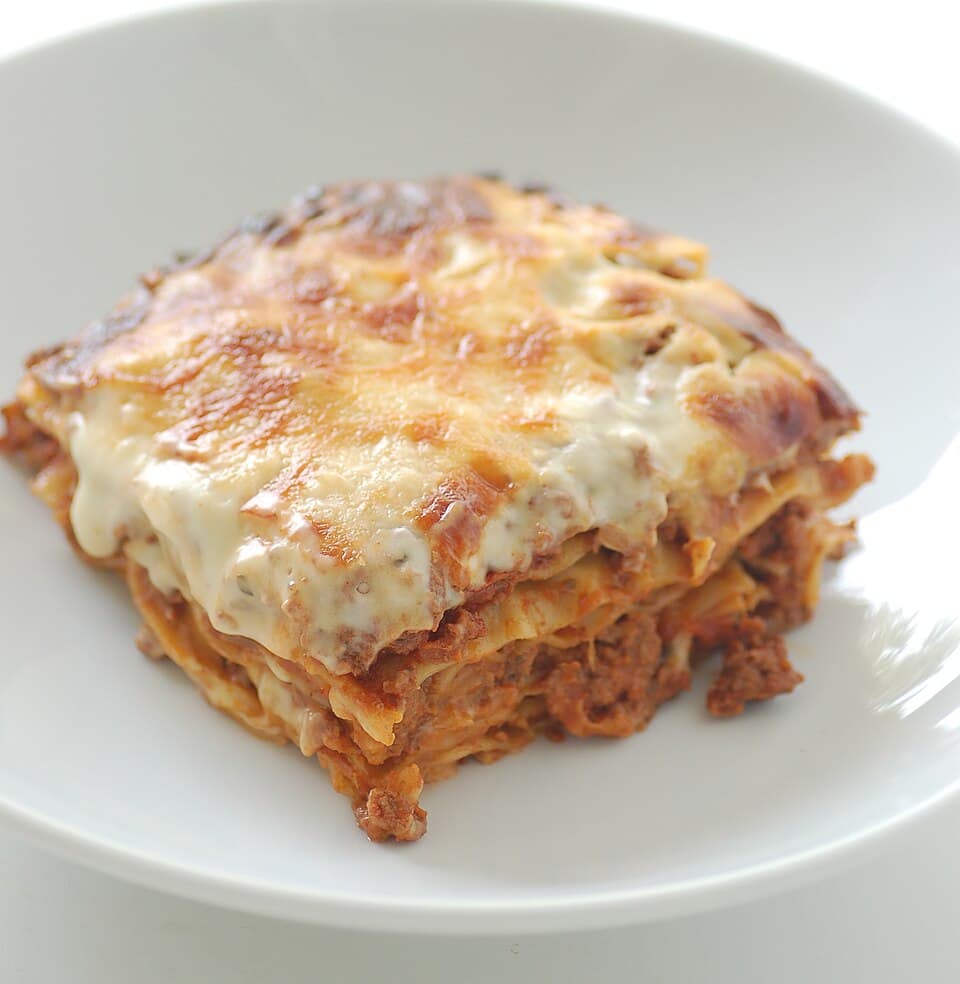
Lasagne alla bolognese
 Italian · 3 h · 547 kcal
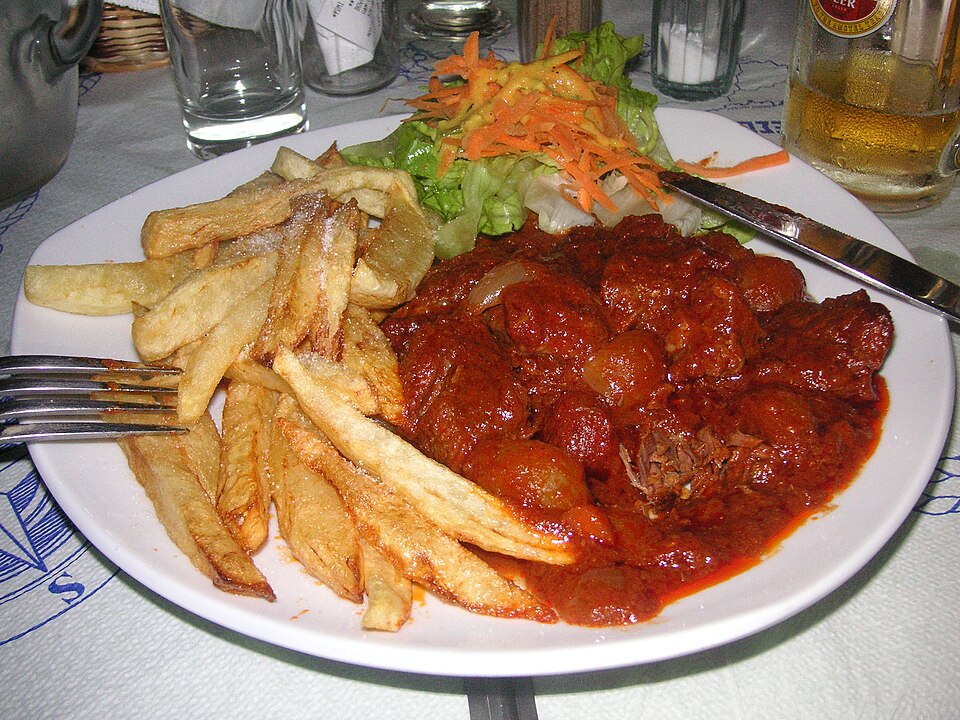
Beef stifado
Greek · 3 h 10 min · 463 kcal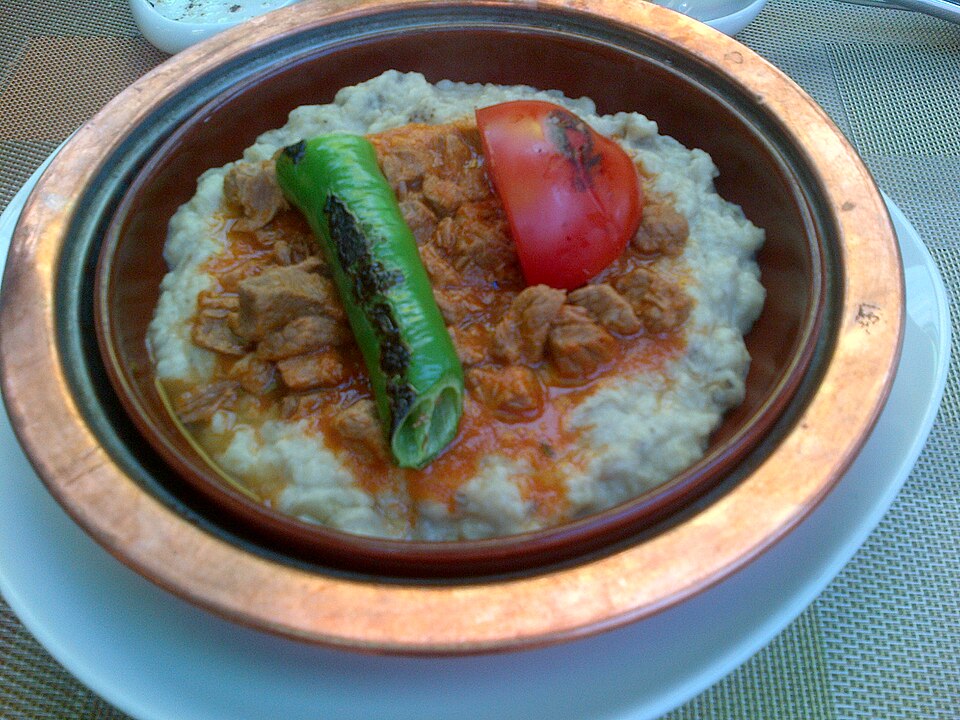
Hünkar beğendi (lamb on smoky aubergine purée)
 Turkish · 2 h 5 min · 577 kcal