
Buttermilk pancakes
Contains egg (no meat or fish)
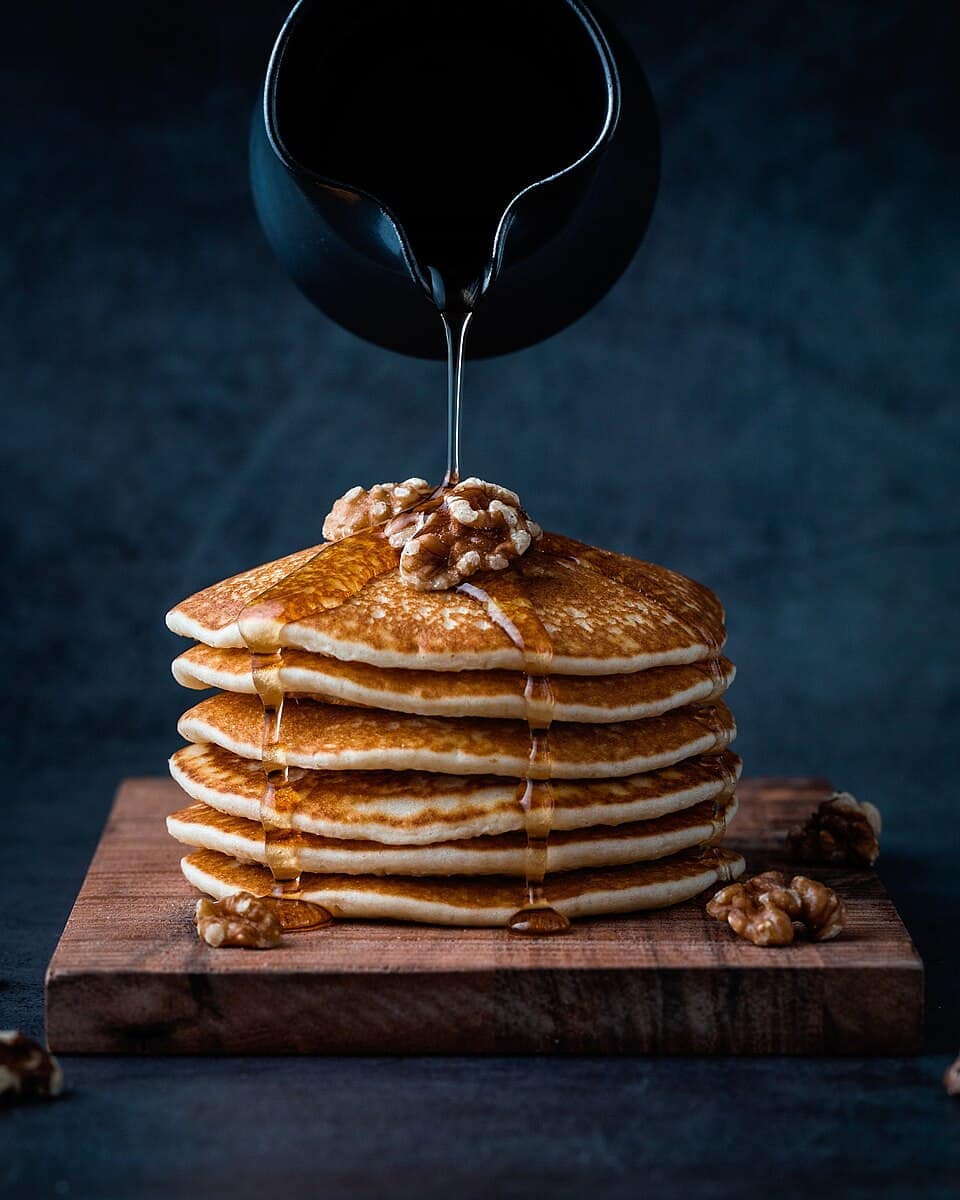
Thick, fluffy griddle pancakes raised with baking powder and the tang of buttermilk. Stack them high with butter and maple syrup for a classic American breakfast.
Buttermilk pancakes is an American bread from United States, ready in about 35 minutes and made with all-purpose flour and buttermilk. It serves 4 and is rated easy to cook.
- Prep
- 10 min
- Cook
- 20 min
- Rest
- 5 min
- Total
- 35 min
- Serves
- 4
- Level
- Easy
- Calories
- 449
Method
Step 1
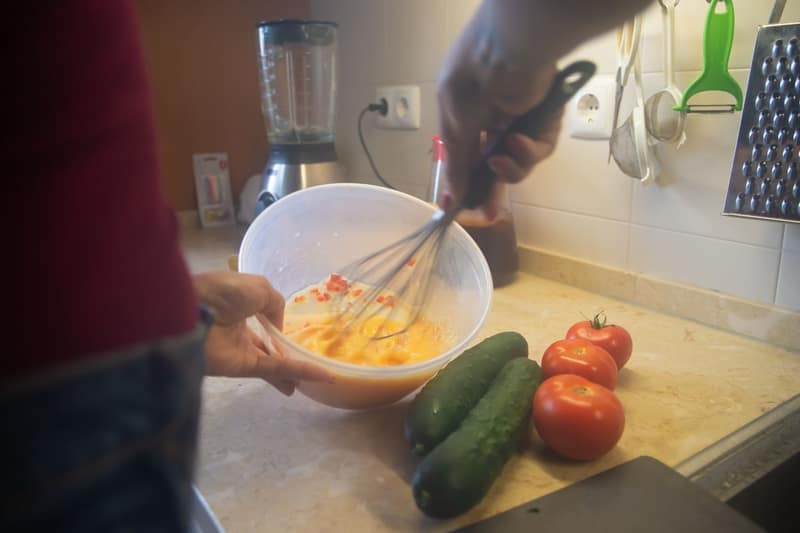
Whisk (opens in a new tab) the flour, sugar (opens in a new tab), baking powder (opens in a new tab), baking soda (opens in a new tab) and salt together in a large bowl.
How it looks · Photo: Kampus Production on Pexels Step 2
In a jug, whisk (opens in a new tab) the buttermilk (opens in a new tab) and eggs (opens in a new tab), then whisk in the melted butter (opens in a new tab). Pour into the dry ingredients and fold just until no dry flour remains — the batter should stay lumpy.
- 3 min
Step 3
Let the batter rest while the griddle heats; it will thicken and turn bubbly.
- 5 min
How it looks · Photo: Muhammad Khawar Nazir on Pexels Step 4
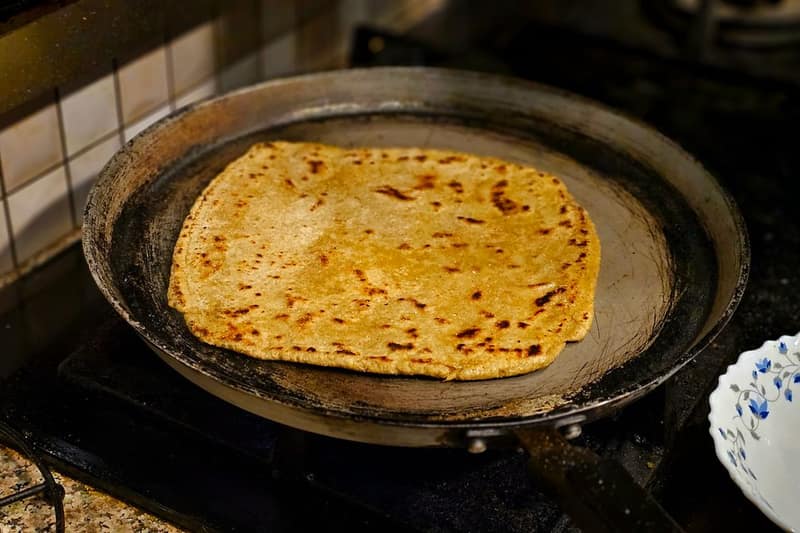
Lightly oil a griddle or large frying pan over medium heat. Pour about 60 ml batter per pancake. Add blueberries (opens in a new tab) now if using. Cook until bubbles break on the surface and the edges look dry, then flip and cook until golden and springy.
- 18 min
- medium heat
- Griddle / tawa (opens in a new tab)
If the first pancake browns before the middle sets, turn the heat down a notch.
Step 5
Keep cooked pancakes warm in a low oven (opens in a new tab) (about 100 °C) while you finish the batch. Serve with butter (opens in a new tab) and maple syrup (opens in a new tab).
- 2 min
- 100°C

How it looks · Photo: Willians Huerta on Pexels
About this dish
- Origin
- United States · Commonly attributedGriddle cakes are eaten in many countries; this thick, buttermilk-leavened style is strongly associated with the United States.Also popular in CanadaMore food from United States
- Dish
- Breakfast · Brunch · Breads & flatbreads
- Cooking method
- Pan-fried
- Taste
- buttery, tangy, sweet, mild
- Diet
- Vegetarian (lacto-ovo) · No nut ingredientsWorked out from the ingredients. How labels work
All labels
Vegetarian (lacto-ovo) · Eggetarian · Pescatarian · Flexitarian-friendly · No nut ingredients · Alcohol-free · Pork-free · Beef-free - Good for
- Child-friendly · Everyday · Budget-friendly
- Cook more with
- All-purpose flour · Buttermilk · Sugar · Baking powder · Baking soda · Egg
- Techniques
- Pan-frying
Allergens
- Contains: Milkfrom buttermilk, butter
- Contains: Eggsfrom egg
- Contains: Wheatfrom all-purpose flour, baking powder
- Contains: Glutenfrom all-purpose flour, baking powder
Based on typical versions of these ingredients and not verified allergen-free. Brands differ and cross-contact happens, so always check labels. For severe allergies, follow your clinician’s advice.
Nutrition
449 kcal per serving
Calculated1 serving ≈ 236 g · recipe makes 4
Where the energy comes from
- Protein 12%
- Carbohydrate 54%
- Fat 34%
| Nutrient | Per serving | Per 100 g* |
|---|---|---|
| Energy | 449 kcal | 191 kcal |
| Protein | 13.8 g | 5.9 g |
| Carbohydrate | 60.7 g | 25.8 g |
| Net carbohydrate | 59 g | 25 g |
| Sugars | 13.2 g | 5.6 g |
| Added sugars | 6.3 g | 2.7 g |
| Fibre | 1.7 g | 0.7 g |
| Fat | 16.8 g | 7.1 g |
| Saturated fat | 7.7 g | 3.3 g |
| Trans fat | — | — |
| Cholesterol | 122 mg | 52 mg |
| Sodium | 979 mg | 415 mg |
| Salt equivalent | 2.4 g | 1 g |
Vitamins & minerals per serving
- Potassium
- 291 mg
- Calcium
- 300 mg
- Iron
- 3.7 mg
- Magnesium
- 31 mg
- Vitamin A (RAE)
- 134 µg
- Vitamin C
- 1 mg
- Vitamin D
- 0.5 µg
- Vitamin B12
- 0.5 µg
- Folate (DFE)
- 200 µg
How these numbers were made
- Calculated from USDA FoodData Central (SR Legacy) per-100 g values and the listed quantities.
- *Per 100 g of combined raw ingredients; the cooked dish may weigh more or less.
- Optional ingredients are not included: maple syrup, blueberries.
- “—” means the value isn’t known for enough of the ingredients; it is never zero by default.
- Values are estimates for guidance, not for medical dosing. U.S. Department of Agriculture, Agricultural Research Service. FoodData Central, 2019. fdc.nal.usda.gov.
Good to know
Tips
- Lumps are fine — overmixing develops gluten and makes pancakes tough and flat.
Common mistakes
- Pressing down on pancakes with the spatula squeezes out the air.
- A pan that is too hot burns the outside before the centre cooks.
Serve with
- Serve with crisp bacon or fresh berries.
Storage
- Cool and refrigerate up to 2 days, or freeze interleaved with baking paper for 2 months.
Reheating
- Toast from frozen or warm in a 160 °C oven for 8–10 minutes.
Variations
- Chocolate chip pancakes: Scatter chocolate chips over each pancake before flipping.
Original editorial recipe · FriendsPantry editorial · Not yet independently reviewed · Added · Updated
Sauces, chutneys & dips for this dish
Recipe DNA
How this dish is built
Grouped by each ingredient’s role in the dish. Each band’s width is its share of the dish by weight. Choose a component to see what it does.
What the dish is built around
Main ingredient
- All-purpose flour250 g
- Buttermilk480 ml · 494 g
- Egg2 piece · 100 g
- Butter, melted, plus extra for serving45 g
- Blueberries, rinsed and patted dry (optional)150 g
Baker’s notes
Customise in Bread & BakeryTimeline and readiness cues
Mix and knead · about 10 min
Mix only until no dry flour remains — overmixing makes it tough and tunnelled.
Rest · about 5 min
Covered so it doesn't dry out; relaxed dough rolls and shapes without springing back.
Bake · about 18 min
Risen and golden; a skewer in the centre comes out clean or with a few moist crumbs; the top springs back.
- Start to finish: about 33 min. Times are a guide — warmth changes everything; follow the cues.
If something goes wrong
Gummy or wet crumb
Likely causes
- Under-baked
- Sliced while hot
- Hydration too high for the flour
What to do
- Bake to 93–96 °C inside (cakes: clean skewer)
- Cool completely on a rack before slicing
- Reduce water by 3–5% or use a stronger flour
Collapsed or sunken middle
Likely causes
- Oven door opened too early
- Too much leavening or sugar
- Under-baked centre
- Over-proofed yeast dough
What to do
- Don't open the oven for the first two-thirds of baking
- Measure leaveners exactly with spoons, levelled
- Test the centre before removing
- Proof less
Pale crust
Likely causes
- Oven too cool
- Too little sugar or no milk/egg for browning
- Over-fermented (yeast ate the sugars)
What to do
- Check the oven with a thermometer
- Brush with egg wash or milk
- Shorten the fermentation
Burnt bottom
Likely causes
- Tray too close to the heat
- Dark tray absorbs more heat
- Too much sugar in the dough
What to do
- Bake on the middle shelf
- Double up trays or use a light-coloured one
- Lower the temperature 10–15 °C and bake a little longer
Cracked or domed top
Likely causes
- Oven too hot (crust sets before the centre rises)
- Too much leavening
- Overmixed batter
What to do
- Lower the oven 10–15 °C
- Use the exact leavening amount
- Fold just until combined
Big holes or tunnels
Likely causes
- Overmixed batter (cakes, muffins)
- Air trapped while shaping bread
- Uneven proof
What to do
- Mix quick breads only until no dry flour shows
- Degas gently and shape tightly
- Proof covered in an even, warm place
Dry or crumbly
Likely causes
- Too much flour (scooped, not weighed)
- Over-baked
- Too little fat or sugar
What to do
- Weigh flour, or spoon it into the cup and level
- Check 5 minutes early
- Don't cut fat or sugar by more than a quarter without another moisture source
Reviews & corrections
Reviews come from signed-in cooks and appear after a moderator checks them. We never show made-up ratings.
You might also like
Buttermilk cornbread
 Southern US · 37 min · 225 kcal · Contains egg
Chicken and waffles
Southern US · 1 h · 1025 kcal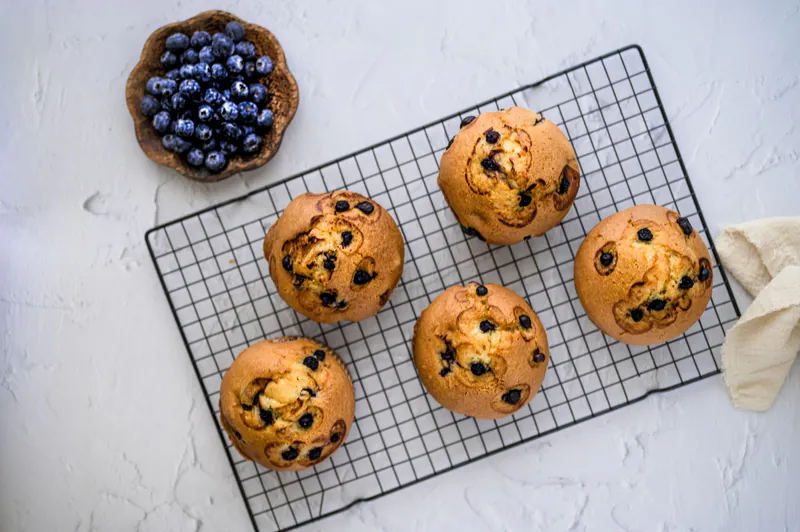
Blueberry Muffins
American · 47 min · 220 kcal · Contains eggSouthern buttermilk biscuits
Southern US · 45 min · 224 kcal · Vegetarian