
Spaghetti al pomodoro
Vegetarian
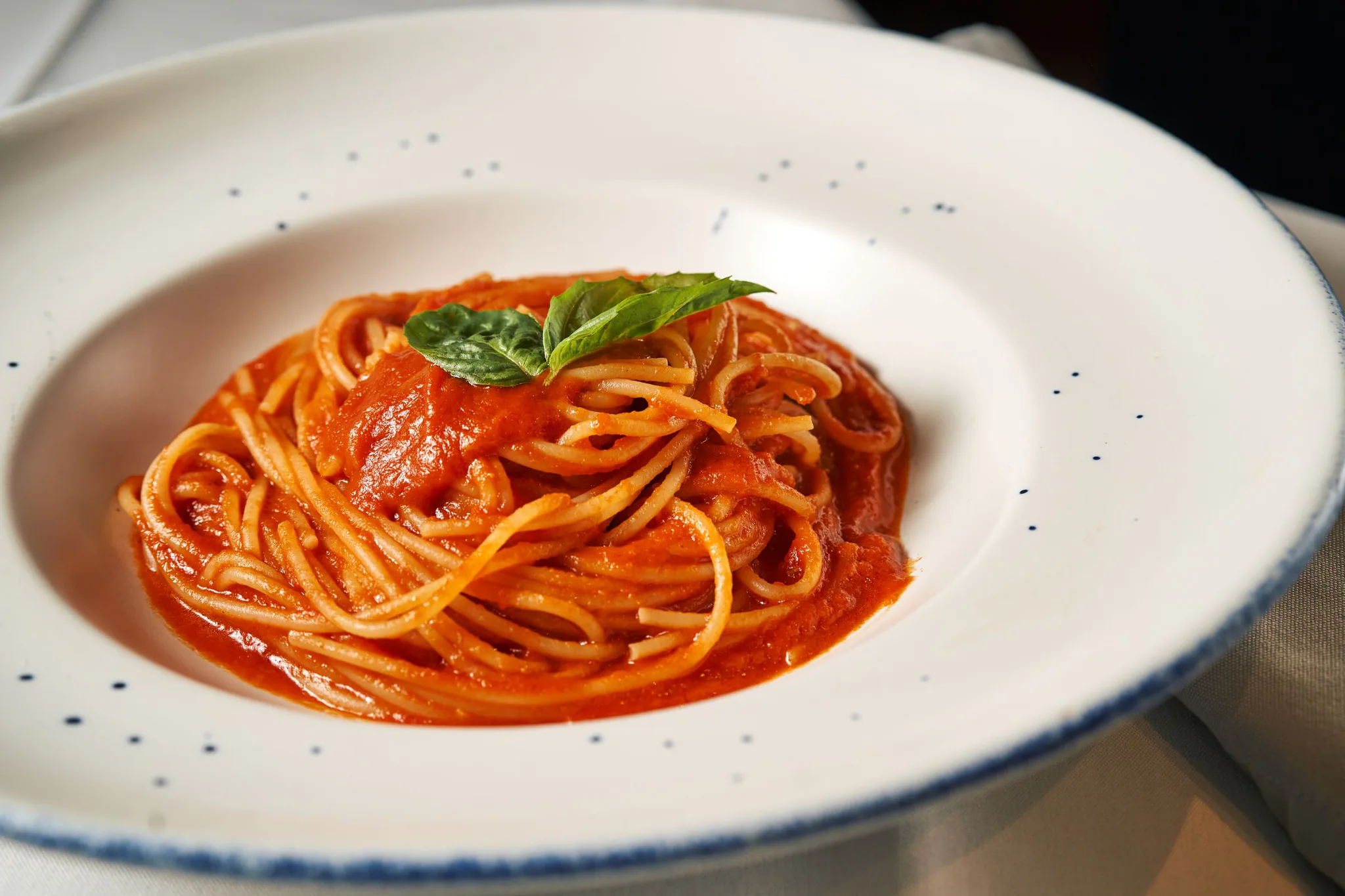
The everyday Italian classic: spaghetti finished in a short-cooked sauce of good tomatoes, olive oil, garlic and basil, glossy with a little pasta water.
Spaghetti al pomodoro is an Italian pasta dish from Italy, ready in about 30 minutes and made with dried pasta, canned tomatoes and olive oil. It serves 4 and is rated beginner to cook.
- Prep
- 5 min
- Cook
- 25 min
- Total
- 30 min
- Serves
- 4
- Level
- Beginner
- Calories
- 525
Method
Step 1
Warm the olive oil (opens in a new tab) and garlic (opens in a new tab) in a wide pan over medium-low heat for 2–3 minutes until the garlic is fragrant and just golden.
- 3 min
- medium-low heat
- Frying pan / skillet (opens in a new tab)
Step 2
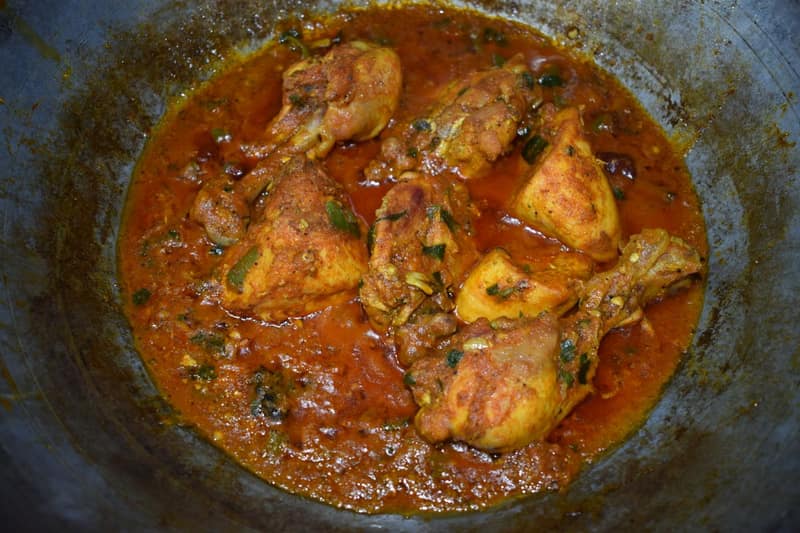
Add the tomatoes, crushing them with your hand or a spoon, and a good pinch of salt. Simmer briskly for 15–20 minutes, stirring now and then, until the sauce thickens and tastes sweet rather than raw. Remove the garlic (opens in a new tab).
- 20 min
- medium heat
How it looks · Photo: Bachir Mamud on Pexels Step 3
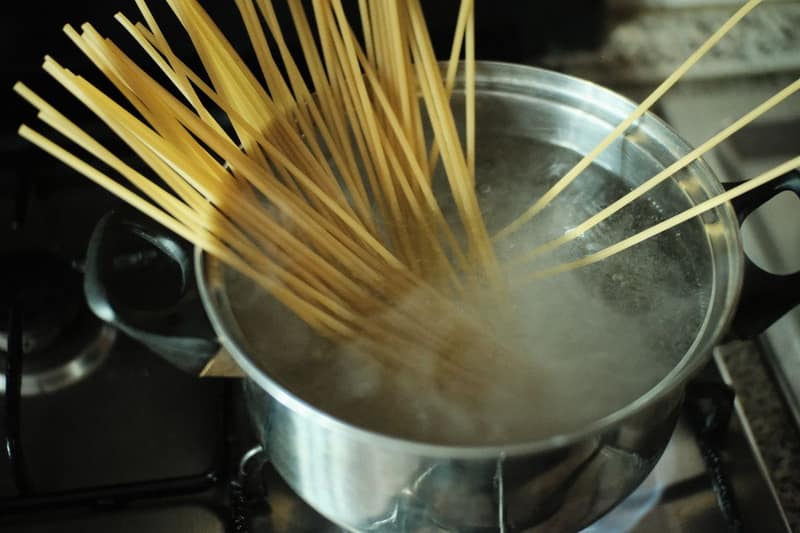
Meanwhile cook the spaghetti (opens in a new tab) in salted boiling water until 1 minute short of al dente. Keep a mug of the cooking water.
- 10 min
- high heat
- Stockpot / large pot (opens in a new tab)
Food safety: Drain boiling pasta water away from you and keep children clear of the stove.
Salt the pasta water at about 10 g per litre — it should taste pleasantly seasoned, not like the sea.
How it looks · Photo: Gianpiero Ferraro on Pexels Step 4
Transfer the spaghetti (opens in a new tab) to the sauce with tongs (opens in a new tab), add a splash of cooking water and toss over the heat for 1 minute until the sauce clings. Tear in the basil (opens in a new tab), drizzle with a little more oil and serve, with Parmesan (opens in a new tab) if you like.
About this dish
- Origin
- Naples and southern Italy, Italy · Commonly attributedPasta with tomato sauce spread from Naples in the 19th century and is now cooked all over Italy.Also popular in United States, United KingdomMore food from Italy
- Dish
- Lunch · Dinner · Pasta · Main courses
- Cooking method
- Simmered, Boiled
- Taste
- tangy, fresh, herby
- Diet
- Vegetarian (lacto-ovo) · No nut ingredientsWithout the optional extras: Vegan, Plant-based, Ovo-vegetarian, Dairy-freeWorked out from the ingredients. How labels work
All labels
Vegetarian (lacto-ovo) · Eggetarian · Lacto-vegetarian · Pescatarian · Flexitarian-friendly · Egg-free · No nut ingredients · No added sugar · Alcohol-free · Pork-free · Beef-free - Good for
- Everyday · Budget-friendly · Child-friendly
- Cook more with
- Dried pasta · Canned tomatoes · Basil · Garlic
Allergens
- Contains, can be adapted: Milkfrom parmesan
- May contain: Eggsfrom dried pasta
- Contains: Wheatfrom dried pasta
- Contains: Glutenfrom dried pasta
Based on typical versions of these ingredients and not verified allergen-free. Brands differ and cross-contact happens, so always check labels. For severe allergies, follow your clinician’s advice.
Nutrition
525 kcal per serving
Estimated1 serving ≈ 317 g · recipe makes 4
Where the energy comes from
- Protein 11%
- Carbohydrate 62%
- Fat 26%
| Nutrient | Per serving | Per 100 g* |
|---|---|---|
| Energy | 525 kcal | 166 kcal |
| Protein | 14.8 g | 4.7 g |
| Carbohydrate | 82.3 g | 26 g |
| Net carbohydrate | 75.2 g | 23.8 g |
| Sugars | 7.8 g | 2.5 g |
| Added sugars | 0 g | 0 g |
| Fibre | 7.1 g | 2.2 g |
| Fat | 15.5 g | 4.9 g |
| Saturated fat | 2.2 g | 0.7 g |
| Trans fat | 0 g | 0 g |
| Cholesterol | 0 mg | 0 mg |
| Sodium | — | — |
| Salt equivalent | — | — |
Vitamins & minerals per serving
- Potassium
- 617 mg
- Calcium
- 93 mg
- Iron
- 4.6 mg
- Magnesium
- 74 mg
- Vitamin A (RAE)
- 43 µg
- Vitamin C
- 26 mg
- Vitamin D
- 0 µg
- Vitamin B12
- 0 µg
- Folate (DFE)
- 408 µg
How these numbers were made
- Calculated from USDA FoodData Central (SR Legacy) per-100 g values and the listed quantities.
- *Per 100 g of combined raw ingredients; the cooked dish may weigh more or less.
- Optional ingredients are not included: parmesan.
- Not counted (tiny amounts or “to taste”): salt — so sodium is shown as unknown.
- “—” means the value isn’t known for enough of the ingredients; it is never zero by default.
- Values are estimates for guidance, not for medical dosing. U.S. Department of Agriculture, Agricultural Research Service. FoodData Central, 2019. fdc.nal.usda.gov.
Good to know
Tips
- Finishing the pasta in the sauce is what makes it taste Italian — the starch binds the sauce to every strand.
Common mistakes
- Over-cooking the sauce until it tastes jammy, or adding sugar to cover poor tomatoes.
Storage
- The sauce keeps 4 days in the fridge or 3 months frozen.
Original editorial recipe · FriendsPantry editorial · Not yet independently reviewed · Added · Updated
Sauces, chutneys & dips for this dish
Recipe DNA
How this dish is built
Grouped by each ingredient’s role in the dish. Each band’s width is its share of the dish by weight. Choose a component to see what it does.
What the dish is built around
Main ingredient
- Dried pasta400 g
- Canned tomatoes800 g
- Parmesan, grated (optional)40 g
Reviews & corrections
Reviews come from signed-in cooks and appear after a moderator checks them. We never show made-up ratings.
You might also like
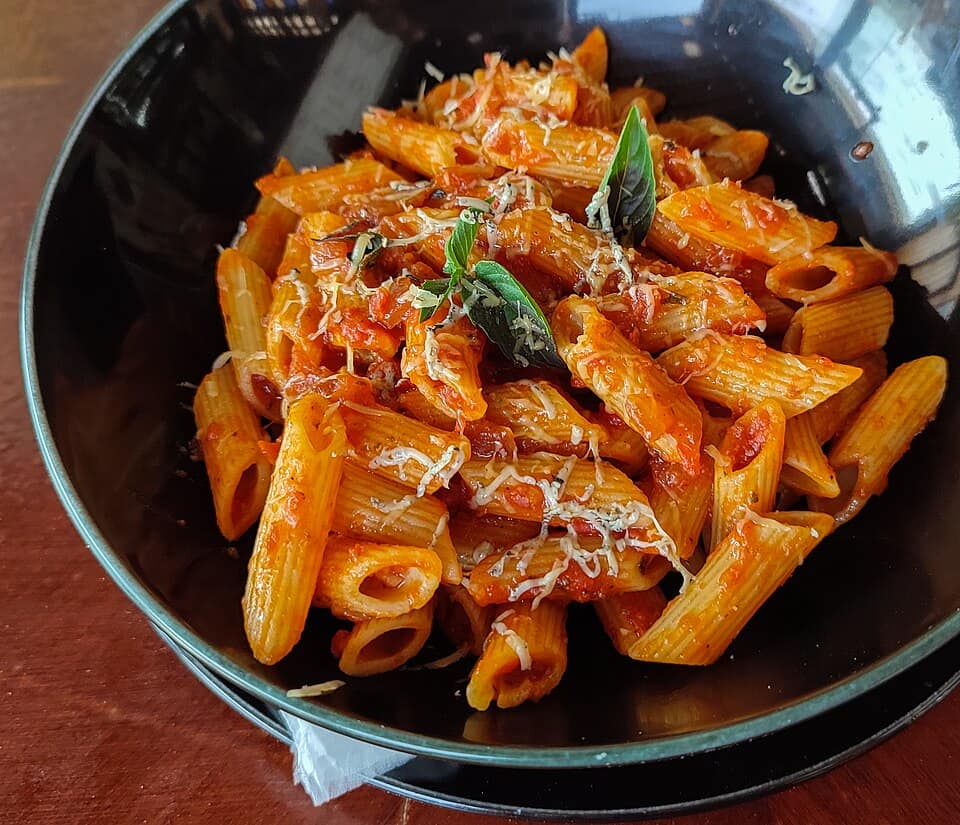
Penne all'arrabbiata
 Italian · 25 min · 408 kcal · Vegetarian
Marinara sauce
Italian · 30 min · 105 kcal · Vegan
Spaghetti alla Nerano
Italian · 1 h 15 min · 638 kcal · Vegetarian
Pasta alla Norma
Italian · 50 min · 632 kcal · Vegetarian