
Sambal matah
Non-vegetarian
A raw Balinese sambal of thinly sliced shallots, lemongrass, bird's eye chillies and lime leaves, rubbed with toasted shrimp paste and lime and dressed with hot coconut oil.
Sambal matah is an Indonesian condiment, ready in about 19 minutes and made with shallot, lemongrass and coconut oil. It serves 6 and is rated easy to cook.
No licensed photograph of this dish yet.
- Prep
- 15 min
- Cook
- 4 min
- Total
- 19 min
- Serves
- 6
- Level
- Easy
- Calories
- 105
Method
Step 1
Slice the shallots (opens in a new tab), lemongrass (opens in a new tab) and chillies as thinly as you can, and shred the lime leaves into fine threads.
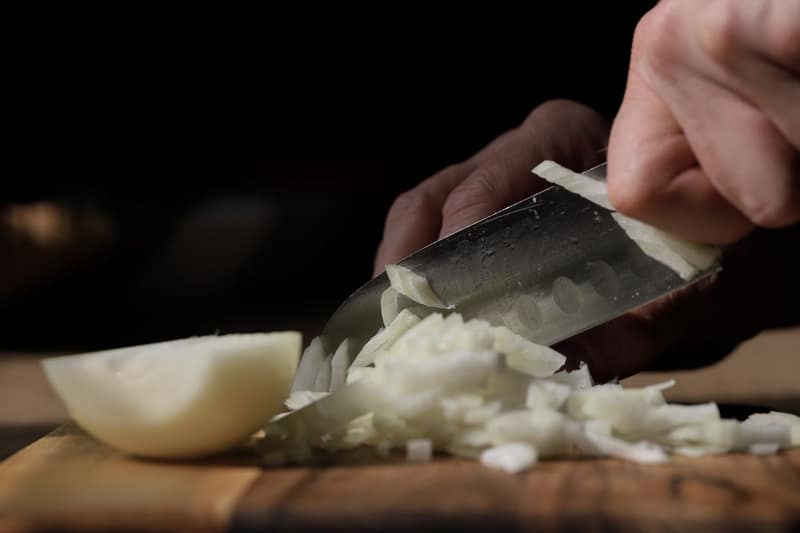
How it looks · Photo: Christina & Peter on Pexels Step 2
Toast the shrimp paste (opens in a new tab) in a dry frying pan over medium-low heat for 1–2 minutes, pressing and turning, until dry, crumbly and strongly fragrant (open a window).
- 2 min
- medium-low heat
- Frying pan / skillet (opens in a new tab)
Step 3
Crumble the shrimp paste (opens in a new tab) into a bowl with the salt, sugar (opens in a new tab) and lime juice (opens in a new tab) and rub together until dissolved. Add the sliced aromatics and squeeze gently with your fingers for 30 seconds to bruise them and release their oils.
Step 4
Heat the coconut oil (opens in a new tab) in a small pan over medium heat until it shimmers, then pour it over the sambal; it should sizzle gently. Toss and taste for salt and lime.
- 2 min
- medium heat
- Saucepan (opens in a new tab)
Food safety: Pour hot oil carefully away from you; it spits on contact with the wet shallots.
About this dish
- Origin
- Bali, Indonesia · Well documentedMatah means raw in Balinese. It is now eaten across Indonesia, especially with grilled chicken and fish.More food from Indonesia
- Dish
- Lunch · Dinner · Condiments, chutneys & relishes
- Cooking method
- Raw, No-cook
- Taste
- spicy (chilli heat), aromatic / warmly spiced, fresh, citrusy
- Diet
- Pescatarian · No gluten ingredients · Dairy-free · No nut ingredientsWithout the optional extras: No added sugarWorked out from the ingredients. How labels work
All labels
Pescatarian · Non-vegetarian · Flexitarian-friendly · No gluten ingredients · Dairy-free · Egg-free · No nut ingredients · Alcohol-free · Pork-free · Beef-free - Cook more with
- Shallot · Lemongrass · Coconut oil · Fresh red chilli · Makrut lime leaves · Shrimp paste
Allergens
- Contains: Crustaceansfrom shrimp paste
Based on typical versions of these ingredients and not verified allergen-free. Brands differ and cross-contact happens, so always check labels. For severe allergies, follow your clinician’s advice.
Nutrition
105 kcal per serving
Estimated1 serving ≈ 38 g · recipe makes 6
Where the energy comes from
- Protein 3%
- Carbohydrate 20%
- Fat 77%
| Nutrient | Per serving | Per 100 g |
|---|---|---|
| Energy | 105 kcal | 274 kcal |
| Protein | 0.7 g | 1.9 g |
| Carbohydrate | 5.5 g | 14.4 g |
| Net carbohydrate | — | — |
| Sugars | — | — |
| Added sugars | 0 g | 0 g |
| Fibre | — | — |
| Fat | 9.2 g | 23.9 g |
| Saturated fat | 7.6 g | 19.8 g |
| Trans fat | 0 g | 0 g |
| Cholesterol | 0 mg | 0 mg |
| Sodium | 256 mg | 667 mg |
| Salt equivalent | 0.6 g | 1.7 g |
Vitamins & minerals per serving
- Potassium
- 128 mg
- Calcium
- 13 mg
- Iron
- 0.8 mg
- Magnesium
- 10 mg
- Vitamin A (RAE)
- 1 µg
- Vitamin C
- 6 mg
- Vitamin D
- 0 µg
- Vitamin B12
- 0 µg
- Folate (DFE)
- 13 µg
How these numbers were made
- Calculated from USDA FoodData Central (SR Legacy) per-100 g values and the listed quantities.
- Optional ingredients are not included: sugar.
- Not counted (tiny amounts or “to taste”): makrut lime leaves.
- Shrimp paste: Fish sauce (FDC 174531) at 1.5× as a stand-in salted fermented seafood condiment; protein is understated.
- “—” means the value isn’t known for enough of the ingredients; it is never zero by default.
- Values are estimates for guidance, not for medical dosing. U.S. Department of Agriculture, Agricultural Research Service. FoodData Central, 2019. fdc.nal.usda.gov.
Good to know
Tips
- Some Balinese cooks use the coconut oil raw for a fresher taste; the hot-oil method softens the shallots slightly.
Common mistakes
- Slicing thickly. The shallots should be paper-thin so they absorb the oil and lime.
Serve with
- Ayam bakar, ayam betutu and grilled fish (ikan bakar).
- Sate lilit and fried tempeh.
- Stir through plain rice or nasi campur.
Food safety
- Always toast shrimp paste before using it raw.
Storage
- Best on the day it is made; refrigerate leftovers up to 1 day.
Variations
- Sambal matah with torch ginger (Indonesia): Thinly sliced torch-ginger flower (kecombrang) adds a floral, sour note.
Original editorial recipe · FriendsPantry editorial · Not yet independently reviewed · Added · Updated
Goes with
Recipe DNA
How this dish is built
Grouped by each ingredient’s role in the dish. Each band’s width is its share of the dish by weight. Choose a component to see what it does.
What the dish is built around
Main ingredient
- Shallot, Asian red shallots, peeled, halved and very thinly sliced120 g
- Lemongrass, 2 stalks, outer layers removed, tender lower part very thinly sliced40 g
- Fresh red chilli, red bird's eye chillies, thinly sliced15 g
- Lime juice15 ml · 16 g
Make it milder, swap ingredients for your diet, change the batch size or thickness — the original stays as it is.
Customise in Sauce & DrizzleReviews & corrections
Reviews come from signed-in cooks and appear after a moderator checks them. We never show made-up ratings.
You might also like
Sambal oelek
 Indonesian · 20 min · 7 kcal · Vegan
Sambal belacan
 Malaysian · 20 min · 8 kcal
Sambal kecap
Indonesian · 5 min · 56 kcal · Vegan
Beef rendang
Indonesian · 4 h · 672 kcal