
Malloreddus alla campidanese
Non-vegetarian
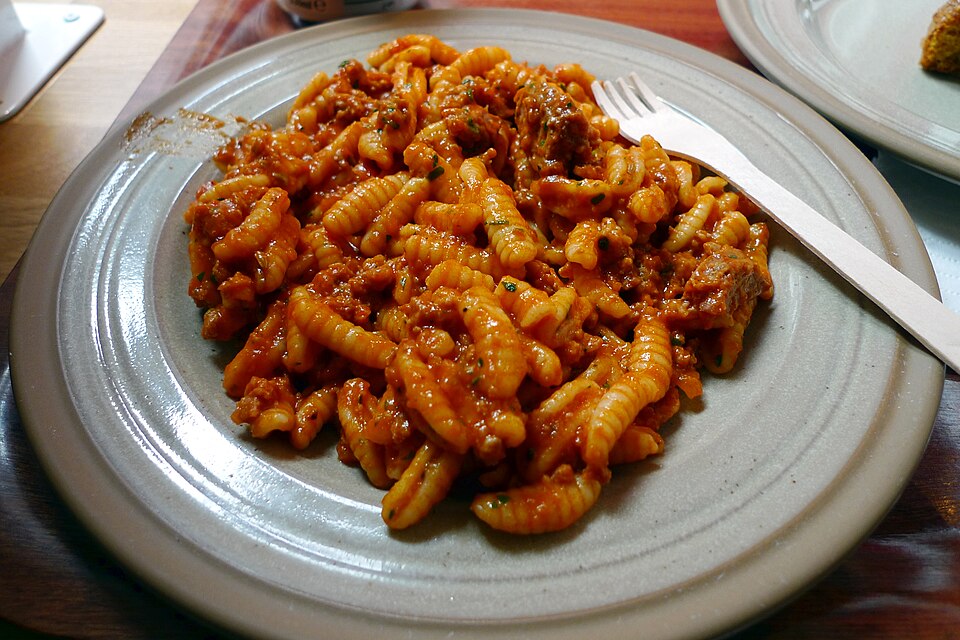
Small ridged Sardinian semolina shells in a tomato and fresh sausage sauce scented with saffron, finished with Pecorino Sardo.
Malloreddus alla campidanese is an Italian pasta dish from Italy, ready in about 50 minutes and made with dried pasta, pork sausage and tomato passata. It serves 4 and is rated easy to cook.
- Prep
- 10 min
- Cook
- 40 min
- Total
- 50 min
- Serves
- 4
- Level
- Easy
- Calories
- 796
Method
Step 1
Soften the onion (opens in a new tab) in the oil over medium-low heat for 6–8 minutes. Add the garlic (opens in a new tab) and crumbled sausage (opens in a new tab) and cook, breaking it up, until browned, about 6 minutes.
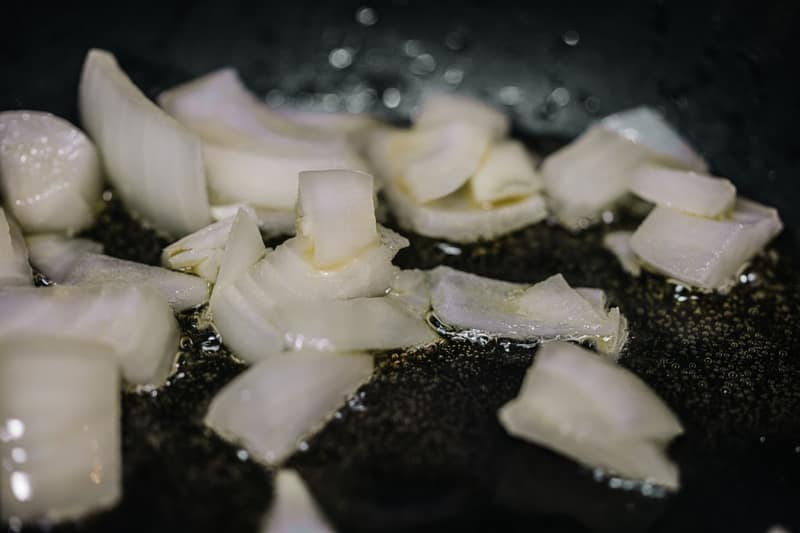
How it looks · Photo: Magda Ehlers on Pexels Step 2
Add the passata, saffron (opens in a new tab) with its water, basil (opens in a new tab) and a little salt. Simmer gently for 25 minutes until thick.
- 25 min
- low heat
Step 3
Cook the malloreddus in salted boiling water until al dente (usually 12–15 minutes for dried). Drain, toss with the sauce and half the pecorino (opens in a new tab), and serve with the rest.
- 15 min
- high heat
- Stockpot / large pot (opens in a new tab)
Salt the pasta water at about 10 g per litre — it should taste pleasantly seasoned, not like the sea.

How it looks · Photo: Willians Huerta on Pexels
About this dish
- Origin
- Sardinia (Campidano plain), Italy · Well documentedMore food from Italy
- Dish
- Lunch · Dinner · Pasta · Main courses
- Cooking method
- Simmered, Boiled
- Taste
- savoury, aromatic / warmly spiced, tangy
- Diet
- No nut ingredients · High-proteinWorked out from the ingredients. How labels work
All labels
Non-vegetarian · Egg-free · No nut ingredients · No added sugar · Alcohol-free · Beef-free · High-protein - Good for
- Make-ahead
- Cook more with
- Dried pasta · Pork sausage · Tomato passata · Saffron · Onion · Garlic
Allergens
- Contains: Milkfrom pecorino romano
- May contain: Eggsfrom dried pasta
- Contains: Wheatfrom dried pasta, pork sausage
- Contains: Glutenfrom dried pasta, pork sausage
- May contain: Sulphitesfrom pork sausage
Based on typical versions of these ingredients and not verified allergen-free. Brands differ and cross-contact happens, so always check labels. For severe allergies, follow your clinician’s advice.
Nutrition
796 kcal per serving
Estimated1 serving ≈ 354 g · recipe makes 4
Where the energy comes from
- Protein 15%
- Carbohydrate 46%
- Fat 39%
| Nutrient | Per serving | Per 100 g* |
|---|---|---|
| Energy | 796 kcal | 225 kcal |
| Protein | 30.7 g | 8.7 g |
| Carbohydrate | 91.6 g | 25.8 g |
| Net carbohydrate | 85.5 g | 24.1 g |
| Sugars | 10.9 g | 3.1 g |
| Added sugars | 0 g | 0 g |
| Fibre | 6.1 g | 1.7 g |
| Fat | 34.1 g | 9.6 g |
| Saturated fat | 10.7 g | 3 g |
| Trans fat | — | — |
| Cholesterol | 67 mg | 19 mg |
| Sodium | — | — |
| Salt equivalent | — | — |
Vitamins & minerals per serving
- Potassium
- 990 mg
- Calcium
- 222 mg
- Iron
- 7.1 mg
- Magnesium
- 103 mg
- Vitamin A (RAE)
- 49 µg
- Vitamin C
- 16 mg
- Vitamin D
- —
- Vitamin B12
- 0.9 µg
- Folate (DFE)
- —
How these numbers were made
- Calculated from USDA FoodData Central (SR Legacy) per-100 g values and the listed quantities.
- *Per 100 g of combined raw ingredients; the cooked dish may weigh more or less.
- Not counted (tiny amounts or “to taste”): salt — so sodium is shown as unknown.
- “—” means the value isn’t known for enough of the ingredients; it is never zero by default.
- Values are estimates for guidance, not for medical dosing. U.S. Department of Agriculture, Agricultural Research Service. FoodData Central, 2019. fdc.nal.usda.gov.
Good to know
Common mistakes
- Undercooking the sausage: it should be browned and cooked through before the tomato goes in.
Food safety
- Cook sausage meat until no pink remains (71 °C / 160 °F).
Storage
- Sauce keeps 3 days in the fridge or 3 months frozen.
Original editorial recipe · FriendsPantry editorial · Not yet independently reviewed · Added · Updated
Recipe DNA
How this dish is built
Grouped by each ingredient’s role in the dish. Each band’s width is its share of the dish by weight. Choose a component to see what it does.
What the dish is built around
Main ingredient
- Dried pasta400 g
- Pork sausage300 g
- Tomato passata500 g
- Pecorino Romano, grated60 g
Reviews & corrections
Reviews come from signed-in cooks and appear after a moderator checks them. We never show made-up ratings.
You might also like
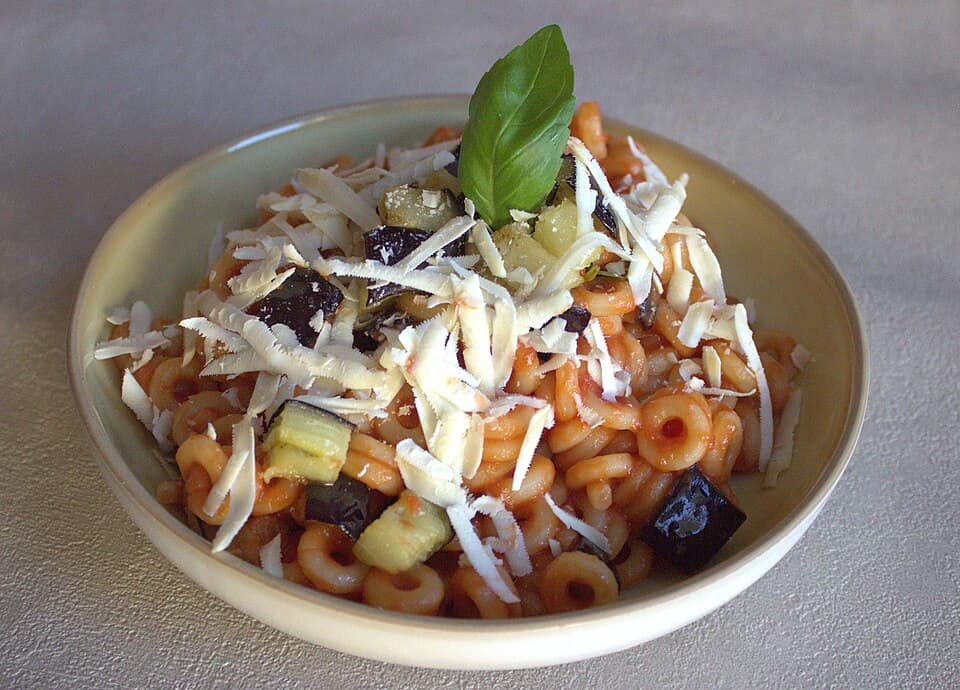
Pasta alla Norma
 Italian · 50 min · 632 kcal · Vegetarian
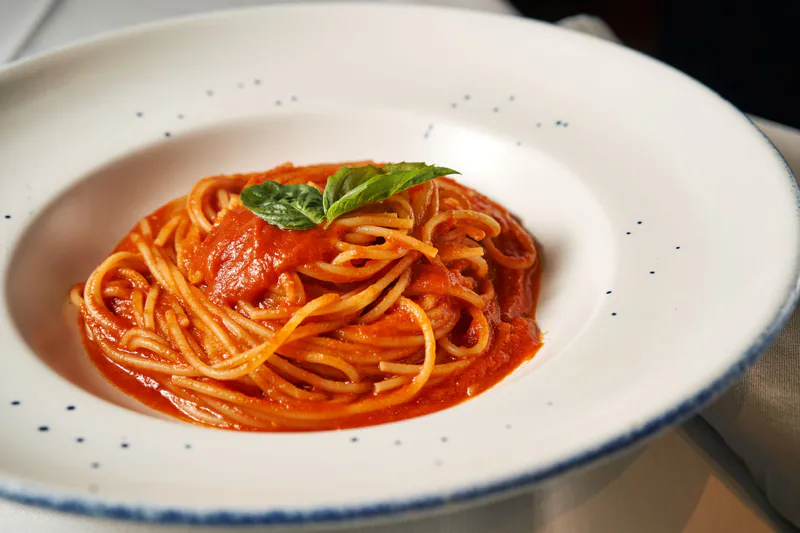
Spaghetti al pomodoro
Italian · 30 min · 525 kcal · Vegetarian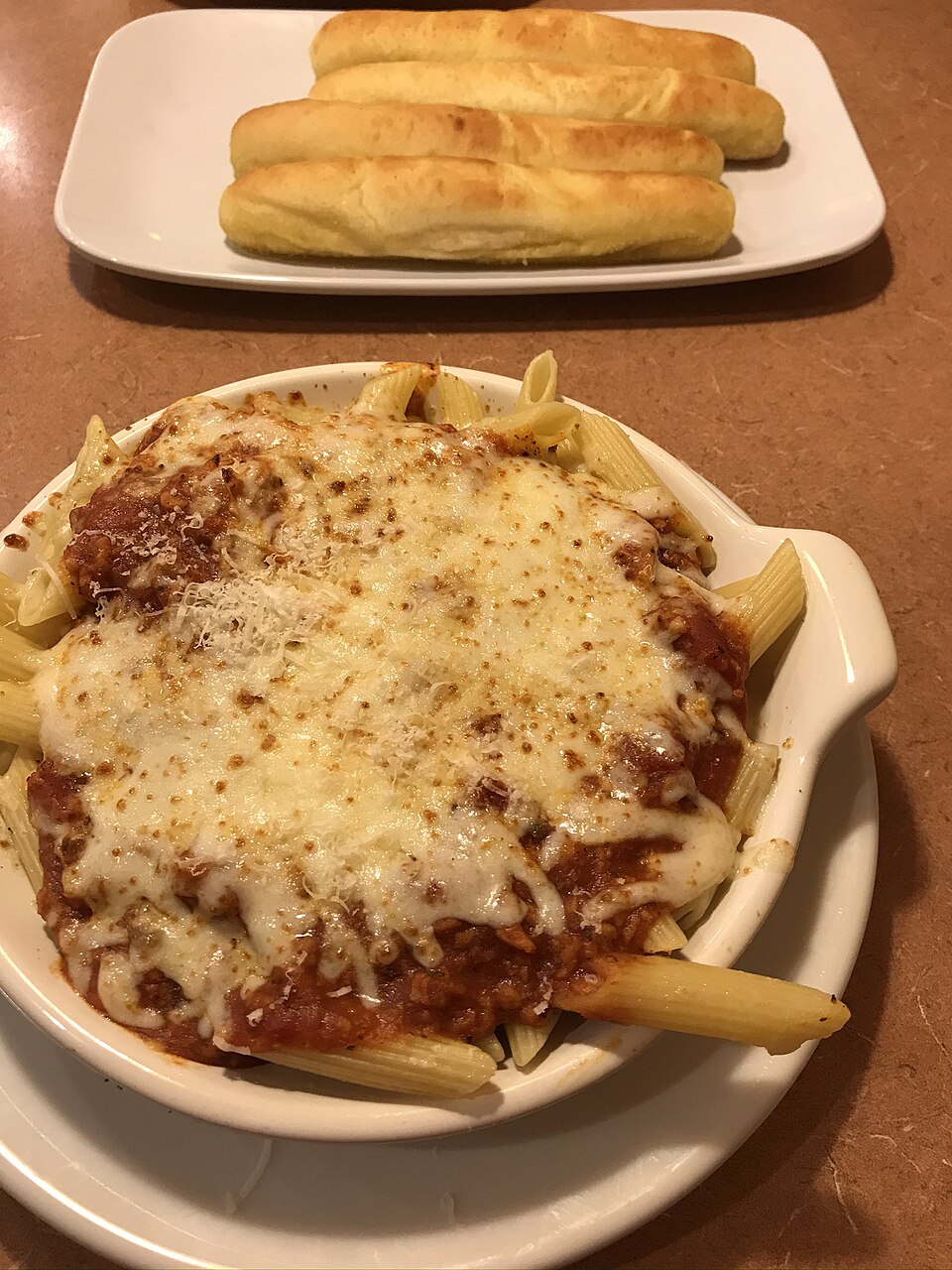
Baked ziti
 American · 1 h 30 min · 487 kcal
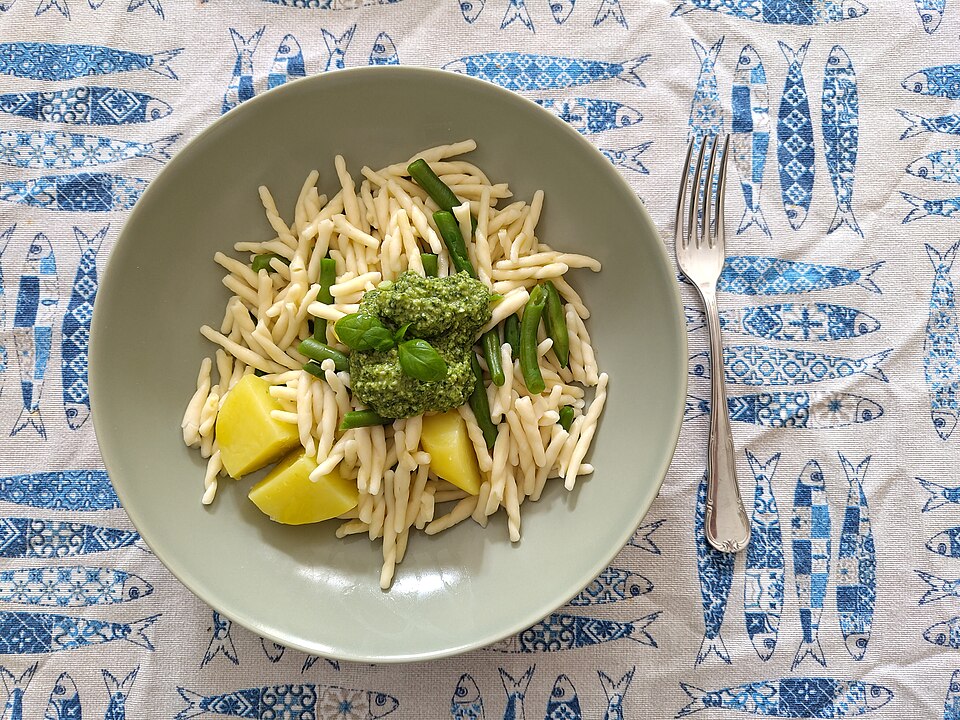
Trofie al pesto with potatoes and green beans
Italian · 40 min · 733 kcal · Vegetarian