
Pernil
Non-vegetarian
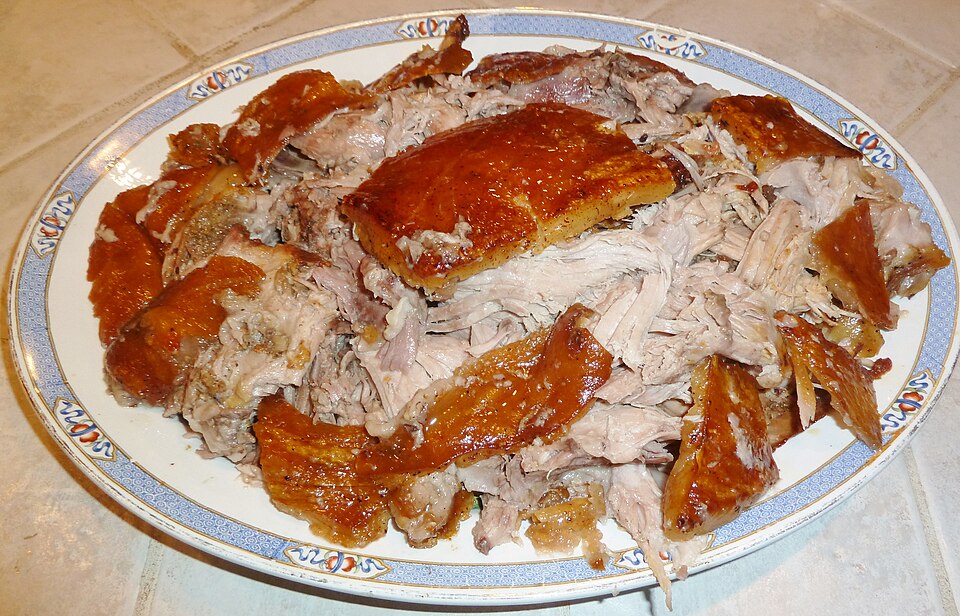
A whole pork shoulder rubbed with a garlic, oregano and vinegar paste, marinated overnight and slow-roasted until it pulls apart, under a crackling skin (cuero).
Pernil is a Puerto Rican main course from Puerto Rico, ready in about 6 hours 20 minutes and made with pork shoulder and garlic. It serves 12 and is rated intermediate to cook.
- Prep
- 20 min
- Cook
- 5 h 30 min
- Rest
- 30 min
- Total
- 6 h 20 min
- Serves
- 12
- Level
- Intermediate
- Calories
- 728
Plus 12–24 hours marinating in the fridge.
Method
Step 1
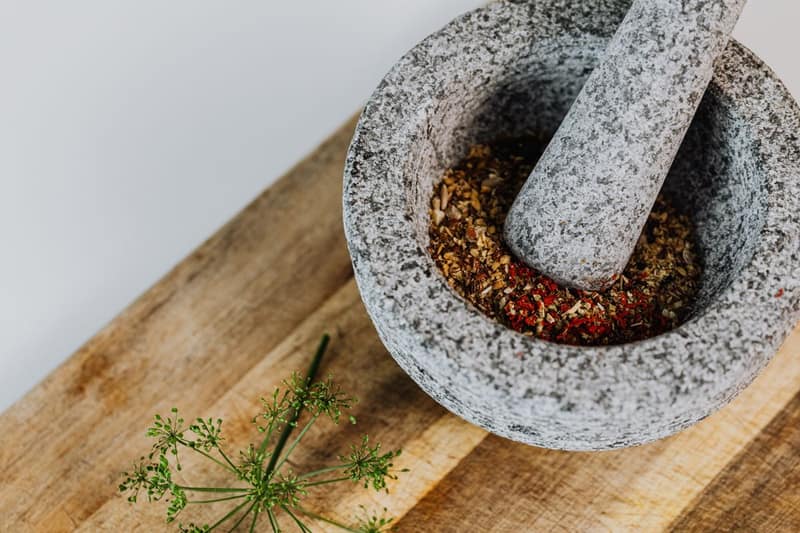
Pound the garlic (opens in a new tab), oregano (opens in a new tab), salt, pepper (opens in a new tab) and cumin (opens in a new tab) to a paste in a mortar, then work in the olive oil (opens in a new tab) and vinegar.
How it looks · Photo: https://kaboompics.com/ on Pexels Step 2
Lift the skin from the meat with a knife, leaving it attached on one side. Make deep slits all over the meat and push the paste into them and over every surface. Lay the skin back, cover and refrigerate for 12–24 hours.
- 10 min
Food safety: Marinate in the fridge, and wash boards and hands after handling raw pork.
Step 3
Heat the oven (opens in a new tab) to 160 °C. Put the pork skin-side up in a roasting dish with the water, cover with foil and roast for about 4½ hours, until the meat is very tender (about 90 °C inside).
- 270 min
- 160°C
- Roasting pan (opens in a new tab)
- Oven (opens in a new tab)
- Food thermometer (opens in a new tab)
How it looks · Photo: locrifa on Pexels Step 4
Uncover, raise the oven (opens in a new tab) to 220 °C and roast for 45–60 minutes more, until the skin is blistered and crackling. Watch closely so it doesn't burn.
- 60 min
- 220°C
Step 5
Rest for 30 minutes, then break the crackling into pieces and pull or chop the meat, spooning over the pan juices.
- 5 min
About this dish
- Origin
- Puerto Rico · Commonly attributedRoast pork shoulder is festive food across the Hispanic Caribbean; this garlicky style is closely associated with Puerto Rico.Also popular in Dominican Republic, CubaMore food from Puerto Rico
- Dish
- Lunch · Dinner · Main courses
- Cooking method
- Marinated / cured, Roasted, Slow-cooked
- Taste
- garlicky, savoury, salty, rich
- Diet
- No gluten ingredients · Dairy-free · No nut ingredients · Keto-style · Low-carb · High-proteinWorked out from the ingredients. How labels work
All labels
Non-vegetarian · Whole-food focused · Paleo-style · No gluten ingredients · Dairy-free · Egg-free · No nut ingredients · No added sugar · Alcohol-free · Beef-free · Keto-style · Low-carb · High-protein - Good for
- Festive & celebration · Make-ahead · Batch cooking · Uses leftovers
- Cook more with
- Pork shoulder · Garlic · Dried oregano · White vinegar
- Techniques
- Roasting · Marinating · Curing
Allergens
None of the 14 major allergens appear in the listed ingredients.
Based on typical versions of these ingredients and not verified allergen-free. Brands differ and cross-contact happens, so always check labels. For severe allergies, follow your clinician’s advice.
Nutrition
728 kcal per serving
Calculated1 serving ≈ 328 g · recipe makes 12
Where the energy comes from
- Protein 28%
- Carbohydrate 1%
- Fat 70%
| Nutrient | Per serving | Per 100 g* |
|---|---|---|
| Energy | 728 kcal | 222 kcal |
| Protein | 50.5 g | 15.4 g |
| Carbohydrate | 2.2 g | 0.7 g |
| Net carbohydrate | 1.9 g | 0.6 g |
| Sugars | 0.1 g | 0 g |
| Added sugars | 0 g | 0 g |
| Fibre | 0.3 g | 0.1 g |
| Fat | 55.9 g | 17.1 g |
| Saturated fat | 18.7 g | 5.7 g |
| Trans fat | — | — |
| Cholesterol | 207 mg | 63 mg |
| Sodium | 968 mg | 296 mg |
| Salt equivalent | 2.4 g | 0.7 g |
Vitamins & minerals per serving
- Potassium
- 911 mg
- Calcium
- 62 mg
- Iron
- 3.3 mg
- Magnesium
- 56 mg
- Vitamin A (RAE)
- 6 µg
- Vitamin C
- 4 mg
- Vitamin D
- 5 µg
- Vitamin B12
- 2.2 µg
- Folate (DFE)
- 15 µg
How these numbers were made
- Calculated from USDA FoodData Central (SR Legacy) per-100 g values and the listed quantities.
- *Per 100 g of combined raw ingredients; the cooked dish may weigh more or less.
- Optional ingredients are not included: cumin.
- “—” means the value isn’t known for enough of the ingredients; it is never zero by default.
- Values are estimates for guidance, not for medical dosing. U.S. Department of Agriculture, Agricultural Research Service. FoodData Central, 2019. fdc.nal.usda.gov.
Good to know
Tips
- Pat the skin very dry before roasting for the best cuero.
Common mistakes
- Rubbing the paste only on top of the skin — it needs to go into the meat.
Serve with
- With arroz con gandules, potato salad and pasteles at Christmas.
Storage
- Refrigerate for up to 4 days; freeze pulled meat for 3 months.
Reheating
- Reheat covered with some pan juices at 160 °C; re-crisp crackling separately.
Original editorial recipe · FriendsPantry editorial · Not yet independently reviewed · Added · Updated
Recipe DNA
How this dish is built
Grouped by each ingredient’s role in the dish. Each band’s width is its share of the dish by weight. Choose a component to see what it does.
What the dish is built around
Main ingredient
- Pork shoulder, bone-in, skin on3500 g
- Garlic, peeled16 clove · 64 g
Reviews & corrections
Reviews come from signed-in cooks and appear after a moderator checks them. We never show made-up ratings.
You might also like
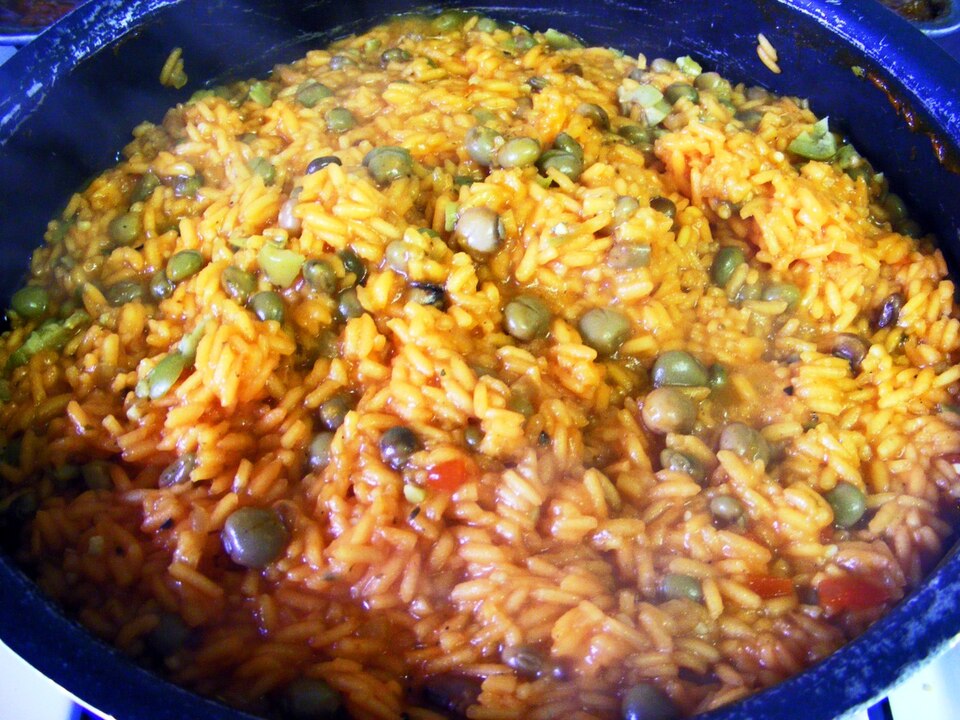
Arroz con gandules
 Puerto Rican · 1 h 10 min · 328 kcal
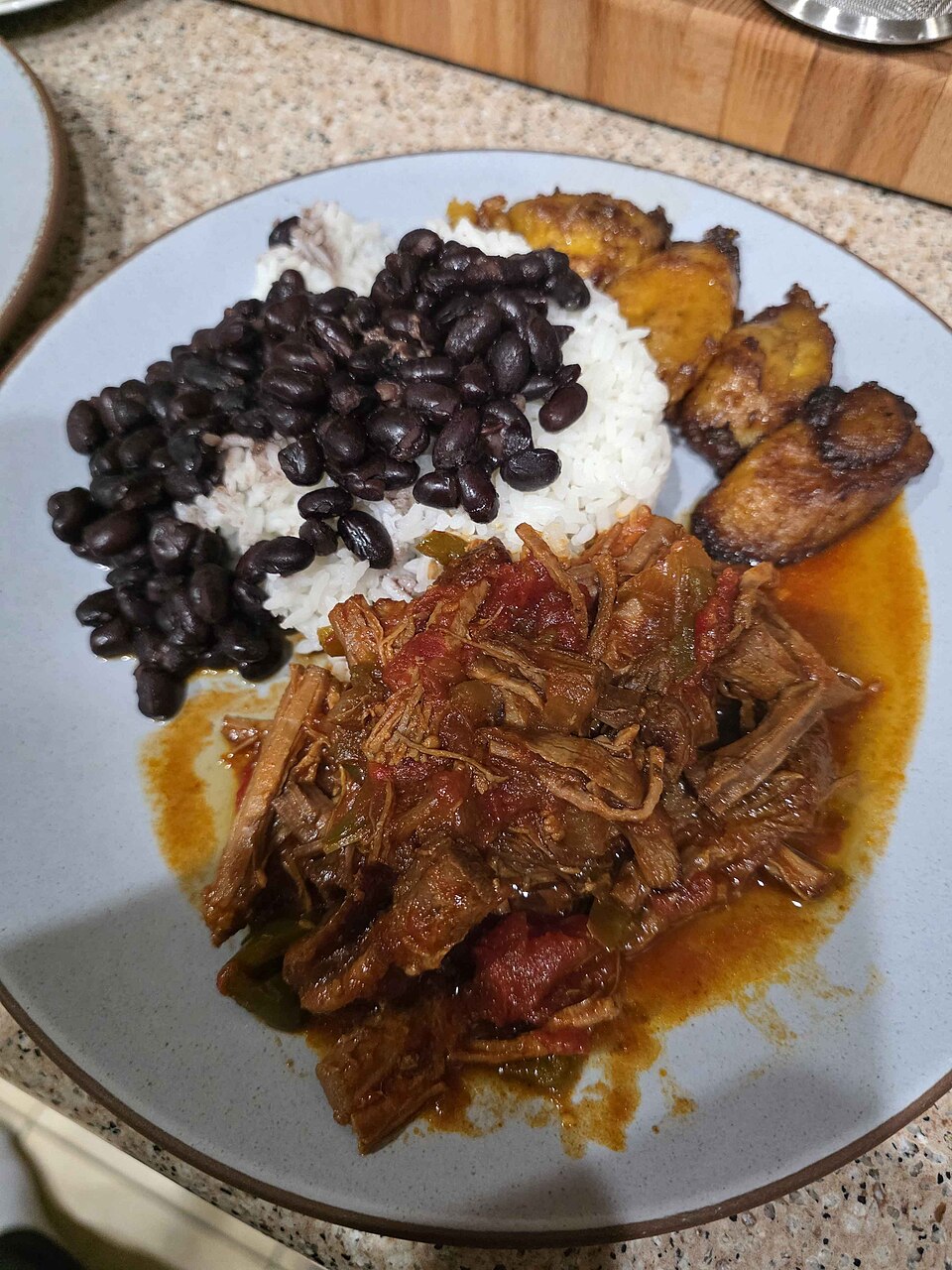
Ropa vieja
 Cuban · 2 h 50 min · 380 kcal
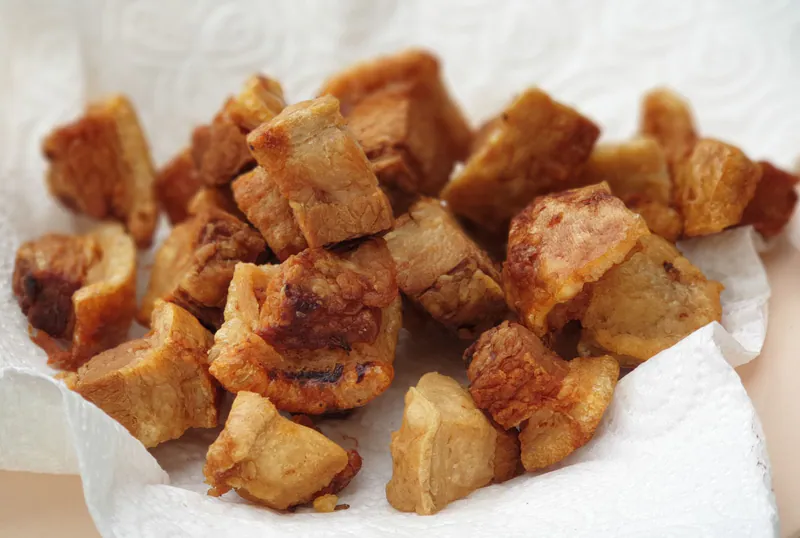
Griot
 Haitian · 5 h 55 min · 524 kcal
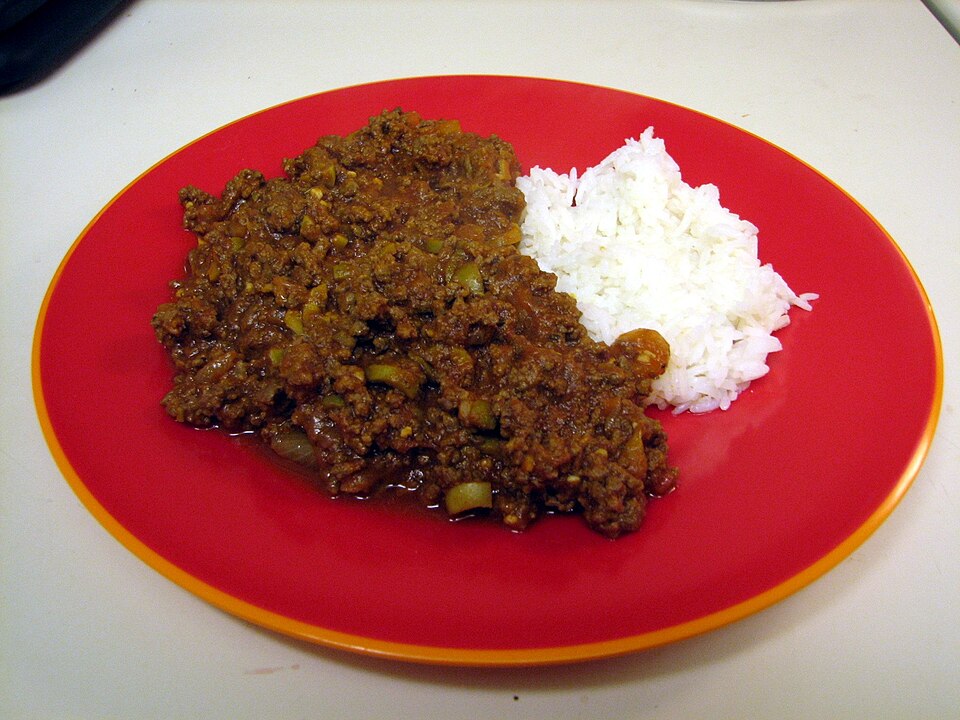
Picadillo a la cubana
Cuban · 40 min · 434 kcal