
Aseeda with mullah
Non-vegetarian
عصيدة · aseeda
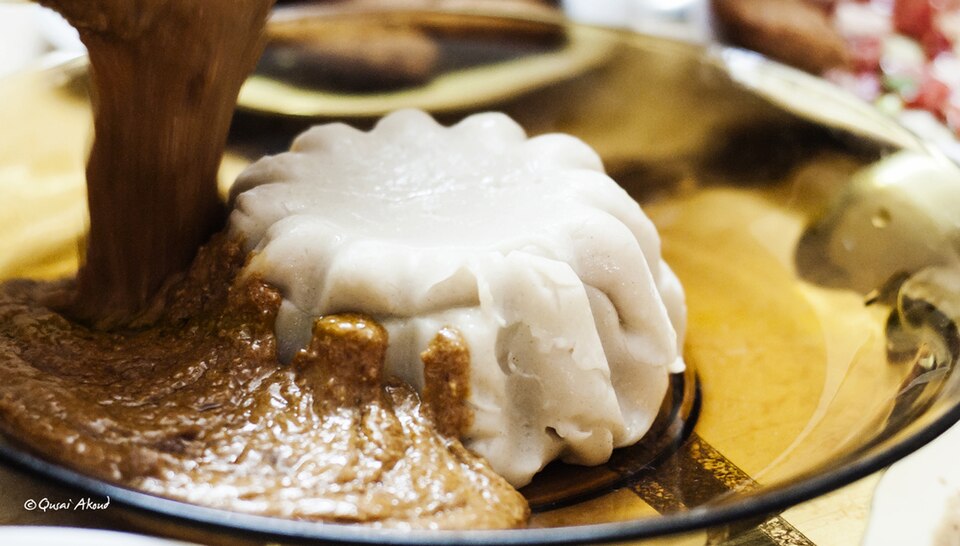
A smooth, firm dome of sorghum porridge served in a bowl surrounded by mullah, a thick tomato, onion and beef stew. Daily food across Sudan and South Sudan.
Aseeda with mullah is a Sudanese main course, ready in about 1 hour 30 minutes and made with sorghum meal and beef chuck. It serves 4 and is rated intermediate to cook.
- Prep
- 15 min
- Cook
- 1 h 15 min
- Total
- 1 h 30 min
- Serves
- 4
- Level
- Intermediate
- Calories
- 504
Ingredients
Aseeda
Mullah
Method
Step 1
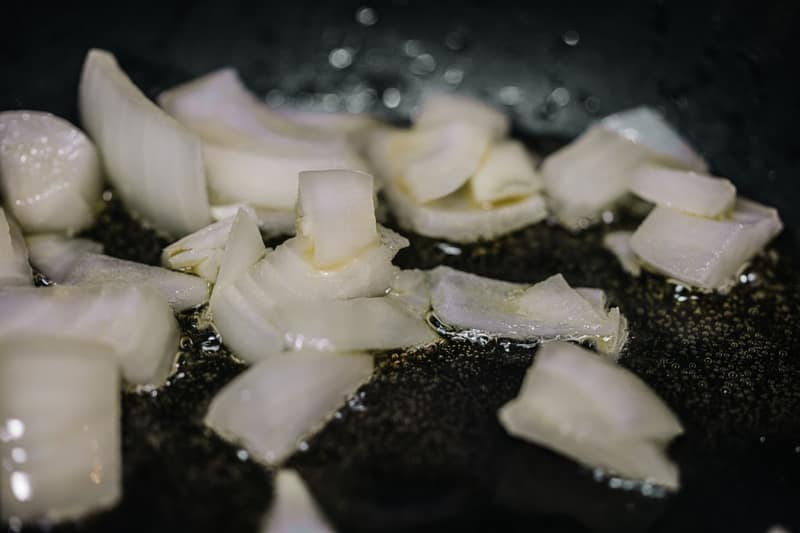
For the mullah, fry the onions (opens in a new tab) slowly in the oil until very soft and golden. Add the beef and garlic (opens in a new tab) and brown, then the tomato paste (opens in a new tab), tomatoes (opens in a new tab), cumin (opens in a new tab), coriander, 1 tsp salt and the stew water.
- 15 min
- medium heat
- Stockpot / large pot (opens in a new tab)
How it looks · Photo: Magda Ehlers on Pexels Step 2
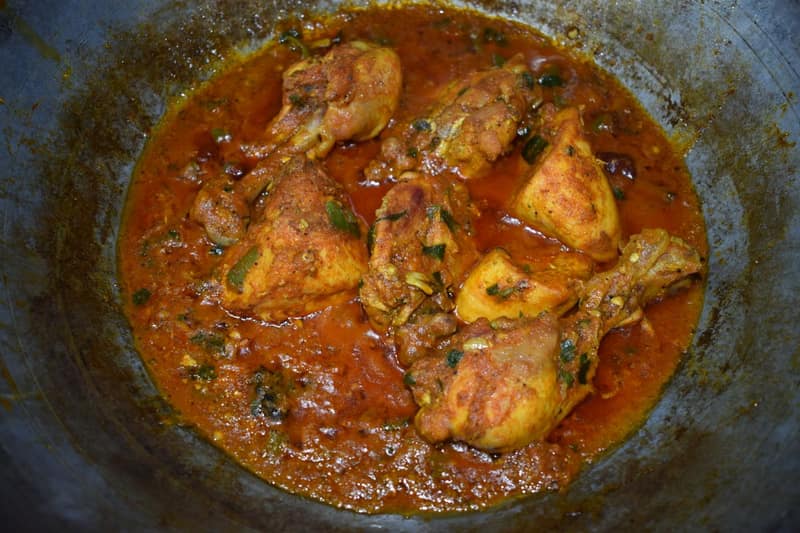
Cover and simmer until the beef is tender, adding the okra (opens in a new tab) for the last 15 minutes. The stew should be thick but pourable.
- 50 min
- low heat
- Stockpot / large pot (opens in a new tab)
How it looks · Photo: Bachir Mamud on Pexels Step 3
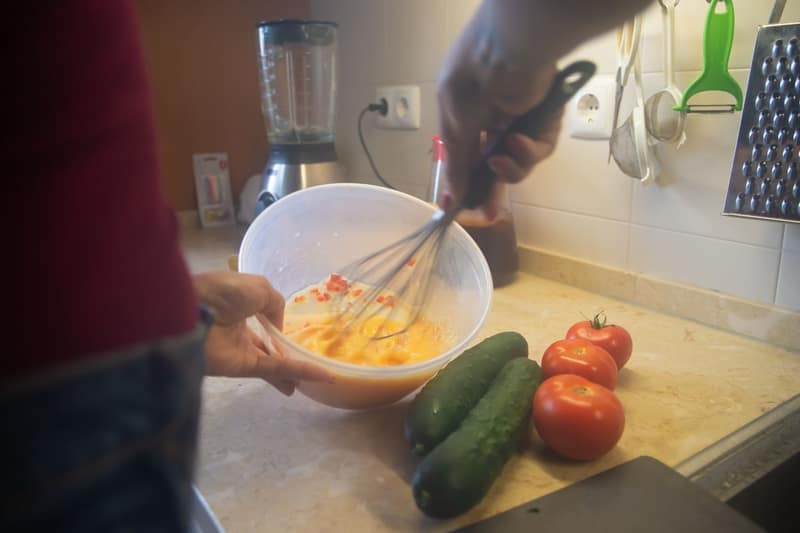
For the aseeda, whisk a third of the sorghum flour (opens in a new tab) into 300 ml cold water. Bring the remaining water and salt to the boil, stir in the slurry and cook until thick.
- 5 min
- medium heat
- Saucepan (opens in a new tab)
How it looks · Photo: Kampus Production on Pexels Step 4
Add the remaining flour gradually, beating hard with a wooden spoon until very stiff and smooth. Cover and steam on low heat for 5 minutes.
- 10 min
- low heat
Step 5
Press into an oiled bowl, turn out into a wide dish and pour the mullah around it.
- 2 min
About this dish
- Origin
- Sudan · Commonly attributedSimilar stiff porridges are eaten throughout the Sahel and East Africa; asida is equally a South Sudanese staple.Also popular in South Sudan, ChadMore food from Sudan
- Dish
- Lunch · Dinner · Main courses · Porridge & cereals
- Cooking method
- Boiled, Stewed, Simmered
- Taste
- savoury, tangy, earthy
- Diet
- No gluten ingredients · Dairy-free · No nut ingredients · High-proteinWorked out from the ingredients. How labels work
All labels
Non-vegetarian · No gluten ingredients · Dairy-free · Egg-free · No nut ingredients · No added sugar · Alcohol-free · Pork-free · High-protein · Low-fat - Good for
- Everyday · Budget-friendly
- Cook more with
- Sorghum meal · Beef chuck · Onion · Tomato paste · Tomato · Garlic
Allergens
None of the 14 major allergens appear in the listed ingredients.
Based on typical versions of these ingredients and not verified allergen-free. Brands differ and cross-contact happens, so always check labels. For severe allergies, follow your clinician’s advice.
Nutrition
504 kcal per serving
Calculated1 serving ≈ 644 g · recipe makes 4
Where the energy comes from
- Protein 19%
- Carbohydrate 53%
- Fat 28%
| Nutrient | Per serving | Per 100 g* |
|---|---|---|
| Energy | 504 kcal | 78 kcal |
| Protein | 24.6 g | 3.8 g |
| Carbohydrate | 68.6 g | 10.7 g |
| Net carbohydrate | 61.3 g | 9.5 g |
| Sugars | 6.9 g | 1.1 g |
| Added sugars | 0 g | 0 g |
| Fibre | 7.3 g | 1.1 g |
| Fat | 16.4 g | 2.6 g |
| Saturated fat | 2.6 g | 0.4 g |
| Trans fat | 0.2 g | 0 g |
| Cholesterol | — | — |
| Sodium | 1102 mg | 171 mg |
| Salt equivalent | 2.8 g | 0.4 g |
Vitamins & minerals per serving
- Potassium
- 884 mg
- Calcium
- 87 mg
- Iron
- 4.9 mg
- Magnesium
- 135 mg
- Vitamin A (RAE)
- 36 µg
- Vitamin C
- 17 mg
- Vitamin D
- —
- Vitamin B12
- —
- Folate (DFE)
- 42 µg
How these numbers were made
- Calculated from USDA FoodData Central (SR Legacy) per-100 g values and the listed quantities.
- *Per 100 g of combined raw ingredients; the cooked dish may weigh more or less.
- Optional ingredients are not included: okra.
- “—” means the value isn’t known for enough of the ingredients; it is never zero by default.
- Values are estimates for guidance, not for medical dosing. U.S. Department of Agriculture, Agricultural Research Service. FoodData Central, 2019. fdc.nal.usda.gov.
Good to know
Tips
- Cook the onions really slowly — in Sudanese cooking the soft, sweet onion base is what thickens the mullah.
Common mistakes
- Adding all the flour to the boiling water at once — start with a slurry to avoid lumps.
Serve with
- Eat together from one dish, pinching off the aseeda and dipping it in the stew.
Food safety
- Simmer stewing beef, goat or lamb until fork-tender; cool leftovers quickly and refrigerate within 2 hours.
Storage
- The mullah keeps 3 days refrigerated; aseeda is best fresh.
Variations
- Mullah roub: A tangier mullah made with yogurt or sour milk and dried okra powder.
Original editorial recipe · FriendsPantry editorial · Not yet independently reviewed · Added · Updated
Recipe DNA
How this dish is built
Reviews & corrections
Reviews come from signed-in cooks and appear after a moderator checks them. We never show made-up ratings.
You might also like
Kisra
 Sudanese · 12 h 40 min · 279 kcal · Vegan
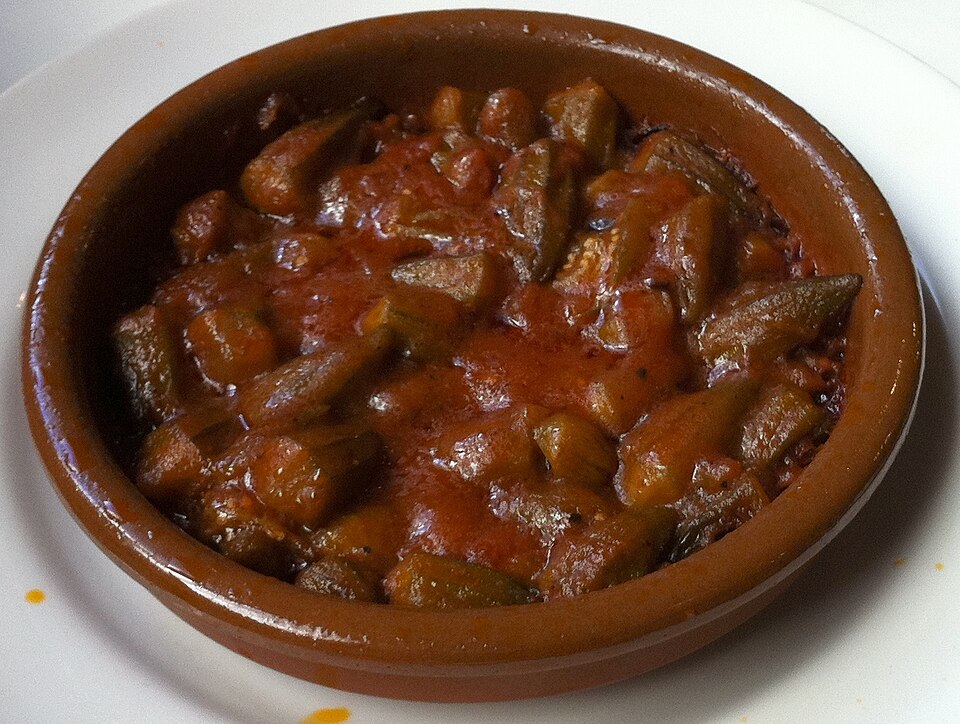
Bamia (okra and beef stew)
 South Sudanese · 1 h 35 min · 276 kcal
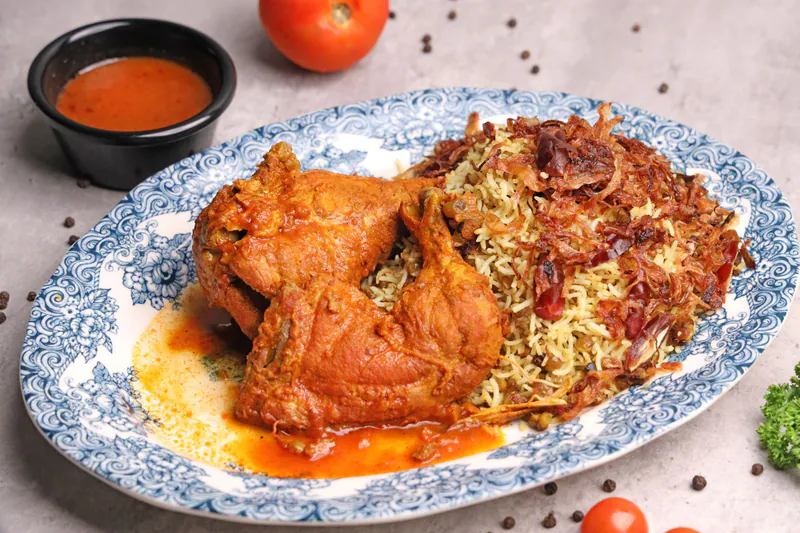
Chicken kabsa
 Saudi Arabian · 1 h 45 min · 667 kcal
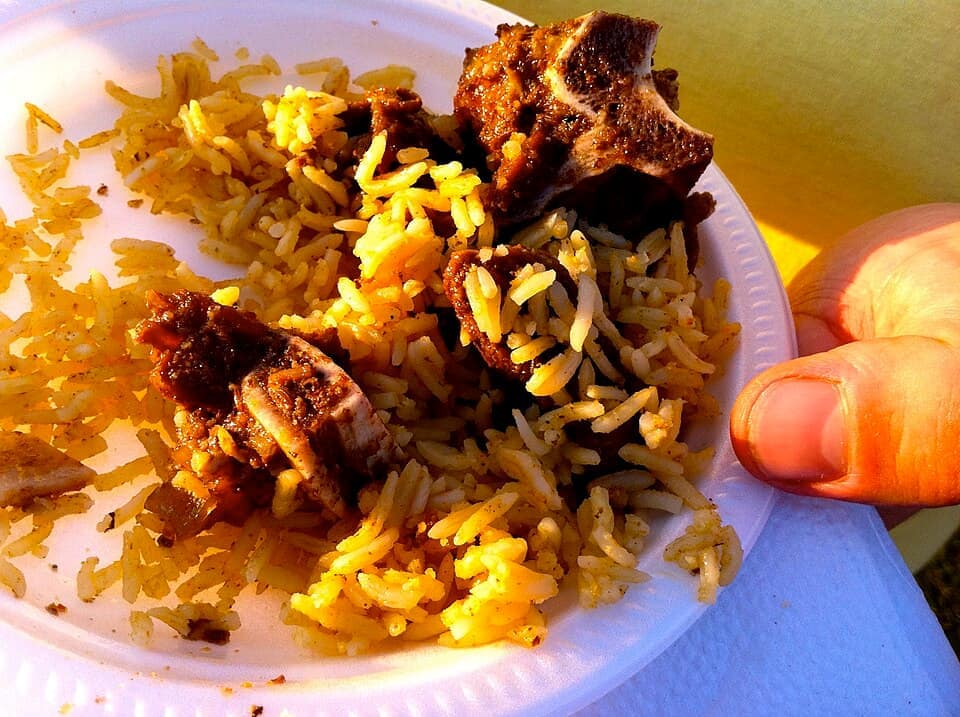
Bariis iskukaris
 Somali · 2 h · 609 kcal