
Boondi raita
Vegetarian
बूंदी रायता · būndī rāytā
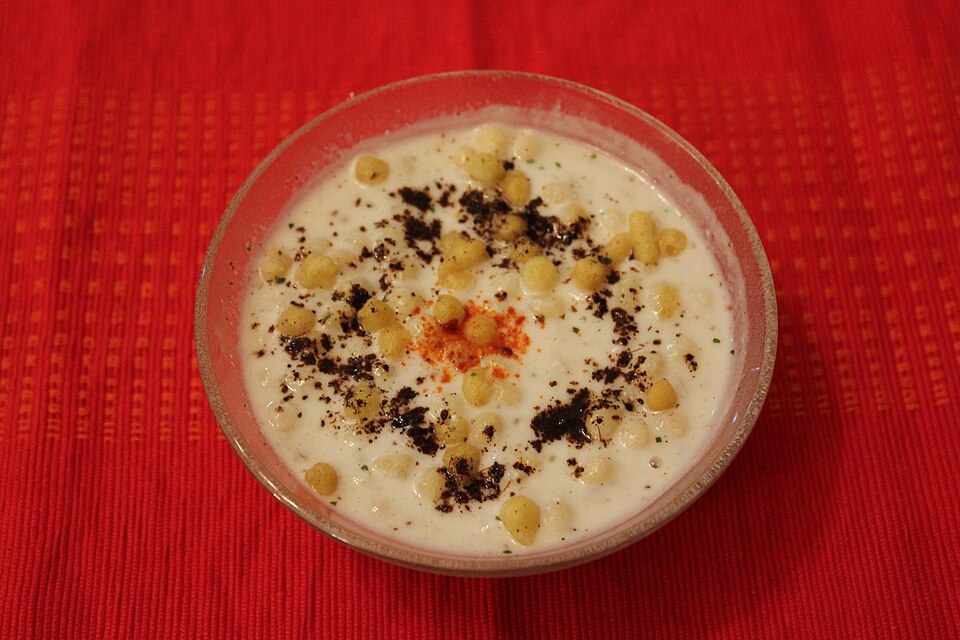
Whisked yoghurt with crisp gram-flour pearls (boondi), roasted cumin, red chilli and black salt. The most common raita on North Indian tables, served with biryani, pulao and parathas.
Boondi raita is an Indian side dish, ready in about 20 minutes and made with yogurt and boondi (fried gram-flour pearls). It serves 6 and is rated beginner to cook.
- Prep
- 10 min
- Cook
- 0 min
- Rest
- 10 min
- Total
- 20 min
- Serves
- 6
- Level
- Beginner
- Calories
- 81
Method
Step 1
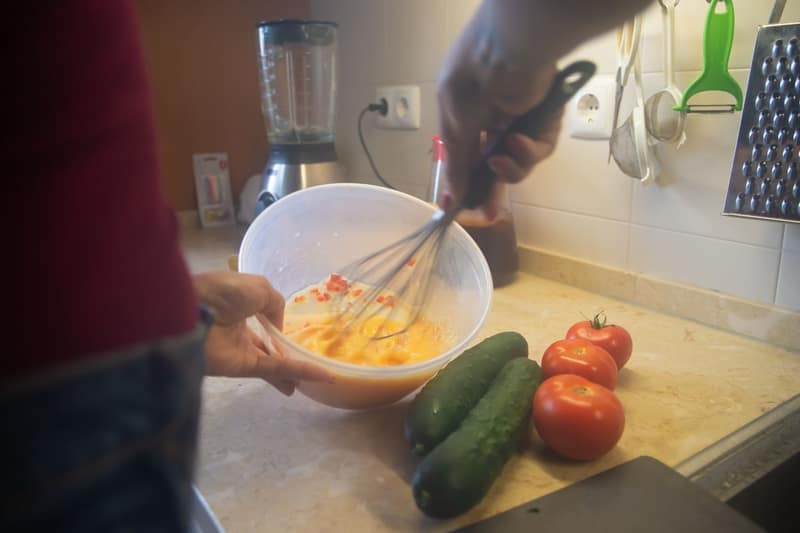
Whisk (opens in a new tab) the yoghurt (opens in a new tab) with the cold water until completely smooth and pourable, like thick buttermilk.
How it looks · Photo: Kampus Production on Pexels Step 2
Whisk (opens in a new tab) in most of the roasted cumin, the black salt (opens in a new tab), salt and sugar (opens in a new tab) (if using).
Step 3
For soft boondi (opens in a new tab), soak it in a bowl of warm water for 2–3 minutes until it swells, then drain in a sieve and press gently to squeeze out the water. For crunchy boondi, skip the soaking.

How it looks · Photo: Katerina Holmes on Pexels Step 4
Stir the boondi (opens in a new tab) into the yoghurt (opens in a new tab). Chill for 10 minutes, then sprinkle with the remaining cumin, the chilli powder, coriander and mint (opens in a new tab) just before serving.
- 2 min
About this dish
- Origin
- North India, India · Commonly attributedMade across North India and Pakistan with ready-made salted boondi; widely documented in home cookbooks.Also popular in PakistanMore food from India
- Dish
- Lunch · Dinner · Side dishes · Condiments, chutneys & relishes
- Cooking method
- No-cook
- Taste
- creamy, refreshing, tangy, savoury
- Diet
- Vegetarian (lacto-ovo) · No gluten ingredients · No nut ingredients · Low-carbWithout the optional extras: Whole-food focused, No added sugarWorked out from the ingredients. How labels work
All labels
Vegetarian (lacto-ovo) · Eggetarian · Lacto-vegetarian · Pescatarian · Flexitarian-friendly · No gluten ingredients · Egg-free · No nut ingredients · Alcohol-free · Pork-free · Beef-free · Low-carb - Good for
- Everyday · Budget-friendly · Child-friendly
- Cook more with
- Yogurt · Ground cumin · Kashmiri chilli powder · Black salt (kala namak) · Coriander leaves
Allergens
- Contains: Milkfrom yogurt
Based on typical versions of these ingredients and not verified allergen-free. Brands differ and cross-contact happens, so always check labels. For severe allergies, follow your clinician’s advice.
Nutrition
81 kcal per serving
Estimated1 serving ≈ 93 g · recipe makes 6
Where the energy comes from
- Protein 23%
- Carbohydrate 45%
- Fat 32%
| Nutrient | Per serving | Per 100 g |
|---|---|---|
| Energy | 81 kcal | 87 kcal |
| Protein | 4.7 g | 5 g |
| Carbohydrate | 9.2 g | 9.8 g |
| Net carbohydrate | 8 g | 8.5 g |
| Sugars | 4.2 g | 4.5 g |
| Added sugars | 0 g | 0 g |
| Fibre | 1.2 g | 1.3 g |
| Fat | 2.9 g | 3.1 g |
| Saturated fat | 1.5 g | 1.6 g |
| Trans fat | — | — |
| Cholesterol | 9 mg | 9 mg |
| Sodium | 232 mg | 249 mg |
| Salt equivalent | 0.6 g | 0.6 g |
Vitamins & minerals per serving
- Potassium
- 202 mg
- Calcium
- 91 mg
- Iron
- 0.8 mg
- Magnesium
- 27 mg
- Vitamin A (RAE)
- 25 µg
- Vitamin C
- 1 mg
- Vitamin D
- 0.1 µg
- Vitamin B12
- 0.2 µg
- Folate (DFE)
- 49 µg
How these numbers were made
- Calculated from USDA FoodData Central (SR Legacy) per-100 g values and the listed quantities.
- Optional ingredients are not included: sugar, mint.
- Boondi (fried gram-flour pearls): Chickpea flour (FDC 174288) used as a stand-in for the batter; boondi is deep-fried, so fat and energy are substantially understated.
- Kashmiri chilli powder: Paprika (FDC 171329) used as a stand-in: Kashmiri chilli is a mild, deep-red chilli powder used mainly for colour.
- Black salt (kala namak): Table salt (FDC 173468) used as a stand-in; kala namak is mostly sodium chloride with sulphur compounds that give its eggy aroma.
- “—” means the value isn’t known for enough of the ingredients; it is never zero by default.
- Values are estimates for guidance, not for medical dosing. U.S. Department of Agriculture, Agricultural Research Service. FoodData Central, 2019. fdc.nal.usda.gov.
Good to know
Tips
- Soaking the boondi removes excess oil and salt and stops it drinking up all the yoghurt.
- For crunch, add unsoaked boondi at the table.
Common mistakes
- Adding boondi hours ahead; it turns mushy and thickens the raita to a paste.
- Using sweet boondi, which is for laddoo.
Serve with
- Serve with chicken or vegetable biryani, vegetable pulao, jeera rice, aloo paratha, chole bhature or a Sunday dal-chawal.
Food safety
- Keep yoghurt dishes chilled and do not leave them at room temperature for more than 2 hours (1 hour in hot weather).
Storage
- Best within a few hours. Refrigerate the yoghurt base for up to 2 days and add boondi just before serving.
Variations
- Masala boondi raita: Use spiced masala boondi and add a pinch of chaat masala.
- Boondi raita with homemade boondi: Drip a thin besan batter through a slotted spoon into hot oil and fry until crisp; drain well before using.
Original editorial recipe · FriendsPantry editorial · Not yet independently reviewed · Added · Updated
Goes with
Recipe DNA
How this dish is built
Grouped by each ingredient’s role in the dish. Each band’s width is its share of the dish by weight. Choose a component to see what it does.
What the dish is built around
Main ingredient
- Yogurt, plain full-fat, chilled400 g
- Boondi (fried gram-flour pearls), salted (khari) boondi60 g
Make it milder, swap ingredients for your diet, change the batch size or thickness — the original stays as it is.
Customise in Sauce & DrizzleReviews & corrections
Reviews come from signed-in cooks and appear after a moderator checks them. We never show made-up ratings.
You might also like
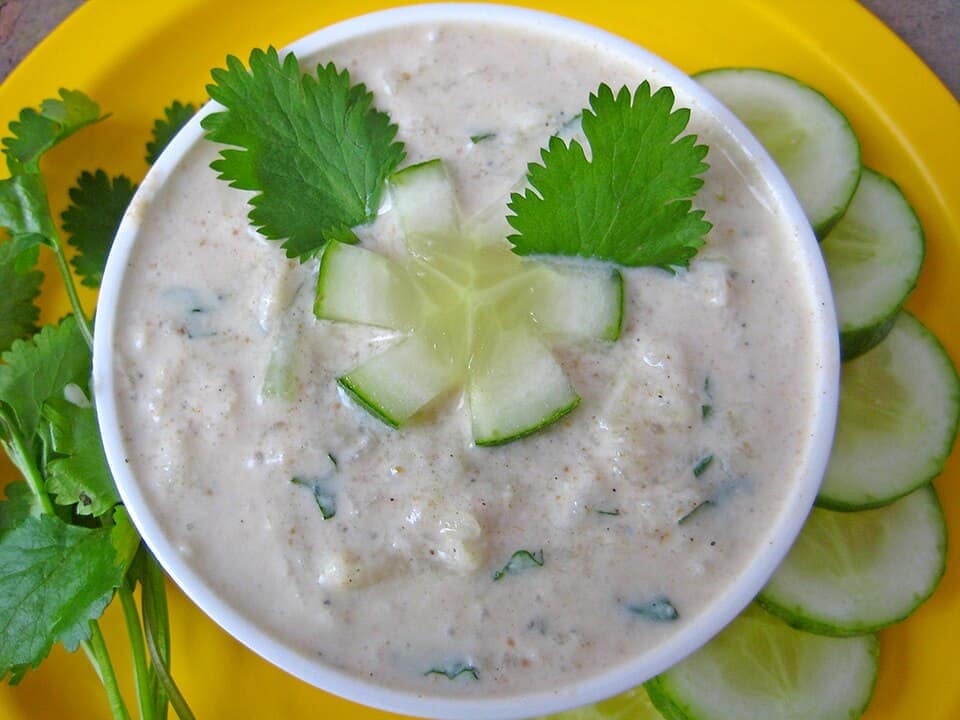
Cucumber raita
 Indian · 12 min · 71 kcal · Vegetarian
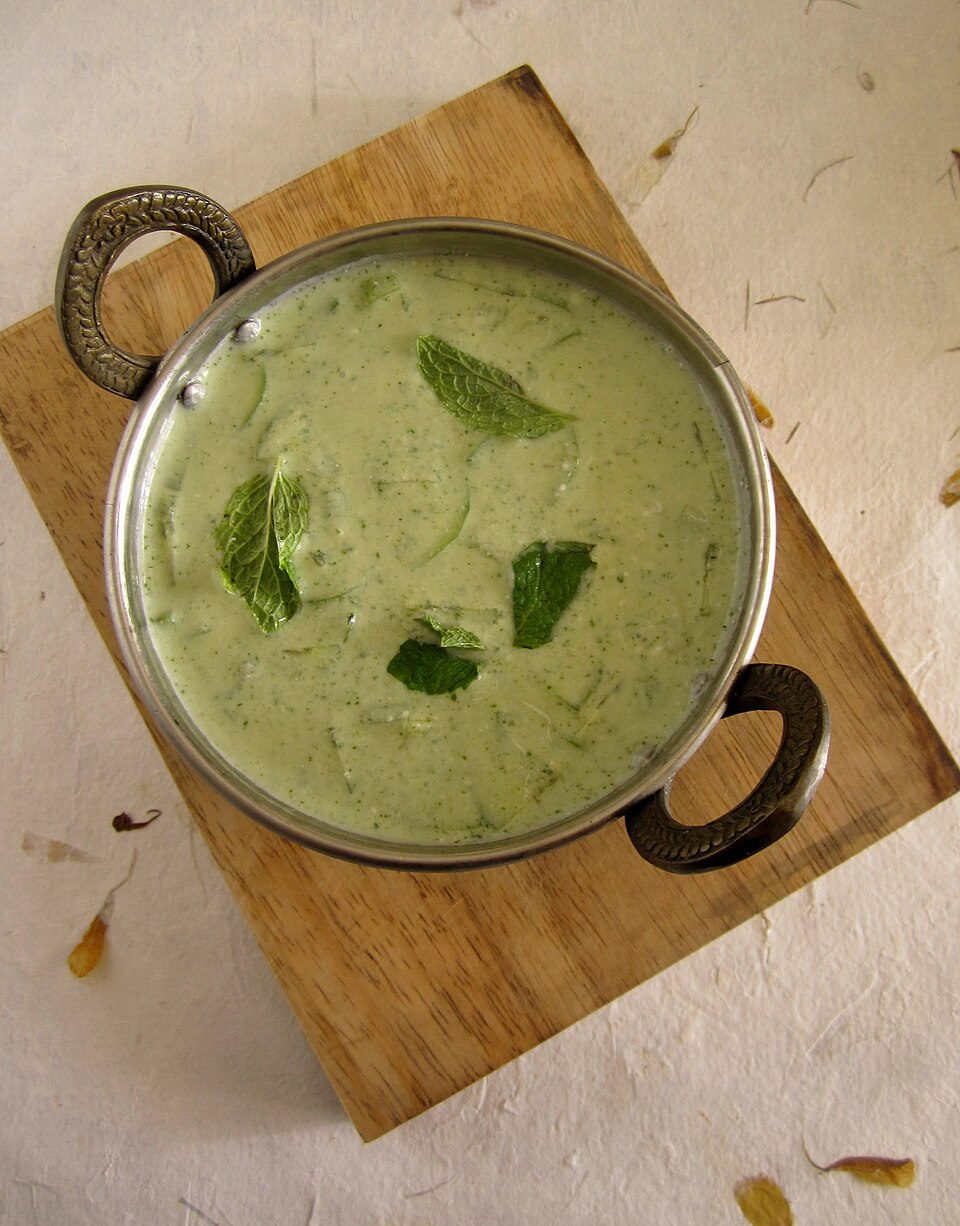
Pudina raita (mint raita)
Indian · 25 min · 45 kcal · Vegetarian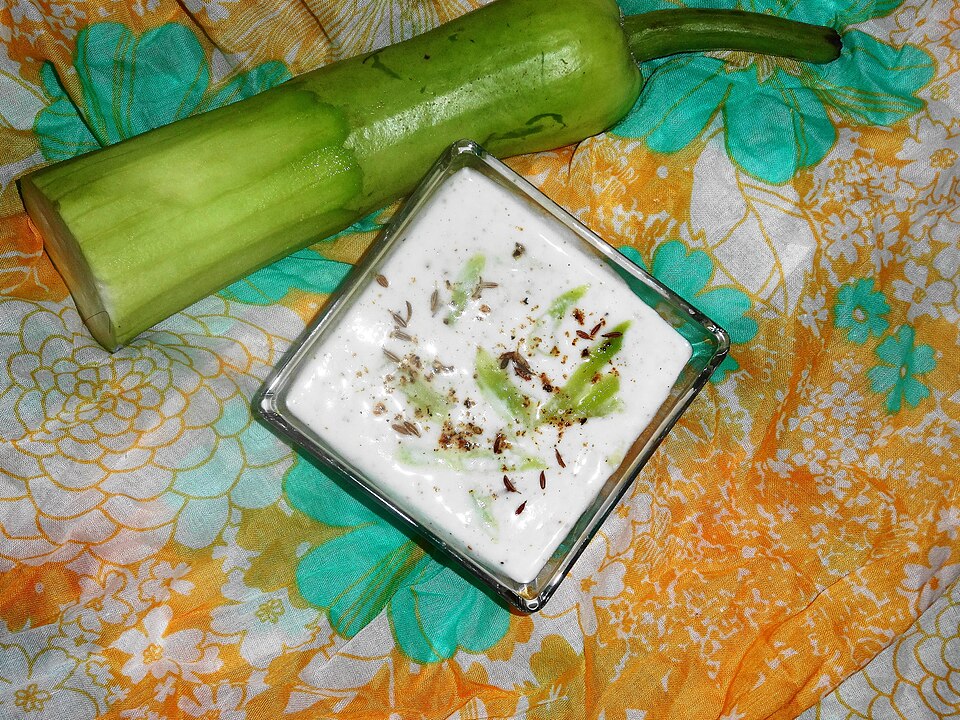
Lauki raita (bottle gourd raita)
Indian · 37 min · 43 kcal · Vegetarian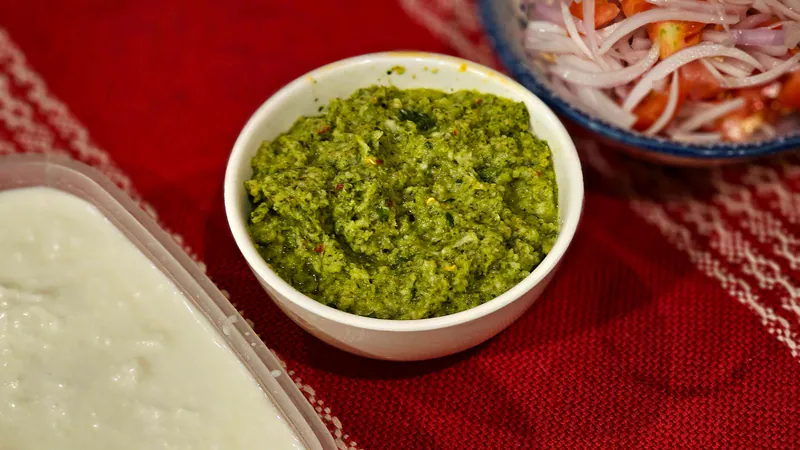
Green chutney (coriander-mint)
Indian · 10 min · 8 kcal · Vegan