
Phulka (puffed roti)
Vegetarian
फुलका · phulka
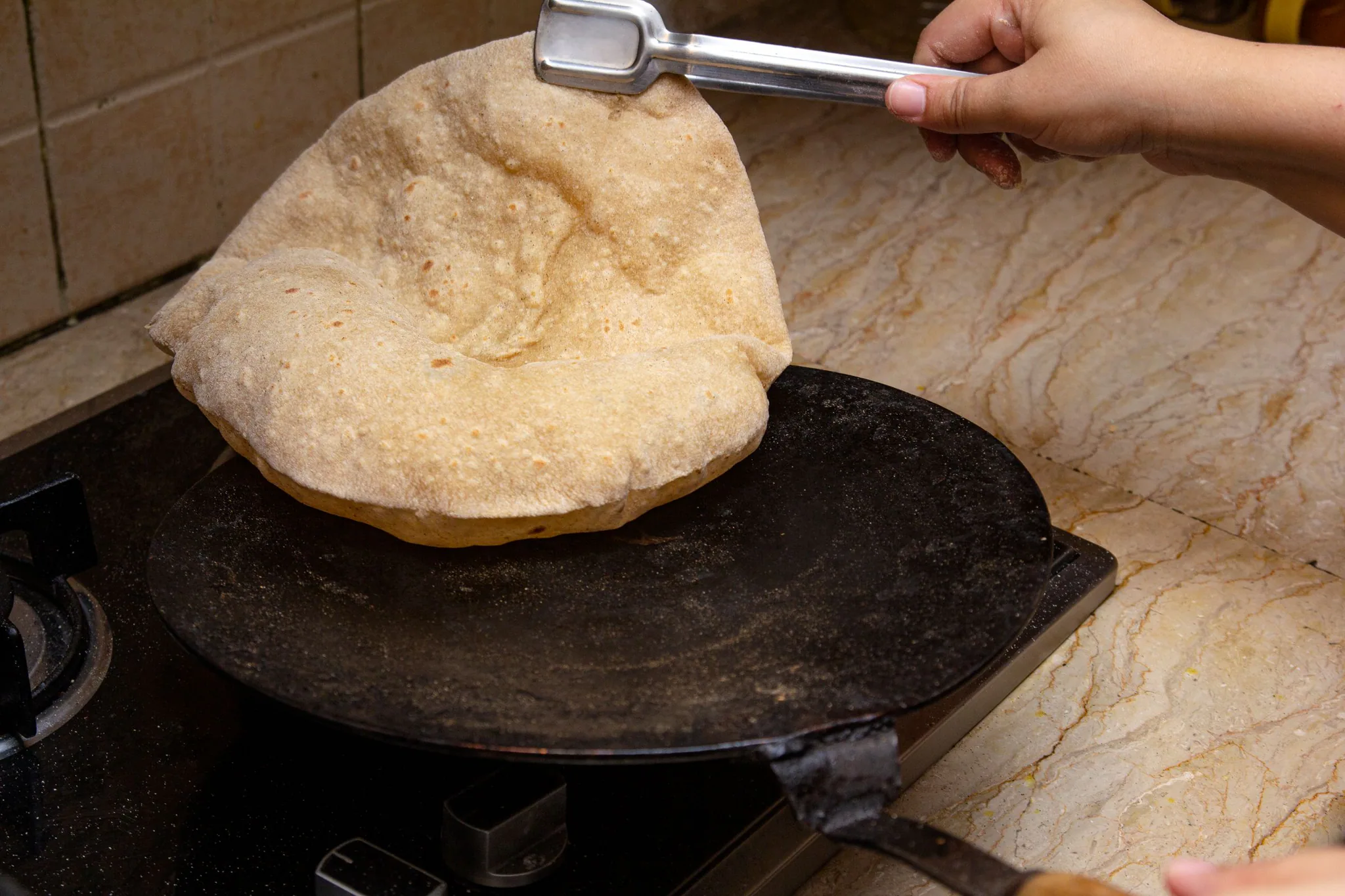
Thin whole-wheat rounds part-cooked on a hot tawa and then puffed into a balloon over an open flame. The everyday unleavened bread of north and west Indian homes.
Phulka (puffed roti) is an Indian bread, ready in about 1 hour 5 minutes and made with whole-wheat flour. It serves 4 and is rated intermediate to cook.
- Prep
- 15 min
- Cook
- 20 min
- Rest
- 30 min
- Total
- 1 h 5 min
- Serves
- 4
- Level
- Intermediate
- Calories
- 223
Method
Step 1
Mix the atta (opens in a new tab) (and salt, if using) in a bowl. Add the water gradually, bringing it together with your fingers, then knead for 5–7 minutes into a soft, smooth dough that dents easily under a fingertip and barely sticks.
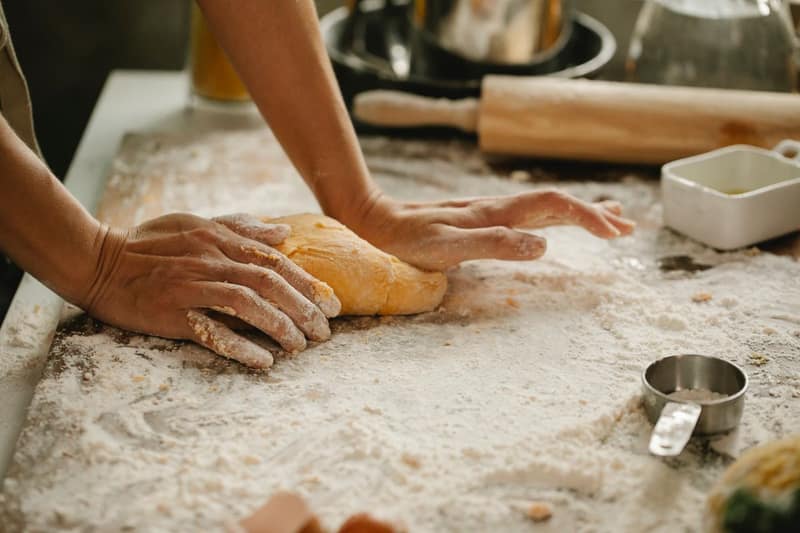
How it looks · Photo: Klaus Nielsen on Pexels Step 2
Cover and rest the dough for at least 30 minutes. Atta (opens in a new tab) has little gluten strength to develop; the rest lets the bran hydrate so the rotis roll thin without springing back.
- 30 min
Step 3
Knead briefly, divide into 8 balls of about 50 g and keep them covered. Dip one in dusting flour and roll into an even 15–16 cm circle about 2 mm thick, rotating it as you go. Even thickness — especially at the edges — is what lets it puff.
Step 4
Heat the tawa over medium-high heat until a sprinkle of flour browns in about 10 seconds. Shake off excess flour and lay the roti on. When small bubbles appear and the top turns matt (15–20 seconds), flip it.
- 1 min
- medium-high heat
- Griddle / tawa (opens in a new tab)
If the first side cooks too long it dries out and won't puff; if too short the roti sticks.
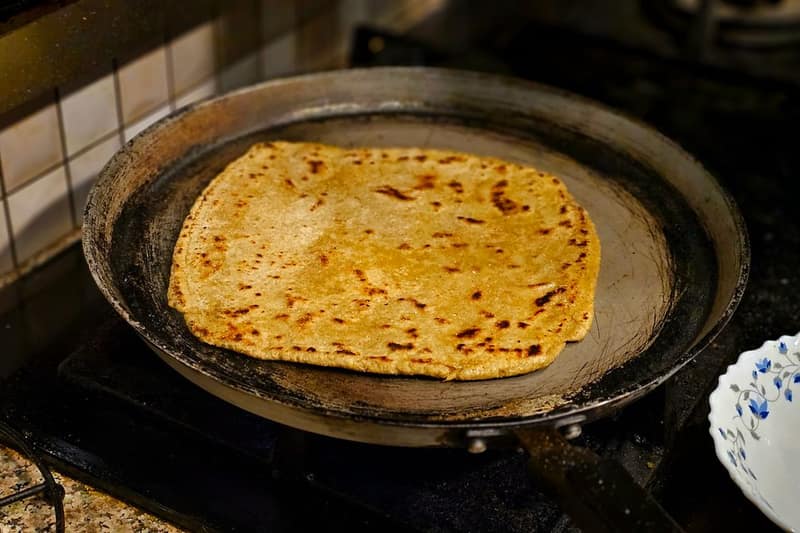
How it looks · Photo: Muhammad Khawar Nazir on Pexels Step 5
Cook the second side for 30–40 seconds until light brown spots appear underneath. Lift with tongs (opens in a new tab) and place the first-cooked side up directly over a medium gas flame: it should balloon within 5–10 seconds. Turn briefly to spot the other side, then remove. On an electric or induction hob, press the roti gently with a folded cloth on the tawa instead to push the steam around.
- 1 min
- medium heat
- Tongs (opens in a new tab)
- Griddle / tawa (opens in a new tab)
Food safety: Keep fingers, sleeves and the cloth clear of the open flame; the escaping steam is hot.
Step 6
Brush with ghee (opens in a new tab) if you like and stack in a cloth-lined container or casserole to stay soft. Roll the next roti while the current one cooks.
- 15 min
About this dish
- Origin
- North and West India, India · Commonly attributedWheat rotis are eaten across the subcontinent; the flame-puffed phulka is the north and west Indian household version.Also popular in Pakistan, NepalMore food from India
- Dish
- Lunch · Dinner · Breads & flatbreads
- Cooking method
- Toasted
- Taste
- mild, nutty, earthy
- Diet
- Vegetarian (lacto-ovo) · No nut ingredients · High-fibreWithout the optional extras: Vegan, Plant-based, Ovo-vegetarian, Dairy-freeWorked out from the ingredients. How labels work
All labels
Vegetarian (lacto-ovo) · Eggetarian · Lacto-vegetarian · Pescatarian · Flexitarian-friendly · Whole-food focused · Egg-free · No nut ingredients · No added sugar · Alcohol-free · Pork-free · Beef-free · High-fibre · Low-fat · Low-sodium · DASH-style - Good for
- Everyday · Budget-friendly
- Cook more with
- Whole-wheat flour
- Techniques
- Toasting · Spice roasting (dry-roasting) · Kneading
Allergens
- Contains, can be adapted: Milkfrom ghee
- Contains: Wheatfrom whole-wheat flour
- Contains: Glutenfrom whole-wheat flour
Based on typical versions of these ingredients and not verified allergen-free. Brands differ and cross-contact happens, so always check labels. For severe allergies, follow your clinician’s advice.
Nutrition
223 kcal per serving
Calculated1 serving ≈ 95 g · recipe makes 4
Where the energy comes from
- Protein 15%
- Carbohydrate 79%
- Fat 6%
| Nutrient | Per serving | Per 100 g |
|---|---|---|
| Energy | 223 kcal | 234 kcal |
| Protein | 8.7 g | 9.1 g |
| Carbohydrate | 47.1 g | 49.6 g |
| Net carbohydrate | 40.1 g | 42.2 g |
| Sugars | 0.3 g | 0.3 g |
| Added sugars | 0 g | 0 g |
| Fibre | 7 g | 7.4 g |
| Fat | 1.6 g | 1.7 g |
| Saturated fat | 0.3 g | 0.3 g |
| Trans fat | — | — |
| Cholesterol | 0 mg | 0 mg |
| Sodium | 2 mg | 2 mg |
| Salt equivalent | 0 g | 0 g |
Vitamins & minerals per serving
- Potassium
- 238 mg
- Calcium
- 27 mg
- Iron
- 2.4 mg
- Magnesium
- 91 mg
- Vitamin A (RAE)
- 0 µg
- Vitamin C
- 0 mg
- Vitamin D
- 0 µg
- Vitamin B12
- 0 µg
- Folate (DFE)
- 29 µg
How these numbers were made
- Calculated from USDA FoodData Central (SR Legacy) per-100 g values and the listed quantities.
- Optional ingredients are not included: salt, ghee.
- “—” means the value isn’t known for enough of the ingredients; it is never zero by default.
- Values are estimates for guidance, not for medical dosing. U.S. Department of Agriculture, Agricultural Research Service. FoodData Central, 2019. fdc.nal.usda.gov.
Good to know
Tips
- Roll the next roti while one is on the tawa — the whole batch takes about 15 minutes once you get a rhythm.
- Dust only lightly; scorched flour on the tawa turns bitter, so wipe it with a dry cloth now and then.
Common mistakes
- A stiff, under-hydrated dough gives hard, papery rotis.
- Thin edges and a thick centre (or a tear) let steam escape so the roti won't puff.
Serve with
- Serve hot with dal, sabzi and yogurt as part of an everyday thali.
Storage
- Wrapped in a cloth inside a closed box they stay soft for a few hours; refrigerate the dough for up to 24 hours.
Reheating
- Warm on a hot tawa for a few seconds per side, or wrap in a damp cloth and microwave for 15–20 seconds.
Variations
- Tawa chapati: Skip the flame and cook entirely on the tawa, pressing with a cloth and brushing with ghee or oil.
Why didn't my phulka puff?
Usually uneven rolling, a tear, a too-cool tawa, or overcooking the first side. A soft, well-rested dough helps most.
Original editorial recipe · FriendsPantry editorial · Not yet independently reviewed · Added · Updated
Recipe DNA
How this dish is built
Built from the recipe’s own sections. Each band’s width is its share of the dish by weight. Choose a component to see what it does.
Baker’s notes
Customise in Bread & BakeryTimeline and readiness cues
Mix and knead · about 35 min
Weigh everything. Knead until smooth and elastic: a small piece stretches thin enough to see light through (the windowpane test).
Rest · about 30 min
Covered so it doesn't dry out; relaxed dough rolls and shapes without springing back.
- Start to finish: about 1 h 5 min. Times are a guide — warmth changes everything; follow the cues.
If something goes wrong
Pale crust
Likely causes
- Oven too cool
- Too little sugar or no milk/egg for browning
- Over-fermented (yeast ate the sugars)
What to do
- Check the oven with a thermometer
- Brush with egg wash or milk
- Shorten the fermentation
Burnt bottom
Likely causes
- Tray too close to the heat
- Dark tray absorbs more heat
- Too much sugar in the dough
What to do
- Bake on the middle shelf
- Double up trays or use a light-coloured one
- Lower the temperature 10–15 °C and bake a little longer
Tough or chewy flatbread
Likely causes
- Dough too stiff
- Not rested
- Cooked too slowly on too cool a pan
What to do
- Add water until the dough is soft and slightly tacky
- Rest 20–30 minutes covered so the gluten relaxes
- Cook on a very hot tawa or pan — quickly
Reviews & corrections
Reviews come from signed-in cooks and appear after a moderator checks them. We never show made-up ratings.
You might also like
Tandoori roti
 Punjabi · 1 h 25 min · 206 kcal · Vegetarian
Ghadichi poli (layered triangle chapati)
Indian · 1 h 15 min · 313 kcal · Vegan
Lachha paratha
Indian · 1 h 35 min · 296 kcal · Vegetarian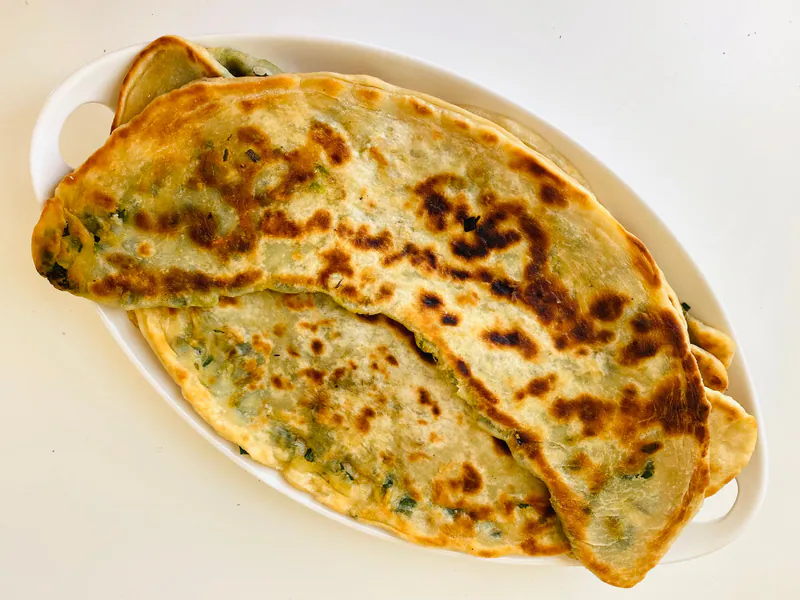
Aloo paratha
Punjabi · 1 h 15 min · 430 kcal · Vegetarian