
Levantine · Lebanese · Palestinian
Labneh (strained yoghurt cheese)
Vegetarian
لبنة · labna
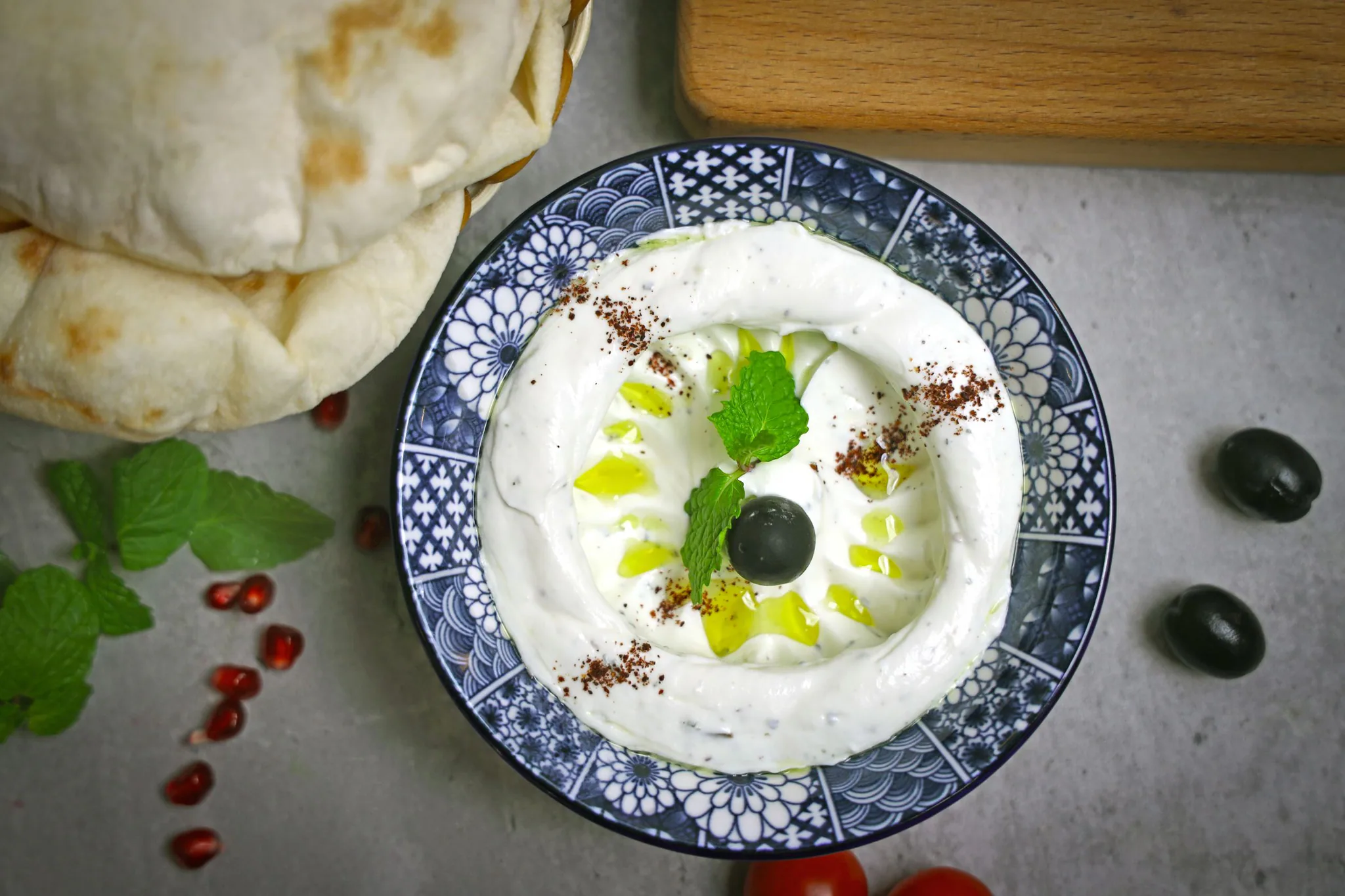
Full-fat yoghurt salted and hung in muslin until it becomes a thick, tangy, spreadable cheese. The everyday breakfast spread of the Levant, eaten with olive oil, za'atar and bread, and the base of many dips.
Labneh (strained yoghurt cheese) is a Levantine dip, ready in about 24 hours 10 minutes and made with yogurt. It serves 10 and is rated beginner to cook.
- Prep
- 10 min
- Cook
- 0 min
- Rest
- 24 h
- Total
- 24 h 10 min
- Serves
- 10
- Level
- Beginner
- Calories
- 73
Mostly unattended straining in the fridge; 12 hours for soft labneh, 24 hours for thick.
Method
Step 1
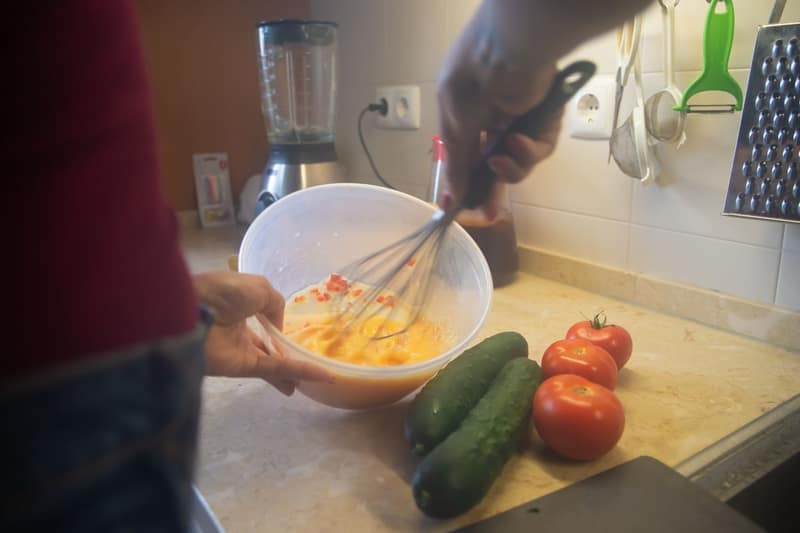
Whisk (opens in a new tab) the salt into the yoghurt (opens in a new tab) in a mixing bowl (opens in a new tab) until completely dissolved and smooth.
How it looks · Photo: Kampus Production on Pexels Step 2
Line a sieve with a double layer of muslin or cheesecloth (or a clean, thin cotton tea towel rinsed in boiling water and wrung out) and set it over a deep bowl so there are at least 5 cm between the bottom of the sieve and the bowl.

How it looks · Photo: Katerina Holmes on Pexels Step 3
Pour in the yoghurt (opens in a new tab), fold the cloth over the top (or gather it into a bundle and tie it to a wooden spoon resting across a tall pot) and refrigerate. Strain 12 hours for a soft, spoonable labneh like thick Greek yoghurt; 24 hours for a dense, spreadable labneh like cream cheese; 36–48 hours, squeezing gently once or twice, for labneh firm enough to roll into balls.
About 500 ml of whey drains from 1 kg yoghurt in 24 hours. Use it in bread dough, smoothies or to marinate chicken.
Step 4
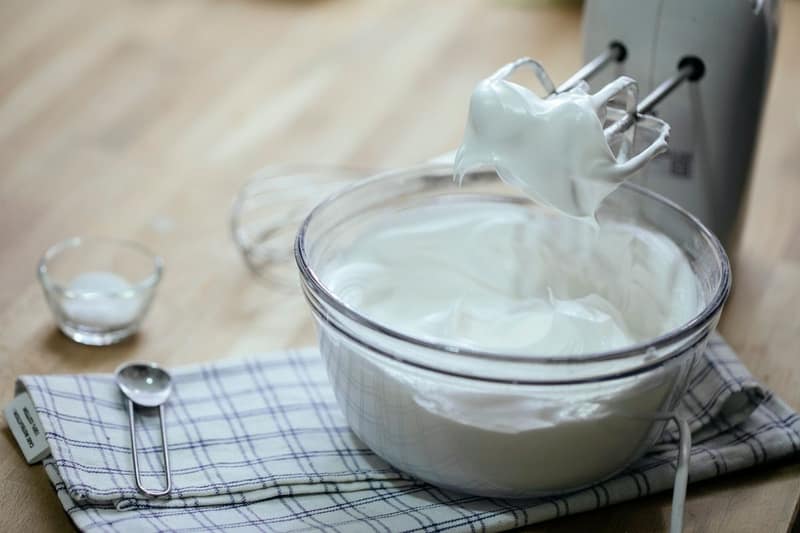
Scrape the labneh off the cloth into a clean container. Stir it smooth; it should be thick, glossy and hold soft peaks. To serve, spread it in a shallow bowl, make a swirl with the back of a spoon and fill the hollow with olive oil (opens in a new tab).
How it looks · Photo: Katerina Holmes on Pexels
About this dish
- Origin
- Levant · Commonly attributedStrained yoghurt is made across the Levant, Turkey (süzme yoğurt), Greece, Iran and South Asia (hung curd); labneh is the Levantine name for the thick, salted version.Also popular in Lebanon, Syria, Palestine, Jordan, Israel
- Dish
- Breakfast · Lunch · Snack · Dips & spreads · Condiments, chutneys & relishes
- Cooking method
- No-cook
- Taste
- tangy, creamy, salty
- Diet
- Vegetarian (lacto-ovo) · No gluten ingredients · No nut ingredients · Low-carbWorked out from the ingredients. How labels work
All labels
Vegetarian (lacto-ovo) · Eggetarian · Lacto-vegetarian · Pescatarian · Flexitarian-friendly · Whole-food focused · No gluten ingredients · Egg-free · No nut ingredients · No added sugar · Alcohol-free · Pork-free · Beef-free · Mediterranean-style · Low-carb - Good for
- Make-ahead · Budget-friendly · Everyday
- Cook more with
- Yogurt
- Techniques
- Boiling
Allergens
- Contains: Milkfrom yogurt
Based on typical versions of these ingredients and not verified allergen-free. Brands differ and cross-contact happens, so always check labels. For severe allergies, follow your clinician’s advice.
Nutrition
73 kcal per serving
Calculated1 serving ≈ 46 g · recipe makes 10
Where the energy comes from
- Protein 19%
- Carbohydrate 25%
- Fat 56%
| Nutrient | Per serving | Per 100 g |
|---|---|---|
| Energy | 73 kcal | 159 kcal |
| Protein | 3.5 g | 7.5 g |
| Carbohydrate | 4.7 g | 10.1 g |
| Net carbohydrate | 4.7 g | 10.1 g |
| Sugars | 4.7 g | 10.1 g |
| Added sugars | 0 g | 0 g |
| Fibre | 0 g | 0 g |
| Fat | 4.6 g | 10 g |
| Saturated fat | 2.3 g | 5 g |
| Trans fat | — | — |
| Cholesterol | 13 mg | 28 mg |
| Sodium | 240 mg | 521 mg |
| Salt equivalent | 0.6 g | 1.3 g |
Vitamins & minerals per serving
- Potassium
- 155 mg
- Calcium
- 121 mg
- Iron
- 0.1 mg
- Magnesium
- 12 mg
- Vitamin A (RAE)
- 27 µg
- Vitamin C
- 1 mg
- Vitamin D
- 0.1 µg
- Vitamin B12
- 0.4 µg
- Folate (DFE)
- 7 µg
How these numbers were made
- Calculated from USDA FoodData Central (SR Legacy) per-100 g values and the listed quantities.
- “—” means the value isn’t known for enough of the ingredients; it is never zero by default.
- Values are estimates for guidance, not for medical dosing. U.S. Department of Agriculture, Agricultural Research Service. FoodData Central, 2019. fdc.nal.usda.gov.
Good to know
Tips
- Goat's or sheep's milk yoghurt makes a sharper, more traditional-tasting labneh.
- If your kitchen is cool you can start straining at room temperature for the first 2–3 hours for extra tang, then move it to the fridge.
Common mistakes
- Using low-fat or stabilised yoghurt, which drains poorly and tastes chalky.
- Straining at room temperature overnight in a warm kitchen; it turns sour and can spoil.
- Forgetting the salt, which seasons it and helps it keep.
Serve with
- With olive oil, za'atar, olives, cucumber, tomato and warm khubz for breakfast.
- Spread inside manakish or a wrap with vegetables.
- As a cool base under roasted vegetables or spiced lamb.
Food safety
- Keep chilled and do not leave yoghurt- or cheese-based dips out of the fridge for more than 2 hours (1 hour in hot weather).
- Use pasteurised yoghurt and strain in the fridge; always lift labneh balls out of the oil with a clean, dry spoon.
Storage
- Refrigerate in a covered container for 7–10 days. Labneh balls (makbouseh) rolled from 48-hour labneh and covered completely with olive oil in a clean jar keep 3–4 weeks in the fridge; the oil solidifies when cold.
Variations
- Labneh makbouseh (labneh balls in oil): Roll 48-hour labneh into walnut-sized balls with oiled hands, chill on a tray overnight, then pack in a jar under olive oil; some roll them in za'atar, dried mint or Aleppo pepper.
- Shanklish (Syria): In Syria and northern Lebanon drained yoghurt is further cured, aged and rolled in za'atar and chilli into a pungent cheese.
- Süzme yoğurt (Türkiye): The Turkish strained yoghurt, usually unsalted and less thick, used as a base for haydari and atom.
Original editorial recipe · FriendsPantry editorial · Not yet independently reviewed · Added · Updated
Goes with
Recipe DNA
How this dish is built
Make it milder, swap ingredients for your diet, change the batch size or thickness — the original stays as it is.
Customise in Sauce & DrizzleReviews & corrections
Reviews come from signed-in cooks and appear after a moderator checks them. We never show made-up ratings.
You might also like
Labneh with za'atar and olive oil
Levantine · 8 min · 125 kcal · Vegetarian
Haydari
 Turkish · 40 min · 142 kcal · Vegetarian
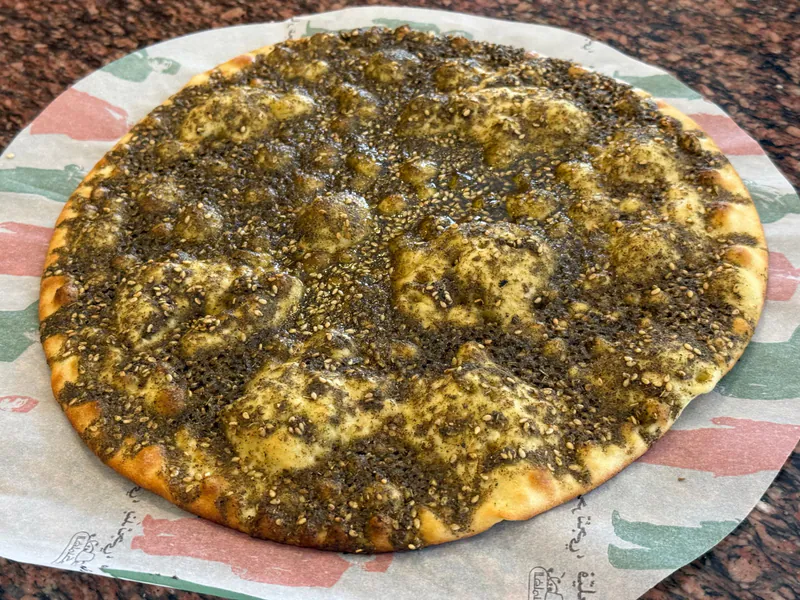
Manakish za'atar
 Lebanese · 1 h 41 min · 424 kcal · Vegetarian
Tzatziki
 Greek · 45 min · 131 kcal · Vegetarian