
Luqaimat
Vegetarian
لقيمات · luqaymāt
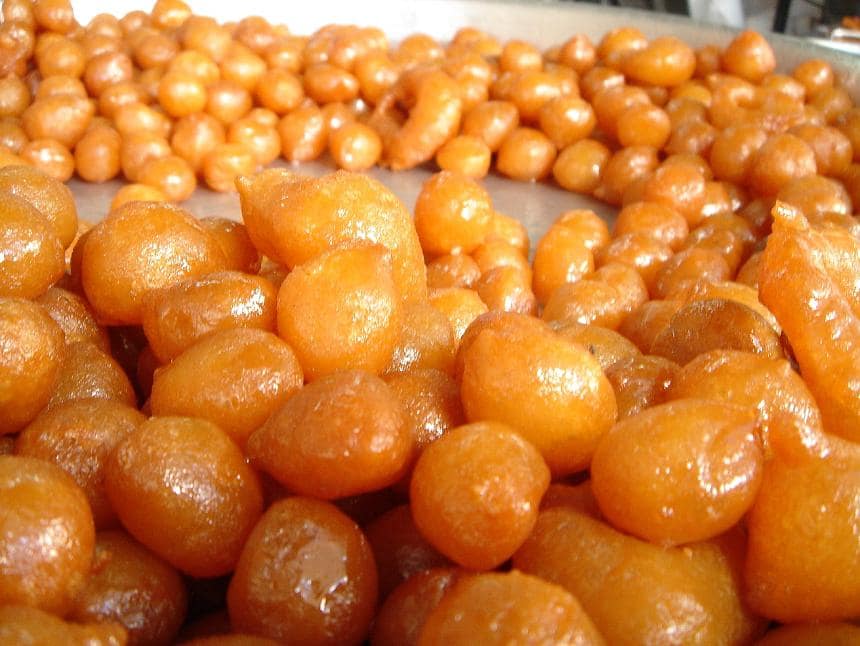
Little balls of saffron- and cardamom-scented yeast batter fried until crisp and golden outside and airy inside, then drizzled with date syrup or honey and sesame.
Luqaimat is a Gulf Arab dessert, ready in about 1 hour 35 minutes and made with all-purpose flour and honey. It serves 6 and is rated advanced to cook.
- Prep
- 10 min
- Cook
- 25 min
- Rest
- 1 h
- Total
- 1 h 35 min
- Serves
- 6
- Level
- Advanced
- Calories
- 321
Method
Step 1
Whisk (opens in a new tab) the flour, cornflour (opens in a new tab), yeast, sugar (opens in a new tab), cardamom (opens in a new tab) and salt. Add the saffron (opens in a new tab) water, yogurt (opens in a new tab) and warm water and beat to a smooth, thick batter like a soft cake batter.
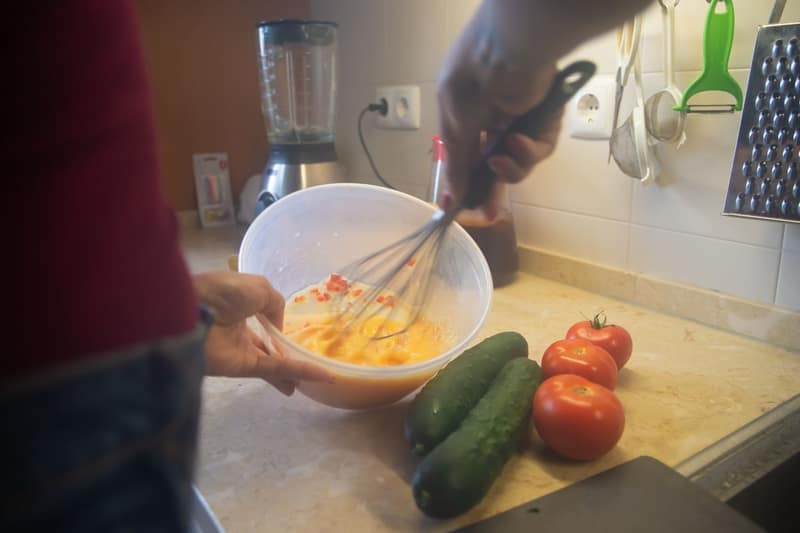
How it looks · Photo: Kampus Production on Pexels Step 2
Cover and leave in a warm place until doubled and bubbly.
- 1 min
Step 3
Heat the oil to 170 °C. Squeeze small balls of batter through your fist (or drop from an oiled teaspoon) into the oil and fry in batches, turning, until deep golden and crisp.
Food safety: Never fill the pan more than a third with oil; keep children away and don't leave hot oil unattended.
Step 4
Drain on kitchen paper, then toss with the honey (opens in a new tab) or date syrup while warm and sprinkle with sesame (opens in a new tab).
- 3 min
How it looks · Photo: Klaus Nielsen on Pexels
About this dish
- Origin
- Not attributed to one place · Commonly attributedPopular across the Gulf, especially during Ramadan; similar fried dough balls are made throughout the Middle East.Also popular in United Arab Emirates, Saudi Arabia
- Dish
- Dessert · Snack · Desserts · Sweets & confectionery · Street food
- Cooking method
- Deep-fried
- Taste
- sweet, aromatic / warmly spiced, mild
- Diet
- Vegetarian (lacto-ovo) · No nut ingredientsWorked out from the ingredients. How labels work
All labels
Vegetarian (lacto-ovo) · Eggetarian · Lacto-vegetarian · Pescatarian · Flexitarian-friendly · Egg-free · No nut ingredients · Alcohol-free · Pork-free · Beef-free · Low-sodium · DASH-style - Good for
- Festive & celebration · Street food
- Cook more with
- All-purpose flour · Honey · Cornstarch · Dried yeast · Sugar · Cardamom
- Techniques
- Deep-frying · Fermentation
Allergens
- Contains: Milkfrom yogurt
- Contains: Wheatfrom all-purpose flour
- Contains: Glutenfrom all-purpose flour
- Contains, can be adapted: Sesamefrom sesame seeds
Based on typical versions of these ingredients and not verified allergen-free. Brands differ and cross-contact happens, so always check labels. For severe allergies, follow your clinician’s advice.
Nutrition
321 kcal per serving
Calculated1 serving ≈ 128 g · recipe makes 6
Where the energy comes from
- Protein 6%
- Carbohydrate 64%
- Fat 30%
| Nutrient | Per serving | Per 100 g* |
|---|---|---|
| Energy | 321 kcal | 250 kcal |
| Protein | 5 g | 3.9 g |
| Carbohydrate | 52.4 g | 40.8 g |
| Net carbohydrate | 50.9 g | 39.6 g |
| Sugars | 18.9 g | 14.7 g |
| Added sugars | 18.5 g | 14.4 g |
| Fibre | 1.5 g | 1.2 g |
| Fat | 10.7 g | 8.3 g |
| Saturated fat | 1.2 g | 0.9 g |
| Trans fat | — | — |
| Cholesterol | 1 mg | 1 mg |
| Sodium | 103 mg | 80 mg |
| Salt equivalent | 0.3 g | 0.2 g |
Vitamins & minerals per serving
- Potassium
- 76 mg
- Calcium
- 19 mg
- Iron
- 2.1 mg
- Magnesium
- 12 mg
- Vitamin A (RAE)
- 1 µg
- Vitamin C
- 0 mg
- Vitamin D
- —
- Vitamin B12
- 0 µg
- Folate (DFE)
- 149 µg
How these numbers were made
- Calculated from USDA FoodData Central (SR Legacy) per-100 g values and the listed quantities.
- *Per 100 g of combined raw ingredients; the cooked dish may weigh more or less.
- Optional ingredients are not included: saffron, sesame seeds.
- “—” means the value isn’t known for enough of the ingredients; it is never zero by default.
- Values are estimates for guidance, not for medical dosing. U.S. Department of Agriculture, Agricultural Research Service. FoodData Central, 2019. fdc.nal.usda.gov.
Good to know
Tips
- Dip the spoon in water or oil between drops so the sticky batter slides off cleanly.
Common mistakes
- Oil too hot — the outsides brown before the centres cook through.
Serve with
- Serve warm with Arabic coffee or karak chai.
Storage
- Best eaten within an hour or two of frying.
Original editorial recipe · FriendsPantry editorial · Not yet independently reviewed · Added · Updated
Recipe DNA
How this dish is built
Grouped by each ingredient’s role in the dish. Each band’s width is its share of the dish by weight. Choose a component to see what it does.
Baker’s notes
Customise in Bread & BakeryTimeline and readiness cues
Mix and knead · about 30 min
Weigh everything. Knead until smooth and elastic: a small piece stretches thin enough to see light through (the windowpane test).
First rise (bulk) · about 1 h
About doubled, domed, jiggly, with bubbles on the sides. A floured finger poked in leaves a dent that fills slowly.
Bake · about 22 min
Deep golden; bread sounds hollow when tapped underneath, or reads 93–96 °C inside (enriched breads 88–90 °C).
- Start to finish: about 1 h 52 min. Times are a guide — warmth changes everything; follow the cues.
If something goes wrong
Pale crust
Likely causes
- Oven too cool
- Too little sugar or no milk/egg for browning
- Over-fermented (yeast ate the sugars)
What to do
- Check the oven with a thermometer
- Brush with egg wash or milk
- Shorten the fermentation
Burnt bottom
Likely causes
- Tray too close to the heat
- Dark tray absorbs more heat
- Too much sugar in the dough
What to do
- Bake on the middle shelf
- Double up trays or use a light-coloured one
- Lower the temperature 10–15 °C and bake a little longer
Dough didn't rise
Likely causes
- Dead yeast (expired or killed by hot liquid)
- Kitchen too cold
- Salt in direct contact with fresh yeast
- Starter not active
What to do
- Liquid should be lukewarm (no hotter than 40 °C)
- Proof somewhere warm (an oven with just the light on)
- Mix the salt into the flour, not onto the yeast
- Feed the starter until it doubles in 4–8 hours
Over-proofed (sour smell, collapses when scored)
Likely causes
- Too warm
- Too much yeast
- Left too long
What to do
- Knock back, reshape and proof again briefly (yeast doughs)
- Use less yeast or a cooler proof
- Set a timer and check early with the poke test
Reviews & corrections
Reviews come from signed-in cooks and appear after a moderator checks them. We never show made-up ratings.
You might also like

Karak chai
Gulf Arab · 12 min · 145 kcal · Vegetarian
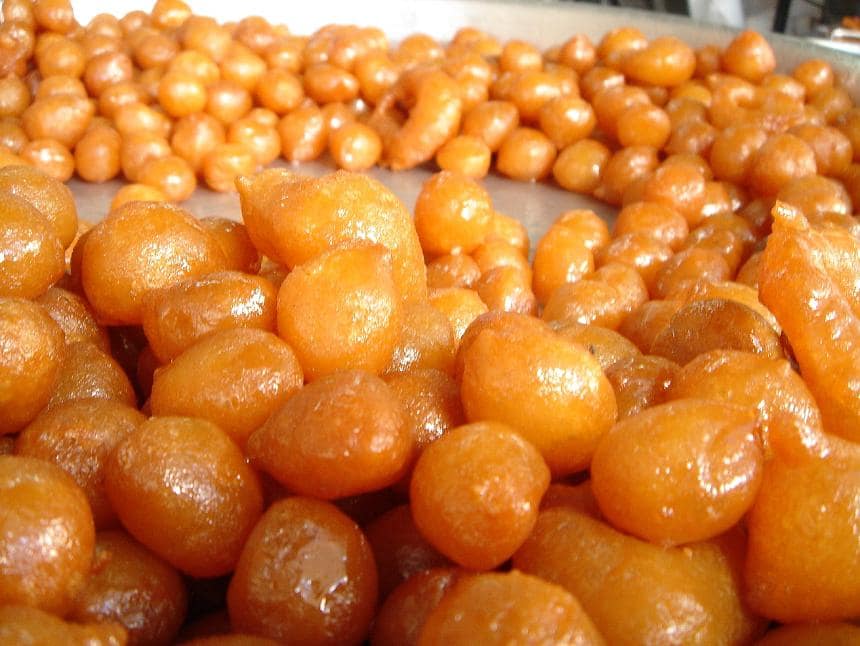
Loukoumades
 Greek · 1 h 40 min · 376 kcal · Vegetarian
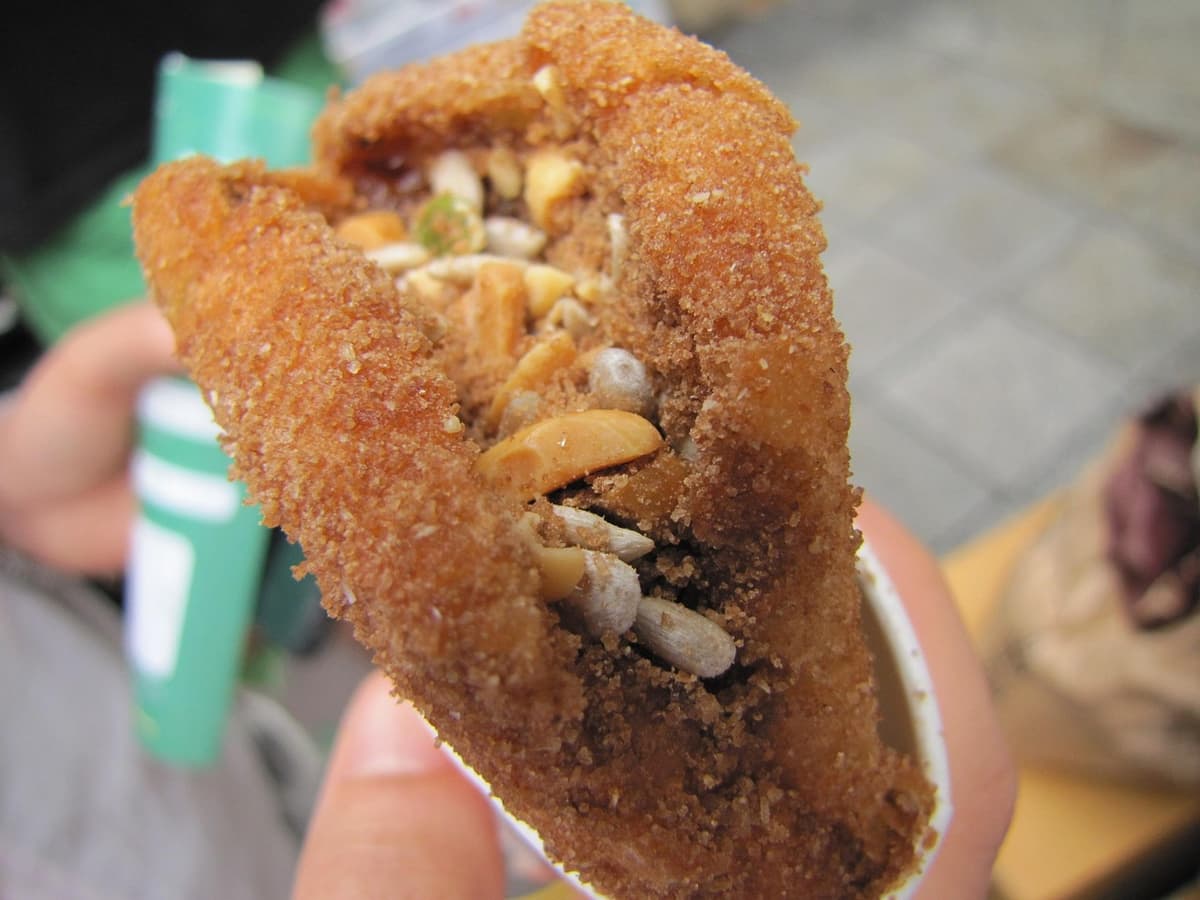
Hotteok
 Korean · 1 h 40 min · 273 kcal · Vegetarian
Churros con chocolate
 Spanish · 55 min · 683 kcal · Vegetarian