
Saltah
Non-vegetarian
سلتة · saltah
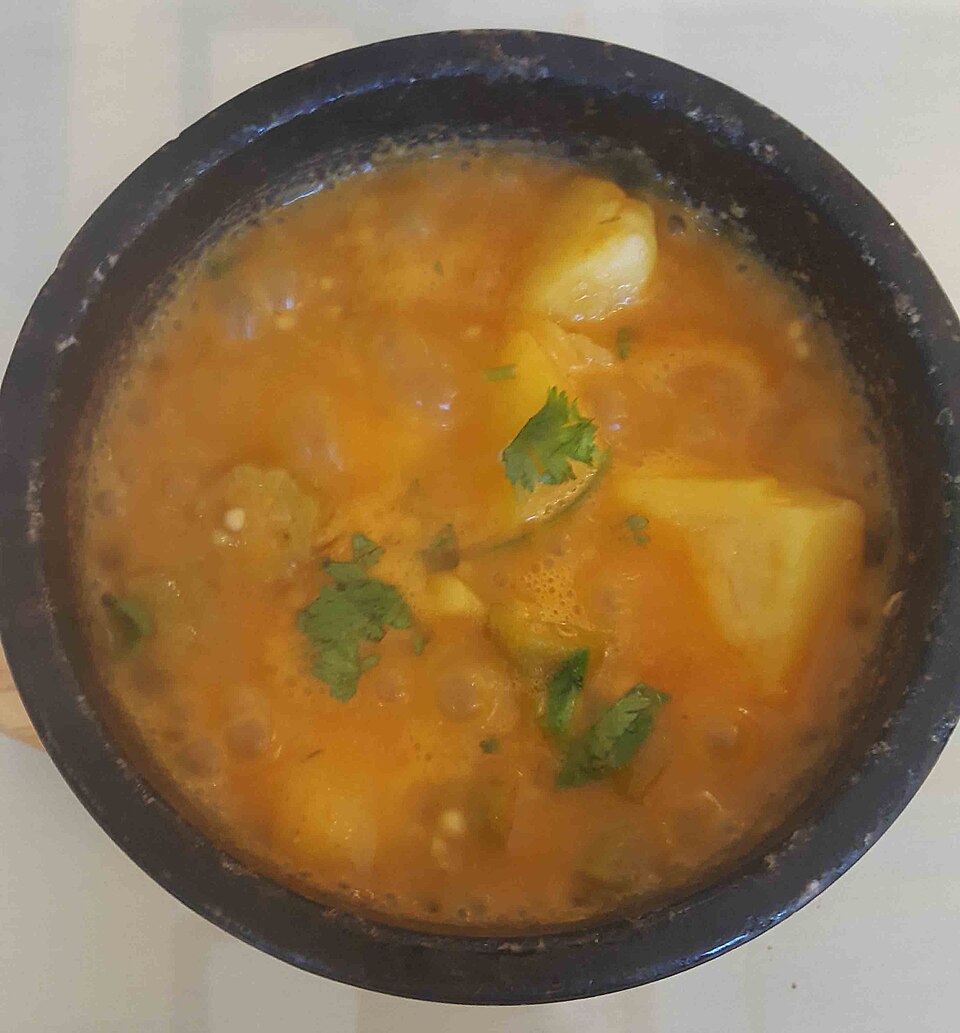
A bubbling stew of lamb broth, minced lamb, potato and tomato spiced with hawaij, brought to the table seething hot and crowned with a frothy, bitter-green fenugreek whip called hilbeh. Yemen's national dish, eaten at lunch with flatbread.
Saltah is a Yemeni stew, ready in about 2 hours 55 minutes and made with fenugreek and ground lamb. It serves 4 and is rated intermediate to cook.
- Prep
- 20 min
- Cook
- 35 min
- Total
- 2 h 55 min
- Serves
- 4
- Level
- Intermediate
- Calories
- 411
Includes about 2 hours soaking the fenugreek.
Ingredients
For the hilbeh
For the stew
Method
Step 1
Soak the ground fenugreek (opens in a new tab) in plenty of water for at least 2 hours, then pour off the water, which carries away much of the bitterness.
- 2 min
Step 2
Blend the soaked fenugreek (opens in a new tab) with the cilantro (opens in a new tab), garlic (opens in a new tab), chilli, lemon juice (opens in a new tab) and salt, then whisk (opens in a new tab) hard, adding cold water a spoonful at a time, until it turns pale, frothy and doubles in volume.
Step 3
Heat the ghee (opens in a new tab) in a heavy pot and soften the onion (opens in a new tab). Add the garlic (opens in a new tab) and lamb and fry until browned, then stir in the spices.
- 10 min
- medium-high heat
- Dutch oven / casserole pot (opens in a new tab)
Food safety: Cook mince until no pink remains.
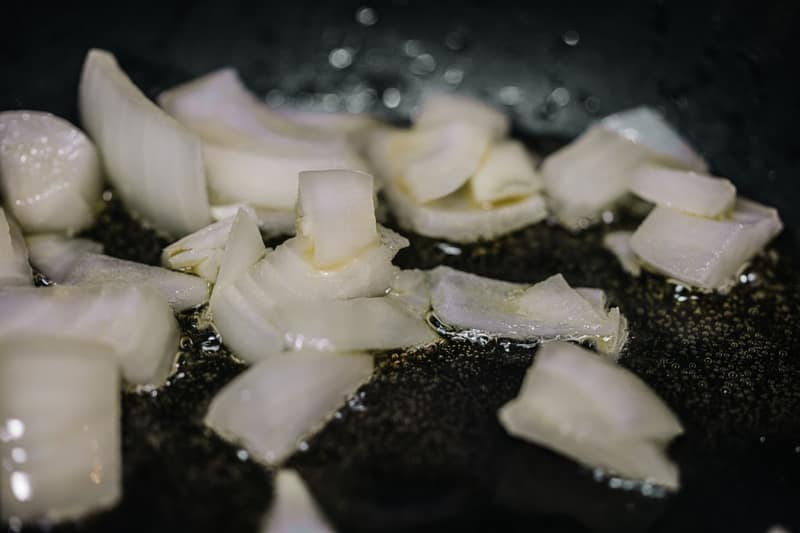
How it looks · Photo: Magda Ehlers on Pexels Step 4
Add the tomatoes (opens in a new tab), potatoes (opens in a new tab), chilli, stock and salt and simmer until the potatoes are soft and the stew is thick. Crack in the eggs (opens in a new tab), if using, and cook until set.
- 20 min
- medium heat
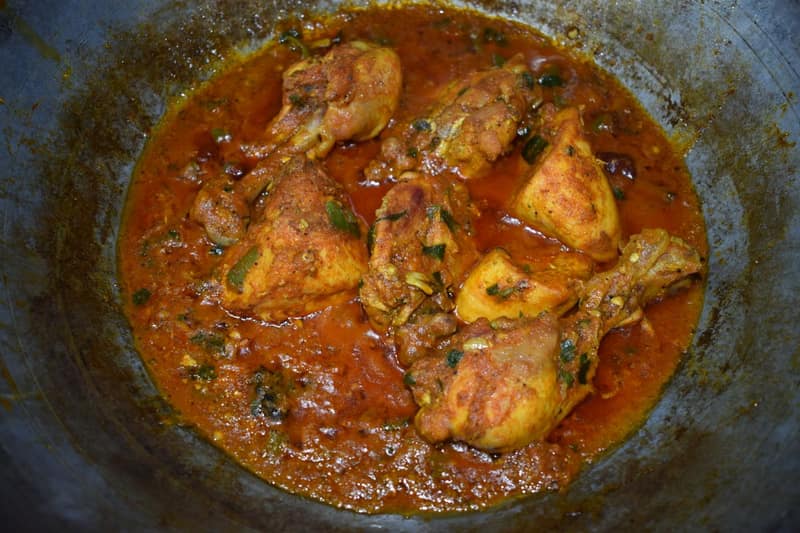
How it looks · Photo: Bachir Mamud on Pexels Step 5
Serve the stew very hot — ideally in a preheated stone or cast-iron pot so it is still bubbling — with the hilbeh spooned on top and bread to scoop.
- 2 min

How it looks · Photo: Willians Huerta on Pexels
About this dish
- Origin
- Sana'a, Yemen · Well documentedWidely regarded as the national dish of Yemen, associated especially with Sana'a.More food from Yemen
- Dish
- Lunch · Stews & braises · Main courses
- Cooking method
- Stewed, Simmered, Whipped
- Taste
- bitter, spicy (chilli heat), savoury, aromatic / warmly spiced
- Diet
- No nut ingredientsWithout the optional extras: Whole-food focused, No gluten ingredients, Egg-freeWith the listed swaps: Dairy-freeWorked out from the ingredients. How labels work
All labels
Non-vegetarian · No nut ingredients · No added sugar · Alcohol-free · Pork-free · Beef-free · Carb-conscious · Calorie-conscious - Cook more with
- Fenugreek · Ground lamb · Coriander leaves · Garlic · Green chilli · Lemon juice
- Techniques
- Simmering · Stewing · Emulsification
Allergens
- Contains, can be adapted: Milkfrom ghee
- Contains, can be adapted: Eggsfrom egg
- Contains, can be adapted: Wheatfrom pita bread
- Contains, can be adapted: Glutenfrom pita bread
- May contain: Sesamefrom pita bread
- May contain: Celeryfrom chicken stock
Based on typical versions of these ingredients and not verified allergen-free. Brands differ and cross-contact happens, so always check labels. For severe allergies, follow your clinician’s advice.
Nutrition
411 kcal per serving
Calculated1 serving ≈ 445 g · recipe makes 4
Where the energy comes from
- Protein 17%
- Carbohydrate 32%
- Fat 51%
| Nutrient | Per serving | Per 100 g* |
|---|---|---|
| Energy | 411 kcal | 92 kcal |
| Protein | 18.3 g | 4.1 g |
| Carbohydrate | 33 g | 7.4 g |
| Net carbohydrate | 27.7 g | 6.2 g |
| Sugars | 5.9 g | 1.3 g |
| Added sugars | 0 g | 0 g |
| Fibre | 5.3 g | 1.2 g |
| Fat | 23.7 g | 5.3 g |
| Saturated fat | 11.1 g | 2.5 g |
| Trans fat | — | — |
| Cholesterol | 67 mg | 15 mg |
| Sodium | 818 mg | 184 mg |
| Salt equivalent | 2 g | 0.5 g |
Vitamins & minerals per serving
- Potassium
- 1009 mg
- Calcium
- 73 mg
- Iron
- 5 mg
- Magnesium
- 70 mg
- Vitamin A (RAE)
- 106 µg
- Vitamin C
- 42 mg
- Vitamin D
- 0.1 µg
- Vitamin B12
- 1.4 µg
- Folate (DFE)
- 56 µg
How these numbers were made
- Calculated from USDA FoodData Central (SR Legacy) per-100 g values and the listed quantities.
- *Per 100 g of combined raw ingredients; the cooked dish may weigh more or less.
- Optional ingredients are not included: egg, pita bread.
- “—” means the value isn’t known for enough of the ingredients; it is never zero by default.
- Values are estimates for guidance, not for medical dosing. U.S. Department of Agriculture, Agricultural Research Service. FoodData Central, 2019. fdc.nal.usda.gov.
Good to know
Tips
- Whip the hilbeh just before serving; it slowly deflates.
Common mistakes
- Skipping the soak — unsoaked fenugreek is harshly bitter and won't whip up light.
Serve with
- Eat with torn flatbread instead of cutlery, Yemeni style.
Storage
- Keep the stew 2 days in the fridge; make the hilbeh fresh.
Reheating
- Reheat until bubbling.
Variations
- Fahsa: A related stew of shredded lamb rather than mince.
Original editorial recipe · FriendsPantry editorial · Not yet independently reviewed · Added · Updated
Sauces, chutneys & dips for this dish
Recipe DNA
How this dish is built
Built from the recipe’s own sections. Each band’s width is its share of the dish by weight. Choose a component to see what it does.
Reviews & corrections
Reviews come from signed-in cooks and appear after a moderator checks them. We never show made-up ratings.
You might also like
Chicken mandi
 Yemeni · 3 h 45 min · 866 kcal
Zhug
Yemeni · 10 min · 90 kcal · VeganBint al sahn
Yemeni · 2 h 35 min · 474 kcal · Contains eggFahsa
Yemeni · 2 h 10 min · 618 kcal