
Kare-kare
Non-vegetarian
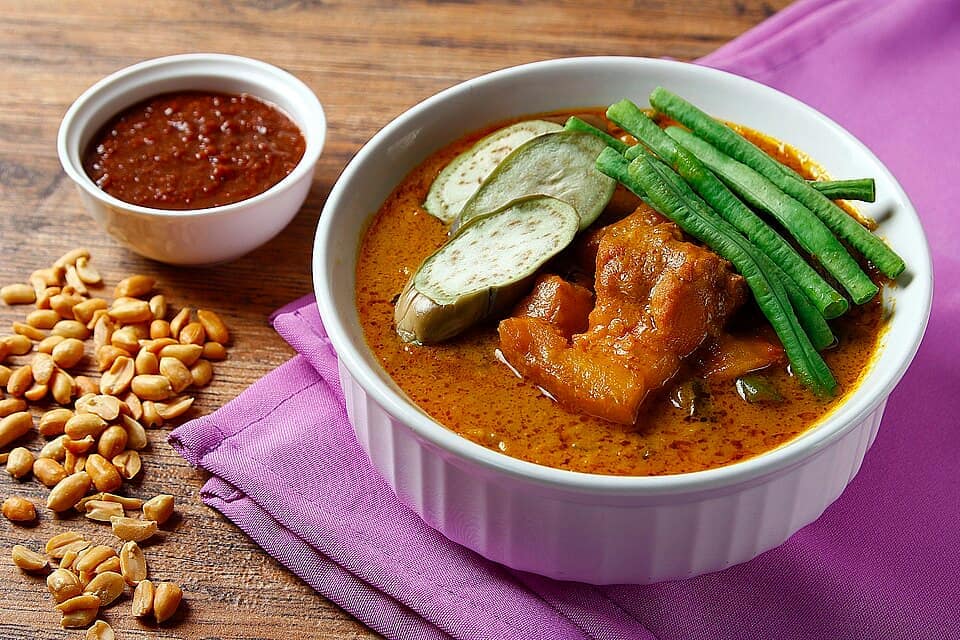
Beef braised until tender in a thick, mild peanut and toasted rice sauce with aubergine, long beans and bok choy, served with salty shrimp paste on the side.
Kare-kare is a Filipino stew from Philippines, ready in about 3 hours 5 minutes and made with beef chuck and peanut butter. It serves 6 and is rated intermediate to cook.
- Prep
- 20 min
- Cook
- 2 h 45 min
- Total
- 3 h 5 min
- Serves
- 6
- Level
- Intermediate
- Calories
- 441
Method
Step 1
Simmer the beef in the water with the salt, skimming, until very tender. Reserve about 1 litre of the broth.
- 140 min
- low heat
- Dutch oven / casserole pot (opens in a new tab)
A pressure cooker does this in about 40 minutes.
Step 2
Toast the rice in a dry pan until golden and nutty, then grind to a powder.
- 8 min
- medium heat
- Frying pan / skillet (opens in a new tab)
Step 3
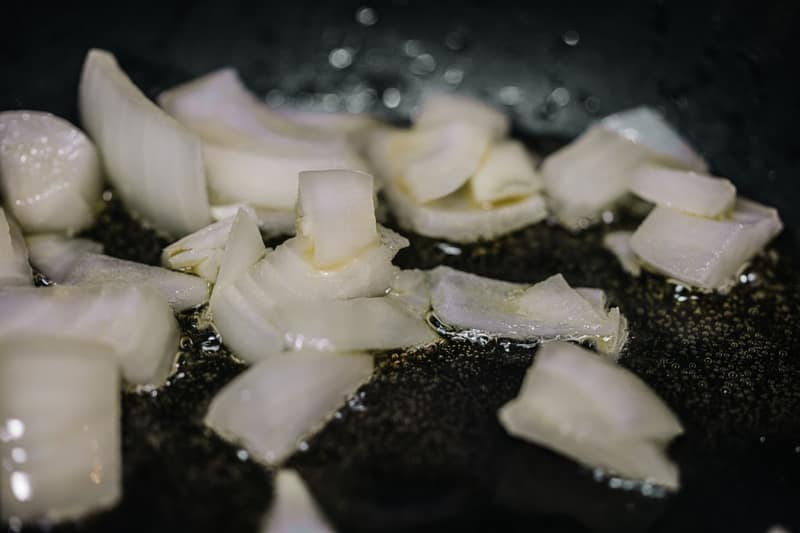
In a clean pot, fry the onion (opens in a new tab) and garlic (opens in a new tab) in the oil until soft, stir in the paprika (opens in a new tab), then the beef. Add the reserved broth and whisk in the peanut butter (opens in a new tab).
- 6 min
- medium heat
How it looks · Photo: Magda Ehlers on Pexels Step 4
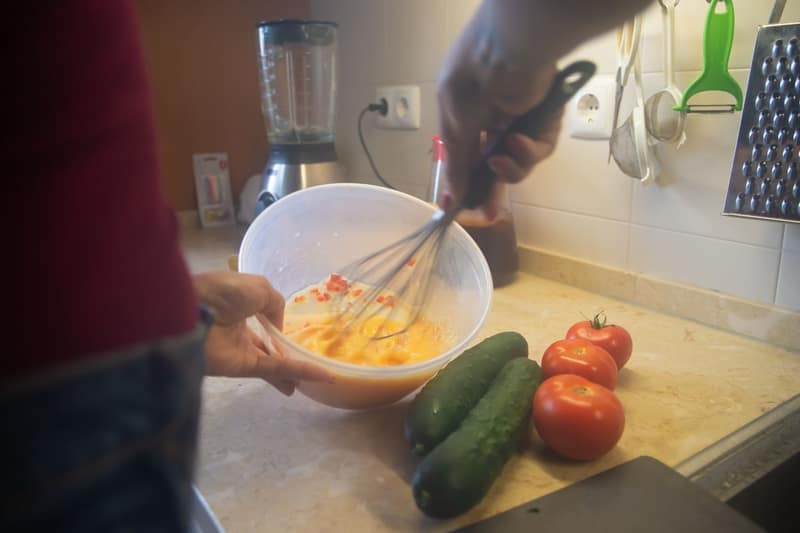
Whisk the ground rice with a little broth, stir it in and simmer until the sauce is thick and smooth.
- 5 min
- medium-low heat
How it looks · Photo: Kampus Production on Pexels Step 5
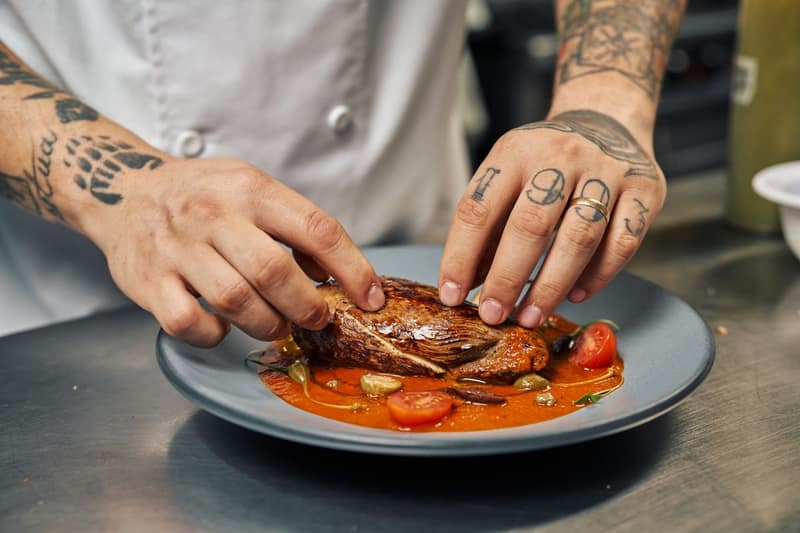
Add the aubergine (opens in a new tab) and beans and simmer until tender, then the bok choy (opens in a new tab) for the last 2 minutes. Serve with bagoong and rice.
- 8 min
- medium-low heat
How it looks · Photo: Willians Huerta on Pexels
About this dish
- Origin
- Philippines · Well documentedIts earlier history is debated.More food from Philippines
- Dish
- Lunch · Dinner · Stews & braises · Main courses
- Cooking method
- Braised, Simmered
- Taste
- nutty, rich, mild, savoury
- Diet
- No gluten ingredients · Dairy-free · Low-carb · High-proteinWorked out from the ingredients. How labels work
All labels
Non-vegetarian · No gluten ingredients · Dairy-free · Egg-free · No added sugar · Alcohol-free · Pork-free · Low-carb · High-protein · Calorie-conscious - Good for
- Festive & celebration · Make-ahead · Batch cooking
- Cook more with
- Beef chuck · Peanut butter · Glutinous rice · Onion · Garlic · Paprika
- Techniques
- Simmering · Braising · Dry grinding
Allergens
- Contains, can be adapted: Crustaceansfrom shrimp paste
- Contains: Peanutsfrom peanut butter
Based on typical versions of these ingredients and not verified allergen-free. Brands differ and cross-contact happens, so always check labels. For severe allergies, follow your clinician’s advice.
Nutrition
441 kcal per serving
Calculated1 serving ≈ 522 g · recipe makes 6
Where the energy comes from
- Protein 38%
- Carbohydrate 17%
- Fat 45%
| Nutrient | Per serving | Per 100 g* |
|---|---|---|
| Energy | 441 kcal | 85 kcal |
| Protein | 43.5 g | 8.3 g |
| Carbohydrate | 19.6 g | 3.8 g |
| Net carbohydrate | 15 g | 2.9 g |
| Sugars | 6.4 g | 1.2 g |
| Added sugars | 0 g | 0 g |
| Fibre | 4.7 g | 0.9 g |
| Fat | 22.7 g | 4.3 g |
| Saturated fat | 5.6 g | 1.1 g |
| Trans fat | 0.4 g | 0.1 g |
| Cholesterol | 107 mg | 20 mg |
| Sodium | 760 mg | 146 mg |
| Salt equivalent | 1.9 g | 0.4 g |
Vitamins & minerals per serving
- Potassium
- 1092 mg
- Calcium
- 130 mg
- Iron
- 5.1 mg
- Magnesium
- 102 mg
- Vitamin A (RAE)
- 141 µg
- Vitamin C
- 30 mg
- Vitamin D
- 0.2 µg
- Vitamin B12
- 3.8 µg
- Folate (DFE)
- 82 µg
How these numbers were made
- Calculated from USDA FoodData Central (SR Legacy) per-100 g values and the listed quantities.
- *Per 100 g of combined raw ingredients; the cooked dish may weigh more or less.
- Optional ingredients are not included: shrimp paste.
- “—” means the value isn’t known for enough of the ingredients; it is never zero by default.
- Values are estimates for guidance, not for medical dosing. U.S. Department of Agriculture, Agricultural Research Service. FoodData Central, 2019. fdc.nal.usda.gov.
Good to know
Tips
- Blanch the vegetables separately and arrange them on top if you want them bright green.
Common mistakes
- Seasoning the sauce heavily — the salty bagoong on the side is meant to do that job.
Serve with
- Serve with steamed rice and bagoong alamang.
Food safety
- Simmer the beef until very tender; refrigerate leftovers within 2 hours and reheat to a full boil.
- Bagoong is fermented: keep opened jars refrigerated.
Storage
- Refrigerate for up to 3 days (store the vegetables separately if possible).
Reheating
- Reheat gently with a splash of water; the sauce thickens on standing.
Variations
- Seafood or vegetable kare-kare: Use prawns and mussels, or tofu and extra vegetables, with vegetable stock.
Original editorial recipe · FriendsPantry editorial · Not yet independently reviewed · Added · Updated
Recipe DNA
How this dish is built
Grouped by each ingredient’s role in the dish. Each band’s width is its share of the dish by weight. Choose a component to see what it does.
What the dish is built around
Main ingredient
- Beef chuck, chuck or shank in large chunks1000 g
- Glutinous rice, toasted in a dry pan until golden, then ground40 g
- Peanut butter, smooth, unsweetened120 g
- Eggplant, cut into thick slices300 g
- Green beans, long beans, cut into 5 cm lengths200 g
- Bok choy, halved300 g
Reviews & corrections
Reviews come from signed-in cooks and appear after a moderator checks them. We never show made-up ratings.
You might also like
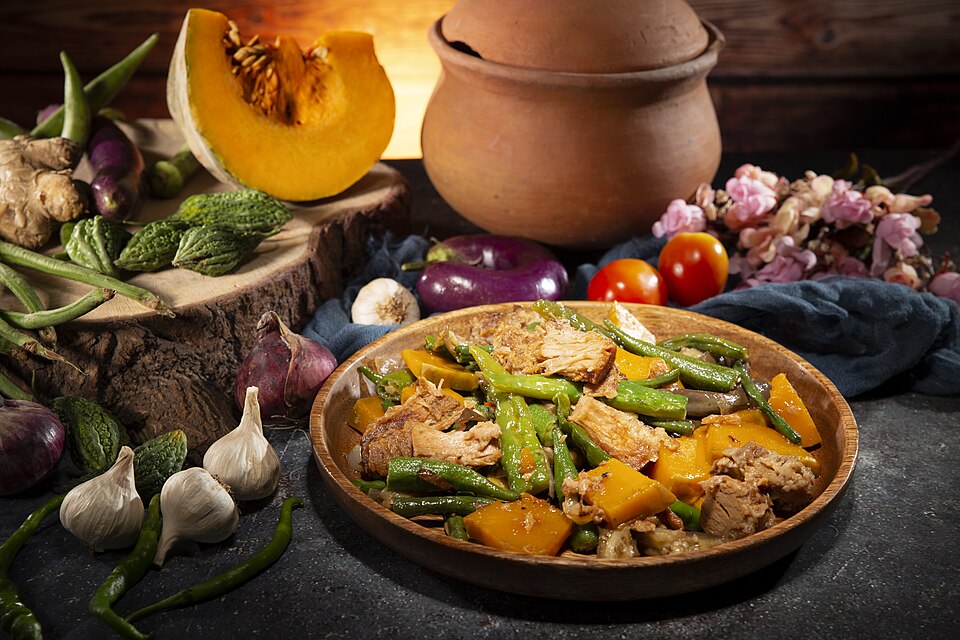
Pinakbet
 Filipino · 50 min · 355 kcal
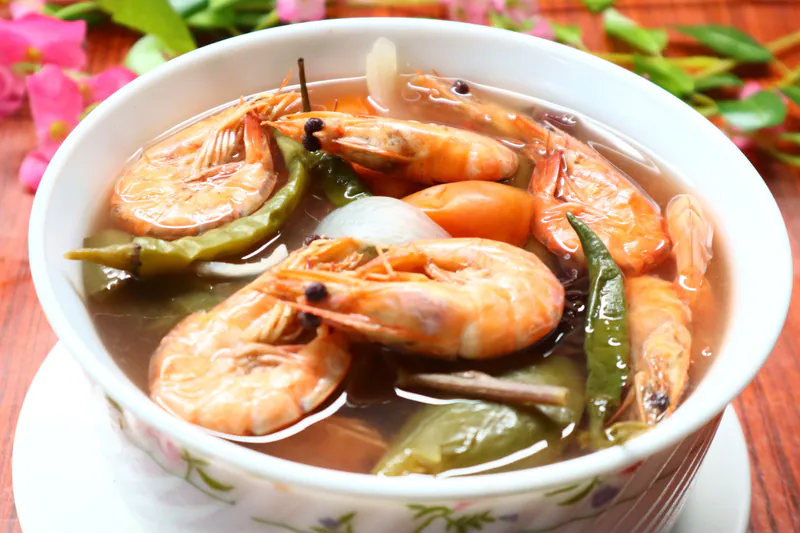
Sinigang na hipon
Filipino · 40 min · 220 kcal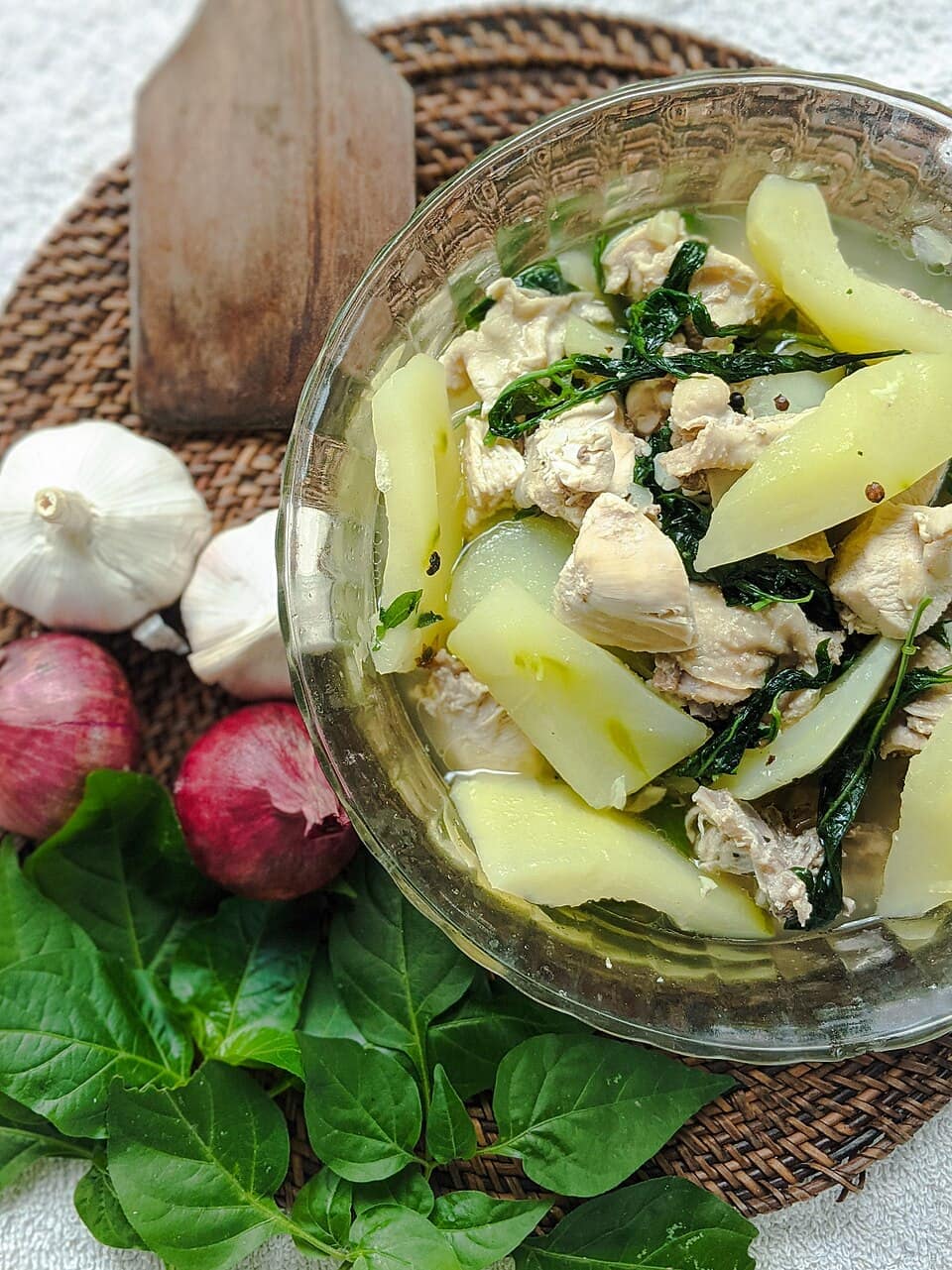
Chicken tinola
Filipino · 1 h · 491 kcal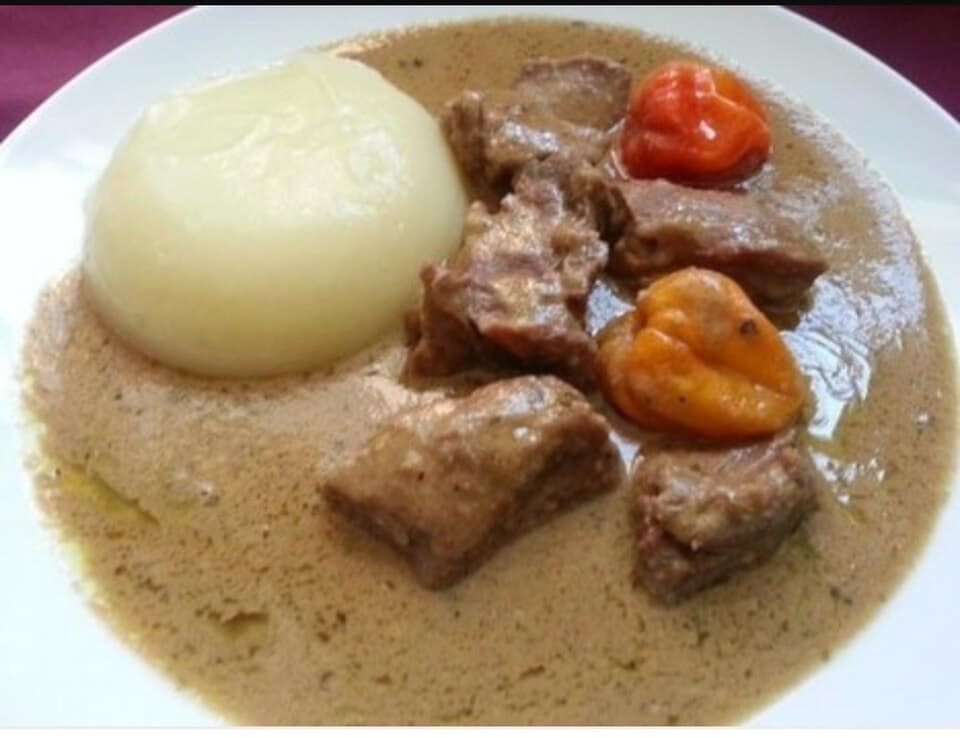
Mafé
 Senegalese · 2 h 10 min · 493 kcal