
Southern buttermilk biscuits
Vegetarian
Tall, flaky, tender quick breads with buttery layers, made by cutting cold butter into flour, folding the dough for layers and baking hot.
Southern buttermilk biscuits is a Southern US bread from United States, ready in about 45 minutes and made with all-purpose flour, unsalted butter and buttermilk. It serves 10 and is rated easy to cook.
No licensed photograph of this dish yet.
- Prep
- 20 min
- Cook
- 15 min
- Rest
- 10 min
- Total
- 45 min
- Serves
- 10
- Level
- Easy
- Calories
- 224
Method
Step 1
Heat the oven (opens in a new tab) to 230 °C. Whisk the flour, baking powder (opens in a new tab), soda, salt and sugar (opens in a new tab). Grate or cut in the cold butter (opens in a new tab) until the pieces are pea-sized and coated in flour.
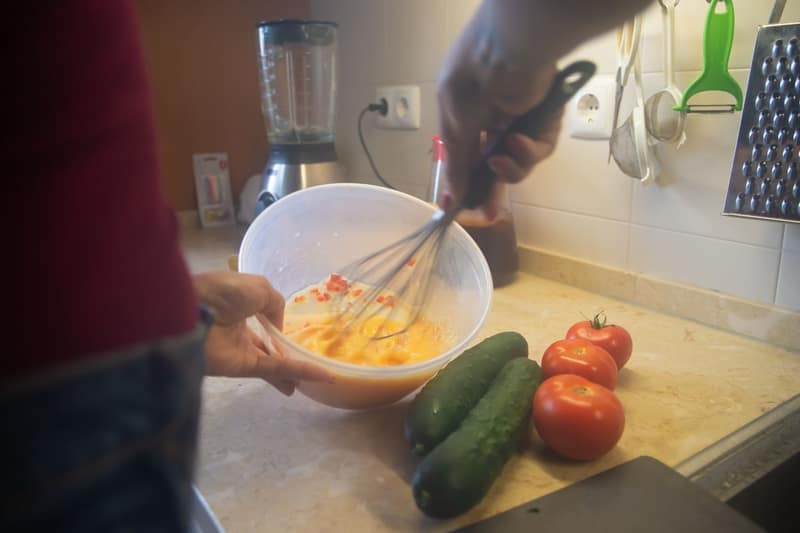
How it looks · Photo: Kampus Production on Pexels Step 2
Pour in the cold buttermilk (opens in a new tab) and stir with a fork just until a shaggy dough forms, with dry bits remaining.
- 2 min
Step 3
Tip onto a floured surface, pat into a 2 cm thick rectangle and fold in thirds like a letter. Repeat the pat-and-fold 3 times, then pat to 2.5 cm thick. If the butter (opens in a new tab) softens, chill 10 minutes.
- 6 min
Step 4
Cut 6 cm rounds with a floured cutter, pressing straight down without twisting so the layers rise. Place touching on a lined tray; gently press scraps together for a few more.
Step 5
Bake 12–15 minutes until tall and golden. Brush with melted butter (opens in a new tab) and serve warm.

How it looks · Photo: Willians Huerta on Pexels
About this dish
- Origin
- American South, United States · Well documentedMore food from United States
- Dish
- Breakfast · Brunch · Dinner · Breads & flatbreads · Side dishes
- Cooking method
- Oven-baked
- Taste
- buttery, tangy, salty
- Diet
- Vegetarian (lacto-ovo) · No nut ingredientsWorked out from the ingredients. How labels work
All labels
Vegetarian (lacto-ovo) · Eggetarian · Lacto-vegetarian · Pescatarian · Flexitarian-friendly · Egg-free · No nut ingredients · Alcohol-free · Pork-free · Beef-free - Good for
- Everyday · Freezer-friendly
- Cook more with
- All-purpose flour · Unsalted butter · Buttermilk · Baking powder · Baking soda · Sugar
- Techniques
- Baking
Allergens
- Contains: Milkfrom unsalted butter, buttermilk, butter
- Contains: Wheatfrom all-purpose flour, baking powder
- Contains: Glutenfrom all-purpose flour, baking powder
Based on typical versions of these ingredients and not verified allergen-free. Brands differ and cross-contact happens, so always check labels. For severe allergies, follow your clinician’s advice.
Nutrition
224 kcal per serving
Calculated1 serving ≈ 62 g · recipe makes 10
Where the energy comes from
- Protein 7%
- Carbohydrate 44%
- Fat 49%
| Nutrient | Per serving | Per 100 g |
|---|---|---|
| Energy | 224 kcal | 362 kcal |
| Protein | 4 g | 6.5 g |
| Carbohydrate | 24.8 g | 40.1 g |
| Net carbohydrate | 24 g | 38.7 g |
| Sugars | 1.8 g | 3 g |
| Added sugars | 0.4 g | 0.7 g |
| Fibre | 0.8 g | 1.3 g |
| Fat | 12.2 g | 19.7 g |
| Saturated fat | 7.5 g | 12.1 g |
| Trans fat | — | — |
| Cholesterol | 32 mg | 51 mg |
| Sodium | 481 mg | 776 mg |
| Salt equivalent | 1.2 g | 1.9 g |
Vitamins & minerals per serving
- Potassium
- 73 mg
- Calcium
- 107 mg
- Iron
- 1.5 mg
- Magnesium
- 10 mg
- Vitamin A (RAE)
- 102 µg
- Vitamin C
- 0 mg
- Vitamin D
- 0 µg
- Vitamin B12
- 0.1 µg
- Folate (DFE)
- 89 µg
How these numbers were made
- Calculated from USDA FoodData Central (SR Legacy) per-100 g values and the listed quantities.
- “—” means the value isn’t known for enough of the ingredients; it is never zero by default.
- Values are estimates for guidance, not for medical dosing. U.S. Department of Agriculture, Agricultural Research Service. FoodData Central, 2019. fdc.nal.usda.gov.
Good to know
Tips
- Placing biscuits so they touch makes them rise taller and stay softer at the sides.
Common mistakes
- Twisting the cutter seals the edges and stops the rise.
- Warm butter and overmixing give flat, tough biscuits.
Serve with
- Serve with butter and honey, sausage gravy, fried chicken or as a breakfast sandwich.
Storage
- Best warm. Freeze unbaked biscuits on a tray, then bag; bake from frozen adding 3–4 minutes.
Reheating
- Warm at 180 °C for 5 minutes.
Variations
- Cheddar-chive biscuits: Toss 80 g grated cheddar and 2 tbsp chives into the flour.
Original editorial recipe · FriendsPantry editorial · Not yet independently reviewed · Added · Updated
Recipe DNA
How this dish is built
Built from the recipe’s own sections. Each band’s width is its share of the dish by weight. Choose a component to see what it does.
What the dish is built around
Main ingredient
- All-purpose flour300 g
- Unsalted butter, very cold, cubed or grated115 g
- Buttermilk, cold240 ml · 247 g
Baker’s notes
Customise in Bread & BakeryTimeline and readiness cues
Mix and knead · about 20 min
Mix only until no dry flour remains — overmixing makes it tough and tunnelled.
Rest · about 10 min
Covered so it doesn't dry out; relaxed dough rolls and shapes without springing back.
Bake · about 15 min at 230 °C
Risen and golden; a skewer in the centre comes out clean or with a few moist crumbs; the top springs back.
- Start to finish: about 45 min. Times are a guide — warmth changes everything; follow the cues.
The dough
| Ingredient | Role | Weight | Baker’s % |
|---|---|---|---|
| All-purpose flour | Flour | 300 g | 100% |
| Unsalted butter | Fat | 115 g | 38.3% |
| Baking powder | Raising agent | 12 g | 4% |
| Salt | Salt | 6 g | 2% |
| Sugar | Sugar | 4 g | 1.4% |
| Baking soda | Raising agent | 2 g | 0.8% |
- Total flour
- 300 g
- Hydration
- —
- With milk, eggs…
- 0%
- Wholegrain
- 0%
Hydration = water ÷ flour × 100. Milk is about 87% water and eggs about 75%, so they’re shown separately as “with milk, eggs…”.
- Salt 2% — normal for bread.
- Fat 38.3% — a rich, tender dough.
If something goes wrong
Pale crust
Likely causes
- Oven too cool
- Too little sugar or no milk/egg for browning
- Over-fermented (yeast ate the sugars)
What to do
- Check the oven with a thermometer
- Brush with egg wash or milk
- Shorten the fermentation
Burnt bottom
Likely causes
- Tray too close to the heat
- Dark tray absorbs more heat
- Too much sugar in the dough
What to do
- Bake on the middle shelf
- Double up trays or use a light-coloured one
- Lower the temperature 10–15 °C and bake a little longer
Crust too hard or thick
Likely causes
- Baked too long at too low a temperature
- No steam at the start
What to do
- Bake hotter for a shorter time
- Add steam for the first 15 minutes (tray of boiling water, or a covered Dutch oven)
- Cool under a tea towel for a softer crust
Reviews & corrections
Reviews come from signed-in cooks and appear after a moderator checks them. We never show made-up ratings.
You might also like
Buttermilk cornbread
 Southern US · 37 min · 225 kcal · Contains egg
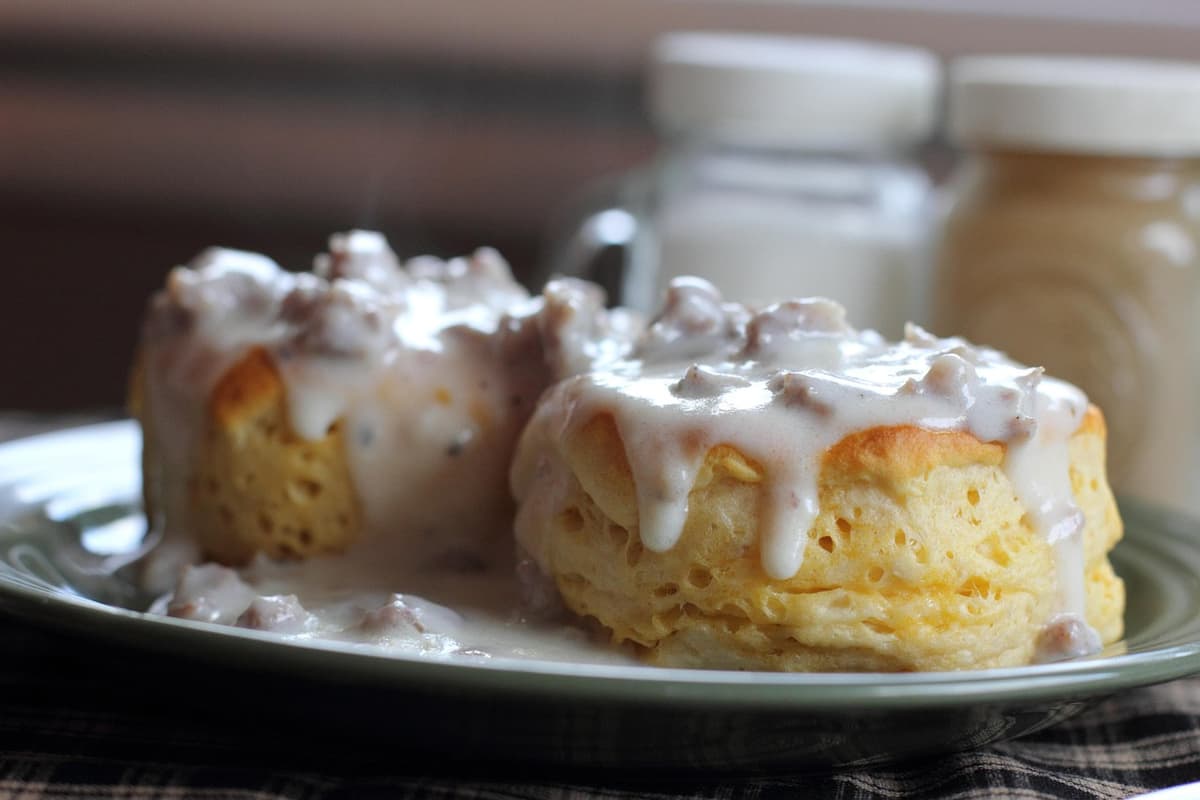
Biscuits and sausage gravy
Southern US · 45 min · 919 kcal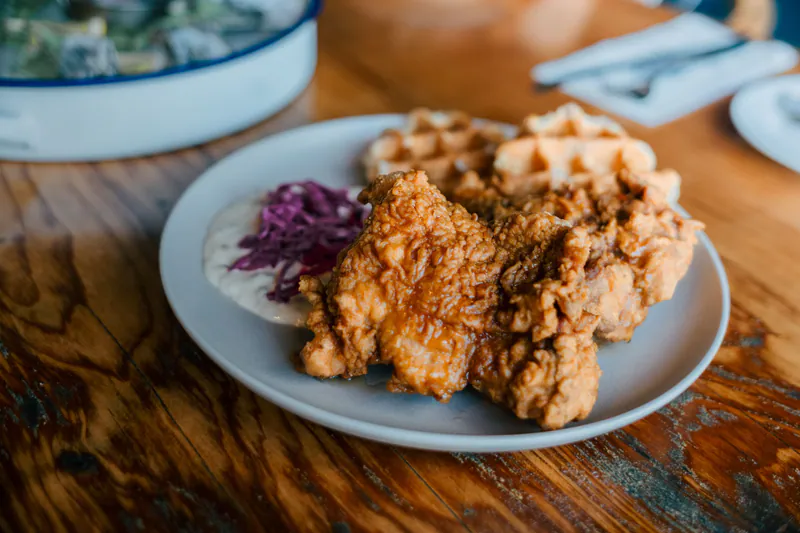
Chicken and waffles
Southern US · 1 h · 1025 kcal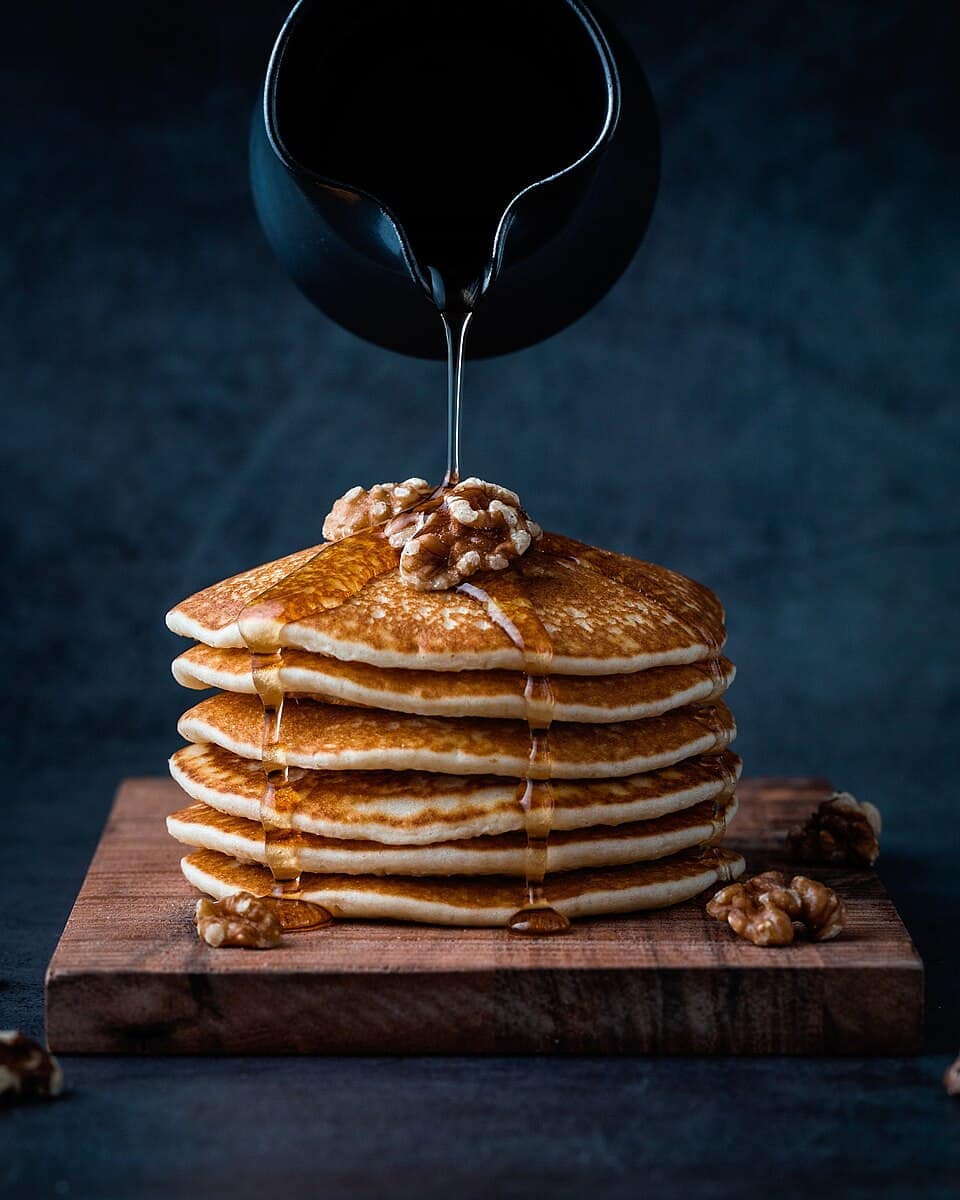
Buttermilk pancakes
American · 35 min · 449 kcal · Contains egg