
Beerakaya pachadi (ridge gourd chutney)
Vegetarian
బీరకాయ పచ్చడి · bīrakāya paccaḍi
Ridge gourd cooked soft in oil and ground coarse with fried urad dal, dried and green chillies, fenugreek, garlic and tamarind, then tempered. Mild, juicy and tangy, it is an everyday Andhra pachadi for rice and dosa.
Beerakaya pachadi (ridge gourd chutney) is a South Indian condiment, ready in about 41 minutes and made with ridge gourd, black gram (urad dal) and green chilli. It serves 6 and is rated easy to cook.
No licensed photograph of this dish yet.
- Prep
- 12 min
- Cook
- 14 min
- Rest
- 15 min
- Total
- 41 min
- Serves
- 6
- Level
- Easy
- Calories
- 69
Method
Step 1
Wash the ridge gourd (opens in a new tab), cut off the ends and taste a tiny piece from each end: if it is bitter, discard the whole gourd. Scrape off the hard ridges with a peeler (leave the green skin between them) and cut into 2 cm pieces.
- 6 min
- Vegetable peeler (opens in a new tab)
- Chopping board (opens in a new tab)
- Chef's knife (opens in a new tab)
Food safety: Bitter gourds can contain cucurbitacins, which cause severe stomach upset; never use a bitter one.
Step 2
Heat 10 ml of the oil over medium-low heat. Fry the urad (opens in a new tab) dal, chana dal (opens in a new tab) and fenugreek (opens in a new tab) for 2–3 minutes until the dal is golden and the fenugreek reddish. Add the cumin, dried chillies and green chillies and fry for 1 minute until the chillies blister. Lift out onto a plate.
- 4 min
- medium-low heat
- Frying pan / skillet (opens in a new tab)
Step 3
Add the remaining 5 ml oil, the ridge gourd (opens in a new tab), garlic (opens in a new tab) and turmeric (opens in a new tab). Cover and cook over medium heat for 6–8 minutes, stirring once or twice, until the gourd is translucent and soft and most of its water has evaporated. Add the tamarind (opens in a new tab) with its water and cook 1 minute more. Cool for 15 minutes.
- 9 min
- medium heat
- Frying pan / skillet (opens in a new tab)
Step 4
Grind the dal and chilli mixture with the salt to a coarse powder. Add the cooked gourd and coriander and pulse a few times to a coarse, spoonable pachadi. No water is needed; the gourd is juicy.
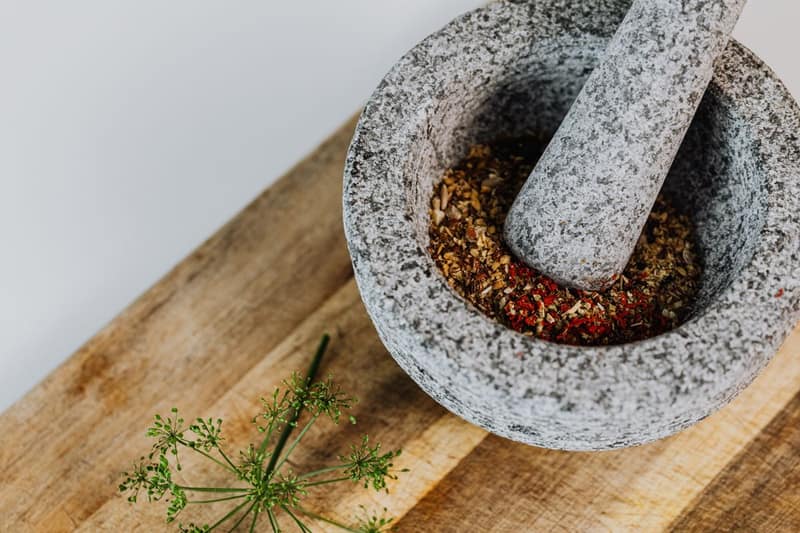
How it looks · Photo: https://kaboompics.com/ on Pexels Step 5
For the tempering, heat the gingelly oil (opens in a new tab) in a small pan or tadka ladle over medium heat until it shimmers. Add the mustard seeds (opens in a new tab); when they crackle and pop (20–30 seconds), add the urad (opens in a new tab) dal and chana dal (opens in a new tab) and the broken dried chilli and stir until the dal turns light golden (about 30 seconds). Take the pan off the heat, add the curry leaves (opens in a new tab) (they spit) and the asafoetida (opens in a new tab), swirl for 2–3 seconds and pour everything over the chutney.
- 2 min
- medium heat
- Frying pan / skillet (opens in a new tab)
Food safety: Hot oil spits when mustard seeds pop and curry leaves go in; keep your face back and have a lid nearby.
About this dish
- Origin
- Andhra Pradesh and Telangana, Andhra Pradesh, India · Commonly attributedA common Telugu vegetable pachadi; Tamil peerkangai and Kannada heerekai chutneys are close relatives.More food from India
- Dish
- Lunch · Breakfast · Condiments, chutneys & relishes
- Cooking method
- Sautéed, Blended
- Taste
- tangy, spicy (chilli heat), savoury, fresh
- Diet
- Vegan · Dairy-free · No nut ingredients · Low-carbWorked out from the ingredients. How labels work
All labels
Vegan · Plant-based · Vegetarian (lacto-ovo) · Eggetarian · Lacto-vegetarian · Ovo-vegetarian · Pescatarian · Flexitarian-friendly · Whole-food focused · Dairy-free · Egg-free · No nut ingredients · No added sugar · Alcohol-free · Pork-free · Beef-free · Low-carb · DASH-style - Good for
- Everyday · Budget-friendly
- Cook more with
- Black gram (urad dal) · Green chilli · Garlic · Gingelly oil (untoasted sesame oil) · Fenugreek · Cumin seeds
- Techniques
- Sautéing · Tadka (tempering) · Wet grinding · Knife skills · Emulsification
Allergens
- May contain: Wheatfrom asafoetida
- May contain: Glutenfrom asafoetida
- Contains: Sesamefrom gingelly oil (untoasted sesame oil)
- Contains: Mustardfrom mustard seeds
Based on typical versions of these ingredients and not verified allergen-free. Brands differ and cross-contact happens, so always check labels. For severe allergies, follow your clinician’s advice.
Nutrition
69 kcal per serving
Estimated1 serving ≈ 55 g · recipe makes 6
Where the energy comes from
- Protein 10%
- Carbohydrate 37%
- Fat 53%
| Nutrient | Per serving | Per 100 g |
|---|---|---|
| Energy | 69 kcal | 125 kcal |
| Protein | 1.9 g | 3.5 g |
| Carbohydrate | 6.8 g | 12.4 g |
| Net carbohydrate | 5.2 g | 9.4 g |
| Sugars | 2 g | 3.7 g |
| Added sugars | 0 g | 0 g |
| Fibre | 1.6 g | 2.9 g |
| Fat | 4.3 g | 7.9 g |
| Saturated fat | 0.6 g | 1.1 g |
| Trans fat | — | — |
| Cholesterol | 0 mg | 0 mg |
| Sodium | 264 mg | 480 mg |
| Salt equivalent | 0.7 g | 1.2 g |
Vitamins & minerals per serving
- Potassium
- 172 mg
- Calcium
- 27 mg
- Iron
- 0.9 mg
- Magnesium
- 21 mg
- Vitamin A (RAE)
- —
- Vitamin C
- 12 mg
- Vitamin D
- 0 µg
- Vitamin B12
- 0 µg
- Folate (DFE)
- 15 µg
How these numbers were made
- Calculated from USDA FoodData Central (SR Legacy) per-100 g values and the listed quantities.
- Optional ingredients are not included: chana dal (split bengal gram).
- Not counted (tiny amounts or “to taste”): curry leaves, asafoetida.
- Ridge gourd: Raw dishcloth (towel) gourd, Luffa aegyptiaca (FDC 168414), used for the closely related ridged luffa, Luffa acutangula; both are watery, mild gourds.
- Chana dal (split bengal gram): Whole raw chickpeas / bengal gram (FDC 173756) used as a stand-in for split, skinned desi chickpeas; the composition is very close.
- “—” means the value isn’t known for enough of the ingredients; it is never zero by default.
- Values are estimates for guidance, not for medical dosing. U.S. Department of Agriculture, Agricultural Research Service. FoodData Central, 2019. fdc.nal.usda.gov.
Good to know
Tips
- Tender, slim gourds with soft seeds are best; old gourds are fibrous.
- Cook off the gourd's water well, or the pachadi will be runny and bland.
Common mistakes
- Skipping the bitterness test.
- Grinding it smooth — beerakaya pachadi should be coarse and juicy.
Serve with
- Mix into hot rice with ghee or serve beside pappu (dal) and rice.
- Serve with dosa, pesarattu or chapati.
Food safety
- Discard any ridge gourd that tastes bitter (cucurbitacin poisoning).
- Store in a scrupulously clean, completely dry jar (sterilise it in boiling water or a low oven and let it dry fully) and always use a dry spoon; moisture is what spoils chutneys, podis and pickles.
Storage
- Keeps 2 days in the fridge in a clean container.
Variations
- Beerakaya thokku pachadi: Made from the scraped ridges and peel alone, fried and ground with the same spices — a no-waste pachadi.
- Peerkangai chutney (Tamil Nadu): Adds onion and grated coconut and is served with idli and dosa.
Original editorial recipe · FriendsPantry editorial · Not yet independently reviewed · Added · Updated
Goes with
Recipe DNA
How this dish is built
Built from the recipe’s own sections. Each band’s width is its share of the dish by weight. Choose a component to see what it does.
What the dish is built around
Main ingredient
- Ridge gourd, ridges scraped off (peel kept for thokku if you like), cut into 2 cm pieces; about 2 medium400 g
- Black gram (urad dal), split and skinned (white)10 g
- Chana dal (split bengal gram) (optional)5 g
- Tamarind, seedless; fibres removed, soaked in 1 tbsp warm water8 g
Make it milder, swap ingredients for your diet, change the batch size or thickness — the original stays as it is.
Customise in Sauce & DrizzleReviews & corrections
Reviews come from signed-in cooks and appear after a moderator checks them. We never show made-up ratings.
You might also like
Andhra tomato pachadi
 South Indian · 50 min · 56 kcal · Vegan
Gongura pachadi (Andhra sorrel-leaf chutney)
South Indian · 40 min · 55 kcal · VeganKobbari pachadi (Andhra coconut chutney)
South Indian · 26 min · 111 kcal · VeganPulihora (Andhra tamarind rice)
South Indian · 1 h 25 min · 573 kcal · Vegan