
Pastel de feira
Non-vegetarian
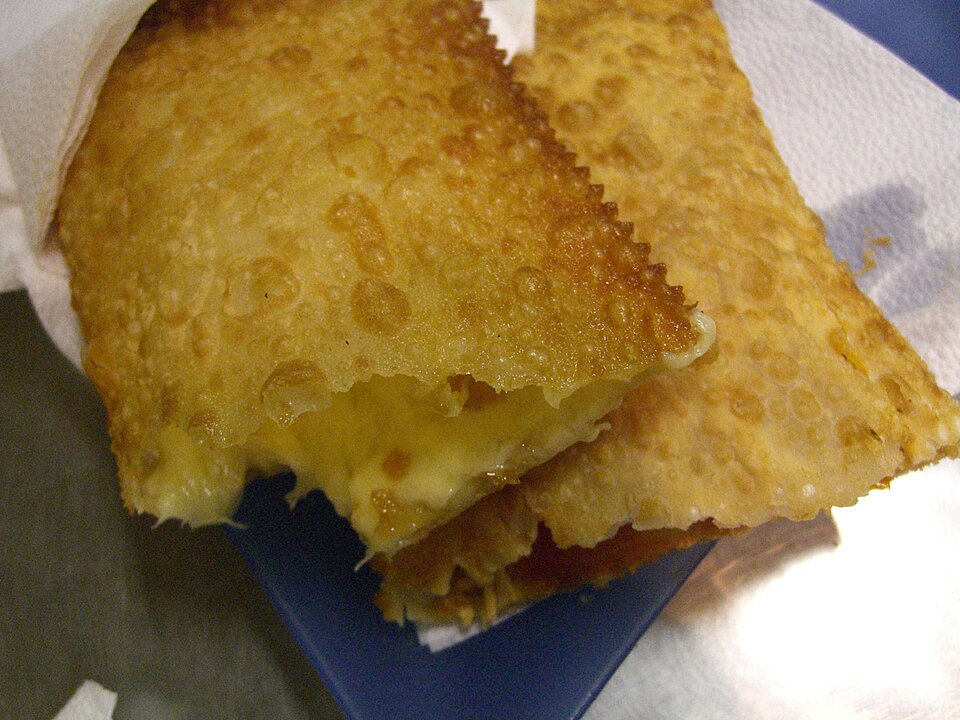
Large, thin, blistered fried pastries filled with seasoned beef and olives, sold sizzling hot at Brazilian street markets with a glass of sugar-cane juice.
Pastel de feira is a Brazilian street food, ready in about 1 hour 40 minutes and made with all-purpose flour and ground beef. It serves 6 and is rated intermediate to cook.
- Prep
- 40 min
- Cook
- 30 min
- Rest
- 30 min
- Total
- 1 h 40 min
- Serves
- 6
- Level
- Intermediate
- Calories
- 661
Ingredients
For the dough
For the filling
For frying
Method
Step 1
Mix the flour and 1 tsp salt, add the water, oil and cachaça (opens in a new tab), and knead to a smooth, firm dough. Wrap and rest 30 minutes.
- 10 min
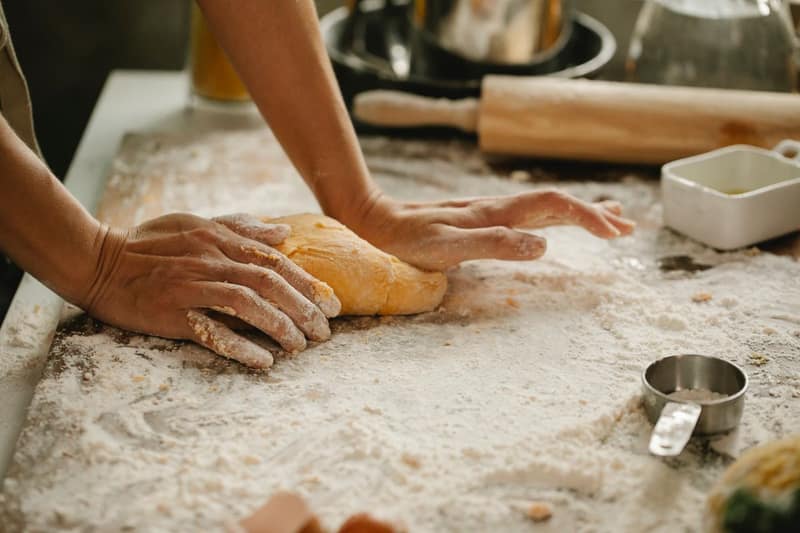
How it looks · Photo: Klaus Nielsen on Pexels Step 2
Brown the beef in a dry pan, breaking it up. Add the onion (opens in a new tab) and garlic (opens in a new tab) and cook until soft, then the tomato (opens in a new tab), remaining salt and pepper (opens in a new tab); cook until dry. Stir in the olives and spring onion (opens in a new tab) and cool completely.
- 15 min
- medium-high heat
- Frying pan / skillet (opens in a new tab)
Food safety: Cook minced beef until no pink remains.
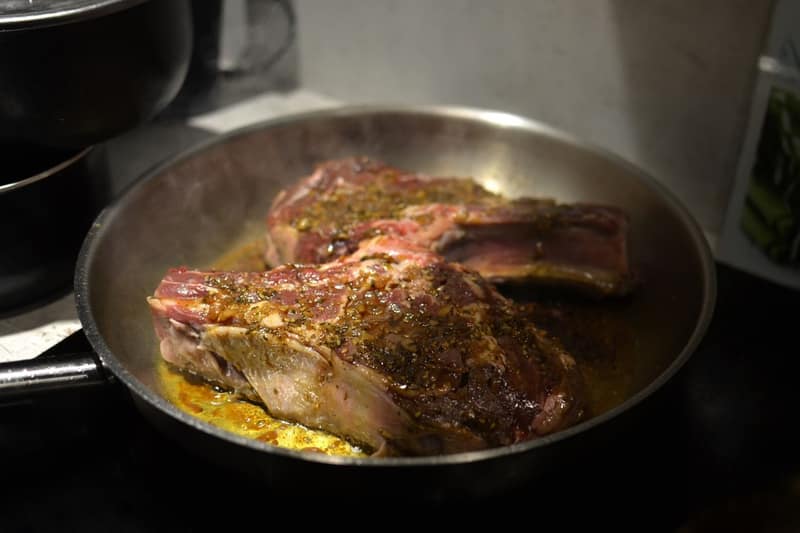
How it looks · Photo: Skylar Kang on Pexels Step 3
Roll the dough very thin (1–2 mm) and cut into 12 rectangles about 12 × 20 cm. Put a heaped spoonful of filling on one half, brush the edge with water, fold and seal firmly with a fork.
Step 4
Fry two at a time in oil at 180 °C, spooning oil over the top, until puffed, blistered and golden, about 2 minutes per side. Drain and serve at once.
Food safety: Seal the edges well: a leaking pastel spits hot oil.
How it looks · Photo: Willians Huerta on Pexels
About this dish
- Origin
- São Paulo, Brazil · Commonly attributedMarket pastéis are strongly associated with São Paulo, where the street-market version is often linked to Japanese- and Chinese-Brazilian vendors.More food from Brazil
- Dish
- Snack · Lunch · Street food · Finger food
- Cooking method
- Deep-fried, Sautéed
- Taste
- savoury, salty
- Diet
- Dairy-free · No nut ingredients · High-proteinWithout the optional extras: Alcohol-freeWorked out from the ingredients. How labels work
All labels
Non-vegetarian · Dairy-free · Egg-free · No nut ingredients · No added sugar · Pork-free · High-protein - Good for
- Street food · Child-friendly
- Cook more with
- All-purpose flour · Ground beef · Onion · Garlic · Tomato · Green olives
- Techniques
- Deep-frying · Sautéing · Kneading
Allergens
- Contains: Wheatfrom all-purpose flour
- Contains: Glutenfrom all-purpose flour
Based on typical versions of these ingredients and not verified allergen-free. Brands differ and cross-contact happens, so always check labels. For severe allergies, follow your clinician’s advice.
Nutrition
661 kcal per serving
Calculated1 serving ≈ 262 g · recipe makes 6
Where the energy comes from
- Protein 13%
- Carbohydrate 41%
- Fat 46%
| Nutrient | Per serving | Per 100 g* |
|---|---|---|
| Energy | 661 kcal | 252 kcal |
| Protein | 21.7 g | 8.2 g |
| Carbohydrate | 67.3 g | 25.6 g |
| Net carbohydrate | 64 g | 24.4 g |
| Sugars | 1.7 g | 0.6 g |
| Added sugars | 0 g | 0 g |
| Fibre | 3.3 g | 1.2 g |
| Fat | 33.4 g | 12.7 g |
| Saturated fat | 5.7 g | 2.2 g |
| Trans fat | — | — |
| Cholesterol | 45 mg | 17 mg |
| Sodium | 762 mg | 290 mg |
| Salt equivalent | 1.9 g | 0.7 g |
Vitamins & minerals per serving
- Potassium
- 384 mg
- Calcium
- 44 mg
- Iron
- 5.5 mg
- Magnesium
- 38 mg
- Vitamin A (RAE)
- 15 µg
- Vitamin C
- 5 mg
- Vitamin D
- 0.1 µg
- Vitamin B12
- 1.4 µg
- Folate (DFE)
- 256 µg
How these numbers were made
- Calculated from USDA FoodData Central (SR Legacy) per-100 g values and the listed quantities.
- *Per 100 g of combined raw ingredients; the cooked dish may weigh more or less.
- Optional ingredients are not included: rum.
- “—” means the value isn’t known for enough of the ingredients; it is never zero by default.
- Values are estimates for guidance, not for medical dosing. U.S. Department of Agriculture, Agricultural Research Service. FoodData Central, 2019. fdc.nal.usda.gov.
Good to know
Tips
- Squeeze out air before sealing so the pastries puff rather than burst.
Common mistakes
- Warm filling softens the dough and causes leaks — let it cool.
Serve with
- Serve with caldo de cana (sugar-cane juice) and chilli vinegar, as at the feira.
Storage
- Uncooked, sealed pastéis freeze well on a tray; fry from frozen.
Variations
- Pastel de queijo (Brazil): Filled with mozzarella only.
- Pastel de palmito (Brazil): With creamy hearts-of-palm filling.
Original editorial recipe · FriendsPantry editorial · Not yet independently reviewed · Added · Updated
Recipe DNA
How this dish is built
Built from the recipe’s own sections. Each band’s width is its share of the dish by weight. Choose a component to see what it does.
The spice and seasoning backbone
Spices, masalas & pastes
- Salt1.5 tsp · 9 g
- Black pepper0.25 tsp · 0.6 g
Baker’s notes
Customise in Bread & BakeryTimeline and readiness cues
Mix and knead · about 40 min
Knead until smooth and soft; it should feel like an earlobe.
Rest · about 30 min
Covered so it doesn't dry out; relaxed dough rolls and shapes without springing back.
Bake · about 15 min
Puffed with golden-brown spots on both sides.
- Start to finish: about 1 h 25 min. Times are a guide — warmth changes everything; follow the cues.
The dough
| Ingredient | Role | Weight | Baker’s % |
|---|---|---|---|
| All-purpose flour | Flour | 500 g | 100% |
| Water | Water | 220 g | 44% |
| Neutral vegetable oil | Fat | 27 g | 5.4% |
- Total flour
- 500 g
- Hydration
- 44%
- With milk, eggs…
- 44%
- Wholegrain
- 0%
Hydration = water ÷ flour × 100. Milk is about 87% water and eggs about 75%, so they’re shown separately as “with milk, eggs…”.
- Stiff dough (under 55% hydration) — firm, easy to roll; typical of bagels, pretzels and many flatbreads.
If something goes wrong
Pale crust
Likely causes
- Oven too cool
- Too little sugar or no milk/egg for browning
- Over-fermented (yeast ate the sugars)
What to do
- Check the oven with a thermometer
- Brush with egg wash or milk
- Shorten the fermentation
Burnt bottom
Likely causes
- Tray too close to the heat
- Dark tray absorbs more heat
- Too much sugar in the dough
What to do
- Bake on the middle shelf
- Double up trays or use a light-coloured one
- Lower the temperature 10–15 °C and bake a little longer
Crust too hard or thick
Likely causes
- Baked too long at too low a temperature
- No steam at the start
What to do
- Bake hotter for a shorter time
- Add steam for the first 15 minutes (tray of boiling water, or a covered Dutch oven)
- Cool under a tea towel for a softer crust
Reviews & corrections
Reviews come from signed-in cooks and appear after a moderator checks them. We never show made-up ratings.
You might also like
Coxinha
 Brazilian · 1 h 55 min · 533 kcal
Jamaican beef patties
 Jamaican · 2 h 35 min · 444 kcal
Mutabbaq
 Saudi Arabian · 2 h 5 min · 656 kcal
Escondidinho de carne moída
Brazilian · 1 h 30 min · 687 kcal