
Açorda alentejana
Contains egg (no meat or fish)
Açorda à alentejana
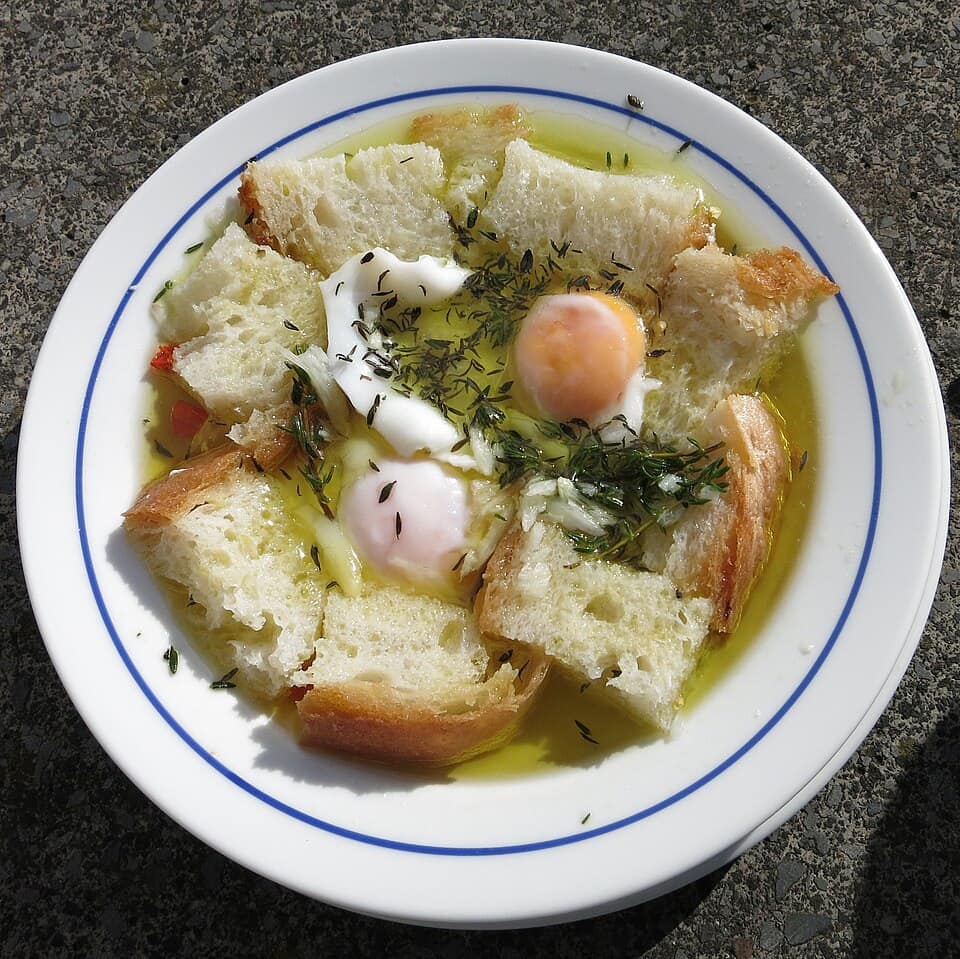
A humble soup from the Alentejo made by pouring boiling water over a pounded paste of garlic, fresh coriander, salt and olive oil, served over stale bread with a poached egg.
Açorda alentejana is a Portuguese soup from Portugal, ready in about 20 minutes and made with garlic, coriander leaves and crusty bread / baguette. It serves 4 and is rated easy to cook.
- Prep
- 10 min
- Cook
- 10 min
- Total
- 20 min
- Serves
- 4
- Level
- Easy
- Calories
- 365
Method
Step 1
Pound the garlic (opens in a new tab), coriander and salt to a coarse paste in a mortar, then stir in the olive oil (opens in a new tab). Transfer to a large serving bowl or tureen.
Step 2
Bring the water to the boil in a saucepan (opens in a new tab) and poach the eggs (opens in a new tab) in it until the whites are set. Lift them out.
- 4 min
- medium heat
- Saucepan (opens in a new tab)
Food safety: Poach until whites are set; longer for firm yolks if serving anyone vulnerable.
Step 3
Pour the hot poaching water over the coriander paste and stir. Put the bread in bowls, ladle over the broth, and top each with a poached egg (opens in a new tab).
- 2 min
About this dish
- Origin
- Alentejo, Portugal · Well documentedMore food from Portugal
- Dish
- Lunch · Dinner · Soups
- Cooking method
- Poached, No-cook
- Taste
- herby, garlicky, fresh
- Diet
- Vegetarian (lacto-ovo) · Dairy-free · No nut ingredientsWorked out from the ingredients. How labels work
All labels
Vegetarian (lacto-ovo) · Eggetarian · Ovo-vegetarian · Pescatarian · Flexitarian-friendly · Dairy-free · No nut ingredients · No added sugar · Alcohol-free · Pork-free · Beef-free - Good for
- Budget-friendly · Uses leftovers
- Cook more with
- Garlic · Coriander leaves · Crusty bread / baguette · Egg
Allergens
- Contains: Eggsfrom egg
- Contains: Wheatfrom crusty bread / baguette
- Contains: Glutenfrom crusty bread / baguette
- May contain: Sesamefrom crusty bread / baguette
Based on typical versions of these ingredients and not verified allergen-free. Brands differ and cross-contact happens, so always check labels. For severe allergies, follow your clinician’s advice.
Nutrition
365 kcal per serving
Calculated1 serving ≈ 435 g · recipe makes 4
Where the energy comes from
- Protein 13%
- Carbohydrate 31%
- Fat 56%
| Nutrient | Per serving | Per 100 g* |
|---|---|---|
| Energy | 365 kcal | 84 kcal |
| Protein | 12.2 g | 2.8 g |
| Carbohydrate | 28.1 g | 6.5 g |
| Net carbohydrate | 26.5 g | 6.1 g |
| Sugars | 2.6 g | 0.6 g |
| Added sugars | 0 g | 0 g |
| Fibre | 1.5 g | 0.4 g |
| Fat | 22.9 g | 5.3 g |
| Saturated fat | 4.2 g | 1 g |
| Trans fat | 0 g | 0 g |
| Cholesterol | 186 mg | 43 mg |
| Sodium | 967 mg | 222 mg |
| Salt equivalent | 2.4 g | 0.6 g |
Vitamins & minerals per serving
- Potassium
- 209 mg
- Calcium
- 100 mg
- Iron
- 3.2 mg
- Magnesium
- 32 mg
- Vitamin A (RAE)
- 122 µg
- Vitamin C
- 5 mg
- Vitamin D
- 1 µg
- Vitamin B12
- 0.4 µg
- Folate (DFE)
- 116 µg
How these numbers were made
- Calculated from USDA FoodData Central (SR Legacy) per-100 g values and the listed quantities.
- *Per 100 g of combined raw ingredients; the cooked dish may weigh more or less.
- “—” means the value isn’t known for enough of the ingredients; it is never zero by default.
- Values are estimates for guidance, not for medical dosing. U.S. Department of Agriculture, Agricultural Research Service. FoodData Central, 2019. fdc.nal.usda.gov.
Good to know
Tips
- Use dense, slightly stale country bread that holds together in the broth.
Common mistakes
- Using fresh, soft bread, which dissolves into a paste in the hot broth.
Food safety
- The eggs are poached, not raw: cook until the whites are fully set, and longer for firm yolks for anyone vulnerable.
Storage
- Make just before eating.
Variations
- Açorda de marisco (Portugal): A Lisbon version thickened into a porridge with bread and loaded with prawns and shellfish.
Original editorial recipe · FriendsPantry editorial · Not yet independently reviewed · Added · Updated
Recipe DNA
How this dish is built
Reviews & corrections
Reviews come from signed-in cooks and appear after a moderator checks them. We never show made-up ratings.
You might also like
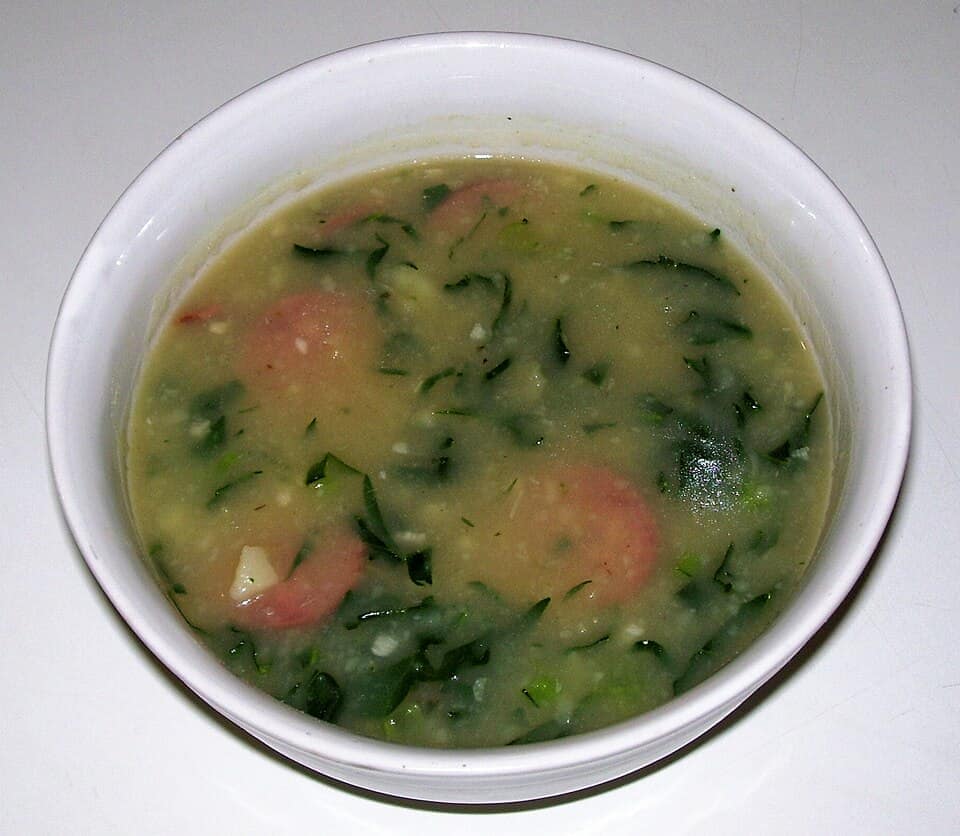
Caldo verde
 Portuguese · 50 min · 220 kcal
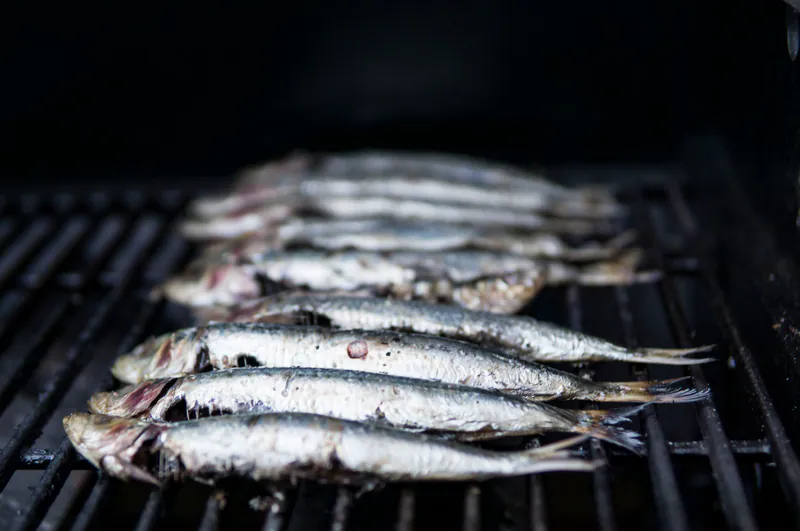
Sardinhas assadas
Portuguese · 57 min · 439 kcal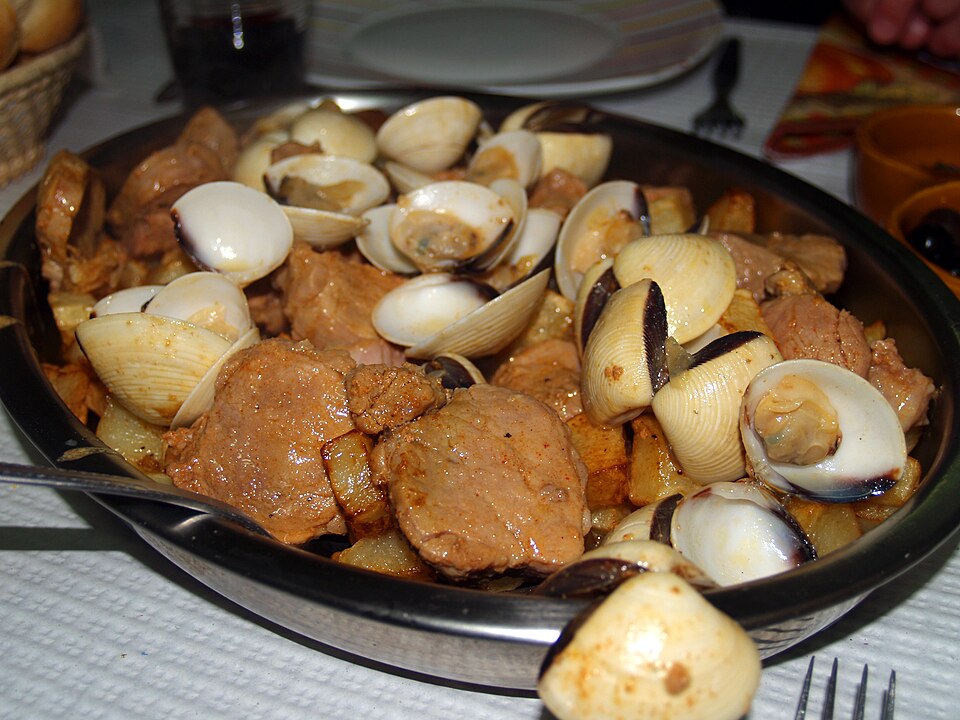
Carne de porco à alentejana
Portuguese · 1 h 5 min · 798 kcal
Lablabi
 Tunisian · 1 h 25 min · 515 kcal