
Brik à l'oeuf
Non-vegetarian
Brik à l'œuf
A crisp, golden pastry triangle filled with tuna, potato, capers and parsley around a whole egg whose yolk stays runny. Tunisia's favourite starter, eaten in the hand.
Brik à l'oeuf is a Tunisian starter, ready in about 35 minutes and made with filo pastry, egg and canned tuna. It serves 4 and is rated intermediate to cook.
No licensed photograph of this dish yet.
- Prep
- 20 min
- Cook
- 15 min
- Total
- 35 min
- Serves
- 4
- Level
- Intermediate
- Calories
- 320
Method
Step 1
Mix the tuna, mashed potato (opens in a new tab), onion (opens in a new tab), parsley (opens in a new tab), capers (opens in a new tab), salt and pepper (opens in a new tab).
- 5 min
Step 2
Heat 1.5 cm of oil in a wide frying pan to 175 °C.
- 5 min
- 175°C
- medium-high heat
- Frying pan / skillet (opens in a new tab)
Food safety: Keep children away from hot oil and never leave it unattended.
Step 3
Lay two phyllo (opens in a new tab) sheets on top of each other and fold into a square about 20 cm across. Spoon a quarter of the filling on one half, make a hollow and crack an egg (opens in a new tab) into it.
- 2 min
Step 4
Quickly fold the pastry over into a triangle, press the edges, and slide straight into the hot oil. Fry, spooning oil over the top, then flip once, until golden and crisp — about 1–2 minutes per side.
- 3 min
- 175°C
Work one brik at a time; the egg makes the pastry soggy if it waits.
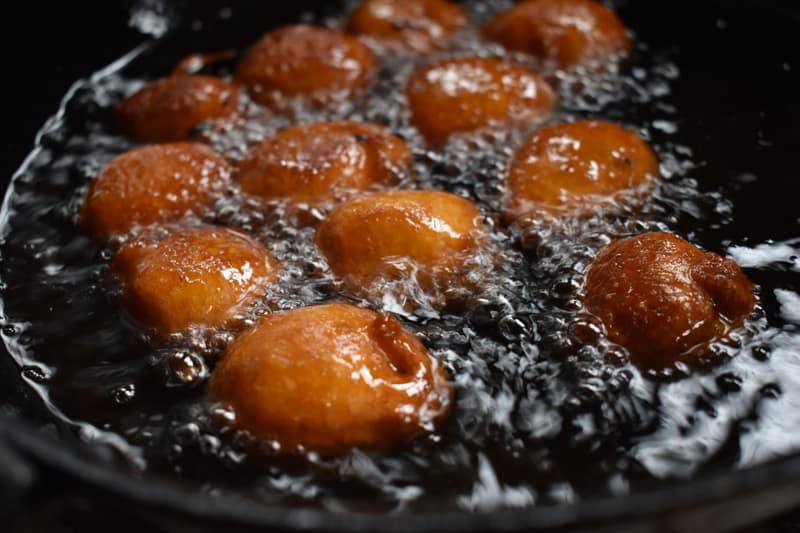
How it looks · Photo: Riya Roy on Pexels Step 5
Drain on paper and serve immediately with lemon (opens in a new tab) wedges. Repeat with the rest.
Food safety: The yolk is meant to be runny; fry longer for a set yolk for young children, pregnant people or anyone vulnerable.

How it looks · Photo: Willians Huerta on Pexels
About this dish
- Origin
- Tunisia · Well documentedAlso popular in AlgeriaMore food from Tunisia
- Dish
- Lunch · Dinner · Snack · Appetizers & starters · Street food · Finger food
- Cooking method
- Shallow-fried
- Taste
- savoury, salty, rich
- Diet
- Pescatarian · Dairy-free · No nut ingredients · High-proteinWorked out from the ingredients. How labels work
All labels
Pescatarian · Non-vegetarian · Flexitarian-friendly · Dairy-free · No nut ingredients · No added sugar · Alcohol-free · Pork-free · Beef-free · High-protein · Calorie-conscious - Good for
- Street food
- Cook more with
- Filo pastry · Egg · Canned tuna · Potato · Onion · Parsley
- Techniques
- Shallow-frying
Allergens
- Contains: Eggsfrom egg
- Contains: Fishfrom canned tuna
- Contains: Wheatfrom filo pastry
- Contains: Glutenfrom filo pastry
Based on typical versions of these ingredients and not verified allergen-free. Brands differ and cross-contact happens, so always check labels. For severe allergies, follow your clinician’s advice.
Nutrition
320 kcal per serving
Calculated1 serving ≈ 188 g · recipe makes 4
Where the energy comes from
- Protein 20%
- Carbohydrate 38%
- Fat 42%
| Nutrient | Per serving | Per 100 g* |
|---|---|---|
| Energy | 320 kcal | 170 kcal |
| Protein | 16.1 g | 8.5 g |
| Carbohydrate | 30.1 g | 16 g |
| Net carbohydrate | 28 g | 14.9 g |
| Sugars | 1 g | 0.5 g |
| Added sugars | 0 g | 0 g |
| Fibre | 2.1 g | 1.1 g |
| Fat | 14.9 g | 7.9 g |
| Saturated fat | 2.8 g | 1.5 g |
| Trans fat | — | — |
| Cholesterol | 197 mg | 105 mg |
| Sodium | 675 mg | 359 mg |
| Salt equivalent | 1.7 g | 0.9 g |
Vitamins & minerals per serving
- Potassium
- 390 mg
- Calcium
- 50 mg
- Iron
- 3.2 mg
- Magnesium
- 33 mg
- Vitamin A (RAE)
- 96 µg
- Vitamin C
- 14 mg
- Vitamin D
- 1.4 µg
- Vitamin B12
- 1.2 µg
- Folate (DFE)
- 90 µg
How these numbers were made
- Calculated from USDA FoodData Central (SR Legacy) per-100 g values and the listed quantities.
- *Per 100 g of combined raw ingredients; the cooked dish may weigh more or less.
- Optional ingredients are not included: lemon.
- “—” means the value isn’t known for enough of the ingredients; it is never zero by default.
- Values are estimates for guidance, not for medical dosing. U.S. Department of Agriculture, Agricultural Research Service. FoodData Central, 2019. fdc.nal.usda.gov.
Good to know
Tips
- Have the oil hot and the pastry ready before you crack the egg — speed is what keeps the brik crisp.
Common mistakes
- Assembling all the briks before frying — the egg soaks through the pastry.
Serve with
- Serve as a starter before chorba or couscous.
Storage
- Eat immediately; does not keep.
Variations
- Brik with meat: Filled with spiced minced beef or chicken instead of tuna.
Original editorial recipe · FriendsPantry editorial · Not yet independently reviewed · Added · Updated
Recipe DNA
How this dish is built
Grouped by each ingredient’s role in the dish. Each band’s width is its share of the dish by weight. Choose a component to see what it does.
What the dish is built around
Main ingredient
- Filo pastry8 sheet · 152 g
- Egg4 piece · 200 g
- Canned tuna, drained and flaked1 can · 120 g
- Potato, boiled and mashed1 piece · 200 g
- Capers, chopped1 tbsp · 8.6 g
Baker’s notes
Customise in Bread & BakeryTimeline and readiness cues
Mix and knead · about 15 min
Knead until smooth and soft; it should feel like an earlobe.
Bake · about 15 min
Puffed with golden-brown spots on both sides.
- Start to finish: about 30 min. Times are a guide — warmth changes everything; follow the cues.
If something goes wrong
Pale crust
Likely causes
- Oven too cool
- Too little sugar or no milk/egg for browning
- Over-fermented (yeast ate the sugars)
What to do
- Check the oven with a thermometer
- Brush with egg wash or milk
- Shorten the fermentation
Burnt bottom
Likely causes
- Tray too close to the heat
- Dark tray absorbs more heat
- Too much sugar in the dough
What to do
- Bake on the middle shelf
- Double up trays or use a light-coloured one
- Lower the temperature 10–15 °C and bake a little longer
Crust too hard or thick
Likely causes
- Baked too long at too low a temperature
- No steam at the start
What to do
- Bake hotter for a shorter time
- Add steam for the first 15 minutes (tray of boiling water, or a covered Dutch oven)
- Cool under a tea towel for a softer crust
Reviews & corrections
Reviews come from signed-in cooks and appear after a moderator checks them. We never show made-up ratings.
You might also like
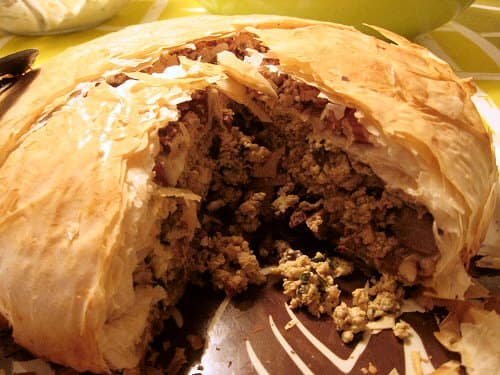
Chicken bastilla
 Moroccan · 2 h 50 min · 577 kcal
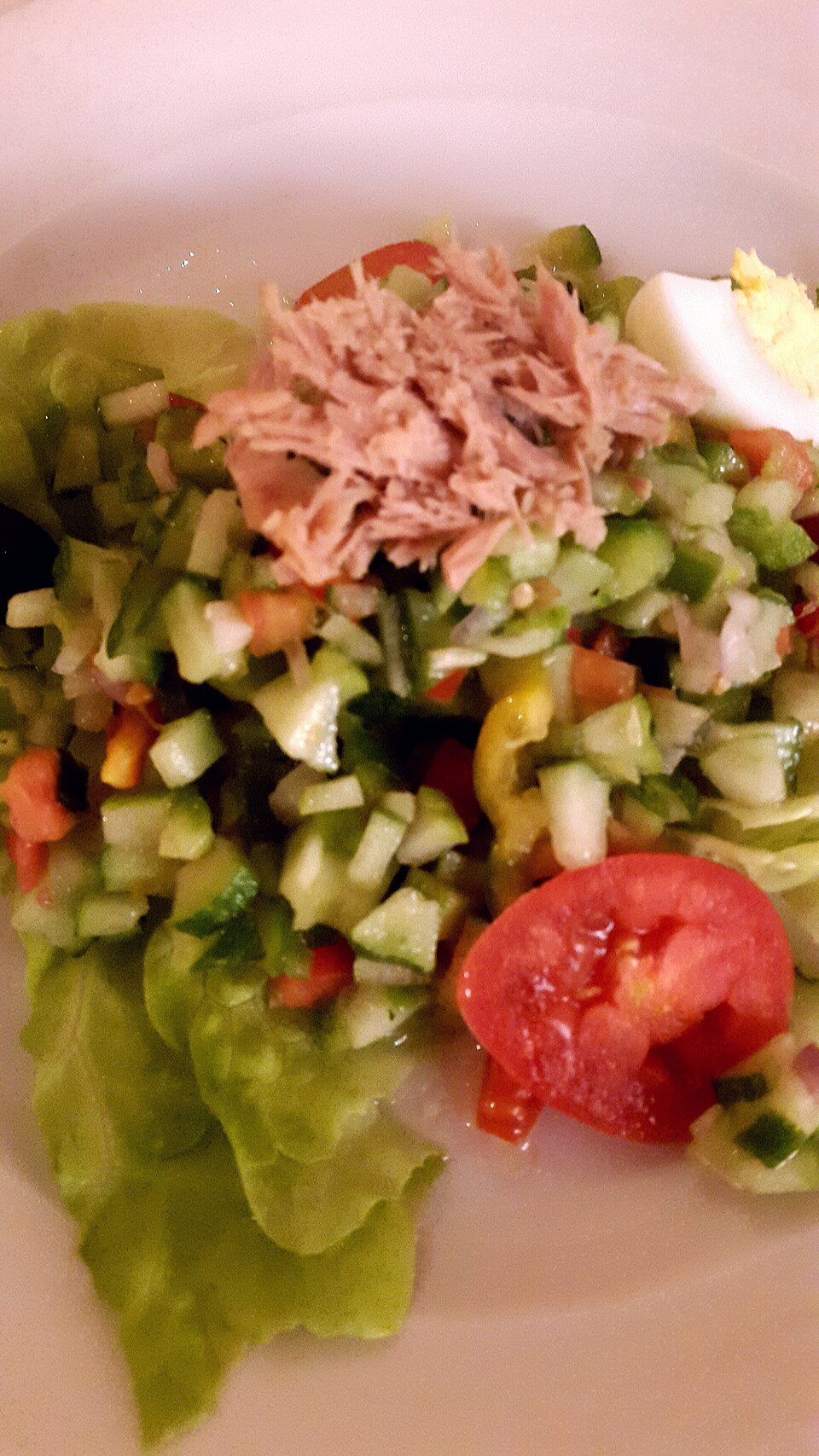
Slata tounsia
 Tunisian · 30 min · 255 kcal
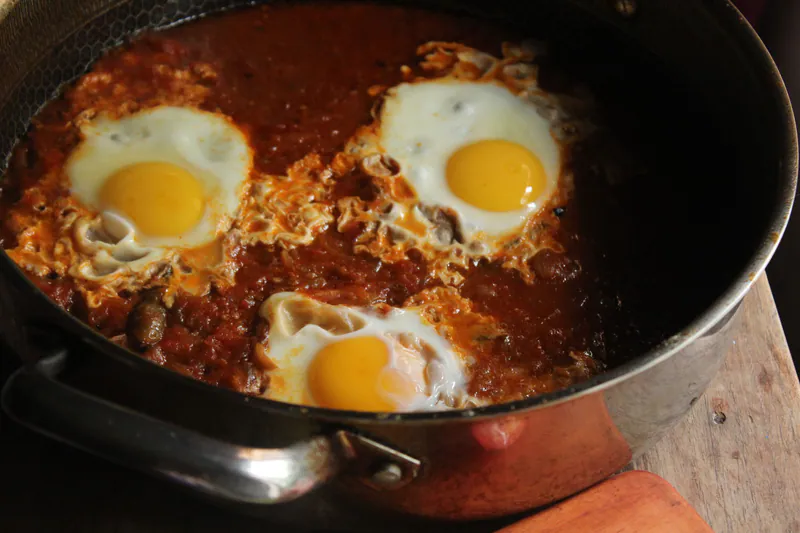
Shakshuka
Tunisian · 40 min · 337 kcal · Contains egg
Kosksi bil hout
Tunisian · 1 h 35 min · 593 kcal