
Tamagoyaki
Non-vegetarian
卵焼き · tamagoyaki
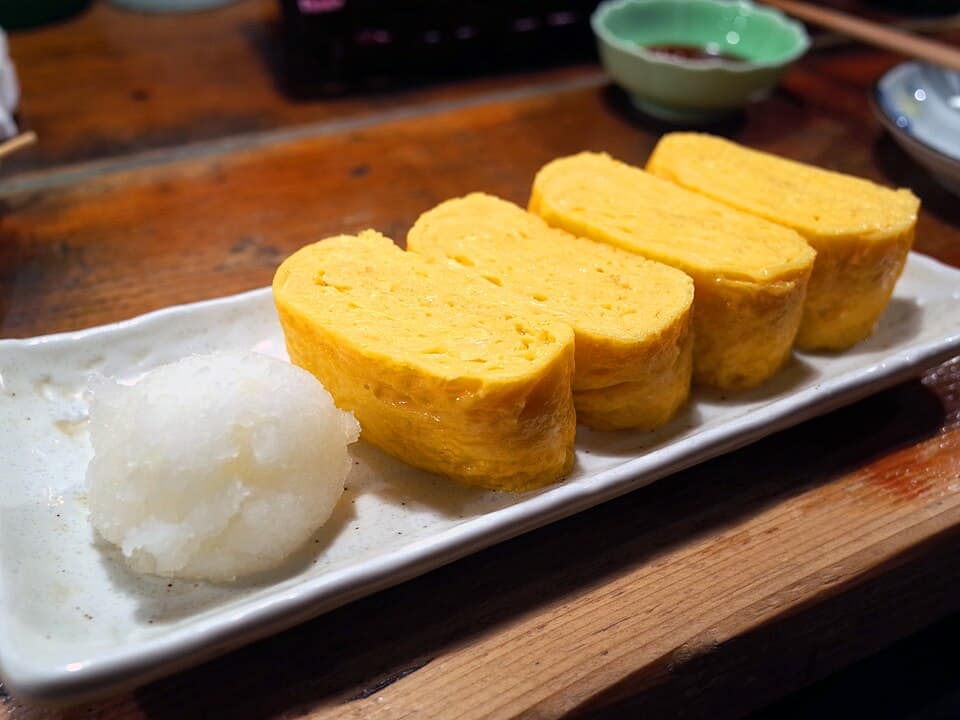
A layered, gently sweet omelette made by rolling thin sheets of egg seasoned with dashi, sugar and soy sauce. Served warm or cold, often in bento.
Tamagoyaki is a Japanese egg dish, ready in about 15 minutes and made with egg, dashi and sugar. It serves 2 and is rated intermediate to cook.
- Prep
- 5 min
- Cook
- 10 min
- Total
- 15 min
- Serves
- 2
- Level
- Intermediate
- Calories
- 228
Method
Step 1
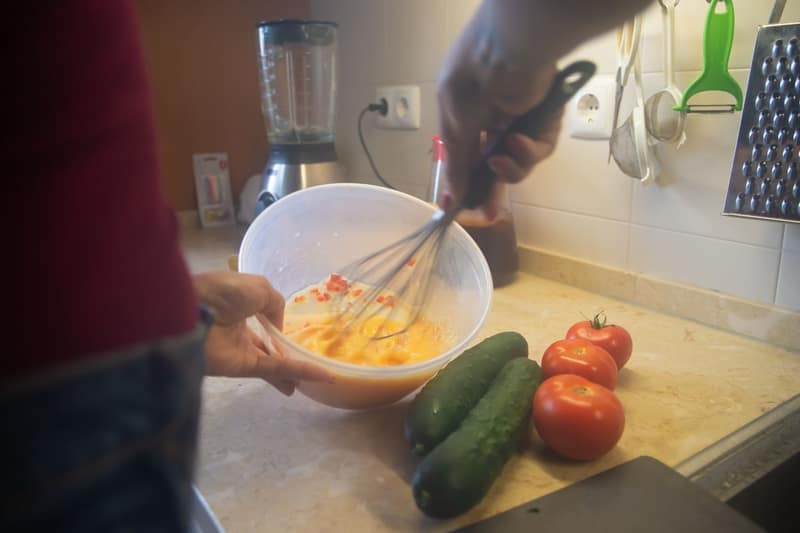
Beat the eggs (opens in a new tab) gently with the dashi (opens in a new tab), sugar (opens in a new tab), mirin (opens in a new tab), soy sauce (opens in a new tab) and salt until smooth, without making them foamy. Strain for an extra-smooth result.
How it looks · Photo: Kampus Production on Pexels Step 2
Heat a rectangular tamagoyaki pan or small frying pan over medium heat and wipe with oil. Pour in a thin layer of egg (opens in a new tab) and tilt to cover the pan.
- 1 min
- medium heat
- Frying pan / skillet (opens in a new tab)
Step 3
When the egg (opens in a new tab) is set underneath but still slightly wet on top, roll it from the far side towards you with chopsticks. Push the roll to the far side.
- 1 min
Step 4
Oil the empty part of the pan, pour in another thin layer and lift the roll so egg (opens in a new tab) runs underneath. Roll again. Repeat until the egg is used.
- 5 min
- medium-low heat
Food safety: Make sure the final roll is cooked through if serving young children, pregnant people or anyone vulnerable.
Step 5
Tip onto a bamboo mat or clean cloth and shape into a neat block. Rest 2 minutes, then slice.
- 2 min
About this dish
- Origin
- Japan · Well documentedMore food from Japan
- Dish
- Breakfast · Lunch · Egg dishes · Side dishes
- Cooking method
- Pan-fried
- Taste
- sweet & savoury, mild, umami
- Diet
- Pescatarian · Dairy-free · No nut ingredients · Keto-style · Low-carb · High-proteinWith the listed swaps: Vegetarian (lacto-ovo), Eggetarian, Ovo-vegetarianWorked out from the ingredients. How labels work
All labels
Pescatarian · Non-vegetarian · Flexitarian-friendly · Dairy-free · No nut ingredients · Pork-free · Beef-free · Keto-style · Low-carb · High-protein - Good for
- Child-friendly · Portable / lunchbox · Make-ahead
- Techniques
- Pan-frying
Allergens
- Contains: Eggsfrom egg
- Contains, can be adapted: Fishfrom dashi
- Contains, can be adapted: Wheatfrom soy sauce
- Contains, can be adapted: Glutenfrom soy sauce
- Contains: Soyfrom soy sauce
Based on typical versions of these ingredients and not verified allergen-free. Brands differ and cross-contact happens, so always check labels. For severe allergies, follow your clinician’s advice.
Nutrition
228 kcal per serving
Estimated1 serving ≈ 139 g · recipe makes 2
Where the energy comes from
- Protein 24%
- Carbohydrate 9%
- Fat 67%
| Nutrient | Per serving | Per 100 g* |
|---|---|---|
| Energy | 228 kcal | 164 kcal |
| Protein | 13.3 g | 9.6 g |
| Carbohydrate | 5.2 g | 3.7 g |
| Net carbohydrate | 5.2 g | 3.7 g |
| Sugars | 4.6 g | 3.3 g |
| Added sugars | — | — |
| Fibre | 0 g | 0 g |
| Fat | 16.5 g | 11.9 g |
| Saturated fat | 3.7 g | 2.6 g |
| Trans fat | — | — |
| Cholesterol | 372 mg | 268 mg |
| Sodium | 410 mg | 295 mg |
| Salt equivalent | 1 g | 0.7 g |
Vitamins & minerals per serving
- Potassium
- 183 mg
- Calcium
- 58 mg
- Iron
- 1.8 mg
- Magnesium
- 16 mg
- Vitamin A (RAE)
- 160 µg
- Vitamin C
- 0 mg
- Vitamin D
- 2 µg
- Vitamin B12
- 1 µg
- Folate (DFE)
- 48 µg
How these numbers were made
- Calculated from USDA FoodData Central (SR Legacy) per-100 g values and the listed quantities.
- *Per 100 g of combined raw ingredients; the cooked dish may weigh more or less.
- Dashi: Home-prepared fish stock (FDC 172885) used as a stand-in for katsuobushi-kombu dashi; both are very low in energy.
- Mirin: Sake (FDC 167723) used as a stand-in; true mirin is sweeter, so sugar is underestimated.
- “—” means the value isn’t known for enough of the ingredients; it is never zero by default.
- Values are estimates for guidance, not for medical dosing. U.S. Department of Agriculture, Agricultural Research Service. FoodData Central, 2019. fdc.nal.usda.gov.
Good to know
Tips
- If the pan is hot enough, a drop of egg should sizzle gently, not spit. Too hot and the layers brown and blister.
- Rolling with the bamboo mat while still warm gives the neat rectangular shape.
Common mistakes
- Too high heat browns the layers and makes the omelette rubbery.
Serve with
- Serve with rice and miso soup, or pack in a bento box.
Storage
- Refrigerate for up to 2 days; good cold.
Variations
- Dashimaki tamago: Kansai style with more dashi and less sugar, giving a softer, juicier roll.
Original editorial recipe · FriendsPantry editorial · Not yet independently reviewed · Added · Updated
Recipe DNA
How this dish is built
Reviews & corrections
Reviews come from signed-in cooks and appear after a moderator checks them. We never show made-up ratings.
You might also like
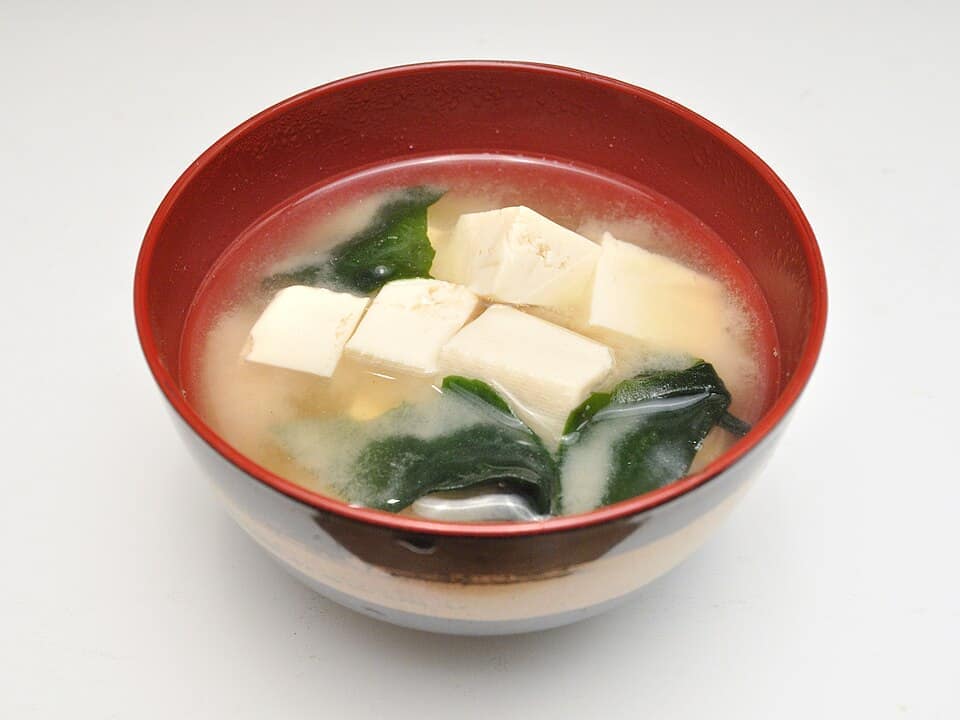
Miso soup with tofu and wakame
 Japanese · 13 min · 84 kcal
Salmon onigiri
Japanese · 1 h · 232 kcal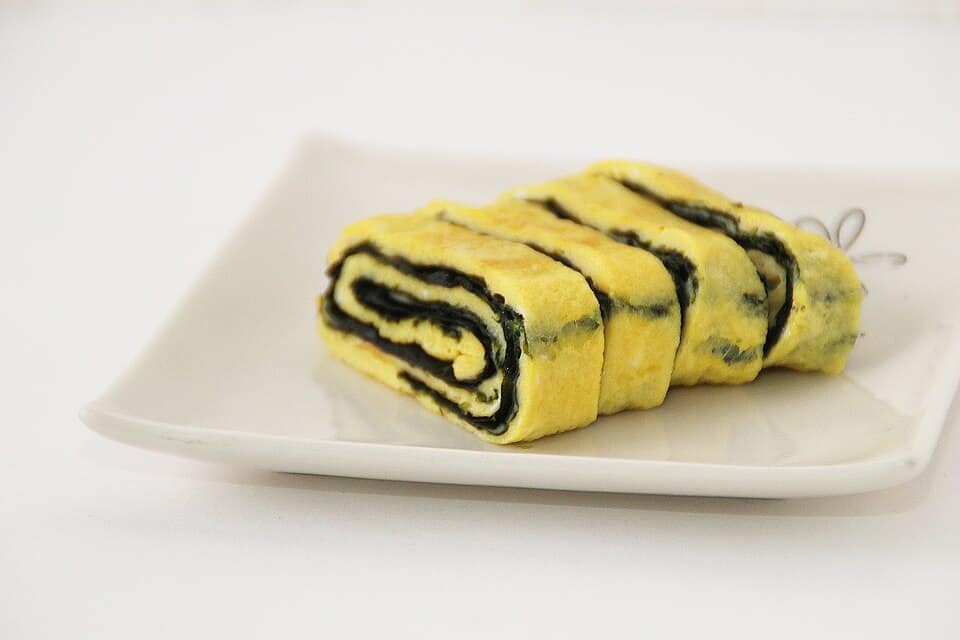
Gyeran-mari
 Korean · 17 min · 167 kcal · Contains egg
Katsudon
Japanese · 40 min · 1003 kcal